
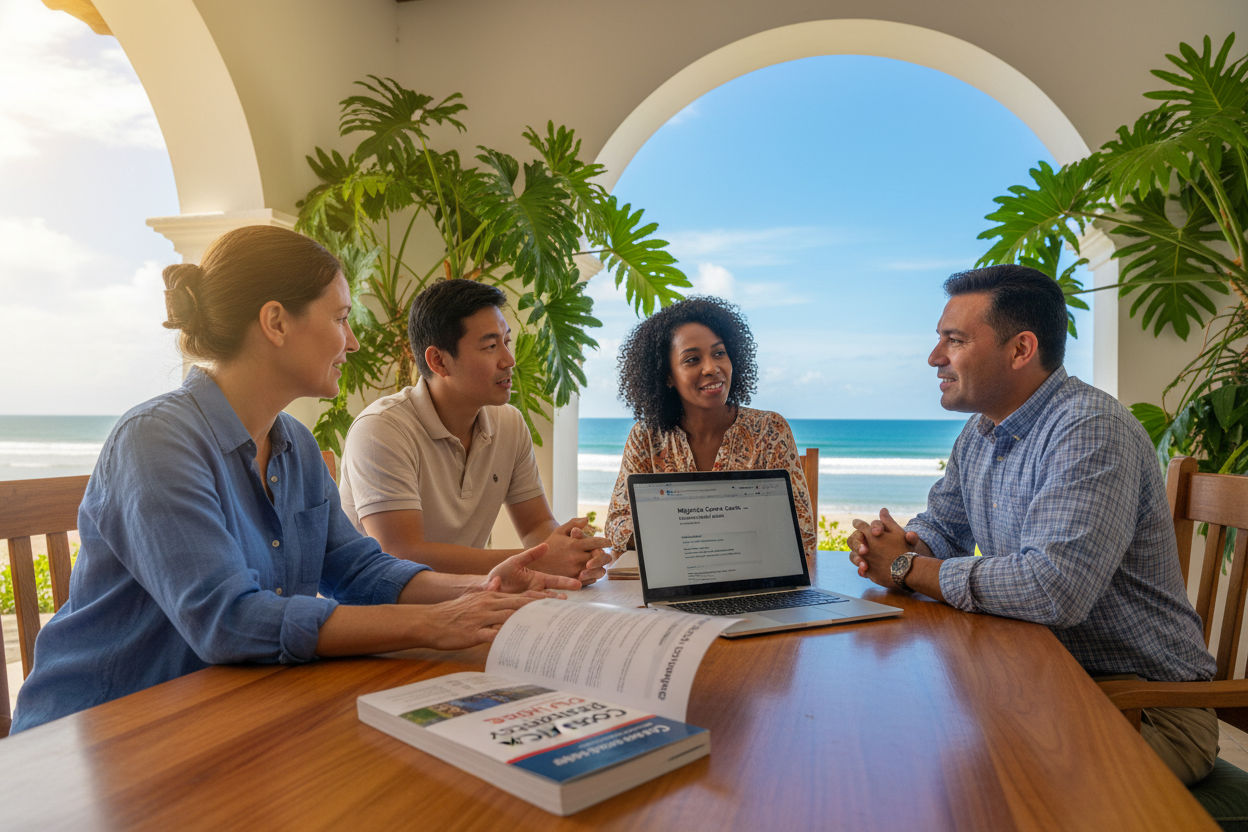
Welcome. We at CRIE provide Costa Rica residency and immigration services. This guide offers clear, practical information to start your immigration-in-costa-rica journey.
This country is home to a significant expatriate community. As of 2012, about 390,000 immigrants lived here—roughly 9% of the population. Over 15,000 Americans have made this move.
We’ll walk you through the complete immigration process. You’ll learn who qualifies for each residency category and the specific financial requirements. We’re candid about timelines, which typically range from three to twelve months.
This information is designed for Americans considering relocation. Whether you’re a retiree, investor, or remote worker, we provide straightforward guidance. We emphasize starting from home—getting your documents ready makes everything smoother.
Our goal is to be your trusted guide. We build trust through honest disclaimers and realistic expectations. By the end, you’ll know your first concrete steps toward residency.
Introducing Costa Rica Residency and Immigration Services (Residencia e Inmigración)
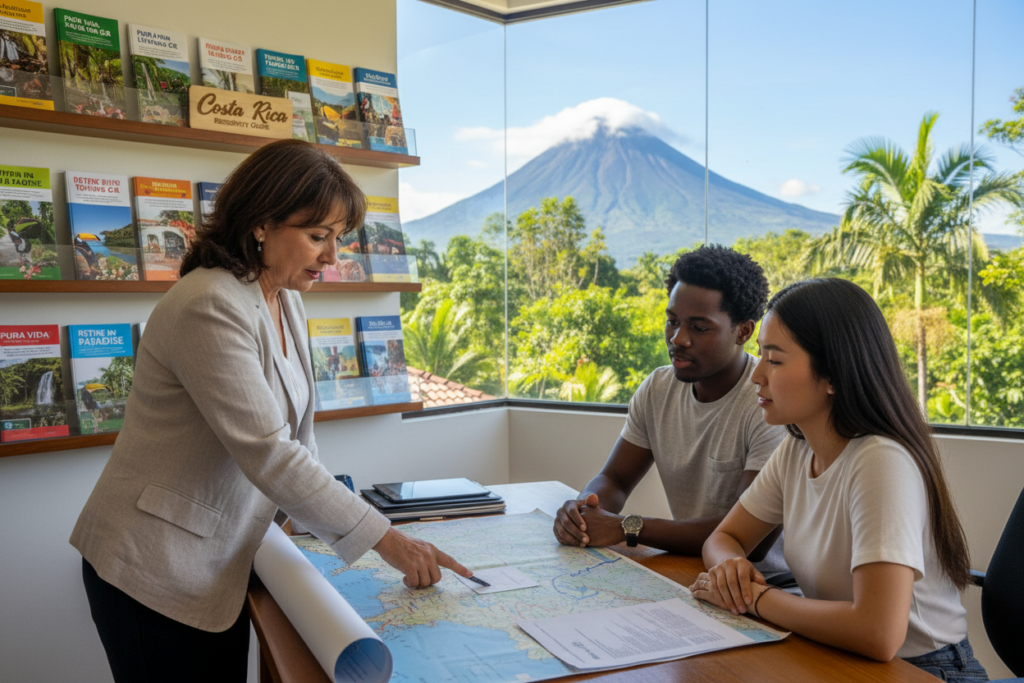
For many from the United States, the dream of living in Costa Rica is supported by a clear framework for residency. We at CRIE focus exclusively on these services—guiding you through the legal process from start to finish.
Overview of US Citizen Benefits
As a US citizen, you have practical advantages. You can enter as a tourist for up to 180 days without a visa. You also enjoy the same property ownership rights as Costa Rican citizens.
Access to both public and affordable private healthcare is another key benefit. An established community of over 16,000 Americans provides a ready support network in areas like Escazú and Santa Ana.
The Allure of the “Pura Vida” Lifestyle
The famous “Pura Vida” phrase reflects a real cultural shift. It emphasizes simplicity, community, and a deep connection to nature. This lifestyle is a major draw for people seeking balance.
The country offers remarkable political stability and no standing army. Its incredible biodiversity and mild climate create an appealing environment. These factors make Costa Rica a top choice for new residents.
Understanding immigration-in-costa-rica Requirements
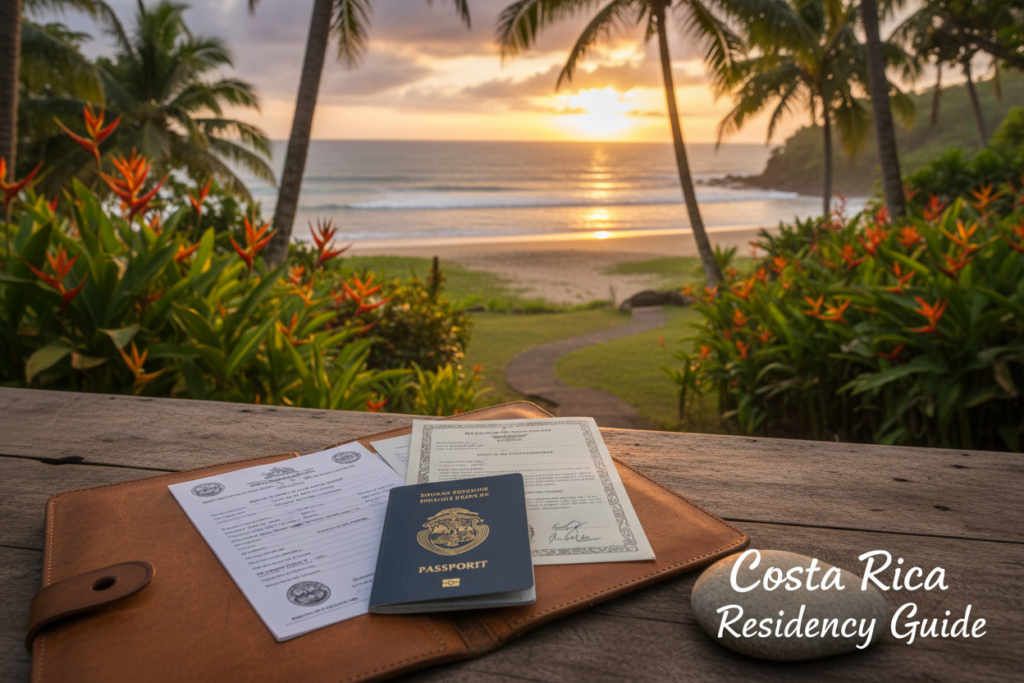
Costa Rican immigration law clearly defines who qualifies for residency status through several distinct pathways. You cannot simply pick the category you prefer.
Who Qualifies and Key Eligibility Criteria
US citizens typically access four routes. The Pensionado category requires a lifetime pension of at least $1,000 monthly. Rentista applicants need guaranteed passive income of $2,500 per month for two years, or a $60,000 bank deposit.
The Inversionista pathway demands a minimum $150,000 investment in the country. Finally, the Digital Nomad visa asks for $3,000+ in monthly remote income.
Each option has specific criteria set by law. You must meet all financial and documentation requirements before applying. Authorities will verify your income sources and background thoroughly.
Exploring the Pensionado Option (Pensionado)
The Pensionado (Pensionado) program stands as the primary gateway for American retirees seeking residency in Costa Rica. It is specifically designed for individuals who receive a guaranteed, lifetime pension.
This is the most popular and straightforward route for those moving here with retirement income.
Minimum Pension Requirement: $1,000+/month
You must prove a minimum pension of $1,000 USD every month. This income must be permanent and come from an official source.
Acceptable sources include U.S. Social Security, military pensions, or qualified private plans. Costa Rican authorities require a letter from your pension provider. This letter must confirm the amount and its lifetime duration.
Benefits Exclusively for Retirees
Pensionados gain significant financial benefits. You receive import duty exemptions for household goods and one personal vehicle.
You also get full access to the Costa Rican healthcare system, known as the Caja. This residency grants you temporary status, renewable every two years.
After three consecutive years, you can apply for permanent residency. We should note this category is for retirees—it restricts local employment but allows business ownership.
Diving into the Rentista Program (Rentista)
If you have reliable investment income but no pension, the Rentista (Rentista) category might be your ideal fit. This pathway is designed for financially independent individuals. It serves those who do not yet qualify for retirement-based residency.
Guaranteed Income or Bank Deposit Requirements
You must prove guaranteed monthly income of $2,500 USD. This needs to be secured for a minimum two-year period. Alternatively, a $60,000 deposit in a Costa Rican bank meets the requirement.
Guaranteed income means stable, recurring funds. Acceptable sources include rental properties, trust distributions, or investment portfolios. One-time payments or sporadic freelance work does not qualify.
Understanding the Two-Year Income Threshold
The two-year threshold is a strict rule. Costa Rican authorities verify this income will last. They want assurance you can support yourself without local work.
This temporary residency is renewable every two years. After three years, you can apply for permanent status. The process takes several months from start to finish.
Reviewing the Inversionista Pathway (Inversionista)
For investors seeking to establish roots in Costa Rica, the Inversionista category represents a significant commitment with specific legal requirements. This pathway requires a minimum capital infusion into the country’s economy.
Investment Minimum of $150,000 Explained
Costa Rican law sets a firm $150,000 USD threshold for this residency category. Your investment must benefit the country economically through approved channels.
Qualifying assets include real estate, business ventures, or government-sanctioned projects. The capital must remain invested throughout your temporary residency period.
Property Ownership and Investment Criteria
A critical rule often overlooked: if using real estate to qualify, the property title must be in your personal name. Holding it through a corporation does not satisfy this requirement.
You must also show at least $1,000 monthly passive income from outside Costa Rica. This proves ongoing financial stability beyond the initial capital.
Inversionista status comes with a six-month annual physical presence obligation. You maintain the same property ownership rights as citizens in most areas, except within the restricted Maritime Zone.
For a deeper look at how investment can lead to longer-term status, review the citizenship by investment details available through our resources.
Clarifying the Digital Nomad Visa Limitations
The Digital Nomad visa offers a tempting shortcut for remote workers, but it carries a significant limitation. This program allows professionals to live and work in Costa Rica for a limited time.
We must be absolutely clear: this is a temporary work authorization, not a residency category. It does not provide a pathway to permanent residency or citizenship.
Why It Does Not Qualify for Residency
The visa requires proof of $3,000 monthly remote income, or $4,000 for families. It permits an initial 12-month stay, renewable once for a maximum of two years.
You can work for employers or clients based in other countries. This visa appeals to those wanting a temporary experience without full commitment.
However, time spent in Costa Rica on this visa does not count toward the seven-year residency requirement for citizenship. It is a dead-end for long-term goals.
If you seek actual residency with a pathway to permanency, the Rentista category is your best option. It requires demonstrating $2,500 in monthly guaranteed income.
The Digital Nomad visa offers tax advantages and allows dependents. Yet, its fundamental limitation remains: it is temporary status, not residency.
Step-by-Step Immigration Process Timeline
The journey from submitting your paperwork to holding your residency card follows a structured, multi-step process. The complete timeline typically spans three to twelve months. We cannot guarantee specific processing time, as it depends on government workload and case complexity.
From Application Filing to DIMEX Issuance
Your first step happens at home. You must gather documents like birth certificates and FBI checks. These need apostilles from the U.S. Department of State.
Step two requires official Spanish translation inside Costa Rica. Only translators registered with local authorities can perform this work. You cannot complete this step in advance.
Step three is filing your application with the Dirección General de Migración y Extranjería (DGME). You’ll submit all documents, pay fees, and provide a refundable deposit. This officially starts the immigration process.
Upon filing, you receive proof your case is in process. This document allows you to stay legally in Costa Rica while waiting. It applies even if your tourist visa expires.
The fourth step is the waiting period. Immigration authorities review your file, verify documents, and run checks. This phase often takes six to ten months.
Final approval leads to step five. You provide biometrics and receive your DIMEX card. This is your official residency identification in Costa Rica. For a broader perspective on this journey, we recommend navigating Costa Rica’s residency and visa with detailed guides.
Gathering Essential Documents
The foundation of a successful residency application lies in meticulous document preparation. This is the phase where most delays occur, so we guide you through it carefully.
Apostilles, Translations, and Authentication Requirements
All applicants need a core set of documents. This includes a valid US passport and a certified birth certificate. You also need a recent FBI criminal background check. If married, include your certified marriage certificate.
Each civil document must receive an apostille from the US Department of State. This authentication certifies the document for international use. The FBI check requires fingerprinting and also needs this apostille.
Financial proof varies by your chosen residency route. Pensionados need a letter confirming lifetime pension income. Rentistas must show guaranteed income or a bank deposit. Inversionistas provide property or investment certificates.
After apostilling your US documents, you must get them translated. Costa Rican authorities require translation by an official, locally authorized translator. Budget $100-$300 for apostilles and $40-$500 for translations.
Plan for this process to take 8-12 weeks before you can file. Starting early is critical to avoid expired checks or missing authentications.
Preparing Your Application Before Arrival
Organizing your application materials before you travel can save you months of waiting and significant stress. We strongly recommend starting the document preparation process from your home in the United States. Completing apostilles and preliminary work before you arrive in Costa Rica streamlines everything.
Staying Organized and Meeting Deadlines
Create a detailed checklist for your specific Costa Rica residency category. Track each item’s status and gather all required information early. This systematic approach prevents discovering missing documents after you’ve already landed.
Begin with your FBI background check, as it often takes 3-5 weeks. While waiting, obtain certified copies of birth and marriage certificates. Use official state agencies, not informational copies.
Schedule apostille processing through the U.S. Department of State or an expedited service. Processing times vary from weeks to just a few business days. Financial documents like pension letters must be recent, typically within 90 days.
Set reminders for document expiration dates. Background checks are valid for six months. Arriving with complete, apostilled paperwork means you only need translations and filing when you land in Costa Rica. This can cut your in-country process to just 2-3 weeks.
Common Mistakes in the Residency Process
Navigating the residency process in Costa Rica requires careful attention to detail. Even minor errors can lead to significant delays or rejection. We want to help you avoid these common pitfalls.
Errors to Avoid When Submitting Documents
The single biggest error is using translations done in the United States. Costa Rican immigration only accepts work from translators registered locally. US translations will be rejected, costing you time and money.
Many applicants submit short-form birth certificates with their application. Authorities require the long-form version showing both parents’ names. Always get certified copies from your state’s vital records office.
FBI background checks expire after six months. Requesting one too early means it may expire before you file. Timing is critical to avoid restarting the entire immigration process.
Income verification letters must come directly from the source institution. A letter from a personal accountant won’t meet the requirement. It must confirm monthly amounts and duration on official letterhead.
For Inversionista applicants, property must be held in your personal name. Using a corporation, while common, does not qualify under the conditions for residency. This mistake often derails applications.
Overstaying your tourist visa while waiting to start can lead to fines or bans. Begin the process before your authorized stay expires. Staying organized and tracking deadlines is essential for a smooth experience in Costa Rica.
To understand your specific conditions, we recommend starting with our free residency assessment. This helps clarify your path and avoid mistakes from the start.
Insights on Who Qualifies for Each Residency Route
Self-assessment is the critical first step to determine which Costa Rican residency category aligns with your situation. We provide practical insights to help you match your profile to the correct pathway.
The Pensionado route suits traditional retirees with guaranteed lifetime pensions. This includes Social Security or government benefits meeting the $1,000 monthly minimum.
Rentista status works for financially independent people who have passive income but no pension. You need $2,500 monthly from investments, rentals, or trusts.
Choose the Inversionista pathway if you have $150,000 to invest in local assets. The Digital Nomad visa is for remote work, but it offers temporary status only.
We’ll be direct: if your profile doesn’t fit cleanly, consult specialists. Attempting to fabricate qualifications leads to denial. The system in Costa Rica is strict but clear for honest people.
How to Begin Your Immigration Journey from Home
Starting your application process from home minimizes delays and unexpected costs later. You can complete essential groundwork before incurring travel expenses in Costa Rica. This smart approach saves both time and money.
Pre-Application Research and Consultations
First, determine which residency category you genuinely qualify for. Review all income thresholds and documentation requirements carefully. This prevents you from investing in the wrong direction.
We recommend a professional consultation to discuss your specific situation. This initial conversation helps identify potential issues early. It also develops a realistic timeline and document preparation plan.
Using Online Resources and Verifying at migracion.go.cr
Conduct preliminary research using official resources. The Costa Rican immigration website at migracion.go.cr provides current regulations and forms. Always verify information there, as rules can change.
Remember, this official site is in Spanish and can be difficult to navigate. Join online expat communities for shared experiences, but verify any advice with qualified professionals. Online information is often outdated or incomplete.
When ready for professional support, contact us. We provide exclusive Costa Rica residency and immigration services. Reach us at WhatsApp +506 8706 3888, email info@crie.cr, or visit www.crie.cr.
Understanding Legal and Immigration Requirements
Meeting Costa Rica’s entry criteria is a fundamental legal requirement before any residency application. We explain this first layer of compliance clearly.
Meeting Entry Criteria and Visa Regulations
US citizens can enter this country for tourism without a visa. Immigration authorities may grant stays up to 180 days at their discretion.
You must have a valid passport for your entire stay. Proof of onward travel, like a return ticket, is also mandatory.
Yellow fever vaccination proof is only required if arriving from certain countries. Non-US citizen family members need valid documents proving permission to re-enter the United States.
Tourist status does not authorize residency or local work. Repeated “visa runs” to reset your stay now face increased scrutiny and potential denial.
Once your residency application is officially filed, you can stay legally even if your tourist period expires. This protection applies after filing, not during preparation.
Costa Rican law requires legal residents to register with the social security system (Caja). You must also maintain your status through timely renewals.
Always verify current entry rules at migracion.go.cr. Requirements can change, and we recommend confirming before you travel.
Tips for a Smooth Transition to Life in Costa Rica
A smooth transition to life here goes far beyond having your residency card in hand. Your success depends on adapting to a different pace and cultural approach. Costa Rica is not the United States with better weather—it’s a unique country with its own systems.
Learn basic Spanish before you arrive. This skill is crucial for navigating healthcare, banking, and government offices. Even in expat-heavy areas, daily life requires at least conversational ability.
Enroll in the public healthcare system, the Caja, as required. We recommend supplementing it with private insurance for shorter wait times. Open a local bank account early, but be prepared for a more detailed process than in the U.S.
Join local expat communities through social groups and meetups. This network provides invaluable practical information and social support. It helps you integrate and feel connected in your new community.
Understand that transportation works differently here. Importing a vehicle carries high taxes. Public buses, domestic flights, and rideshares offer good alternatives in urban areas.
Embrace the “Pura Vida” culture. Appointments may start late, and processes move at their own pace. Fighting this reality creates stress, while adapting to it greatly improves your quality of life and security.
Evaluating Lifestyle, Housing, and Community Options
Your daily quality of life in Costa Rica will be shaped significantly by the region you select as your new home. This choice impacts your access to amenities, social connections, and overall comfort.
Popular Expat Regions Such as San José and Tamarindo
San José and the Central Valley offer the most comprehensive infrastructure. This region provides modern healthcare facilities, international schools, and easy access to both coasts.
Areas like Escazú feature large English-speaking communities and high-end conveniences. Expect higher rental costs here, often between $800 and $1,500 monthly.
The Pacific Coast, including towns like Tamarindo, delivers a classic beach lifestyle. This area is ideal for surf culture and active nightlife, but rentals can range from $1,000 to over $2,000.
For a peaceful, small-town feel, consider the Central Highlands. Atenas is famous for its ideal climate and lower costs, with rentals around $400 to $700.
Your priorities should guide your search. If healthcare access is critical, stay near San José. For budget-friendly authenticity, explore less-touristed Costa Rican regions.
Final Thoughts on Taking the Next Step Toward Residency
This guide has equipped you with the knowledge to navigate the immigration system confidently. Establishing legal status in Costa Rica is absolutely achievable for qualified Americans.
Your success depends on three key factors. You must genuinely qualify for a pathway like Pensionado or Rentista. Gather and authenticate all documents properly before filing.
The complete process from preparation to DIMEX card typically takes 3-12 months. Starting with properly prepared documents from home significantly reduces timeline and complications.
After three years of temporary status, you become eligible for permanent residency. Citizenship requires seven years of legal residency.
We at CRIE specialize exclusively in Costa Rica residency and immigration services. We provide clear guidance and document preparation support.
If you’re ready to take the next step, contact CRIE at WhatsApp +506 8706 3888, email info@crie.cr, or visit www.crie.cr for a consultation.
FAQ
What are the main residency programs for moving to Costa Rica?
How long does the residency application process typically take?
Do I need to translate and authenticate all my documents?
Can I work in Costa Rica with a Pensionado or Rentista residency?
What is the CAJA, and do I need to join?
Is the Digital Nomad Visa a path to permanent residency?
What are the most common mistakes people make in their application?
Where is the best place to live as an expat in Costa Rica?
Article by Glenn Tellier (Founder of CRIE and Grupo Gap)
Don't wait, contact us right now!
Call or WhatsApp Costa Rica +506 8373 2085 or +506 8706 3888
Call USA/Canada +1 305-906-6784