Moving your life to a new country involves crucial paperwork. Your legal documents form the bedrock of your new beginning—they must arrive securely and on time.
We understand the anxiety that comes with international mail. Navigating logistics for Costa Rica requires a clear plan to avoid common delays and ensure protection for your sensitive information.
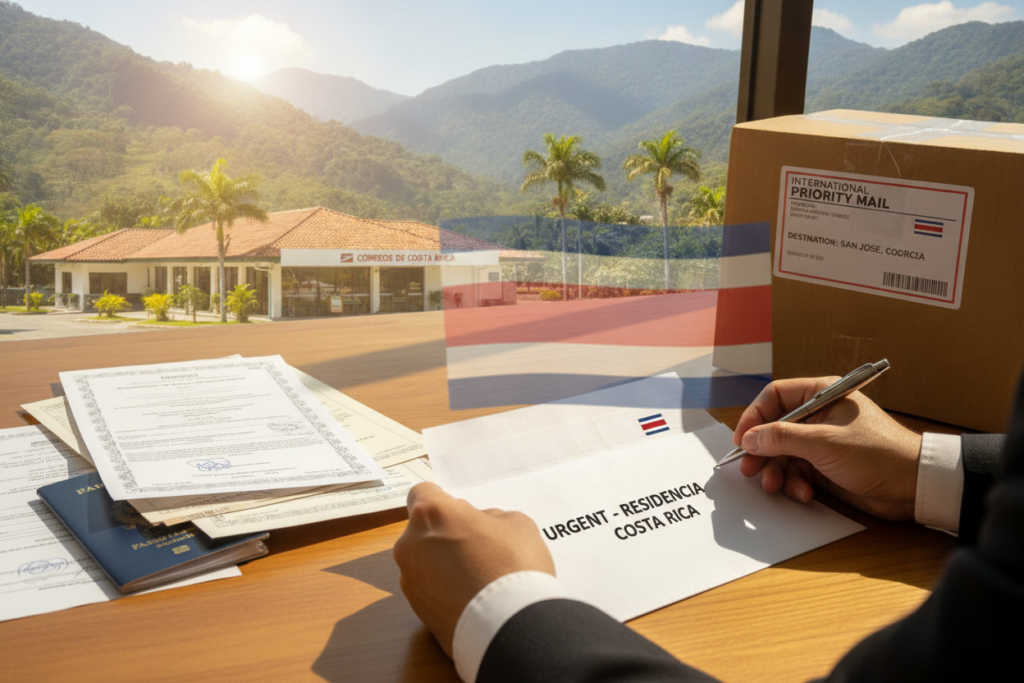
The national postal service, Correos de Costa Rica, is one option. For faster, tracked delivery, private couriers like FedEx and DHL are available.
Our role at CRIE is to be your guide. We provide the essential information you need to coordinate these services effectively. Starting your preparation from home is the most effective strategy for a smooth transition.
Let’s explore your options together. We prioritize security in every step, turning a complex process into a managed, straightforward task.
Understanding Costa Rica Residency Through CRIE (crie.cr)

At CRIE, we dedicate our practice exclusively to Costa Rica’s immigration landscape. Our service provides the expert guidance you need to navigate this complex legal terrain.
We believe in giving you clear, actionable information. This foundation turns a daunting process into a managed journey.
Overview of the CRIE Process
We start by helping you understand your specific path to residency. Managing your documents correctly is the essential first step toward securing your future here.
Our process is designed to provide clarity at every stage. We focus on the legal requirements that matter for your application.
Focus on Costa Rica Immigration Only
Please note that our expertise is strictly limited to immigration matters for Costa Rica. This specialization allows us to offer support tailored precisely to your unique situation.
We do not handle other legal or financial services. This singular focus ensures you receive the most accurate and dedicated assistance available.
Ready to begin? Contact us via WhatsApp at +506 8706 3888 or email info@crie.cr. We’ll provide the information you need to start your journey toward legal residency.
Applicant Qualifications for Residency (Who Qualifies?)

Costa Rica offers several distinct residency pathways. Each is defined by specific financial criteria.
Choosing the correct category is crucial. It unlocks the full benefits of legal status in the country.
Pensionado (Pensionado) Requirements
This option is designed for retirees. You must prove a stable lifetime pension of at least US$1,000 per month.
The income must come from a recognized institution, like a government or company pension plan.
Rentista and Investor (Inversionista) Thresholds
The Rentista category suits those with a guaranteed income. It requires proof of US$2,500 per month for a minimum of two years.
For the Inversionista status, a minimum investment of US$150,000 is required. This asset must be held in the applicant’s personal name.
We assist in organizing the necessary documents to prove these financial thresholds. The right path depends entirely on your profile and long-term goals.
For personalized guidance, consider scheduling a immigration interview. This helps clarify your best options.
how-to-send-documents-costa-rica: A Detailed Documentation Guide
Organizing your paperwork correctly is the foundation for a successful residency application in Costa Rica. We provide a clear roadmap to navigate this phase from your home country.
Step-by-Step Guidance Before Arrival
Following official guidelines, you must complete a medical exam in San José. This includes blood tests costing around US$11 and a physical exam for approximately US$100.
Ensure your passport is valid for at least one year beyond your planned entry date. Every applicant must also bring their DS-260 confirmation page—a required form—to their embassy interview.
Essential Document Checklist
Prepare a comprehensive list before you arrive. Your valid passport and necessary civil records are paramount.
This process applies to various categories, including residency as a child of a Costa. We recommend keeping a digital copy of every submitted document.
This maintains a clear record of your immigration progress and safeguards your information.
Preparing Your Documents: Apostilles, Translations, and More
Properly authenticating your paperwork is a non-negotiable step for establishing legal residency in Costa Rica. This process ensures your credentials are legally recognized by local authorities.
We guide you through each requirement to prevent costly delays. The goal is a complete, valid dossier ready for submission.
How to Get Apostilles and Translations Ready
Obtaining an apostille must be completed in your home country before relocation. This stamp certifies the authenticity of your documents for international use.
Any document not in English or Spanish requires a certified translation. Authorities in Costa Rica will only accept paperwork in these languages.
Timing is critical. Police certificates and single status documents are only valid for three months from issuance. Plan your requests accordingly to meet deadlines.
Your family members need their own apostilled records, like birth certificates. These must support the primary application alongside your valid passport.
We provide the precise information you need for correct authentication. This careful preparation safeguards your residency processing timeline.
Mapping the Timeline and Critical Milestones
The clock starts ticking on your Costa Rica residency journey long before you submit your first document. A realistic schedule is your best tool for managing the inherent delays in any international process.
We guide clients to view this phase with a strategic mindset. This approach turns a waiting period into a productive planning stage.
Document Preparation and Submission Timelines
Official administrative processing can take up to 60 days after your final interview. You must account for this time when planning your relocation.
Managing your schedule effectively prevents last-minute stress. It also protects your ability to establish legal status without unnecessary hurdles.
Planning Your Move from Home
Begin gathering essential records like tax returns and business documents well in advance. This proactive step is crucial for a complete application dossier.
We advise treating your entire residency case like a serious business project. Define clear milestones and keep everything organized from your current home.
Starting early ensures your transition to Costa Rica is as seamless and efficient as possible. A disciplined timeline is the foundation of a successful move.
Avoiding Common Mistakes in the Residency Process
The path to legal status in Costa Rica is paved with specific rules. Deviating from them, even unintentionally, carries real consequences.
We see applicants encounter the same preventable setbacks year after year. These errors add unnecessary cost and delay to an already detailed process.
Frequent Pitfalls to Watch Out For
A top error is submitting documents without verifying their current validity. This simple oversight can halt your entire application.
Many people also misunderstand the specific residency options available. Choosing the wrong category wastes significant time and effort.
It is vital to use a professional service for guidance. Application mistakes can lead to a finding of ineligibility, and visa fees are non-refundable.
Do not assume the process is simple. Navigating requirements for living in Costa Rica demands sharp attention to detail.
Always work with current information. Relying on outdated rules is a major pitfall. For a deeper look, review the guide on common document mistakes in the residency process.
Our service exists to help you sidestep these issues from the start.
Digital Nomad Versus Traditional Residency Options
Choosing how to establish your life in Costa Rica means distinguishing between temporary stays and permanent legal status. The popular Digital Nomad program is a visa, not a form of residency.
Why Digital Nomad Does Not Count for Residency
It is vital to understand this critical distinction. The Digital Nomad status does not provide a path to permanent residency or citizenship in Costa Rica.
While the program offers a fantastic way to experience the country, it does not count toward the time or benefits required for formal residency. If your ultimate goal is to live in Costa Rica permanently, you must pursue a traditional category.
Relying solely on a temporary visa can delay your long-term plans. We help clients evaluate all their options to choose the correct path.
Our role is to clarify these differences. Contact us to discuss transitioning from a temporary status to a residency that supports your future.
Securing Your Documents: Mail, Courier, and Delivery Options
Selecting the right method to transport your documents is a critical security decision. The final step involves physically moving your vital paperwork to its destination.
You have two primary pathways: the public postal system or a private courier service. Each offers different benefits for speed, tracking, and security.
Choosing Between Public Postal Service and Private Couriers
The national postal service, Correos de Costa Rica, handles general letters and parcels. For non-urgent, low-value items, this public office can be a cost-effective option.
We recommend private couriers like FedEx, DHL, or UPS for sensitive documents. These services provide reliable delivery with full tracking and enhanced security protocols.
Many expats use forwarding services like Aeropost or JetBox for regular mail. This provides a stable address in the country for receiving general correspondence and packages.
Ensuring Document Security and Proof of Delivery
Document security is paramount, especially for original items like your passport. Never send irreplaceable papers through standard mail if a secure courier is available.
Always request and retain proof of delivery when sending your passport to the embassy. For any delivery inquiries, use the official contact: support-costarica@ustraveldocs.com.
This simple step provides essential information and peace of mind. It confirms your vital documents arrived safely at their intended destination.
Final Thoughts: Starting from Home with Proactive Preparation
The most successful residency applications begin not at the immigration office, but at your own kitchen table. Early, organized action from your current home is the single most reliable way to prevent delays and stress.
We transform this complex process into a clear, managed journey. Our guidance helps you build a complete application, turning careful preparation into the significant milestone of secured legal status.
Let’s begin this important project together. Contact us via WhatsApp at +506 8706 3888 or email info@crie.cr. We’ll provide the clarity and partnership you need to start your new life in Costa Rica.
FAQ
What is the safest way to send important papers like my passport to Costa Rica?
We strongly recommend using a reputable international courier service like DHL, FedEx, or UPS. These private companies offer end-to-end tracking, require signatures upon delivery, and provide you with proof that your items arrived securely. This level of security is essential for sensitive documents.
How long does it typically take for mail or a package to arrive from the U.S. or Canada?
Delivery times vary significantly. Private courier services can deliver to major cities in Costa Rica in 3-5 business days. Using the public postal system, however, can take several weeks and offers far less security and tracking. For time-sensitive residency applications, we always advise using a tracked courier.
Do all my documents for the residency application need to be apostilled and translated?
Yes, this is a critical step. Documents like birth certificates, marriage certificates, and police background checks must have an apostille from the issuing state or country. After apostille, they must be officially translated into Spanish by a certified translator recognized in Costa Rica. We guide you through this exact process.
What are the main financial requirements for Pensionado and Rentista residency?
For the Pensionado category, you must prove a lifetime pension of at least
FAQ
What is the safest way to send important papers like my passport to Costa Rica?
We strongly recommend using a reputable international courier service like DHL, FedEx, or UPS. These private companies offer end-to-end tracking, require signatures upon delivery, and provide you with proof that your items arrived securely. This level of security is essential for sensitive documents.
How long does it typically take for mail or a package to arrive from the U.S. or Canada?
Delivery times vary significantly. Private courier services can deliver to major cities in Costa Rica in 3-5 business days. Using the public postal system, however, can take several weeks and offers far less security and tracking. For time-sensitive residency applications, we always advise using a tracked courier.
Do all my documents for the residency application need to be apostilled and translated?
Yes, this is a critical step. Documents like birth certificates, marriage certificates, and police background checks must have an apostille from the issuing state or country. After apostille, they must be officially translated into Spanish by a certified translator recognized in Costa Rica. We guide you through this exact process.
What are the main financial requirements for Pensionado and Rentista residency?
For the Pensionado category, you must prove a lifetime pension of at least $1,000 per month. For the Rentista category, you must demonstrate a guaranteed income of $2,500 per month for two years, often backed by a deposit in a Costa Rican bank. The Inversionista category requires a minimum $150,000 investment.
Why doesn’t the Digital Nomad Visa lead to permanent residency?
The Digital Nomad Visa is a fantastic temporary permit for remote workers, but it is a separate legal track. Time spent under this visa does not count toward the years required for permanent residency. It’s a great option for testing life here, but you would need to apply for a traditional residency category if you wish to stay permanently.
What is the most common mistake people make when preparing their application?
A frequent and costly error is submitting documents that are not properly apostilled or translated. Another is not planning for the lengthy timeline—the entire process from gathering papers to approval can take 6-12 months. Starting early and ensuring every document meets the exact legal specifications is key to avoiding delays.
Can I use a P.O. Box for receiving official documents in Costa Rica?
While many people use a P.O. Box (Apartado) for general mail, we do not recommend it for critical legal documents or correspondence with immigration. It’s best to use a physical street address for all official business to ensure secure and traceable delivery, especially when dealing with government offices.
,000 per month. For the Rentista category, you must demonstrate a guaranteed income of ,500 per month for two years, often backed by a deposit in a Costa Rican bank. The Inversionista category requires a minimum 0,000 investment.
Why doesn’t the Digital Nomad Visa lead to permanent residency?
The Digital Nomad Visa is a fantastic temporary permit for remote workers, but it is a separate legal track. Time spent under this visa does not count toward the years required for permanent residency. It’s a great option for testing life here, but you would need to apply for a traditional residency category if you wish to stay permanently.
What is the most common mistake people make when preparing their application?
A frequent and costly error is submitting documents that are not properly apostilled or translated. Another is not planning for the lengthy timeline—the entire process from gathering papers to approval can take 6-12 months. Starting early and ensuring every document meets the exact legal specifications is key to avoiding delays.
Can I use a P.O. Box for receiving official documents in Costa Rica?
While many people use a P.O. Box (Apartado) for general mail, we do not recommend it for critical legal documents or correspondence with immigration. It’s best to use a physical street address for all official business to ensure secure and traceable delivery, especially when dealing with government offices.
Article by Glenn Tellier (Founder of CRIE and Grupo Gap)
Don't wait, contact us right now!
Call or WhatsApp Costa Rica +506 8373 2085 or +506 8706 3888
Call USA/Canada +1 305-906-6784