
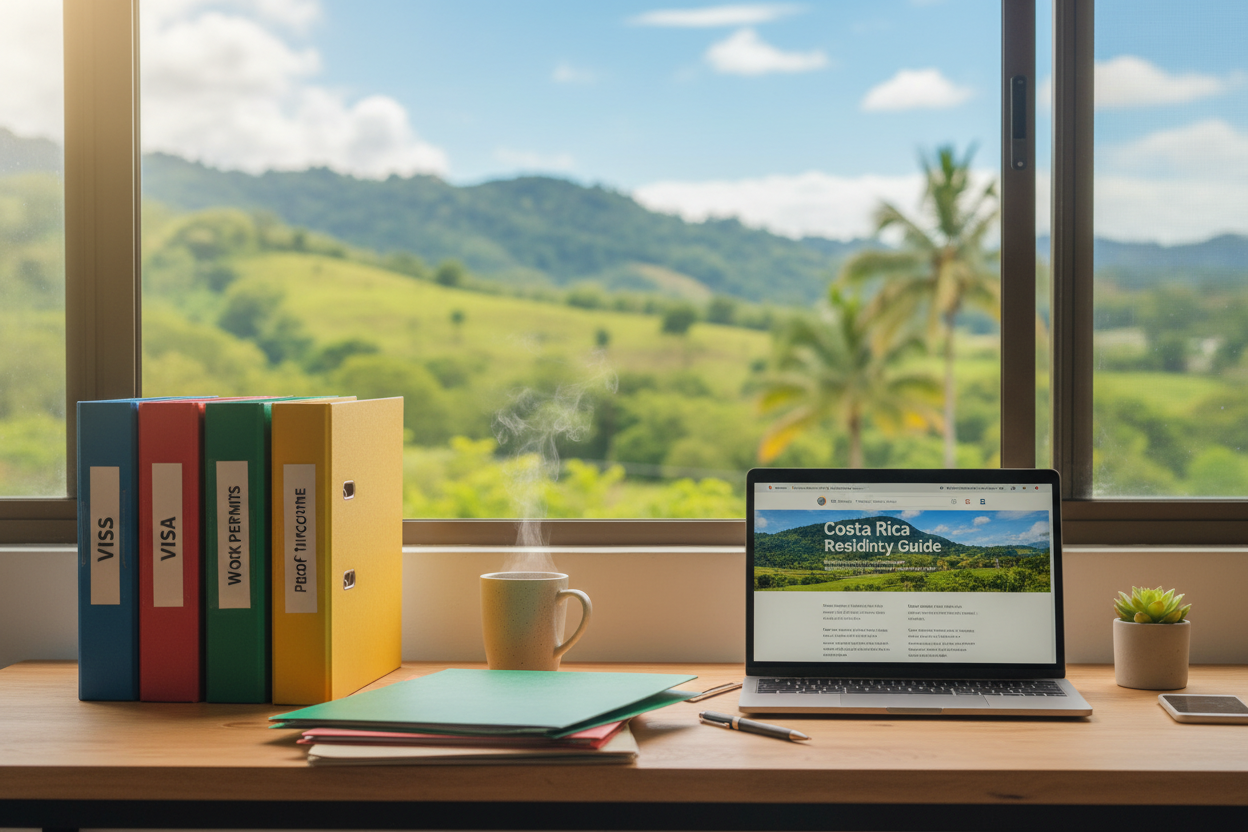
Relocating to this beautiful country brings excitement and new possibilities. Proper documentation forms the foundation of a successful transition—it’s not something to handle later.
We specialize exclusively in residency and immigration services for Costa Rica. Our role is clear: we guide you through legal pathways to establish your status here.
Foreign nationals typically have four main options. These include Pensionado, Rentista, Inversionista, and Digital Nomad programs. A critical note: only the first three lead to actual residency status.
The documentation process should begin before you arrive. Documents require proper authentication and translation. We emphasize preparing everything from your home country first.
Realistic expectations matter. The process typically takes three to twelve months. Costs generally range from $1,500 to $4,000, depending on your chosen pathway.
We position ourselves as experienced guides, not salespeople. We acknowledge both opportunities and challenges in this journey. For personalized support, contact us via WhatsApp at +506 8706 3888, email info@crie.cr, or visit www.crie.cr.
Intro: Preparing to Relocate with CRIE

The path to becoming a resident in Costa Rica starts with meticulous preparation long before your arrival. We at CRIE serve as your dedicated partner, focusing solely on immigration and residency matters. Our expertise is navigating the legal pathways for foreign nationals.
Successful applications are built from your home country. Essential documents must be gathered, authenticated, and translated prior to your move. This upfront work is non-negotiable for a smooth transition.
The process demands attention to detail and realistic timelines. Costa Rica welcomes expats, but its bureaucratic systems require patience. We provide transparent guidance to set proper expectations.
Different residency categories exist for retirees, investors, and remote workers. Most expats begin with temporary status, renewable every two years. Permanent residency becomes an option later.
Our role is to guide you through each requirement and step. We cannot guarantee outcomes or bypass legal rules. For personalized advice on moving to Costa Rica, contact us via WhatsApp at +506 8706 3888 or email info@crie.cr.
Understanding Costa Rica Residency Programs (Residencia)
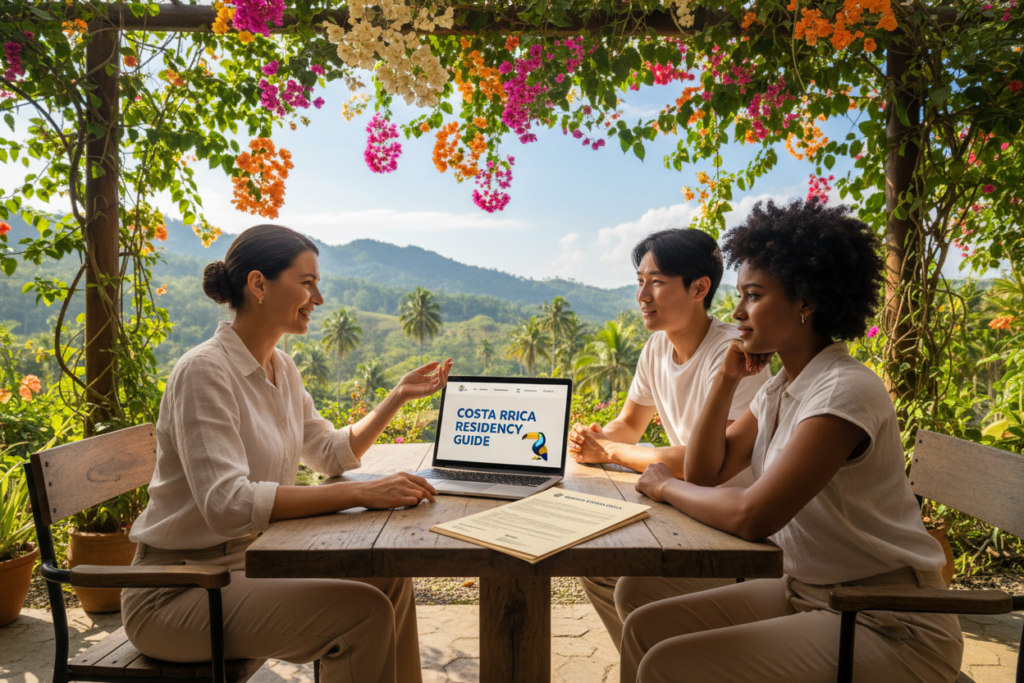
Navigating Costa Rica’s formal residency system, known as Residencia, is the first critical step for any long-term relocation. Understanding the differences between categories is crucial for choosing the right path for your specific circumstances.
Pensionado (Pensionado) Requirements and Benefits
The Pensionado category is designed for retirees. You must prove a lifetime pension or retirement income of at least $1,000 US dollars per month from a source like Social Security.
A key benefit is the ability to import household goods and one vehicle with significant tax exemptions. We clarify that holders cannot work as local employees but may own and operate a business.
Rentista (Rentista) and Inversionista (Inversionista) Options
The Rentista pathway serves those with stable passive income. It requires a guaranteed monthly income of $2,500 for two years, often proven with a $60,000 deposit in a Costa Rican bank.
The Inversionista category requires a minimum $150,000 investment in assets like real estate or business. This investment must be in your personal name and benefit the local economy.
All three programs grant temporary residency status, renewable every two years. Permanent residency becomes available after three years. For a complete breakdown of detailed residency requirements, thorough preparation is key.
Temporary residents must also contribute to the national healthcare system based on their declared income level.
Clarifying the Digital Nomad Visa vs. Residency
We frequently encounter clients who mistake the Digital Nomad visa for a pathway to permanent residency—this misconception must be corrected.
Costa Rica’s Digital Nomad visa is a temporary authorization. It allows remote workers to live here for one year, renewable for a second.
Why Digital Nomad Does Not Count as Residency
This nomad visa requires proving stable foreign income. Individuals need $3,000 monthly; families require $4,000.
However, it provides no residency rights. The years spent under this visa do not count toward permanent status.
If your goal is long-term settlement, this route is a dead-end. You would need to start the residency process from zero afterward.
For remote workers seeking actual residency, the Rentista category is the legitimate path. It requires $2,500 monthly income and leads to permanent residency after three years.
We provide honest guidance to align your visa choice with your long-term plans in Costa Rica.
Who Qualifies for Costa Rican Residency?
Qualifying for legal residency in Costa Rica hinges on meeting specific income or investment requirements established by the government. We help applicants match their situation to the correct category.
Not every pathway suits every person. The financial thresholds are clear and non-negotiable.
Income Thresholds and Investment Minimums
The Pensionado category requires a guaranteed $1,000 US dollars per month from a pension or retirement source. There is no minimum age, so younger people with stable income may qualify.
Rentista applicants must prove $2,500 monthly income for two years. Alternatively, a $60,000 deposit in a local bank satisfies this requirement.
The Inversionista program demands a minimum $150,000 investment. This asset, like real estate, must be in your personal name.
Special Conditions and Eligibility Criteria
Special conditions can accelerate the process. Marriage to a Costa Rican citizen or having a child born in the country creates a direct path to permanent residency.
These family ties also remove standard work restrictions earlier. We provide realistic guidance—if you don’t currently meet these requirements, building toward them is a valid strategy.
Essential Documents for Your Application
We provide a definitive checklist to prevent the most common cause of delays: incomplete documentation. A successful residency process depends on a perfectly prepared dossier from your home country.
Primary Identification and Background Checks
Every applicant needs a valid passport with over six months of validity. An official, certified birth certificate from your state or country is mandatory.
You must also submit a recent FBI criminal background check, issued within six months. If married, include your authenticated marriage certificate.
Proof of Income and Pension Documentation
Financial proof varies by category. Pensionado applicants need official letters verifying a permanent $1,000 monthly pension.
Rentista applicants must show $2,500 monthly income via bank statements or investment account records. Inversionista applicants prove a $150,000 investment with titles or statements.
All foreign documents require an apostille and official Spanish translation. Getting this right from the start is non-negotiable for approval in Costa Rica.
Preparing Your Documents Before Arrival
Before you even book your flight, a critical administrative phase begins: authenticating and translating your paperwork. This step is a legal requirement, not a suggestion.
We demystify the process to prevent costly delays. All official documents from your home country must undergo two specific procedures.
Apostilles, Translations, and Legalization Process
First, documents need an apostille. This is an international certification under the Hague Convention. It verifies the document’s origin for use abroad.
For U.S. citizens, federal documents go to the U.S. Department of State. State-issued documents go to your Secretary of State’s office. Fees are typically $8-$20 per item, and processing can take weeks.
We stress this must be completed before leaving the United States. Attempting it from Costa Rica involves mailing originals back, creating risk and major delays.
Second, every apostilled document requires translation into Spanish. This must be done by a translator authorized by the Costa Rican Ministry of Foreign Affairs.
Translation costs vary from $40 for a birth certificate to $500+ for complex financial records. This creates a planning catch-22, as translations are best done locally.
We recommend building 2-3 months into your timeline for this entire document preparation process. Shortcuts here lead to application rejection, not just simple delays.
Step-by-Step Application Process
Your journey to legal status in Costa Rica follows a structured, multi-phase path. We break this residency process into manageable steps to prevent overwhelm.
Initial Research and Document Gathering
Phase one involves realistic self-assessment. You must determine which category—Pensionado, Rentista, or Inversionista—matches your financial profile.
Phase two is systematic document collection. Gather birth certificates, background checks, and income proofs from multiple sources. Simultaneously, begin the apostille authentication in your home country.
Submission Steps at the Immigration Office (DGME)
After arriving, complete phase three: establish local address proof and open a bank account. Then locate an authorized translator for document conversion.
Phase four is formal submission at the Dirección General de Migración y Extranjería (DGME). You’ll pay fees, provide biometrics, and receive confirmation your application is in process.
Phase five is the waiting period—typically 3 to 12 months. Immigration reviews everything and may request additional information. This “in process” status offers some legal standing, but the DIMEX card comes only after final approval.
Understanding Timelines and Processing Durations
We set realistic expectations: achieving legal residency here is a marathon, not a sprint. The initial application process typically takes three to twelve months for approval.
Pensionado and Rentista files often clear in four to six months. Inversionista cases may require more time for verification.
During this period, you remain on tourist status. Once approved, you receive temporary residency for two years.
You must renew this status, proving continued income or investment. After three full years of temporary residency, you can apply for permanent status.
Permanent residency removes renewal cycles and allows local employment. Citizenship is possible after seven years, but most expats focus on maintaining their residency status first.
This multi-year journey requires sustained patience and compliance. Rushing the official process is not an option in Costa Rica.
Common Mistakes to Avoid During the Application Process
We see the same errors repeated by applicants, each one potentially delaying approval for months. These missteps are avoidable with proper guidance.
The most frequent pitfall is failing to get documents apostilled before leaving your home country. This forces costly international mail services or a return trip.
Another critical error is using translators not authorized by Costa Rica’s Ministry of Foreign Affairs. Immigration will reject these translations, wasting time and money.
Many people also misunderstand tourist visa rules. While applying for residency stops the 180-day exit clock for immigration, you may still need to leave to renew a driver’s license.
Expat applicants must maintain proof of ongoing income. Officials can request updated verification at any time during the process.
These mistakes are entirely preventable. A careful, informed approach protects your investment and secures your future in Costa Rica.
Key Document Details: Apostilles and Translations
The apostille and translation phase represents one of the most technical aspects of preparing your application. Every public document requires this dual authentication process.
Birth certificates, marriage licenses, and FBI background checks all need apostilles. These certifications verify document authenticity for international use.
Processing times vary from same-day service to several weeks. Federal apostilles cost $8 each, while state-level certifications range from $10 to $20.
Translations must be completed by professionals authorized by Costa Rica’s Ministerio de Relaciones Exteriores. The Ministry maintains an official registry of approved translators.
Translation costs depend on document complexity. Simple one-page items might cost $40, while detailed financial records can exceed $200.
Budget adequately for these requirements. A couple’s complete dossier often costs $500 to $800 for authentication and translation services.
Managing Your Application from Home
We advocate for a ‘prepare from home’ strategy to avoid the common pitfalls of last-minute document scrambling. This core philosophy dramatically improves outcomes and reduces stress for your move.
The majority of essential work happens before departure. You must gather certified birth certificates and request FBI background checks. Securing pension letters or bank statements for proof of income is also a home-country task.
The apostille process is a critical step you cannot complete from Costa Rica. Documents like background checks need this authentication from U.S. authorities before you leave.
Financial preparation is another key part of planning from home. Ensure you have sufficient money for application fees and living costs during the processing period. Setting up international wire capabilities eases the later transfer of funds.
Arriving with your documents ready allows you to focus on translations and submission locally. This organized approach prevents months of frustration and sets you up for success in living in Costa Rica.
Detailed Guide: what-paperwork-do-i-need-to-move-to-costa-rica-3
Your complete roadmap to residency paperwork involves eight methodical stages, each with specific deliverables. We synthesize all requirements into one actionable plan.
First, confirm your qualifying category. Options include Pensionado, Rentista, or Inversionista. Each has distinct financial thresholds for income or investment.
Next, gather core documents from your home country. This includes your birth certificate, marriage license, and an FBI background check. All require apostille certification before you depart.
After arrival, secure authorized Spanish translations. Then, assemble forms, photos, and proof of local address for submission. The process demands a budget of $1,500 to $4,000 and takes 3-12 months.
This legal pathway is non-negotiable for expats seeking stability. Proper preparation transforms a complex procedure into a manageable journey for living in Costa Rica.
Resources and References for Your Residency Journey
Building a reliable information toolkit is essential for navigating your residency journey successfully. We direct applicants to authoritative official sources for the most current requirements.
Always start with migracion.go.cr, the official website of Costa Rica’s immigration authority. For U.S. apostilles, consult the Department of State’s website. FBI background checks must come from FBI.gov or approved channelers.
Costa Rica’s Ministerio de Relaciones Exteriores maintains the official translator registry. Expat community forums offer practical peer advice, but they should supplement official guidance.
We provide expert guidance, but Costa Rican law can change. Official government sources have final authority on all requirements. This multi-source approach creates a complete understanding for living in Costa Rica.
How CRIE Supports Your Immigration Process
Navigating immigration alone can be daunting. Specialized support makes a significant difference. We at CRIE focus exclusively on residency and immigration services for Costa Rica.
Our expertise is concentrated where it matters most. We do not offer broader relocation help. This allows us to provide deep, actionable guidance.
Our support begins with a thorough category assessment. We evaluate your finances and goals. This ensures you pursue the correct residency pathway.
We then provide a customized document checklist. It details every item you need from your home country. This prevents costly oversights before you depart.
Contact via WhatsApp +506 8706 3888 and Email info@crie.cr
We facilitate connections with authorized translators. Our team also reviews your application assembly. This reduces rejection risks from formatting errors.
During the long processing period, we offer follow-up support. We help you respond to any official requests. Our role is to keep your application moving forward.
We are transparent about our limitations. We cannot guarantee approval or promise specific timelines. We provide honest assessments, not false hope.
Ready for expert guidance? Contact us directly on WhatsApp at +506 8706 3888. You can also email info@crie.cr or visit www.crie.cr to start your journey.
Final Checklist to Ensure a Smooth Transition
Crossing the final items off your pre-departure list ensures you arrive organized and ready to begin your residency process. We provide this verification step to prevent mid-process scrambling.
First, confirm all documents are in hand and apostilled. This includes your birth certificate, FBI check, and income proof. Do not leave with any items pending.
Financial preparation is vital. Ensure you have funds for application fees and several months of living costs. Decide how you will transfer money and understand local bank account requirements.
Have temporary housing arranged. Complete your research on different living areas in Costa Rica. Set realistic expectations for the timeline ahead.
Finally, decide if you will seek professional guidance. If using our services, establish contact before your move. This final review is your key to a smooth start living in Costa Rica.
Wrapping Up Your Move: Next Steps in Costa Rican Living
Securing your residency status marks a major milestone, but it’s just the opening chapter of your life in Costa Rica. Ongoing duties like Caja healthcare payments and residency renewals become part of your routine. U.S. citizens must also plan for tax filings in both countries.
Your monthly cost of living shapes your experience. Many couples live well on $2,000 to $3,000. Your chosen place greatly affects this budget. Central Valley areas offer city amenities and temperate weather.
Beach towns provide stunning views and vibrant communities. Mountain regions often deliver the best value and authentic culture. Practical decisions, like buying a car or navigating healthcare, come next.
Building connections with local people enriches your journey. We encourage realistic optimism as you settle in. For expert guidance on every step, contact CRIE via WhatsApp at +506 8706 3888 or email info@crie.cr.
FAQ
What is the main difference between a Digital Nomad Visa and permanent residency in Costa Rica?
What are the minimum income requirements for the Pensionado and Rentista residency programs?
FAQ
What is the main difference between a Digital Nomad Visa and permanent residency in Costa Rica?
The Digital Nomad Visa is a temporary permit for remote workers, valid for up to one year with an option to renew. It does not count toward permanent residency status. In contrast, programs like Pensionado or Rentista are pathways to legal residency, offering long-term stability and a path to citizenship after several years.
What are the minimum income requirements for the Pensionado and Rentista residency programs?
For the Pensionado program, you must prove a guaranteed lifetime pension of at least
FAQ
What is the main difference between a Digital Nomad Visa and permanent residency in Costa Rica?
The Digital Nomad Visa is a temporary permit for remote workers, valid for up to one year with an option to renew. It does not count toward permanent residency status. In contrast, programs like Pensionado or Rentista are pathways to legal residency, offering long-term stability and a path to citizenship after several years.
What are the minimum income requirements for the Pensionado and Rentista residency programs?
For the Pensionado program, you must prove a guaranteed lifetime pension of at least $1,000 per month. For the Rentista program, you must demonstrate a stable income of $2,500 per month for two years or make a $150,000 deposit in a Costa Rican bank. These are the current thresholds set by immigration authorities.
Which documents typically require an apostille and official translation for my application?
Key documents like birth certificates, marriage certificates, and police background checks from your home country must have an apostille. They must then be translated into Spanish by a certified translator in Costa Rica. Recent bank statements and proof of income also need proper certification.
How long does the residency application process usually take from start to finish?
The entire process, from document preparation to receiving your physical *cédula* (ID card), typically takes between 6 to 12 months. This timeline includes gathering documents, submitting your file to the DGME (Dirección General de Migración y Extranjería), and waiting for government processing and approval.
Can I apply for residency while I am in Costa Rica on a tourist visa?
Yes, you can initiate the process while in the country. However, you must ensure your tourist status remains valid throughout the initial filing period. Many expats work with a local legal advisor to manage their status and ensure a smooth transition without overstaying their legal permit.
What is the most common mistake people make during the residency application?
The most frequent error is submitting documents without the proper apostille or certified Spanish translation. This causes immediate rejection and delays. Another common mistake is not providing sufficient, continuous proof of income that meets the exact requirements of the chosen residency category.
What ongoing obligations do I have after obtaining residency in Costa Rica?
As a resident, you must pay annual *personería jurídica* fees to maintain your file with immigration. You are also required to notify the DGME of any change of address. Most importantly, you cannot be absent from Costa Rica for more than two consecutive years, or you risk losing your residency status.
How can CRIE assist me with my immigration paperwork and process?
Our team at CRIE provides end-to-end support. We help you determine the best residency program, obtain and legalize all required documents, prepare your application for submission, and liaise with immigration authorities on your behalf. For direct assistance, you can contact us via WhatsApp at +506 8706 3888 or email at info@crie.cr.
,000 per month. For the Rentista program, you must demonstrate a stable income of ,500 per month for two years or make a 0,000 deposit in a Costa Rican bank. These are the current thresholds set by immigration authorities.
Which documents typically require an apostille and official translation for my application?
Key documents like birth certificates, marriage certificates, and police background checks from your home country must have an apostille. They must then be translated into Spanish by a certified translator in Costa Rica. Recent bank statements and proof of income also need proper certification.
How long does the residency application process usually take from start to finish?
The entire process, from document preparation to receiving your physical *cédula* (ID card), typically takes between 6 to 12 months. This timeline includes gathering documents, submitting your file to the DGME (Dirección General de Migración y Extranjería), and waiting for government processing and approval.
Can I apply for residency while I am in Costa Rica on a tourist visa?
Yes, you can initiate the process while in the country. However, you must ensure your tourist status remains valid throughout the initial filing period. Many expats work with a local legal advisor to manage their status and ensure a smooth transition without overstaying their legal permit.
What is the most common mistake people make during the residency application?
The most frequent error is submitting documents without the proper apostille or certified Spanish translation. This causes immediate rejection and delays. Another common mistake is not providing sufficient, continuous proof of income that meets the exact requirements of the chosen residency category.
What ongoing obligations do I have after obtaining residency in Costa Rica?
As a resident, you must pay annual *personería jurídica* fees to maintain your file with immigration. You are also required to notify the DGME of any change of address. Most importantly, you cannot be absent from Costa Rica for more than two consecutive years, or you risk losing your residency status.
How can CRIE assist me with my immigration paperwork and process?
Our team at CRIE provides end-to-end support. We help you determine the best residency program, obtain and legalize all required documents, prepare your application for submission, and liaise with immigration authorities on your behalf. For direct assistance, you can contact us via WhatsApp at +506 8706 3888 or email at info@crie.cr.
Which documents typically require an apostille and official translation for my application?
How long does the residency application process usually take from start to finish?
Can I apply for residency while I am in Costa Rica on a tourist visa?
What is the most common mistake people make during the residency application?
What ongoing obligations do I have after obtaining residency in Costa Rica?
How can CRIE assist me with my immigration paperwork and process?
Article by Glenn Tellier (Founder of CRIE and Grupo Gap)
Don't wait, contact us right now!
Call or WhatsApp Costa Rica +506 8373 2085 or +506 8706 3888
Call USA/Canada +1 305-906-6784