
Understanding Costa Rica’s residency landscape can feel complex. We’re here to walk you through it in plain terms. This guide provides practical, step-by-step guidance on who qualifies and what each pathway demands.
Costa Rica offers three primary residency categories that lead to permanent status. These are Pensionado (for retirees), Rentista (for those with stable income), and Inversionista (for investors). Each has specific financial requirements you must meet.
It’s crucial to clarify one common point of confusion upfront. The Digital Nomad visa is a temporary program. It does not count toward residency or citizenship timelines.
This guide focuses exclusively on actual residency pathways. We’ll cover eligibility, key documents, and how to prepare from home before you arrive. We provide honest guidance grounded in current regulations—not pricing quotes or guarantees.
Our goal is to equip you with the knowledge to navigate the process intelligently. Let’s explore your options for making Costa Rica your long-term home.
Understanding the Costa Rican Residency Landscape
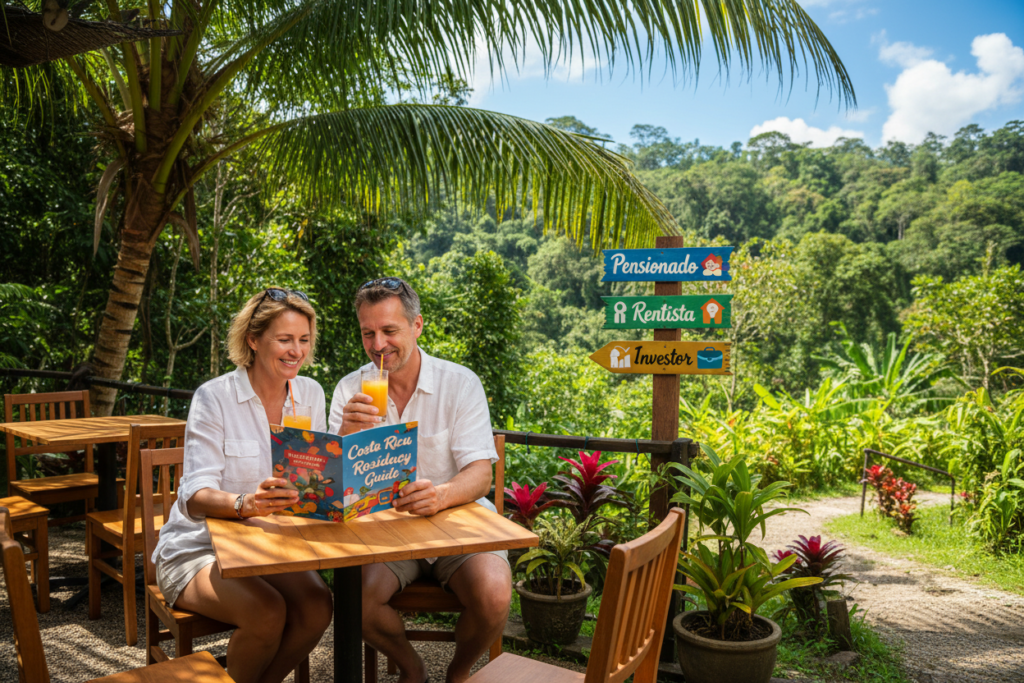
Before diving into paperwork, it’s essential to distinguish between Costa Rica’s temporary visas and its true residency programs. The country offers three primary categories that lead to permanent status: Pensionado (Pensionado), Rentista (Rentista), and Inversionista (Inversionista).
An Overview of Available Pathways (Pensionado, Rentista, Inversionista)
Pensionado is for retirees proving a $1,000 monthly pension. Rentista is for individuals with a guaranteed $2,500 monthly passive income. Inversionista requires a $150,000 investment in local assets.
These are temporary residency options, renewed every two years. After three consecutive years, you can apply for permanent status.
Residency Versus Digital Nomad: Key Differences
The Digital Nomad visa is a temporary work permit, not a residency category. It allows a stay of up to two years but does not count toward the three-year requirement for permanent residency.
For remote workers seeking a long-term pathway, the Rentista category is the closest fit. This requires demonstrating passive income, not a salary. Preparing the essential paperwork correctly is key for this application.
Understanding this distinction early prevents confusion and aligns your efforts with your long-term goals.
Step-by-Step Guide: How to Become a Permanent Resident in Costa Rica
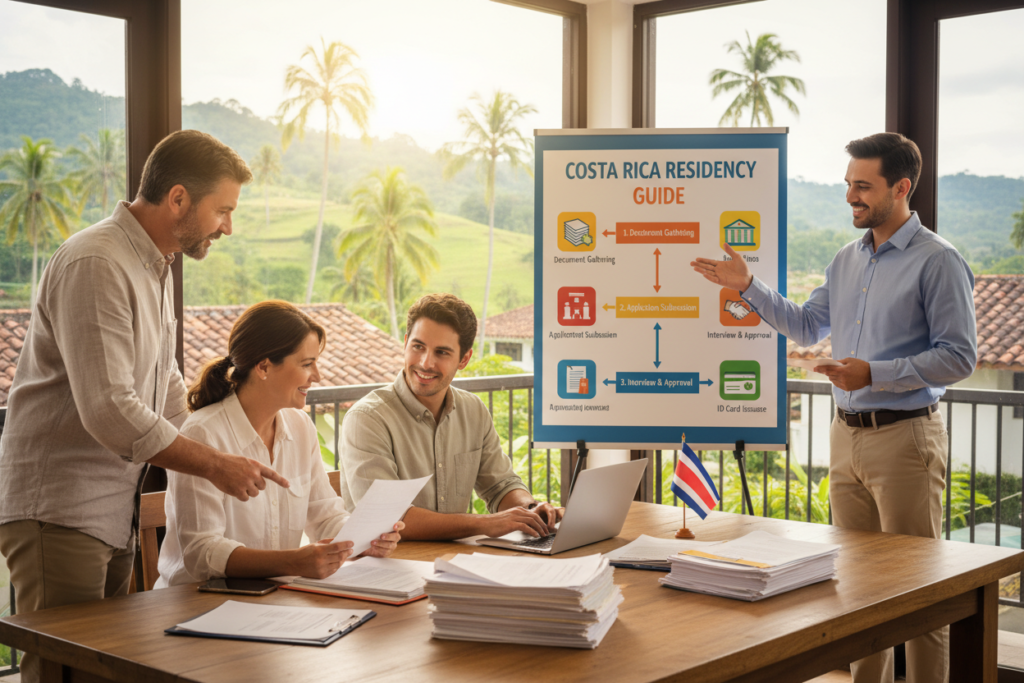
The journey to permanent residency in Costa Rica is structured around a temporary-to-permanent pathway. You must first secure temporary status under a qualifying category like Pensionado, Rentista, or Inversionista. After maintaining that status for three consecutive years, you become eligible to apply for permanent residency.
Your preparation begins at home. Determine which category fits your finances and gather essential documents like birth certificates and background checks. Authenticating these papers with an apostille and official Spanish translation is a critical step before submission.
File your completed application with Costa Rica’s immigration authority, the DGME. Processing can take 9 to 24 months. Once approved, you’ll receive a temporary DIMEX card, valid for two years. You must renew it on time and meet all requirements to keep your status active for the full three-year period.
The final step is to apply for permanent residency after those three years. This status grants the legal right to work and is renewed every five years. For detailed guidance on starting your journey, we recommend this friendly guide on how to apply for residency in Costa Rica.
Who Qualifies for Costa Rica Residency?
Qualifying for residency in Costa Rica hinges on meeting specific financial benchmarks. The three main pathways each have clear thresholds you must satisfy.
Your ability to support yourself without local employment is the core requirement. We’ll break down the key numbers and rules for families.
Eligibility Criteria and Financial Thresholds
The Pensionado category requires a lifetime pension of at least $1,000 per month. This applies whether you are single or married.
Rentista applicants need guaranteed passive income of $2,500 monthly for two years. Salary or wages do not qualify for this program.
For the Inversionista route, a $150,000 investment in local assets is mandatory. This investment must be held in your personal name.
Considerations for Married Applicants and Family Members
A major advantage is that these financial requirements do not increase for family members. The same $2,500 monthly income covers a spouse and dependent children.
One spouse acts as the primary applicant meeting the threshold. The other spouse and eligible children are included as dependents on the same application.
All applicants must provide clean criminal background checks. Demonstrating you won’t be a financial burden is essential for approval.
Document Preparation: Apostilles, Translations, and More
Properly preparing your paperwork is the single most important step you can take to ensure a smooth application process. We strongly advise starting this documentation work from your home country. This proactive approach prevents months of frustrating delays later.
Every document submitted to Costa Rican immigration must undergo a two-step authentication process. First, it needs an apostille from the issuing authority, like the U.S. Department of State. Second, it requires an official Spanish translation by a translator recognized by Costa Rica.
Essential Documents Required
The core documentation for your application includes several key items. You will need a valid passport, an original birth certificate, and an FBI criminal background check. If applicable, include a marriage certificate as well.
All these personal certificates must be recent, typically issued within the last six months. The FBI check involves submitting your fingerprints and can take several weeks to receive. Proof of financial means—like pension letters or bank statements—is also mandatory and varies by residency category.
Allow ample time for the apostille and translation steps. For the most current and specific requirements, always verify details directly with Costa Rica’s immigration authority at migracion.go.cr before finalizing your package.
Navigating Application Timelines and Processes
Managing the application process requires a clear understanding of both official and personal timelines. We provide typical timeframes to help you plan, but actual processing times can vary.
Estimated Processing Times and Renewal Schedules
The initial document gathering phase often takes three to four months. This work is within your control and should not be rushed.
Once submitted, the official processing period for a temporary permit can range from nine to twenty-four months. Most applications are resolved within twelve to fifteen months. You can typically stay in Costa Rica during this time.
After approval, you receive a DIMEX card valid for two years. You must renew this temporary residency permit before it expires.
Maintaining this status for three consecutive years makes you eligible for permanent residency. The permanent resident permit must be renewed every five years. Flexibility and patience are essential throughout this entire process.
Avoiding Common Pitfalls During Your Application
Many applicants encounter avoidable setbacks that delay or derail their Costa Rica residency goals. We see the same errors repeatedly. Understanding these common mistakes is your first defense.
Documentation errors top the list. Submitting expired background checks or birth certificates causes immediate rejection. Using uncertified translators for required Spanish versions also creates major delays.
You must maintain your financial requirements throughout the entire process. Stopping pension deposits or investment transfers jeopardizes your status. Also, never overstay your tourist visa while waiting for approval.
Relying on “perpetual tourism” with border runs is increasingly risky. Costa Rican immigration authorities are cracking down on this practice. Border officials can deny entry at their discretion.
The best way to navigate this complex process is with professional guidance. An experienced immigration service provider understands current requirements and common rejection reasons. They help ensure your application avoids these costly pitfalls.
Exploring Residency Options: Pensionado, Rentista, and Inversionista
Costa Rica’s three primary residency programs each serve distinct financial profiles and long-term goals. Your choice hinges on whether your funds come from a pension, passive income, or a direct capital investment.
Pensionado: Meeting the $1,000+ Monthly Income Requirement
The Pensionado program is designed for retirees. It requires proof of a guaranteed lifetime pension of at least $1,000 per month.
Qualifying sources include Social Security or private pensions. This income threshold does not increase for a married applicant.
Rentista: Ensuring $2,500 per Month Income and Bank Deposit Protocols
Rentista serves non-retirees with passive income. You must prove guaranteed unearned income of $2,500 monthly for 24 months.
The most common proof is a $60,000 deposit in a bank, with a commitment to transfer $2,500 monthly to a Costa Rican bank account. Salary or employment income does not qualify for this program.
For investors, the Inversionista category requires a one-time investment of at least $150,000. A critical rule is that this investment must be held in your personal name, not through a corporation.
Preparing Your Application from Home: Tips and Tools
The most efficient path to Costa Rica residency begins long before you board a plane, with meticulous document preparation from your home country. This proactive approach puts you in control of the initial process and prevents frustrating delays later.
A common snag is document authentication. Every piece of paperwork must be apostilled and translated into Spanish by an authorized translator. We recommend building extra time into your schedule for these steps.
Start by creating a detailed checklist for your specific residency category. Request your FBI background check immediately, as it can take several weeks. Organize originals in a secure folder as you receive them.
Organize your financial proof according to the program requirements. You can complete many steps remotely, including initial consultations. Working with a provider like CRIE from afar allows for document review and guidance before you move.
Understanding what you can do from home versus what requires a local presence is key. For personalized information and support with your Costa Rica immigration journey, contact CRIE via WhatsApp at +506 8706 3888, email at info@crie.cr, or visit www.crie.cr.
Understanding the Path to Citizenship Through Residency
Citizenship represents the final, most secure step in establishing your life in Costa Rica. It requires a clear understanding of a multi-year legal pathway. This process builds directly on your established residency status.
You must first obtain and maintain legal temporary residency for three years. Time spent on a Digital Nomad visa does not count toward this requirement. After three years, you can apply for permanent residency.
Standard naturalization requires seven total years of continuous legal residency. This includes your three years as a temporary resident plus four as a permanent resident. If married to a Costa Rican citizen, the requirement drops to five years.
Beyond the residency timeline, you must pass a Spanish language test. You also need to demonstrate knowledge of local history and values. Proof of financial stability and a clean criminal record are mandatory.
Costa Rica officially requires naturalized citizens to renounce prior citizenship. In practice, a “don’t ask, don’t tell” policy allows de facto dual citizenship. Most Americans maintain permanent resident status rather than pursuing naturalization due to the lengthy timeline.
For those committed long-term, citizenship offers voting rights and a Costa Rican passport. It also eliminates all future residency permit renewals. This provides the ultimate security for your life in the country.
Final Thoughts and Next Steps for Your Costa Rican Residency Journey
With the right information, your Costa Rica residency journey can begin confidently. Your first step is choosing the program that fits your finances—Pensionado for pension income, Rentista for passive funds, or Inversionista for investors.
Start gathering documents from home immediately. This includes your FBI check and birth certificate. Remember, the Digital Nomad visa is a temporary permit, not a path to resident status.
We encourage realistic expectations. Outcomes depend on your unique case and government processing time. There are no shortcuts, but thorough preparation improves your success.
For personalized guidance, contact CRIE. We provide Costa Rican immigration services exclusively. Reach us via WhatsApp at +506 8706 3888, email at info@crie.cr, or visit www.crie.cr. Always verify current requirements at migracion.go.cr.
FAQ
What is the main difference between temporary and permanent residency?
How much monthly income do I need for the Pensionado program?
FAQ
What is the main difference between temporary and permanent residency?
Temporary residency is your initial status, granted for a specific period—usually two or three years—and tied to conditions like a monthly income or investment. Permanent residency is the next step, offering indefinite stay without those ongoing financial conditions, though you must first hold temporary status for several years. We help clients navigate this progression smoothly.
How much monthly income do I need for the Pensionado program?
To qualify for the Pensionado (retiree) residency, you must prove a guaranteed lifetime pension of at least
FAQ
What is the main difference between temporary and permanent residency?
Temporary residency is your initial status, granted for a specific period—usually two or three years—and tied to conditions like a monthly income or investment. Permanent residency is the next step, offering indefinite stay without those ongoing financial conditions, though you must first hold temporary status for several years. We help clients navigate this progression smoothly.
How much monthly income do I need for the Pensionado program?
To qualify for the Pensionado (retiree) residency, you must prove a guaranteed lifetime pension of at least $1,000 per month from a government or private source, such as Social Security. This income must be deposited into a Costa Rican bank account each month.
Can my family members apply for residency with me?
A> Yes. As a primary applicant under programs like Pensionado, Rentista, or Inversionista, you can include direct family members—like a spouse and dependent children—in your application. They will derive their status from yours, streamlining the process for the entire family.
What are the bank deposit requirements for the Rentista option?
The Rentista program requires proof of a $2,500 monthly income for two years. This is typically demonstrated by depositing $60,000 into a Costa Rican bank account—or by showing a bank letter guaranteeing $2,500 monthly transfers for 24 months. We can clarify which proof method best suits your situation.
How long does the residency application process typically take?
Processing times vary, but you should generally expect the initial application to take several months for approval. After receiving your temporary resident permit, you’ll need to renew it before eventually qualifying for permanent residency. We manage timelines and documentation to avoid delays.
Do all my documents need to be translated and apostilled?
Yes, this is a critical step. Documents like birth certificates and marriage certificates must be apostilled (or authenticated) in their country of origin and then officially translated into Spanish by a certified translator in Costa Rica. Proper documentation is the foundation of a successful application.
Can real estate investment qualify me for residency?
Absolutely. The Inversionista program requires a minimum investment of $150,000 in Costa Rican assets, with real estate being the most common choice. You must provide registered proof of this investment to qualify for this residency category.
How do I transition from a temporary resident to a citizen?
The path to citizenship begins after you obtain permanent residency. You must live in the country for several years as a permanent resident—typically seven—before you can apply. The process involves additional documentation, language tests, and a commitment to Costa Rican culture and laws.
,000 per month from a government or private source, such as Social Security. This income must be deposited into a Costa Rican bank account each month.
Can my family members apply for residency with me?
A> Yes. As a primary applicant under programs like Pensionado, Rentista, or Inversionista, you can include direct family members—like a spouse and dependent children—in your application. They will derive their status from yours, streamlining the process for the entire family.
What are the bank deposit requirements for the Rentista option?
The Rentista program requires proof of a ,500 monthly income for two years. This is typically demonstrated by depositing ,000 into a Costa Rican bank account—or by showing a bank letter guaranteeing ,500 monthly transfers for 24 months. We can clarify which proof method best suits your situation.
How long does the residency application process typically take?
Processing times vary, but you should generally expect the initial application to take several months for approval. After receiving your temporary resident permit, you’ll need to renew it before eventually qualifying for permanent residency. We manage timelines and documentation to avoid delays.
Do all my documents need to be translated and apostilled?
Yes, this is a critical step. Documents like birth certificates and marriage certificates must be apostilled (or authenticated) in their country of origin and then officially translated into Spanish by a certified translator in Costa Rica. Proper documentation is the foundation of a successful application.
Can real estate investment qualify me for residency?
Absolutely. The Inversionista program requires a minimum investment of 0,000 in Costa Rican assets, with real estate being the most common choice. You must provide registered proof of this investment to qualify for this residency category.
How do I transition from a temporary resident to a citizen?
The path to citizenship begins after you obtain permanent residency. You must live in the country for several years as a permanent resident—typically seven—before you can apply. The process involves additional documentation, language tests, and a commitment to Costa Rican culture and laws.
Can my family members apply for residency with me?
What are the bank deposit requirements for the Rentista option?
How long does the residency application process typically take?
Do all my documents need to be translated and apostilled?
Can real estate investment qualify me for residency?
How do I transition from a temporary resident to a citizen?
Article by Glenn Tellier (Founder of CRIE and Grupo Gap)
Don't wait, contact us right now!
Call or WhatsApp Costa Rica +506 8373 2085 or +506 8706 3888
Call USA/Canada +1 305-906-6784