

You’re here because you’re seriously considering a move to Costa Rica and need straight answers about the legal process. We provide Costa Rica residency and immigration services exclusively at CRIE. This means we know the system inside and out, including where applicants typically stumble.
For U.S. citizens, there are four main pathways. The Pensionado requires a lifetime pension of at least $1,000 per month. The Rentista needs $2,500 in guaranteed monthly income. The Inversionista demands a minimum investment of $150,000. We must clarify: the Digital Nomad visa is not a residency path and does not count toward permanent status or citizenship.
The process typically takes between three and twelve months. The smoothest applications start at home with properly prepared documents—apostilles, translations, and authentication completed before you arrive.
This guide offers honest, practical guidance. It covers who qualifies, what documents you need, realistic timelines, and common pitfalls. We provide no pricing quotes or guarantees of approval. We encourage you to verify current regulations at migracion.go.cr.
Consider this your roadmap. We’ll walk you through determining your category, gathering documentation, understanding financial thresholds, and navigating the legal process. When you’re ready to move forward, contact us: WhatsApp +506 8706 3888 | info@crie.cr | www.crie.cr.
An Introduction to Costa Rican Residency Options
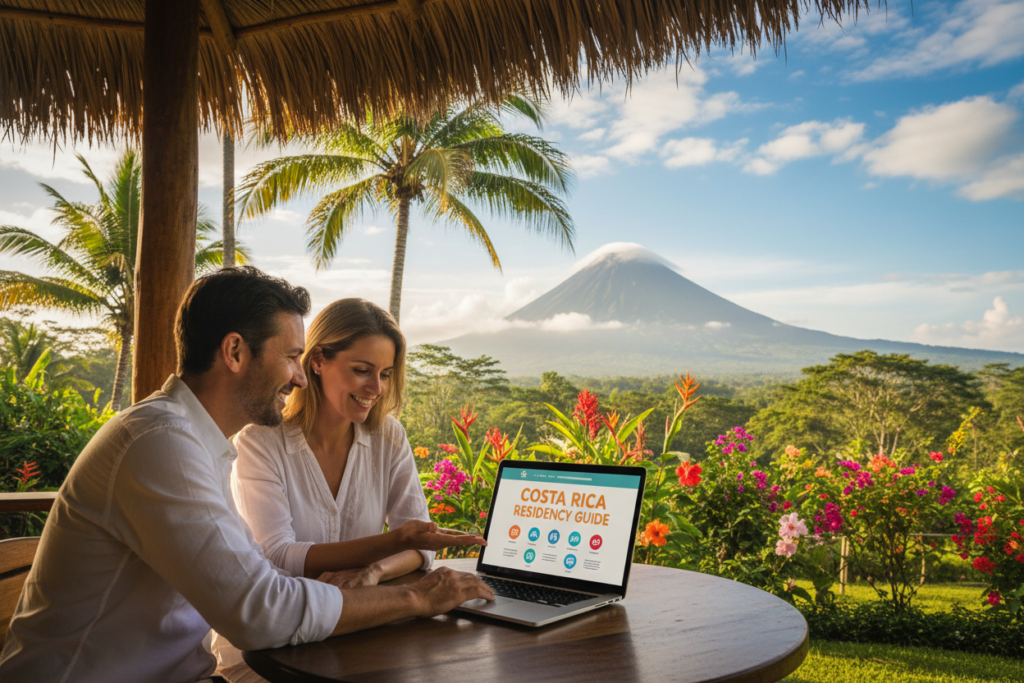
Costa Rica’s immigration system provides several formal residency options, each with specific financial criteria. Understanding which type fits your profile is the critical first decision. The four main pathways are Pensionado, Rentista, Inversionista, and the Digital Nomad visa.
The Pensionado category is for anyone with a guaranteed lifetime pension of at least $1,000 USD per month. There is no age requirement. The Rentista option requires proof of $2,500 in guaranteed monthly income, often met with a $60,000 bank deposit.
For investors, the Inversionista pathway demands a minimum $150,000 investment in qualifying assets like real estate. A key rule: the property must be in your personal name, not a corporation’s.
We must clarify a common point. The Digital Nomad visa allows remote work but is NOT a residency pathway. It does not count toward permanent status or citizenship. For those considering it, the Rentista category is the closest true residency option.
Most pathways grant temporary residency, renewed every two years. After three years of legal status, you become eligible for permanent residency.
Step-by-Step Process to how-do-i-get-residency-in-costa-rica
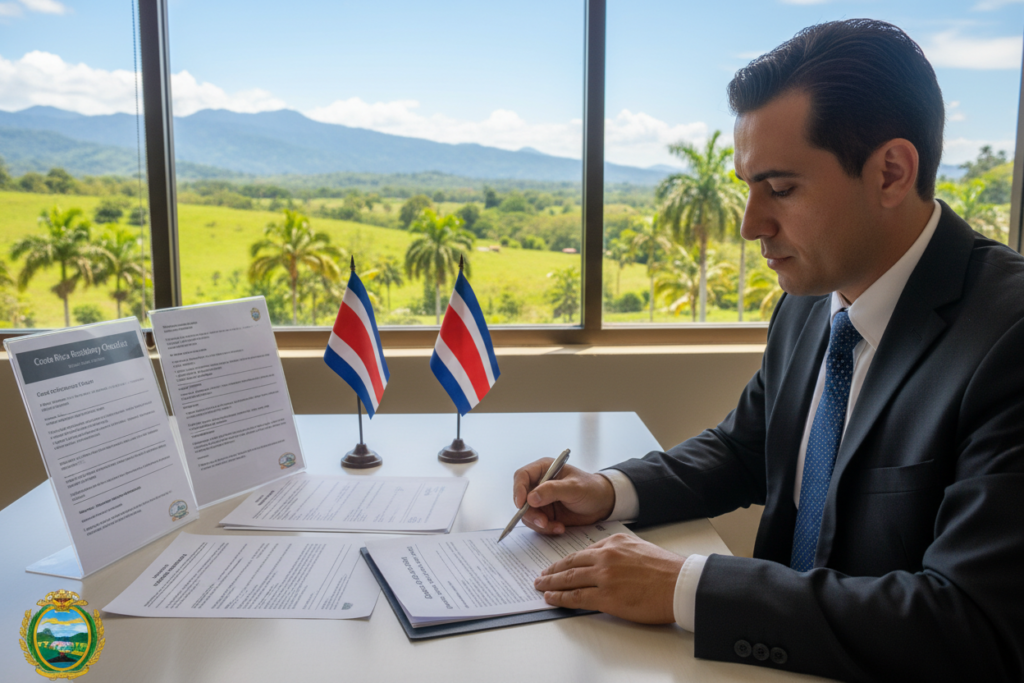
A structured approach is essential for moving through Costa Rica’s residency application process efficiently and avoiding common delays. The most critical advice we give is to begin your document preparation at home in the U.S. before you arrive. This upfront work is where successful applications gain a real advantage.
First, determine which category fits your finances—Pensionado, Rentista, or Inversionista. Next, gather and authenticate your required documents. This includes your passport, birth certificate, and FBI background check. Each must be apostilled by the U.S. Department of State.
After apostilles, all papers need translation into Spanish by an authorized Costa Rican translator. Only then can you file your application with the Dirección General de Migración y Extranjería (DGME). Upon filing, you receive proof your case is in process.
Your physical DIMEX card is issued after final approval and registration, not immediately. The entire process takes three to twelve months. Given the complex legal framework, working with a specialized immigration lawyer is highly recommended.
Determining Who Qualifies for Costa Rica Residency
Eligibility for Costa Rican residency is not about age but about proving stable, verifiable income or investment. We break down the three main categories to clarify who qualifies.
The Pensionado type requires proof of a lifetime pension of at least $1,000 per month. There is no age requirement. Younger individuals with a qualifying disability or early retirement income can meet these financial requirements.
The Rentista category demands guaranteed monthly income of $2,500 for two years. This is often shown with a $60,000 deposit in a local bank. The Inversionista pathway needs a minimum $150,000 investment in assets like real estate.
A critical rule for investors: if using real estate, the property must be in your personal name, not a corporation. Your legal spouse and dependent children can be included in any application.
We must clarify the Digital Nomad visa for Costa Rica. It allows remote work but is not a residency pathway. It does not count toward permanent status or citizenship.
Qualification requires showing your income or investment is stable and verifiable through official documents. Planning early ensures a smooth process.
Understanding the Detailed Requirements and Documentation
The backbone of any successful residency application lies in meticulous document preparation. We see many delays stem from incomplete or improperly authenticated paperwork. Getting your documents right from the start is the single best way to avoid setbacks.
Essential Documents: Passport, Birth Certificate, and Police Checks
Every applicant needs a core set of documents. This includes a valid U.S. passport with six months’ validity, an original birth certificate, and an FBI criminal background check.
If including family, add marriage and children’s birth certificates. The FBI check often takes 8-12 weeks, so start it early. Proof of income or investment documents are also category-specific.
Apostilles and Translations (Traducciones Oficiales): Key Guidelines
All U.S. documents require an apostille from the issuing state or the U.S. Department of State. This authentication is mandatory under the Hague Convention.
After apostille, every paper must be translated into Spanish by an authorized Costa Rican translator. These are called traducciones oficiales. The sequence is critical: obtain, apostille, then translate.
U.S. citizens must also complete a consular inscription at the embassy. This involves STEP enrollment and a notarial appointment with a $50 fee.
We advise creating a tracking spreadsheet for each document. Managing this paper trail is where organized applicants succeed. For a full overview of your potential pathways, review the detailed Costa Rica residency options available.
Pre-Arrival Guidance and Timelines
The difference between a smooth residency process and a frustrating one often comes down to what you do before you ever board the plane. We emphasize starting your document preparation while still in the United States. This proactive step is where organized applicants gain a decisive advantage.
Preparing Your Documents at Home
Begin by obtaining your FBI background check, which alone takes 8 to 12 weeks. Next, secure apostilles from the appropriate state or federal authorities. This authentication step can add several more weeks to your timeline.
Follow the proper sequence: obtain the original U.S. document, get it apostilled, then have it translated in Costa Rica. Skipping this order creates avoidable delays. Immigration authorities typically want documents issued within the last six months.
Managing Timeline Expectations
The entire residency application process takes between three and twelve months from start to finish. Most of this time is spent in the document preparation phase, not in government processing.
We recommend creating a reverse timeline. Work backward from your desired filing date to schedule each step. This prevents documents from expiring while you wait for other pieces. Proper planning saves significant time and stress.
Common Application Mistakes and Tips for Success
Many applicants for Costa Rican residency face unnecessary delays and rejections due to a handful of common, yet preventable, mistakes. We see these errors repeatedly, and they often stem from a lack of clear information about the official process.
Avoiding Document Errors
A frequent error is letting documents expire. Apostilled papers are typically valid for six months. If your FBI check is apostilled in January but you file in August, it may be rejected.
The sequence is also critical. Always apostille your U.S. documents first, then get them translated by an authorized Costa Rican translator. Doing this out of order wastes time and money.
Ensuring Accurate Timings and Renewals
Do not overstay your tourist visa while your application processes. You must manage your legal status carefully to avoid jeopardizing your case.
After approval, maintain your qualifying income or investment. Letting a pension lapse or withdrawing a Rentista deposit early can cause renewal problems.
Set calendar reminders for renewals. Temporary status must be renewed every two years. Missing this window can force you to restart the entire process.
For success, keep copies of every document and track all dates. We strongly recommend working with a specialized immigration attorney. Finally, always verify current requirements at the official source, migracion.go.cr, for the most accurate information.
Preparing Your Financial Documentation and Proof of Income
Successfully proving your financial stability is the cornerstone of any Costa Rican residency application. Immigration authorities require concrete, verifiable evidence that you meet the specific financial thresholds for your chosen category.
Pensionado: $1,000+ Monthly Pension Requirements
The Pensionado category requires proof of a lifetime pension of at least $1,000 USD per month. Official letters from sources like Social Security or a military retirement system are essential.
The key is demonstrating this income will continue indefinitely. You must also budget for contributing a portion of this monthly income to the local social security system.
Rentista and Inversionista: Income and Investment Thresholds
For the Rentista option, you must show guaranteed income of $2,500 per month for two years. A common method is depositing $60,000 in a local bank with a letter confirming monthly withdrawals.
The Inversionista pathway demands a minimum $150,000 investment in assets like real estate. A critical rule: if using property, the title must be in your personal name, not a corporation’s.
For both categories, immigration will review bank statements, official letters, and property deeds. They need to see stable, documented financial sources.
Navigating the Immigration Process and Legal Considerations
Understanding the role of specialized legal counsel can transform a complex immigration process into a manageable journey. Costa Rica’s government system has specific rules that must be followed precisely.
The Role of a Specialized Immigration Lawyer
We strongly recommend working with a lawyer who focuses on expatriate cases. Costa Rican immigration law is detailed and changes periodically. A small error in your application can cause months of delay.
An experienced attorney reviews your finances to confirm your category. They manage the document checklist and coordinate with authorized translators. They also file everything correctly with the Dirección General de Migración y Extranjería (DGME).
Coordinating Document Dates and Required Translations
Timing is everything. The DGME expects all documents to be recent, typically within six months. Each paper must have a valid apostille and an official Spanish translation.
Your lawyer ensures these dates align before filing. There is also a U.S. Embassy requirement. You must complete a consular inscription via STEP and a notarial appointment.
We at CRIE provide these specialized services. Our focus is on proper timing and accurate submissions. This approach prevents the common pitfall of incomplete applications.
Ready for professional guidance? Contact us: WhatsApp +506 8706 3888 | info@crie.cr | www.crie.cr.
Complementary Advice for Your Life as an Expat in Costa Rica
Once your residency is secured, the next chapter begins: building a fulfilling daily life in Costa Rica. We shift from legal processes to practical realities. The cost to live in Costa Rica is typically 30-50% lower than in major U.S. cities.
Most couples live comfortably on $2,000 to $3,000 per month. This budget covers housing, food, healthcare, and entertainment. Single expats often manage on $1,500 to $2,000 monthly.
Popular areas for living in Costa Rica include San José, Tamarindo, Atenas, and Puerto Viejo. Each offers distinct climates and communities. We strongly advise renting for 6-12 months before buying property anywhere in the country.
Healthcare here is a major advantage. As a resident, you join the CAJA public system. You contribute 7-11% of your declared income for comprehensive coverage.
Remember, most residency types do not permit working as an employee. You can own a business, but not take a local job. Cultural adjustment is real—embrace “Tico time” and the “pura vida” pace.
For a smooth transition, learn basic Spanish and connect with both expats and locals. We answer more common questions in our detailed FAQs section.
Guidance on U.S. Compliance, Tax Implications, and Banking Considerations
Beyond securing your legal status, practical financial management in Costa Rica requires navigating U.S. tax rules and local banks. A critical compliance issue many new expats misunderstand is that U.S. citizens must file taxes on worldwide income every year. Moving here does not change that requirement.
Costa Rica uses a territorial tax system. You only pay local taxes on income earned within its borders. U.S. pensions or Social Security are generally not taxed here. There is no tax treaty between the two countries.
However, tools like the Foreign Earned Income Exclusion can reduce your U.S. liability. We strongly recommend working with a professional specializing in U.S. tax preparation for expats.
You will need a Costa Rican bank account for daily life. It is essential for paying rent, utilities, and managing money locally. Opening an account is more complex than in the U.S.
You typically need your passport, proof of legal residency or application, and a local utility bill. This account is also used for automatic CAJA social security contributions. As a resident, you contribute 7-11% of your declared income for healthcare.
Final Steps to Realize Your Costa Rica Residency Dream
We map out the complete progression from temporary residency to citizenship for those committed to a long-term future in Costa Rica. Temporary status is renewed every two years. After three years, you can apply for permanent residency.
Permanent status offers stability with no renewals. Citizenship becomes an option after seven total years. It requires five years if married to a Costa Rican citizen.
Remember, the Digital Nomad visa does not count toward these timelines. Success hinges on early document preparation and working with a specialized attorney.
Maintain your income requirements and track all renewal dates carefully. Ready for guidance? Contact us: WhatsApp +506 8706 3888 | info@crie.cr | www.crie.cr.
FAQ
What are the main types of residency available in Costa Rica?
How long does the residency application process typically take?
Do I need a local lawyer to apply for residency?
What are the income requirements for the Pensionado and Rentista options?
FAQ
What are the main types of residency available in Costa Rica?
The primary categories are Pensionado (retiree), Rentista (person of independent means), and Inversionista (investor). Each has specific financial requirements, like proving a stable pension or making a significant investment in the country. We guide clients to choose the option that best fits their long-term goals for living in Costa Rica.
How long does the residency application process typically take?
Realistically, plan for 6 to 12 months from submission to approval. Government processing times can vary. We always advise starting your document preparation—like obtaining apostilles and official translations—well before you move to avoid delays.
Do I need a local lawyer to apply for residency?
While not legally mandatory, we strongly recommend hiring a specialized immigration attorney. The process involves complex, ever-changing regulations and Spanish-language legal filings. A good lawyer prevents costly errors and manages your case directly with immigration authorities.
What are the income requirements for the Pensionado and Rentista options?
For Pensionado, you must prove a lifetime pension of at least
FAQ
What are the main types of residency available in Costa Rica?
The primary categories are Pensionado (retiree), Rentista (person of independent means), and Inversionista (investor). Each has specific financial requirements, like proving a stable pension or making a significant investment in the country. We guide clients to choose the option that best fits their long-term goals for living in Costa Rica.
How long does the residency application process typically take?
Realistically, plan for 6 to 12 months from submission to approval. Government processing times can vary. We always advise starting your document preparation—like obtaining apostilles and official translations—well before you move to avoid delays.
Do I need a local lawyer to apply for residency?
While not legally mandatory, we strongly recommend hiring a specialized immigration attorney. The process involves complex, ever-changing regulations and Spanish-language legal filings. A good lawyer prevents costly errors and manages your case directly with immigration authorities.
What are the income requirements for the Pensionado and Rentista options?
For Pensionado, you must prove a lifetime pension of at least $1,000 per month. For Rentista, you must demonstrate a guaranteed income of $2,500 per month for two years, often by depositing $60,000 into a Costa Rican bank. These amounts are set by the government and are non-negotiable.
Can I work or run a business with temporary residency?
Generally, no. Temporary residency categories like Pensionado and Rentista do not grant work permits. To work legally, you typically need to be hired by a Costa Rican company that sponsors you, or apply under a different category like a Digital Nomad visa, which has its own rules.
What common mistakes should I avoid during the application?
The most frequent errors are submitting documents with expired dates (like police checks), missing apostilles or official *traducciones*, and not coordinating the validity windows of all your paperwork. We help clients create a meticulous timeline to keep every document in sync.
Do my children qualify as dependents on my application?
Yes, children under 25 who are students, or those of any age with disabilities, can be included as dependents on most residency applications. You’ll need to provide their birth certificates, proof of student status, and other required documents, all properly legalized.
Is opening a local bank account required for residency?
For some categories, like Rentista, depositing funds into a Costa Rican bank account is a direct requirement. For others, it’s highly practical for managing your monthly income proof and living expenses. We can advise on the documentation needed to open an account smoothly.
,000 per month. For Rentista, you must demonstrate a guaranteed income of ,500 per month for two years, often by depositing ,000 into a Costa Rican bank. These amounts are set by the government and are non-negotiable.
Can I work or run a business with temporary residency?
Generally, no. Temporary residency categories like Pensionado and Rentista do not grant work permits. To work legally, you typically need to be hired by a Costa Rican company that sponsors you, or apply under a different category like a Digital Nomad visa, which has its own rules.
What common mistakes should I avoid during the application?
The most frequent errors are submitting documents with expired dates (like police checks), missing apostilles or official *traducciones*, and not coordinating the validity windows of all your paperwork. We help clients create a meticulous timeline to keep every document in sync.
Do my children qualify as dependents on my application?
Yes, children under 25 who are students, or those of any age with disabilities, can be included as dependents on most residency applications. You’ll need to provide their birth certificates, proof of student status, and other required documents, all properly legalized.
Is opening a local bank account required for residency?
For some categories, like Rentista, depositing funds into a Costa Rican bank account is a direct requirement. For others, it’s highly practical for managing your monthly income proof and living expenses. We can advise on the documentation needed to open an account smoothly.
Can I work or run a business with temporary residency?
What common mistakes should I avoid during the application?
Do my children qualify as dependents on my application?
Is opening a local bank account required for residency?
Article by Glenn Tellier (Founder of CRIE and Grupo Gap)
Don't wait, contact us right now!
Call or WhatsApp Costa Rica +506 8373 2085 or +506 8706 3888
Call USA/Canada +1 305-906-6784