
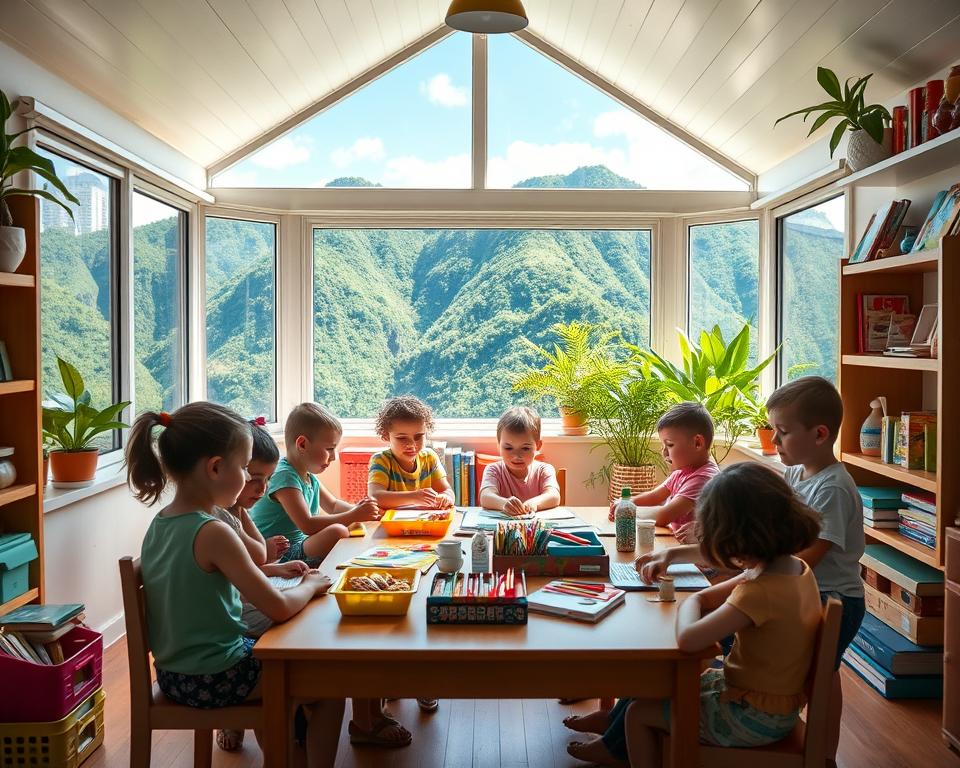
Have you ever thought about how a country’s schools can affect a child’s learning? In Costa Rica, homeschooling is an interesting choice. Many families, including those who don’t speak Spanish, face challenges in public schools. Schools teach mostly in Spanish, and private schools are often too expensive.
This article is your guide to homeschooling in Costa Rica. We’ll cover the laws, benefits, challenges, resources, and support for homeschooling families. It’s a deep dive into this educational path.

Key Takeaways
- Homeschooling in Costa Rica offers flexibility and personalized education tailored to a child’s needs.
- Though not officially recognized, a strong homeschooling community exists for families.
- It’s important to register with the Ministry of Education and check on progress every year.
- Popular curriculum choices include A Beka, Bob Jones University Press, and Sonlight.
- Adding local culture to learning makes it richer and builds community ties.
Introduction to Homeschooling in Costa Rica
Homeschooling is becoming more popular in Costa Rica, thanks to expat families. They like the flexible education options it offers. This way, kids can learn in a way that suits them best, surrounded by the country’s culture and nature.
Expat families can use online resources like Time4Learning and K12 for their kids’ education. Even though the government doesn’t officially recognize homeschooling, it’s still a good choice for many.
Parents have the freedom to design their own curriculum or use international programs. They can also join local homeschooling groups. These groups help organize activities and events, making learning fun and interactive.
Understanding the Legal Framework of Homeschooling in Costa Rica
Homeschooling in Costa Rica has its own set of rules. Since 1996, it has been a legal way to educate children. Families must tell the Ministry of Education (MEP) about their homeschool plans.
They need to show that their education meets national standards. Talking to local MEP officials is helpful. Rules can vary by area.
Even though kids must go to school until sixth grade, many expat families homeschool. They follow MEP rules. New laws, like the Basic Education Laws Amendment (BELA) Bill, will make rules stricter.
Parents will have 30 days to register after the law is published. If they don’t get a response in 60 days, it means they’re approved. The new law also means kids will have to pass tests at the end of each major school phase.
Home visits are no longer part of the law. This makes it clearer how to homeschool. Even though the law doesn’t cover online schooling, a plan for that is being made. Parents can still use recognized curricula, like Cambridge or the GED, for homeschooling.

Benefits of Homeschooling in Costa Rica
Homeschooling in Costa Rica offers many benefits, like a personalized learning space. Families can adjust their teaching to fit each child’s needs. This makes learning fun and effective.
Parents can choose from many teaching methods. These include unschooling, online learning, and traditional schooling.
Personalized Learning Experience
Homeschooling in Costa Rica lets families tailor learning to each child. This means lessons are made to fit each child’s learning style. It boosts their grades and helps them understand better through hands-on activities.
Integration of Cultural Experiences
Another great thing is learning about local culture. Parents can take field trips to learn about Costa Rica’s heritage and geography. This makes kids appreciate the world more and broadens their view.
Stronger Family Bonds
Homeschooling also strengthens family bonds. Working together on projects and discussing topics builds teamwork and communication. It creates a supportive home where kids feel loved and understood.
The flexibility of homeschooling also leads to exciting family adventures. These experiences bring families closer together.
Challenges of Homeschooling in Costa Rica
Families homeschooling in Costa Rica face big challenges. One major issue is the lack of recognized legal status. This makes it hard for parents to understand costa rica homeschool regulations. They worry about following local laws.
Lack of Recognized Legal Status
The challenges of homeschooling in costa rica also include not being recognized by the government. This leads to confusion about what documents are needed and what standards to follow. Parents might be scared to homeschool because they fear legal problems. They also miss out on benefits that public school families get.
Limited Resources in English
Another big challenge is finding homeschooling resources in english. Costa Rica has a high literacy rate, but most school materials are in Spanish. This is hard for English-speaking families. They often use online resources and traditional websites. But, finding good English curricula is still hard.

To deal with these problems, families should look for support and resources. Working together with other homeschooling families can help. Sharing experiences and materials makes homeschooling better. It also helps families feel connected and supported.
Homeschooling Curriculum Options in Costa Rica
In Costa Rica, parents have many homeschool options. They can pick from various educational resources that fit different learning styles. The best programs include Abeka, Bob Jones University Press, and Sonlight.
Popular Homeschool Programs
Abeka is known for its spiral learning method. This method helps kids remember and understand better. It offers video lessons for K4 to Grade 12, making learning easy and fun.
Its textbooks and visual aids make learning exciting. Kids get to enjoy learning from preschool to 12th grade. Abeka also offers video lessons led by expert teachers, making learning flexible.
Other top programs include online platforms like Time4Learning, 21k Schools, and Khan Academy. They provide interactive lessons that cater to different learning styles.
Incorporating Local Culture into Lessons
It’s important to include local culture in lessons. This helps kids understand their surroundings better. Families can explore Costa Rican customs and history through field trips.
Visiting national parks or museums makes learning fun and real. Using local libraries or community activities adds more depth to homeschooling. This way, kids learn and appreciate their community and culture.
Choosing the right curriculum is key. It should match the family’s goals and the kids’ learning needs. This ensures a fulfilling educational journey. Learn more about selecting the best for your family.
Homeschooling Community in Costa Rica
The homeschooling community in Costa Rica is very supportive. Families find it helpful to connect with others who homeschool. They share ideas and support each other.
Support Groups and Networks
Being part of a homeschool support group has many benefits. Families can:
- Get access to shared resources and materials
- Discuss educational philosophies
- Organize group lessons
- Meet local experts and educators
These groups help parents feel less alone. They also give kids a chance to meet other kids. In Costa Rica, parents can find online forums and local groups that fit their homeschooling needs.
Local Events and Activities
Local homeschooling events are key to a child’s education. Families enjoy:
- Workshops on specific subjects or skills
- Field trips to museums and parks
- Cultural festivals
These events add variety to learning at home. They let kids learn by doing and explore their surroundings. The homeschooling community in Costa Rica works together to make learning fun and engaging for everyone.

Homeschooling Resources in Costa Rica
Families in Costa Rica who homeschool have many resources to help. They can use online tools and local learning centers. These help create a rich learning environment for kids.
Online Educational Tools
Online tools are key for homeschooling families. They offer interactive lessons and games. This makes learning fun and effective.
Using technology keeps kids interested. Sites like Khan Academy and Duolingo are great. They let kids learn at their own speed, covering subjects like math and languages.
Local Libraries and Learning Centers
Local libraries and centers are also important. They have books, multimedia, and more. Many centers host workshops and events.
These events help families connect and learn together. They also help kids make friends and learn in groups.

Parents can improve homeschooling by using online tools and local centers. This creates a balanced and rewarding learning experience for kids. For those thinking about moving to Costa Rica, knowing about family visas is helpful. They offer benefits like better healthcare and education access such as healthcare access and educational.
Homeschooling Activities to Explore in Costa Rica
Homeschooling in Costa Rica offers many exciting activities. Families can dive into nature and learn about local wildlife. They can also explore creative projects that show off Costa Rican culture.
Exploring Nature and Wildlife
Nature exploration is key in Costa Rica. The country’s green landscapes are perfect for family adventures. They can visit national parks and wildlife reserves.
- Observe diverse species in their natural habitats
- Engage in hands-on environmental studies
- Participate in guided nature tours or hikes
These activities help kids love nature and learn about Costa Rica’s wildlife. It’s not just about school; it’s about caring for our planet.
Creative Arts and Crafts
Creative homeschooling thrives in Costa Rica. Kids use local materials to make art and learn about traditions. They might make crafts from leaves and clay or try traditional art.
- Making crafts from natural resources like leaves and clay
- Creating traditional Costa Rican art forms
- Participating in community art projects or workshops
These activities boost artistic skills and connect kids with their heritage. Homeschooling in Costa Rica is a fun way to learn and grow together.

Homeschooling vs Traditional Schooling in Costa Rica
Choosing between homeschooling and traditional schooling in Costa Rica depends on family values and goals. Traditional schools offer a structured setting, which is key for many students. They follow set curricula and routines, helping with social skills.
Homeschooling, on the other hand, gives parents more control over their child’s education. It allows for learning that fits the child’s interests and needs. This method is great for those who want a more personalized education.
With safety concerns in traditional schools, some parents are looking at homeschooling. Homeschoolers find ways to socialize through community groups and events. This way, they get a well-rounded education.
For those interested in homeschooling, knowing the legal aspects is important. Resources like information on student residency can help. The choice between homeschooling and traditional schooling depends on a family’s educational and lifestyle goals.

Conclusion
Homeschooling in Costa Rica is a special chance for families to learn together. It shows off the country’s culture and beautiful views. More families worldwide are choosing homeschooling for its personal touch and family time.
Even with legal hurdles and limited resources, families can still create great learning spaces. These spaces focus on what each child needs. This way, homeschooling can be a big success.
Families can make smart choices about education by knowing what’s available. Homeschooling lets parents tailor lessons to keep kids interested. It’s a flexible way to learn, whether online or through group projects.
Costa Rica is becoming a hub for new ways of learning. It helps families stand out in their educational paths. With the right steps, families can make homeschooling work well for them.
Article by Glenn Tellier (Founder of CRIE and Grupo Gap)
Don't wait, contact us right now!
Call or WhatsApp Costa Rica +506 8373 2085 or +506 8706 3888
Call USA/Canada +1 305-906-6784