
Costa Rica’s fruit stalls offer familiar bananas and pineapples alongside guanábana, mamón chino, guava and passionfruit. Learning the local names makes shopping easier—and helps you ask what is ripe today instead of choosing only by appearance.
This guide covers fruit identification, seasonality, guanábana-growing areas and everyday produce shopping. Availability changes with the producing region, variety and weather. A supermarket’s stock can also include imported produce, so fruit on a shelf is not proof of a local harvest.
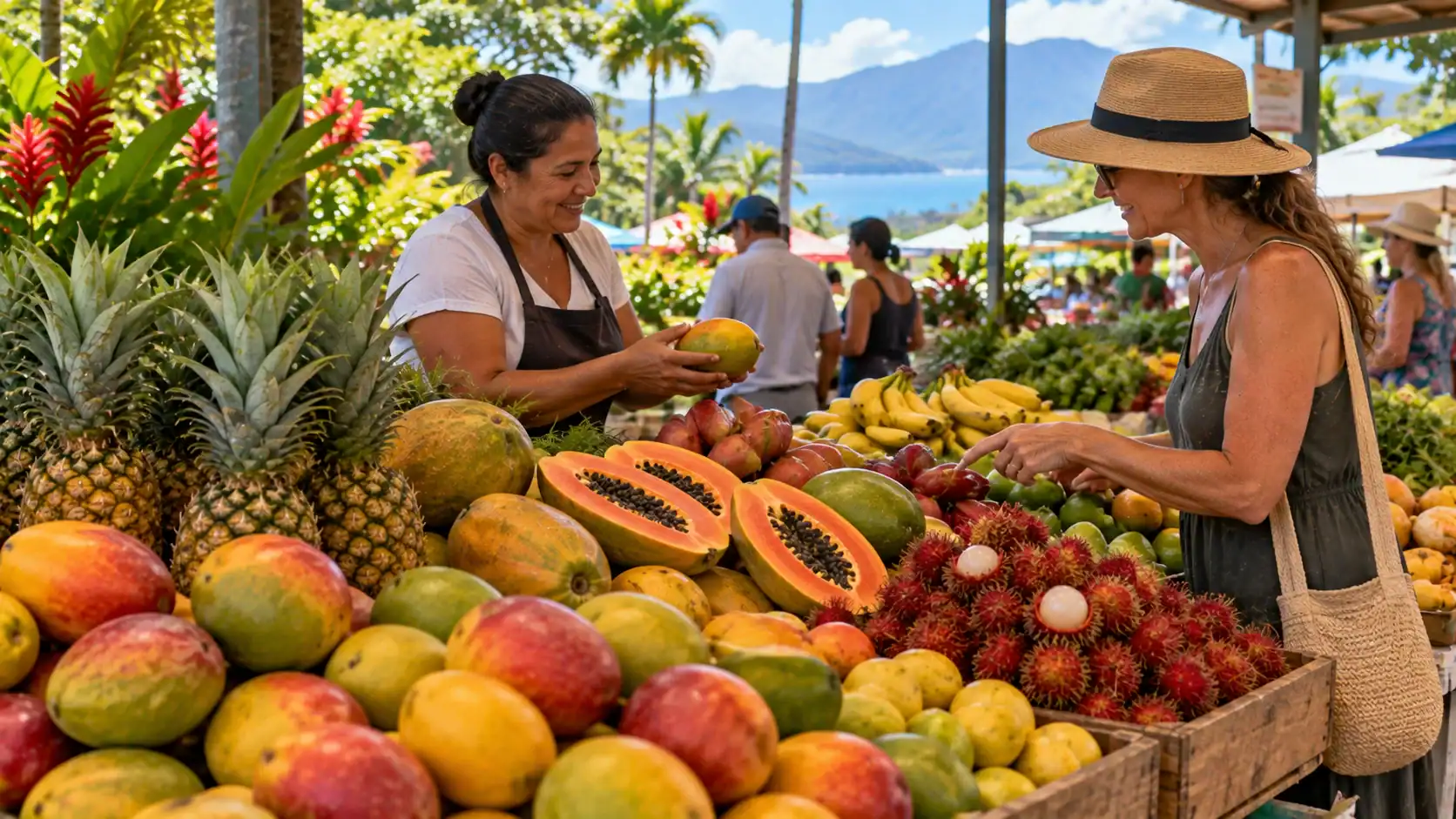
Common fruits and the names to use at the market
| Local name | English name | What to look for |
|---|---|---|
| Piña | Pineapple | Firm patterned skin and a leafy crown; usually sold whole or prepared. |
| Banano | Banana | Small dessert bananas are different from the larger cooking plantains sold as plátano. |
| Papaya | Papaya | Orange flesh and a central cavity of dark seeds when cut. |
| Mango | Mango | Varieties differ in size, color and sweetness; color alone is not a dependable ripeness test. |
| Guanábana | Soursop | Green skin with soft spines, white fibrous pulp and dark seeds. |
| Mamón chino | Rambutan | A red or yellowish hairy shell surrounding translucent pale flesh and a central seed. |
| Maracuyá | Passionfruit | A firm outer shell enclosing aromatic, juicy pulp and seeds. |
| Guayaba | Guava | Fragrant fruit with white or pink flesh, depending on the variety. |
Ask ¿Está maduro para comer hoy?—“Is it ripe to eat today?”—or explain that you want something for later in the week. Buy a small amount of an unfamiliar fruit first and ask the seller how they normally prepare it.
Fruit seasons in Costa Rica
There is no single harvest calendar that applies to every district and every variety. Elevation, rainfall, growing practices and transport affect what reaches your local market. Common staples may be available across much of the year, while other fruits arrive in more noticeable seasonal waves.
For example, a MAG regional production document describes rambután supply beginning around July and continuing into November. That is useful seasonal background, not a guarantee for every farm or the current year’s crop. UCR’s food-culture account describes an abundance of jocotes in July and August and discusses production in Aserrí and Acosta. Local varieties and conditions can shift what you find.
For current shopping, check PIMA’s market information system. Its seasonal calendar concerns price patterns for produce traded at CENADA; it should not be relabelled as an exact nationwide harvest timetable. Ask vendors which items are arriving locally this week, and compare prices using the same unit and quality.
Guanábana: where it grows and how to recognize it
Guanábana is Annona muricata, known in English as soursop. It is a tropical American fruit; it should not be described as originating in one Costa Rican town. UCR’s species information notes uncertainty about its precise natural origin.
UCR’s account of guanábana identifies growing areas including San Carlos, Upala, Guácimo, Limón, Matina, Siquirres, Garabito, Parrita and Pococí. MAG’s cultivation material describes a warm-climate crop sensitive to cold. These sources help explain why the humid lowlands feature prominently in accounts of its production; they are not a current farm directory or an invitation to visit private plantations.
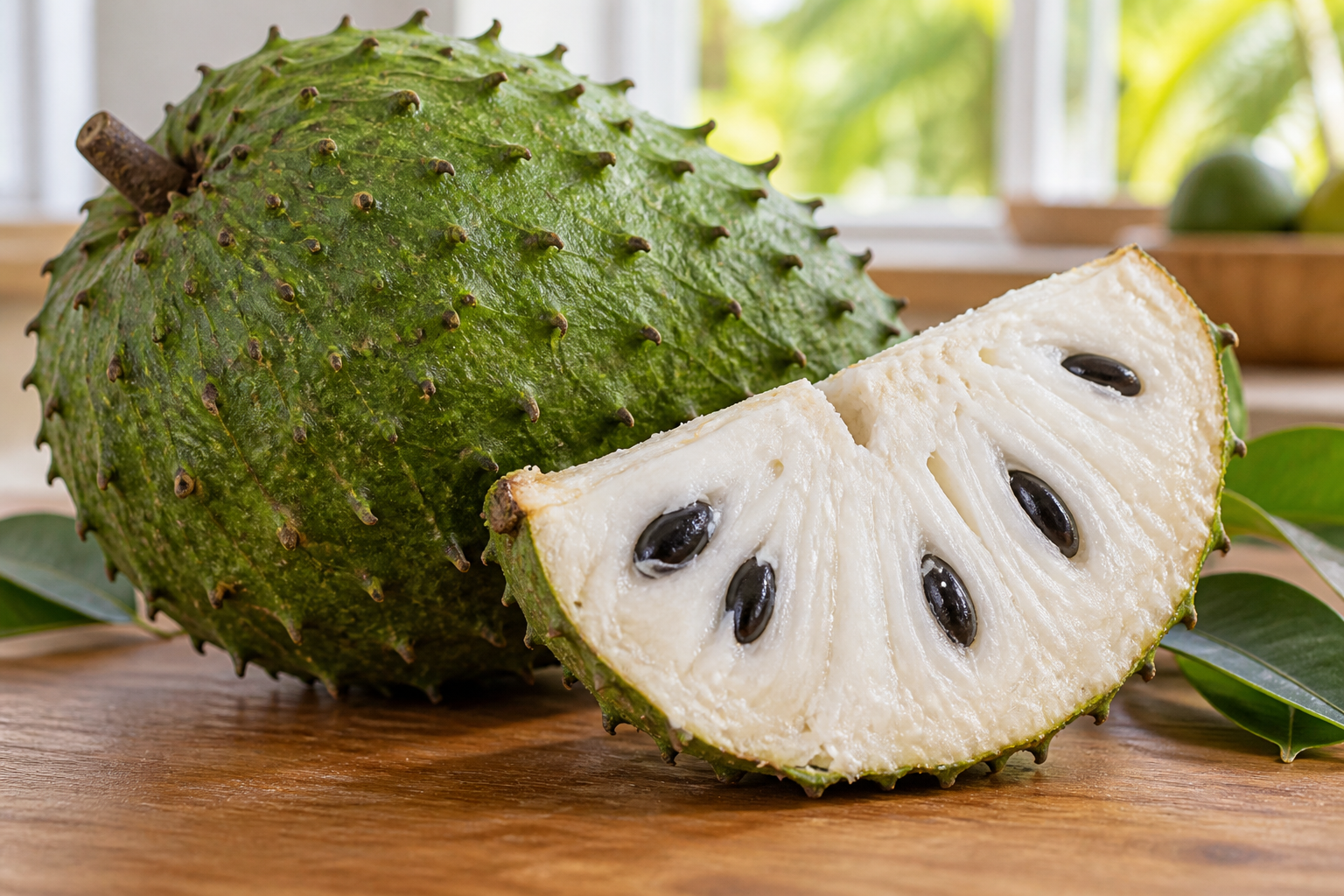
At the market, ask whether the fruit is ready to use and how soon it should be prepared. The pulp is used in drinks and desserts; remove the skin and seeds when preparing it. If buying prepared pulp, check the ingredient list, storage instructions and whether sugar has already been added. This article makes no medical or disease-treatment claims about the fruit.
Mamón chino, passionfruit and guava
Mamón chino’s striking outer shell can make it look more complicated than it is. The pale flesh sits around a central seed; the shell and seed are not the snack. Passionfruit offers a different texture: juicy pulp and seeds inside a shell. Guava may have pale or pink flesh, so a different interior color does not automatically mean the seller has given you a different fruit.
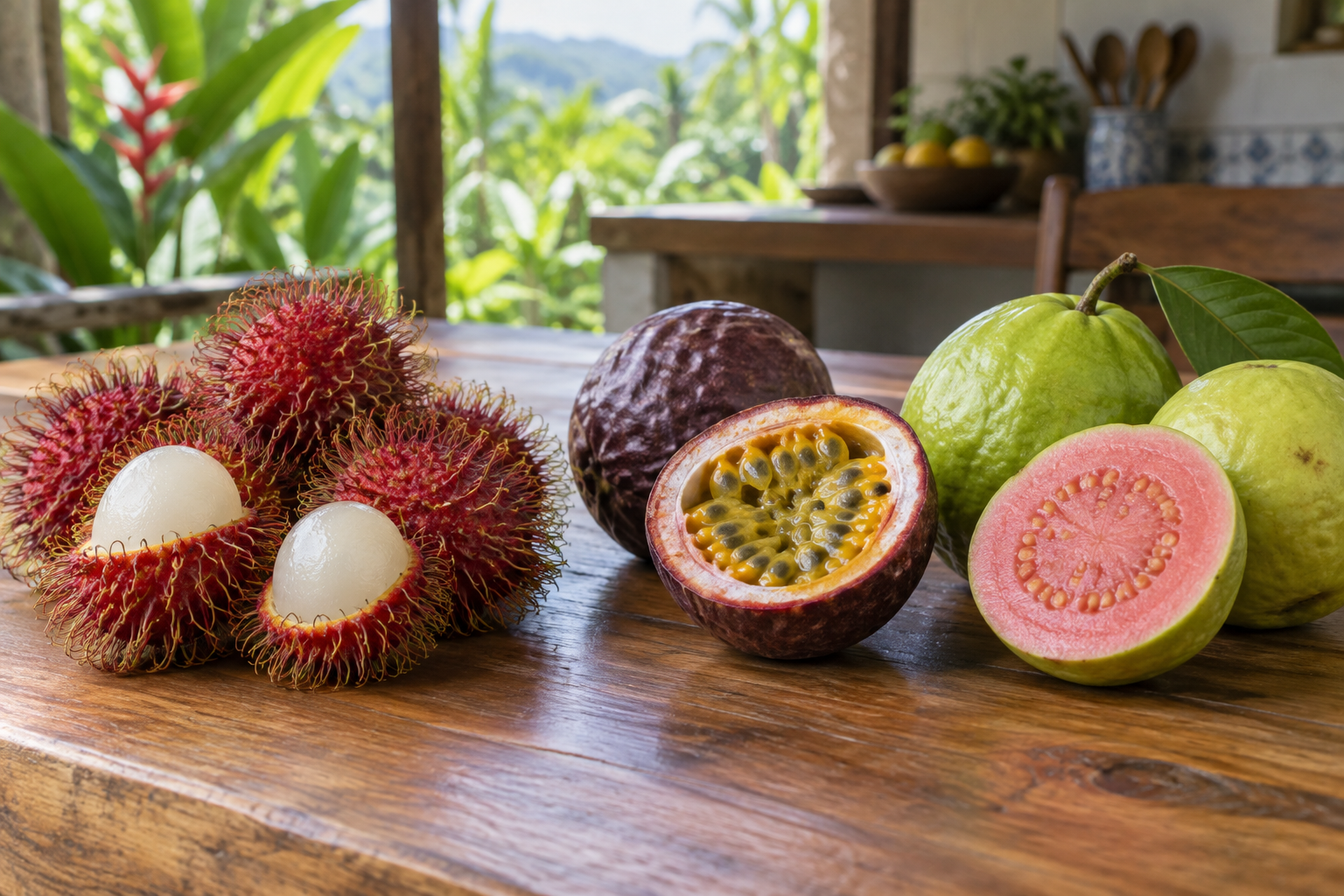
Names can vary between countries. Point to the fruit, ask its local name and confirm whether you are buying a whole fruit, a bag or a weight-based portion. The illustrations here are identification aids, not evidence of the exact produce available at a particular market.
Vegetables and other produce you will see
Alongside fruit, look for chayote, yuca, camote (sweet potato), ayote (squash), plantains, tomatoes, cabbage, lettuce and carrots. These are useful names for planning ordinary meals. A seller’s location does not establish where each item was grown; ask about origin if buying locally produced food matters to you.
Cooking roots and plantains serve a different purpose from ready-to-eat dessert fruit. Ask how to prepare unfamiliar produce rather than assuming everything can be eaten raw. If your interest is growing your own food, our Costa Rica gardening guide covers planning for local conditions. Finding a fruit in a shop does not mean it will grow well in your garden’s climate.
Farmers’ markets: shopping at a feria or grocery store
For a first visit to a farmers’ market, confirm the current day, location, opening hours and parking or bus access with the organizer. Bring reusable bags and ask which payment methods vendors accept. Plan how you will carry purchases home, especially if buying more than you normally would on foot.
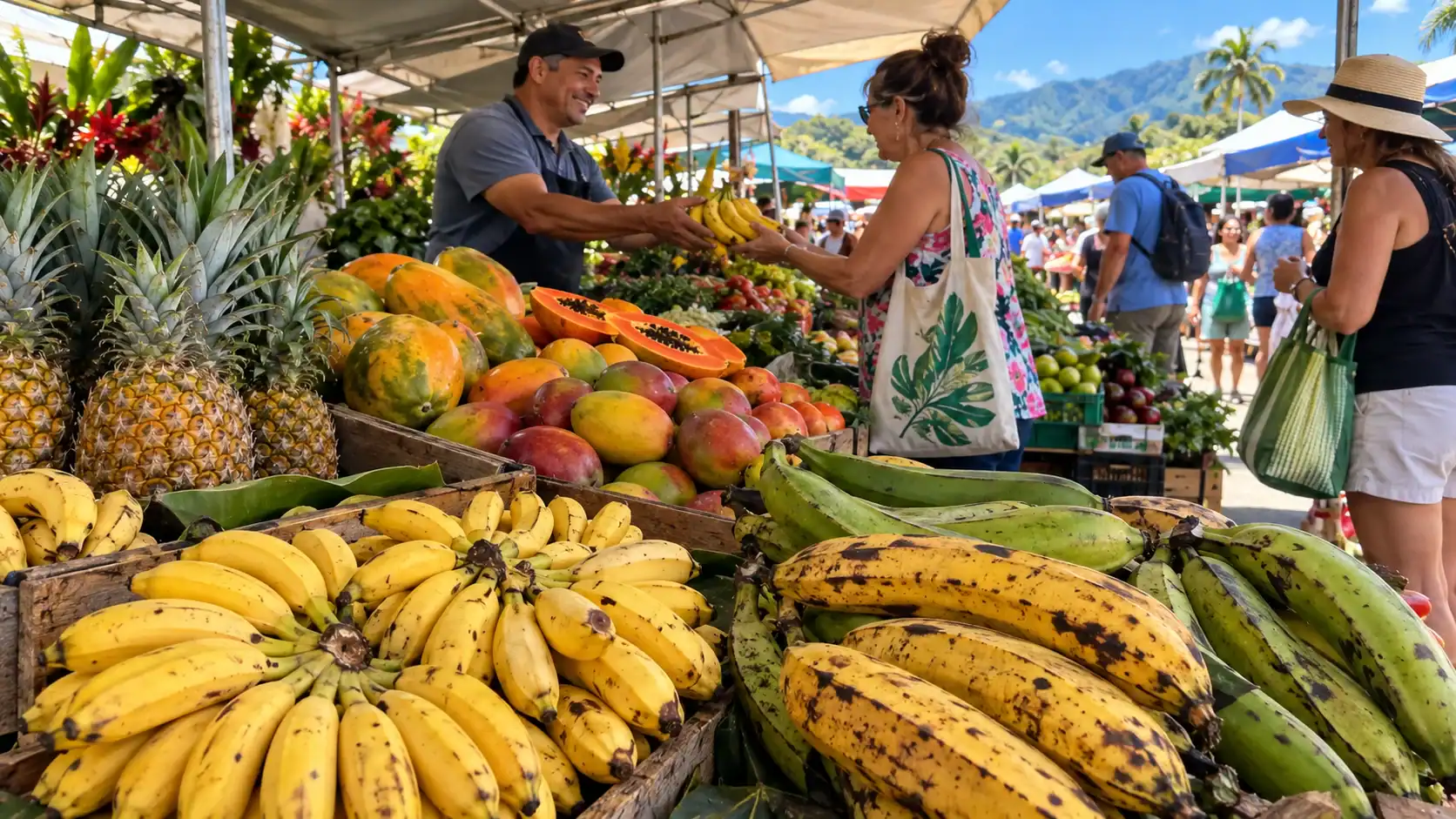
Start with the produce you use each week, then try a small amount of something unfamiliar. Ask who grew or made an item and where it came from; a market setting alone does not prove every product is local, organic or cheaper than a supermarket. For packaged or prepared products, check ingredients and storage instructions. Compare the same quantity and quality rather than assuming a lower sticker price means a better deal.
- Confirm the unit. A price may be per kilogram, item, bunch or bag.
- Match your purchases to your meals. Buy smaller amounts of ripe fruit if you cannot use it promptly.
- Check condition. Look for damaged skin, leakage or signs of spoilage before buying.
- Compare like with like. Whole fruit, prepared pulp and imported packaged fruit have different preparation and storage costs.
- Ask about the market schedule. Verify the location and day locally before making a special trip.
PIMA’s reference prices describe its stated market and reporting period. They are not a promise that a retail stall must charge the same amount. For broader household budgeting, see our cost-of-living guide.
Sources and review date
Reviewed 8 September 2026. Historical agricultural sources are used for crop background, not as current price lists or production totals.
- PIMA: market information and seasonality resources.
- University of Costa Rica: Dulce guanábana, 2023.
- UCR CIGRAS: Annona muricata species information.
- MAG: guanábana cultivation background.
- MAG: rambután regional production and seasonal supply.
- UCR: Ricos jocotes, 2023.
Thinking of moving to Costa Rica?
Get a free residency assessment. Tell Johanna, our immigration expert, about your situation, and she will tell you which residency fits you and what you need.
WhatsApp Johanna: +506 8373 2085Free assessment
Or email info@crie.cr