
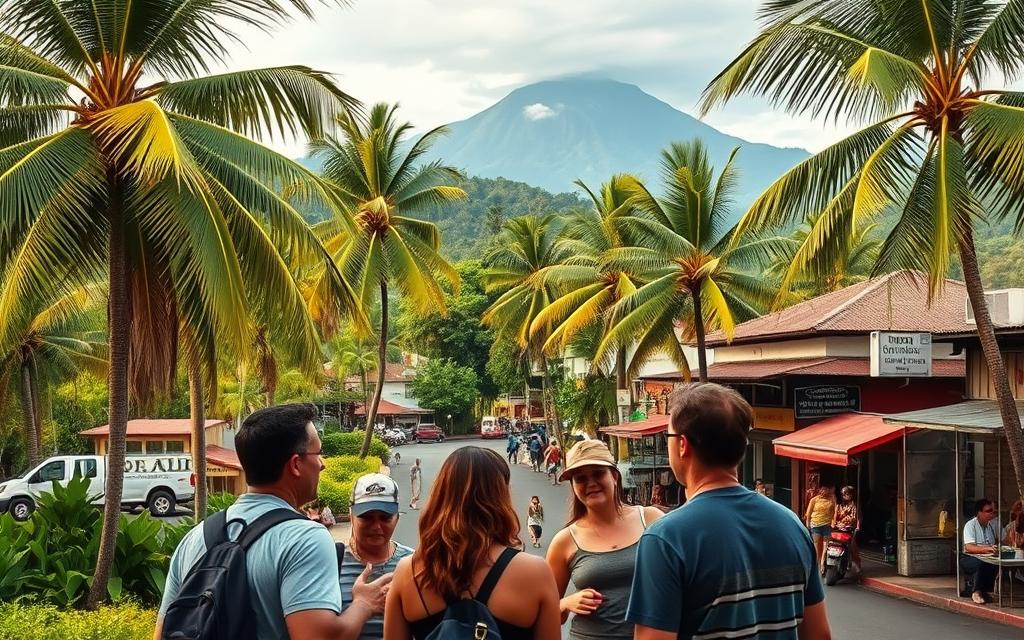
Did you know Costa Rica ranks 38th in the EF English Proficiency Index, showcasing strong English skills among its population? This Central American country is a top travel destination, known for its lush landscapes and vibrant culture. While Spanish is the official language, English is widely spoken, especially in tourist areas like San José and Guanacaste1.
For travelers, this bilingual environment makes exploring the country easier. Many locals in hotels, restaurants, and tour operations are fluent in English, ensuring smooth communication2. However, understanding a few Spanish phrases and cultural expressions like “pura vida” can greatly enhance the experience.
Language barriers are more common in rural areas, but even there, bilingual signage and services are available. Whether you’re a tourist or an expat, learning basic Spanish can help you connect with the local culture and make new friends3.
This guide will provide practical tips to navigate the linguistic landscape and fully enjoy your time in this beautiful country. From language schools to cultural insights, we’ve got you covered.
Understanding the Linguistic Landscape of Costa Rica
Costa Rica’s linguistic diversity reflects its rich cultural heritage and vibrant communities. Spanish is the official language, spoken by nearly 99% of the population. However, the country’s linguistic tapestry includes indigenous languages like Bribri, Cabécar, and Maleku, each with its own unique history and cultural significance.
Spanish: The Official Language and Regional Dialects
Spanish in Costa Rica has its own distinct flavor, with regional dialects and accents that vary across the country. Words like “pura vida” embody the local way of life and are deeply rooted in the culture. While the language is widely spoken, regional differences add depth to everyday communication.
Education plays a key role in language proficiency, with many schools offering bilingual programs. This focus on learning ensures that the population remains connected to both local and global communities.
Urban Versus Rural Language Proficiency
In urban areas like San José, language skills are often more advanced due to access to education and tourism. English is commonly spoken in these regions, making it easier for visitors to navigate their trip.
In contrast, rural and indigenous communities often rely on traditional languages. Efforts to preserve these languages through cultural workshops and community tours are ongoing, ensuring their survival for future generations.
Understanding these differences helps travelers and expats connect with the local culture in meaningful ways. Whether in bustling cities or serene villages, language remains a bridge to Costa Rica’s heart and soul.
Do They Speak English in Costa Rica?
Costa Rica’s bilingual environment offers a unique advantage for travelers and expats. In tourist hubs and major cities, English is widely spoken, making communication seamless for visitors. For instance, service providers in San José and Guanacaste are well-prepared to assist international guests6.
English in Tourist Hubs and Major Cities
Urban areas like San José are hotspots for English speakers. Many locals in hotels, restaurants, and tour companies are fluent, ensuring smooth interactions for tourists. This level of proficiency enhances the travel experience, allowing visitors to explore with confidence.
Education plays a significant role in this. Schools in these regions often offer bilingual programs, equipping the population with strong language skills. This focus on learning creates a welcoming environment for international visitors.
Limited English in Remote and Indigenous Areas
In contrast, remote and indigenous communities have limited English proficiency. Here, traditional languages like Bribri and Cabécar are more commonly spoken. This can create a language barrier for travelers venturing into these areas.
Efforts to preserve indigenous languages are ongoing, with cultural workshops and community tours promoting their use. While this enriches the local culture, it also highlights the importance of learning basic Spanish for a deeper connection.
Understanding these differences helps travelers plan their trips effectively. Whether in bustling cities or serene villages, language remains a key to unlocking Costa Rica’s charm.
Language Barriers for Travelers and Expats
Navigating a new country often comes with its share of communication hurdles. For travelers and expats in Costa Rica, language barriers can shape daily interactions and access to essential services. While many locals in tourist areas speak English, rural regions present unique challenges.
Common Communication Challenges
Simple tasks like ordering food or asking for directions can become complex without language proficiency. In rural areas, only about 50% of service providers can communicate in English, making interactions difficult. Bureaucratic tasks, such as signing up for utilities, often require Spanish fluency.
Families moving to the country face additional hurdles. Enrolling children in schools or accessing healthcare services may require bilingual assistance. These challenges highlight the importance of understanding local customs and language nuances.
The Impact on Daily Life and Services
Language barriers can affect every aspect of daily life. Expats may struggle to build friendships or integrate into the community without Spanish skills. Limited proficiency can also delay access to services like transportation or medical care.
For travelers, these barriers can disrupt plans and reduce the enjoyment of their trip. Learning basic Spanish phrases can make a lot of difference in navigating unfamiliar places. Resources like local language programs offer practical solutions for overcoming these challenges.
Understanding these barriers helps visitors and expats prepare better. Whether for a short trip or a long-term stay, language remains a key to unlocking Costa Rica’s charm.
The Benefits of Learning Costa Rican Spanish
Learning Costa Rican Spanish opens doors to deeper cultural connections and professional growth. Whether you’re a traveler or an expat, mastering the language enhances your experience in this vibrant country. Even basic skills can make a significant difference in daily interactions and long-term integration.

Enhancing Cultural Experiences and Local Integration
Understanding the local language allows you to connect with the community on a deeper level. Simple phrases like “pura vida” can help you embrace the Costa Rican lifestyle and build meaningful friendships10. Cultural events, festivals, and local traditions become more accessible when you can communicate effectively.
For families, learning Spanish ensures smoother transitions into schools and neighborhoods. It also helps in understanding local customs and traditions, making it easier to integrate into the community11.
Unlocking Professional Opportunities
Bilingual professionals are in high demand across various sectors, including education, healthcare, and business11. Improved language proficiency can open doors to new career paths and networking opportunities. Many expats have advanced their careers by mastering Spanish, gaining a competitive edge in the job market.
Additionally, understanding the language simplifies administrative tasks like opening bank accounts or obtaining residency permits12. This makes life easier for those planning to stay long-term.
- Build deeper connections with locals through shared language.
- Access a wider range of job opportunities in diverse industries.
- Navigate daily tasks and services with greater ease.
Investing time in learning Costa Rican Spanish is a step toward fully embracing the “pura vida” mentality. For more tips on integrating into the local culture, check out this expat guide.
Practical Tips to Overcome Language Barriers
Overcoming language barriers in Costa Rica is easier with the right tools and strategies. Whether you’re a traveler or an expat, these practical tips can help you communicate effectively and navigate daily life with confidence.
Essential Spanish Phrases and Communication Tools
Learning a few key phrases can make a big difference. Words like “hola” (hello), “gracias” (thank you), and “¿dónde está?” (Where is?) are essential for everyday interactions. Research shows that knowing basic phrases improves communication effectiveness by up to 50%13.
Mobile apps like Google Translate are also helpful. They can reduce frustration by approximately 60% during travel13. These tools are especially useful in rural areas where English proficiency is limited.

Immersive Language Programs and Local Classes
For those planning a longer stay, immersive language programs are a great option. Costa Rica offers some of the best Spanish courses globally, attracting learners from around the world14. These programs focus on real-life usage, helping students build confidence quickly.
Local classes are another effective method. They provide structured learning and opportunities to practice with native speakers. Consistent practice is key to mastering the language and integrating into the community.
Utilizing Translation Services and Mobile Apps
Translation services are widely available in urban areas. They can assist with tasks like signing up for utilities or accessing healthcare15. For travelers, these services ensure smooth communication in unfamiliar settings.
Mobile apps are also invaluable. They offer instant translations and can be used offline, making them perfect for remote areas. Combining these tools with basic Spanish skills can significantly enhance your experience.
- Memorize essential phrases to ease everyday challenges.
- Enroll in immersive programs or local classes for rapid skill improvement.
- Use translation apps and services to bridge communication gaps.
By following these tips, you can overcome the language barrier in Costa Rica and fully enjoy your time in this beautiful country. Practice and consistency are the keys to success.
English Proficiency in Costa Rican Tourist Destinations
Exploring Costa Rica’s tourist destinations reveals a fascinating blend of language proficiency and cultural adaptation. In popular areas, locals often speak English to cater to international visitors, creating a welcoming environment for travelers. This section highlights real-life examples from San José, Tamarindo, and Manuel Antonio, showcasing how these communities balance traditional customs with modern communication needs.
Case Studies: San José, Tamarindo, and Manuel Antonio
In San José, the capital city, English is widely spoken in hotels, restaurants, and tour companies. Approximately 30% of locals in urban areas can communicate effectively in English, ensuring smooth interactions for tourists16. This level of proficiency enhances the travel experience, allowing visitors to explore with confidence.
Tamarindo, a coastal town, is another hotspot for English speakers. Many service providers here are fluent, making it easy for travelers to navigate the area. However, occasional challenges arise when local customs and traditions come into play, requiring a deeper understanding of the culture.
Manuel Antonio, known for its stunning national park, also boasts strong English proficiency among its community. Tour guides and hospitality staff often speak multiple languages, catering to a diverse range of visitors. This adaptability ensures that tourists feel at home while exploring the natural beauty of the region.
Balancing Tourist Expectations with Local Communication
While English is prevalent in tourist hubs, preserving local customs remains a priority. Communities in these areas strive to maintain their cultural identity while accommodating international visitors. This balance is crucial for creating a meaningful travel experience.
Travelers can enhance their understanding by learning a few Spanish phrases or participating in cultural workshops. These efforts not only bridge communication gaps but also foster a deeper connection with the local way of life. For more insights, check out this guide on language proficiency in Costa Rica.
By adapting to local customs and leveraging available resources, visitors can fully immerse themselves in the vibrant culture of this beautiful country. Whether in bustling cities or serene coastal towns, language remains a key to unlocking unforgettable experiences.
Cultural and Educational Initiatives in Costa Rica
Costa Rica’s commitment to education and culture is evident in its innovative language programs. These initiatives aim to boost both Spanish and English proficiency among the population, fostering a bilingual future17. From schools to community projects, the country is bridging communication gaps and enhancing cultural understanding.

Local Language Programs and Community Efforts
Local language programs are transforming how communities connect. Schools across the country emphasize bilingual education, equipping students with essential skills for global communication17. These programs also preserve indigenous languages, ensuring their survival for future generations18.
Community efforts play a vital role in promoting language proficiency. Workshops and cultural events bring locals and expats together, creating opportunities for meaningful interactions. These initiatives strengthen community bonds and improve understanding of local customs19.
Fostering Cross-Cultural Communication and Expat Integration
Cross-cultural communication is a priority in Costa Rica. Seminars and immersion programs help expats integrate into the community while preserving the country’s cultural identity17. These programs benefit everyone, from senior citizens to young learners, fostering a sense of belonging.
Collaborative projects are also enhancing cultural pride. By combining educational reform with community-driven efforts, Costa Rica is setting an example for bilingual nations. These initiatives not only improve language skills but also enrich the cultural experience for all19.
Conclusion
Exploring the linguistic landscape of this Central American gem reveals a blend of tradition and modernity. Spanish remains the dominant language, but many tourist areas cater to English speakers, ensuring smooth communication for visitors20. Learning even a few Spanish phrases can significantly enrich travel experiences and foster deeper connections with locals.
Cultural insights and practical tips empower travelers and expats to overcome language barriers. Embracing the “pura vida” mentality and integrating into local communities enhances every person’s journey21. Whether in bustling cities or serene rural areas, language serves as a bridge to understanding and opportunity.
By reflecting on the interconnectedness of language, culture, and experience, visitors can fully appreciate the beauty of this vibrant country. Armed with these insights, travelers are encouraged to explore further, knowing that language learning unlocks unforgettable moments and meaningful connections.
Article by Glenn Tellier (Founder of CRIE and Grupo Gap)
Don't wait, contact us right now!
Call or WhatsApp Costa Rica +506 8373 2085 or +506 8706 3888
Call USA/Canada +1 305-906-6784