

Legal Framework of Defamation Law in Costa Rica
Defamation law in Costa Rica is primarily governed by the Penal Code, which categorizes defamation offenses as “crimes against honor.” Unlike some countries where defamation is handled exclusively as a civil matter, Costa Rica maintains both civil and criminal approaches to addressing reputation-damaging statements.
Civil vs. Criminal Defamation
Costa Rican law distinguishes between civil and criminal defamation cases:
Civil Defamation
Civil defamation cases focus on obtaining monetary compensation for damages to reputation. These proceedings are initiated by the affected party filing a civil lawsuit seeking financial remedies for harm suffered. The burden of proof is generally lower than in criminal cases, requiring a preponderance of evidence rather than proof beyond a reasonable doubt.
Criminal Defamation
Criminal defamation is prosecuted under the Penal Code as a “private crime,” meaning it requires the victim to file a formal complaint to initiate proceedings. While historically punishable by imprisonment, Costa Rica has moved toward monetary penalties in line with international human rights standards, particularly following a 2010 Supreme Court ruling that abolished jail terms for defamation offenses.
Relevant Articles in the Penal Code
The Costa Rican Penal Code addresses defamation through several key articles:
- Article 145: Defines and criminalizes insults (injuria) as expressions that dishonor, discredit, or scorn another person.
- Article 146: Addresses defamation (difamación) specifically, prohibiting false statements that damage a person’s reputation or honor.
- Article 147: Covers calumny (calumnia), which involves falsely accusing someone of committing a crime.
- Article 148: Extends protection to the deceased, making it possible to bring defamation claims for statements that harm the reputation of someone who has died.
- Article 153: Provides for special considerations when defamation involves public officials.
Additionally, the 1902 Printing Press Law (Ley de Imprenta) contains provisions specific to defamation in published materials, though its application has been modified by subsequent court rulings, particularly the 2010 Supreme Court decision that eliminated imprisonment as a penalty for defamation.
Essential Elements of Defamation Under Costa Rican Law
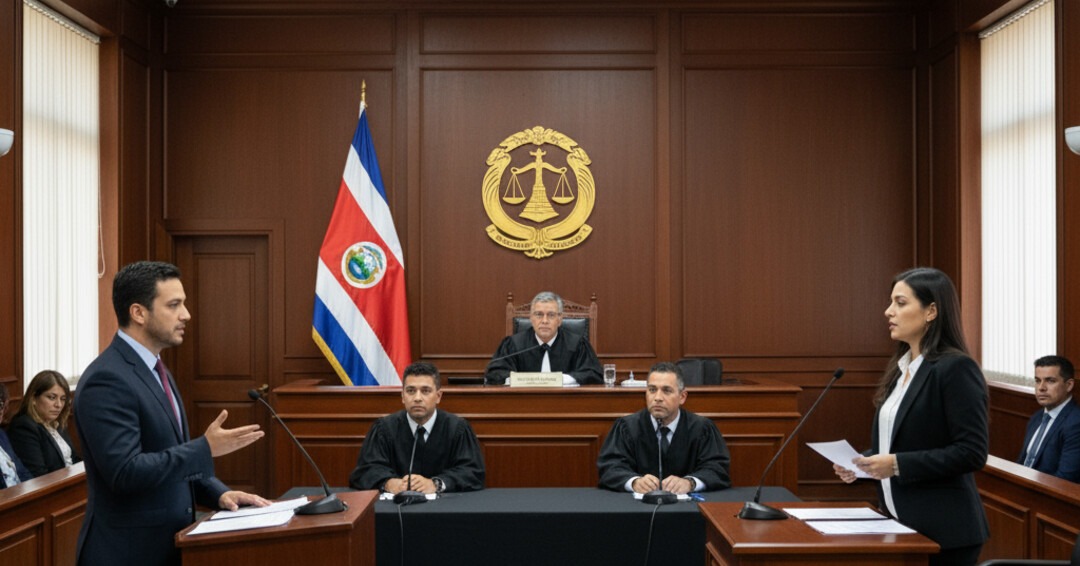
To successfully prove defamation in Costa Rica, several key elements must be established. Understanding these criteria is crucial for both potential plaintiffs considering legal action and individuals or organizations seeking to avoid defamation liability.
Four Key Elements to Prove Defamation
1. False Statement
The statement in question must be demonstrably false. Truth is an absolute defense against defamation claims in Costa Rica. The plaintiff bears the burden of proving the statement’s falsity, which distinguishes Costa Rican law from jurisdictions where defendants must prove the truth of their statements.
2. Publication
The false statement must be communicated to at least one person other than the subject of the statement. This “publication” can occur through various media, including newspapers, radio, television, social media, or even verbal communication to third parties.
3. Identification
The defamatory statement must clearly identify or be reasonably understood to refer to the plaintiff. This identification can be direct (using the person’s name) or indirect (providing enough information for others to recognize who is being discussed).
4. Harm to Reputation
The plaintiff must demonstrate that the false statement caused actual harm to their reputation. This can include damage to personal standing, professional reputation, business relationships, or social status. Unlike some jurisdictions, Costa Rica does not require proof of financial loss.
Distinguishing Between Libel and Slander
Costa Rican defamation law distinguishes between libel and slander, though the distinction carries less legal significance than in some other jurisdictions:
Libel (Difamación Escrita)
Libel refers to defamation in written or permanent form, including printed publications, online articles, social media posts, emails, and other recorded communications. Because of its permanent nature and potential for wider dissemination, libel can sometimes be treated more seriously.
Slander (Difamación Verbal)
Slander involves spoken defamation, such as verbal statements made in person, in speeches, or in broadcast media like radio or television. While traditionally considered less severe due to its ephemeral nature, modern recording technology has blurred this distinction.
Special Considerations for Public Figures
Costa Rican defamation law provides special considerations for statements about public officials and public figures. While such individuals still have legal protections against defamation, courts generally apply a higher threshold for proving defamation when the statements relate to matters of public interest or the performance of official duties.
This approach reflects the importance of public debate and scrutiny in a democratic society, though it does not create a complete immunity for statements about public figures. False accusations of criminal conduct, for example, may still constitute defamation even when directed at public officials.
Penalties and Consequences for Defamation in Costa Rica

The consequences for defamation in Costa Rica can vary significantly depending on whether the case is pursued through civil or criminal channels, the severity of the defamatory statements, and the extent of harm caused to the plaintiff’s reputation.
Civil Lawsuit Damages
In civil defamation cases, the primary remedy is monetary compensation for damages. Costa Rican courts may award several types of damages:
- Actual Damages: Compensation for quantifiable harm, such as lost business opportunities or income resulting from the defamatory statements.
- Moral Damages: Compensation for non-economic harm, including emotional distress, humiliation, and damage to social standing or reputation.
- Legal Costs: The losing party may be required to pay the prevailing party’s legal fees and court costs.
The amount of damages awarded varies based on factors such as the severity of the defamation, the prominence of the plaintiff, the extent of publication, and the defendant’s intent or negligence.
Criminal Penalties
Following the 2010 Supreme Court ruling that abolished imprisonment for defamation offenses, criminal penalties now primarily consist of monetary fines:
- Fines for Insults (Injuria): Typically range from 10 to 50 “días multa” (fine days), with each “día multa” calculated based on the defendant’s daily income.
- Fines for Defamation (Difamación): Generally range from 20 to 100 “días multa,” depending on the severity of the case.
- Fines for Calumny (Calumnia): Usually range from 50 to 150 “días multa” for falsely accusing someone of a crime.
In addition to fines, criminal convictions for defamation may result in a criminal record, which can have long-term consequences for employment, immigration status, and other aspects of life.
Additional Remedies
Costa Rican courts may also order additional remedies in defamation cases:
- Public Retraction: The defendant may be required to publish a retraction or correction in the same medium where the defamatory statement appeared.
- Right of Reply: The plaintiff may be granted the right to publish a response in the same medium.
- Removal of Content: In cases involving online defamation, courts may order the removal of defamatory content from websites or social media platforms.
- Prohibition on Republication: The defendant may be prohibited from repeating the defamatory statements.
Valid Defenses Against Defamation Claims in Costa Rica
When facing defamation allegations in Costa Rica, defendants have several potential defenses available. Understanding these defenses is crucial for journalists, media organizations, businesses, and individuals communicating in the public sphere.
Primary Defenses in Costa Rican Defamation Law
Truth (Verdad)
Truth is the most fundamental defense against defamation claims in Costa Rica. If the defendant can prove that the allegedly defamatory statement is substantially true, the claim will generally fail. This defense acknowledges that true statements, even if harmful to reputation, serve the public interest and should not be suppressed.
Good Faith (Buena Fe)
Statements made in good faith, with a reasonable belief in their truth and without malicious intent, may be protected from defamation claims. This defense is particularly relevant for journalists and others who make reasonable efforts to verify information before publication but may inadvertently include inaccuracies.
Public Interest (Interés Público)
Statements concerning matters of public interest receive stronger protection, especially when they involve public officials or figures. Costa Rican courts recognize the importance of open debate on issues affecting society, though this does not create a blanket immunity for false statements.
Additional Defenses
- Opinion and Fair Comment: Expressions of opinion, as opposed to assertions of fact, generally receive stronger protection. Courts distinguish between statements that can be proven true or false (facts) and subjective judgments or critiques (opinions).
- Privilege: Certain communications made in official or legal contexts may be protected by privilege. For example, statements made during legislative debates, judicial proceedings, or in official government reports often receive special protection.
- Consent: If the plaintiff consented to the publication of the information, this may serve as a defense against defamation claims.
- Statute of Limitations: Defamation claims in Costa Rica must be filed within one year of the publication or communication of the allegedly defamatory statement.
- Lack of Identification: If the allegedly defamatory statement does not clearly identify the plaintiff, or if reasonable readers/listeners would not understand it to refer to the plaintiff, this may constitute a defense.
The “Actual Malice” Standard and Its Limited Application
Unlike the United States, Costa Rica has not fully adopted the “actual malice” standard established in New York Times v. Sullivan. However, Costa Rican courts do consider the defendant’s intent and the reasonableness of their belief in the truth of the statement, particularly in cases involving public figures or matters of public interest.
This approach reflects a balancing of the right to reputation with the importance of free expression and public debate in a democratic society. Journalists and media organizations should be aware that while reporting on matters of public interest receives some protection, this does not eliminate the need for responsible fact-checking and verification practices.
Jurisdiction and Cross-Border Online Defamation
In our increasingly interconnected digital world, defamation often crosses national boundaries, raising complex questions about which country’s laws apply and which courts have jurisdiction to hear cases. Understanding these jurisdictional issues is particularly important for online publishers, social media users, and multinational businesses operating in or targeting Costa Rica.
Establishing Jurisdiction in Costa Rica
Costa Rican courts may assert jurisdiction over defamation cases when:
- The defamatory content was published or accessed in Costa Rica, even if the publisher is located abroad.
- The plaintiff is a Costa Rican citizen or resident whose reputation was damaged within the country.
- The defendant is a Costa Rican citizen or resident, regardless of where the defamatory content was published.
- The defamatory content specifically targets a Costa Rican audience, such as content in Spanish that discusses Costa Rican matters or is published on Costa Rican domains (.cr).
Online Defamation Law in Costa Rica
Costa Rica applies its defamation laws to online content, including:
Social Media Posts
Defamatory statements on platforms like Facebook, Twitter, Instagram, or LinkedIn can lead to legal liability in Costa Rica, even if the account holder is located abroad. The global reach of these platforms does not exempt users from complying with local defamation laws.
Website Content
Articles, blog posts, comments, and other content published on websites accessible in Costa Rica may be subject to Costa Rican defamation law. This includes content on international sites that can be accessed by users in Costa Rica.
Messaging Apps
While private messages typically have a smaller audience, defamatory content shared in group chats or forwarded messages on platforms like WhatsApp can still constitute publication for defamation purposes if they reach third parties.
Intermediary Liability
Costa Rican law regarding the liability of internet intermediaries (such as social media platforms, website hosts, and internet service providers) for defamatory content posted by users is still evolving. Generally, intermediaries may be protected from liability if they:
- Do not have actual knowledge of the defamatory content
- Act promptly to remove or disable access to the content once notified of its allegedly defamatory nature
- Do not exercise editorial control over the content
However, this area of law continues to develop, and intermediaries operating in Costa Rica should stay informed about their potential legal obligations.
Enforcement of Foreign Judgments
If a defamation judgment is obtained in a foreign court against a defendant with assets in Costa Rica, the plaintiff may seek to enforce that judgment in Costa Rica. Costa Rican courts will generally recognize and enforce foreign judgments if:
- The foreign court had proper jurisdiction over the case
- The defendant received proper notice and an opportunity to be heard
- The judgment does not conflict with Costa Rican public policy
- The judgment is final and not subject to further appeal in the foreign jurisdiction
However, Costa Rican courts may be reluctant to enforce foreign defamation judgments that impose penalties significantly harsher than those available under Costa Rican law or that conflict with Costa Rican constitutional protections for freedom of expression.
Case Studies: Defamation Law in Action in Costa Rica
Examining real-world defamation cases provides valuable insights into how Costa Rican courts apply defamation law in practice. The following case studies illustrate key principles and evolving trends in Costa Rican defamation jurisprudence.
Case Study 1: The La Nación Newspaper Case
In a landmark case that reached the Inter-American Court of Human Rights in 2022, journalists from La Nación newspaper were initially found liable for defamation after publishing an article alleging that Costa Rican police were involved in smuggling liquor through the southern border. When some information in the article proved incorrect, La Nación issued a correction, but one of the implicated officers sued the newspaper, the journalists, the Minister of Public Safety, and the state of Costa Rica for slander and defamation.
While criminal charges were dropped, a civil court ordered the defendants to pay approximately 6 million colones (about $12,000 USD) in damages, a decision upheld by the Costa Rican Supreme Court. However, when the case reached the Inter-American Court of Human Rights, that court ruled that journalists will sometimes publish false information in good faith and should not be required to exhaustively fact-check every detail before publication. The court found that imposing damages had created a “chilling effect” on journalism, violating Article 13 of the American Convention on Human Rights, and ordered the sanction overturned.
This case established an important precedent recognizing that investigative journalism requires some latitude for error and that imposing excessive penalties for good-faith mistakes can undermine press freedom and public discourse.
Case Study 2: The Suave un Toque Political Satire Case
In March 2023, the Goicoechea Criminal Court convicted journalist Marlon Mora of defamation for content that appeared on the political satire program “Suave un Toque.” The case involved satirical material about former presidential candidate Juan Diego Castro that went viral on social media during the 2018 campaign period.
Mora, who was the director of Canal UCR, which hosted the program, was ordered to pay a fine of 600,000 colones ($1,100), plus 15 million colones ($27,600) for civil damages and 3 million colones ($5,500) for personal expenses incurred by Castro. The court also ordered Mora to publish the judge’s decision in a national media outlet.
However, in February 2024, an appeals court annulled the conviction and ordered a new trial, finding that it had not been sufficiently proven that Mora, as the channel’s director, had acted with intent to harm Castro’s reputation. Despite this partial victory, the court maintained the judicial embargo on Mora’s assets pending the new trial.
This case highlights the ongoing tension between protecting individual reputation and allowing for political satire and commentary, as well as the potential financial and professional consequences that can result from defamation allegations, even before a final judgment is reached.
Lessons from Costa Rican Defamation Cases
These cases illustrate several important aspects of defamation law in Costa Rica:
- The courts balance protection of reputation with freedom of expression, particularly for journalism on matters of public interest.
- International human rights standards increasingly influence Costa Rican defamation jurisprudence.
- The legal process itself can impose significant burdens on defendants, even if they ultimately prevail.
- The line between protected political commentary or satire and actionable defamation remains contested.
- Both traditional and social media publications can give rise to defamation liability.
These cases underscore the importance of understanding defamation law for anyone publishing content or making public statements in Costa Rica, while also highlighting the evolving nature of this area of law as courts continue to refine the balance between reputation protection and free expression.
Practical Advice: Minimizing Defamation Risks in Costa Rica
Understanding defamation law is important, but knowing how to apply that knowledge in practical situations is equally valuable. The following guidelines can help individuals and organizations minimize the risk of defamation liability while communicating effectively in various contexts.
Guidelines for Media Professionals
Journalists, bloggers, and other media professionals operating in Costa Rica should consider these best practices:
- Verify facts thoroughly from multiple reliable sources before publication.
- Maintain detailed records of research, interviews, and fact-checking processes.
- Distinguish clearly between facts and opinions in reporting and commentary.
- Provide fair opportunity for response to individuals or organizations criticized in your reporting.
- Use precise language that avoids unnecessary exaggeration or inflammatory characterizations.
- Consider legal review for stories involving serious allegations or high-profile subjects.
- Promptly correct errors when they are discovered, with appropriate prominence.
- Be particularly careful when reporting on ongoing criminal investigations or court cases.
Social Media Best Practices
Social media users should be aware that posts, comments, and shares can potentially lead to defamation liability:
Think Before Posting
Consider whether your statement is based on verified facts or assumptions. Remember that even sharing or retweeting defamatory content can potentially create liability. Ask yourself if your post could harm someone’s reputation before publishing.
Use Cautious Language
Frame statements as opinions rather than factual assertions when appropriate. Avoid absolute statements about others’ motives, character, or actions unless you have solid evidence. Consider using qualifying language like “allegedly” when discussing unproven claims.
Manage Privacy Settings
Be aware that even “private” posts can be screenshotted and shared more widely. Remember that the larger the audience for a defamatory statement, the greater the potential damages. Review and update your privacy settings regularly on all platforms.
Business Communication Guidelines
Businesses operating in Costa Rica should implement these practices to minimize defamation risks:
- Establish clear social media policies for employees, including guidelines on discussing competitors.
- Train staff on defamation risks, particularly those in marketing, public relations, or customer service roles.
- Review advertising claims carefully, especially comparative advertising that mentions competitors.
- Implement approval processes for public-facing communications that might include sensitive statements about individuals or other businesses.
- Respond thoughtfully to negative reviews or criticism without making counter-accusations that could themselves be defamatory.
- Consider legal review for communications addressing disputes with competitors, former employees, or other potentially contentious situations.
What to Do If You’re Accused of Defamation
If you receive a defamation complaint or threat of legal action:
- Don’t panic or respond hastily – take time to consider your position carefully.
- Preserve all relevant evidence, including research materials, sources, and the original communication.
- Consider whether a correction, clarification, or retraction might be appropriate.
- Consult with a qualified attorney experienced in Costa Rican defamation law before taking substantive action.
- Review any applicable insurance policies that might provide coverage for defamation claims.
- Be aware of the one-year statute of limitations for defamation claims in Costa Rica.
By following these guidelines, individuals and organizations can significantly reduce their risk of defamation liability while still engaging in robust communication, journalism, and public discourse. When in doubt about a specific situation, consulting with a legal professional familiar with Costa Rican defamation law is the most prudent approach.
Conclusion: Navigating Defamation Law in Costa Rica
Defamation law in Costa Rica represents a careful balancing act between protecting individual and corporate reputations and preserving the fundamental right to freedom of expression. As we’ve explored throughout this guide, Costa Rica’s approach to defamation combines elements of both civil and criminal law, though recent reforms have moved toward less severe penalties in line with international human rights standards.
Understanding the key principles of defamation law in Costa Rica is essential for anyone living, working, or communicating in the country. Whether you’re a journalist reporting on matters of public interest, a business owner promoting your products or services, or an individual using social media, knowledge of these legal frameworks can help you communicate effectively while minimizing legal risks.
Key Takeaways
- Costa Rican defamation law encompasses both libel (written defamation) and slander (spoken defamation), categorized as “crimes against honor” in the Penal Code.
- Following a 2010 Supreme Court ruling, defamation penalties now focus on monetary fines rather than imprisonment, reflecting a progressive approach to balancing reputation protection with freedom of expression.
- To prove defamation, plaintiffs must generally establish that the statement was false, published to third parties, clearly identified the plaintiff, and caused harm to the plaintiff’s reputation.
- Valid defenses include truth, good faith, public interest, privilege, and the expression of opinion rather than fact.
- Online defamation presents complex jurisdictional challenges, with Costa Rican courts potentially asserting jurisdiction over content published abroad but accessible in Costa Rica.
- Practical risk management strategies include thorough fact-checking, clear distinction between facts and opinions, prompt correction of errors, and careful language in all communications.
As Costa Rican defamation law continues to evolve, particularly in response to the challenges of digital communication and social media, staying informed about legal developments is crucial. The courts continue to refine the balance between protecting reputation and ensuring robust public discourse, with increasing reference to international human rights standards.
For specific situations involving potential defamation issues, consulting with a qualified attorney experienced in Costa Rican defamation law remains the most prudent approach. Legal professionals can provide tailored advice based on the particular circumstances and help navigate the complexities of this important area of law.
Frequently Asked Questions About Defamation Law in Costa Rica
What constitutes defamation under Costa Rican law?
In Costa Rica, defamation encompasses both slander (spoken defamation) and libel (written defamation) and pertains to the act of communicating false statements that harm the reputation of an individual or a legal entity. This falls within the scope of “crimes against honor” in the Costa Rican Penal Code, specifically Articles 145-148.
What is the statute of limitations for defamation claims in Costa Rica?
The statute of limitations for filing a defamation lawsuit in Costa Rica is one year from the date of the defamatory act. This means that legal action must be taken within this time frame for the case to be considered by the courts.
Can companies be defamed under Costa Rican law?
Yes, Costa Rican legislation safeguards companies from defamatory statements that could harm their public trust and creditworthiness. Legal entities can file defamation claims when false statements damage their business reputation, potentially affecting customer relationships, partnerships, or market position.
What are the penalties for defamation in Costa Rica?
Modern penalties for defamation in Costa Rica primarily involve monetary fines rather than imprisonment, following a 2010 Supreme Court ruling. Fines are typically calculated using the “días multa” (fine days) system, with each “día multa” based on the defendant’s daily income. For insults (injuria), fines range from 10-50 días-multa; for defamation (difamación), 20-100 días-multa; and for calumny (calumnia), 50-150 días-multa. Civil damages may also be awarded separately.
Is truth an absolute defense against defamation claims in Costa Rica?
Yes, the truth is considered an absolute defense against defamation claims in Costa Rica. If the defendant can prove that the allegedly defamatory statement is substantially true, the claim will generally fail. This defense acknowledges that true statements, even if harmful to reputation, serve the public interest and should not be suppressed.
How does Costa Rican law handle online defamation?
Costa Rica applies its defamation laws to online content, including social media posts, website content, blog articles, and even messaging app communications that reach third parties. Costa Rican courts may assert jurisdiction over online defamation cases when the content was published or accessed in Costa Rica, when the plaintiff is a Costa Rican citizen or resident whose reputation was damaged within the country, or when the content specifically targets a Costa Rican audience.
Are there special considerations for defamation of public officials in Costa Rica?
Yes, defamation against public officials is treated with particular consideration under Costa Rican law. While public officials still have legal protections against defamation, courts generally apply a higher threshold for proving defamation when the statements relate to matters of public interest or the performance of official duties. This reflects the importance of public debate and scrutiny in a democratic society.
What should I do if I’m accused of defamation in Costa Rica?
If you’re accused of defamation in Costa Rica, you should: (1) Avoid responding hastily; (2) Preserve all relevant evidence; (3) Consider whether a correction or clarification might be appropriate; (4) Consult with a qualified attorney experienced in Costa Rican defamation law; (5) Review any applicable insurance policies; and (6) Be aware of the one-year statute of limitations. Taking these steps can help you respond effectively and protect your legal interests.
Article by Glenn Tellier (Founder of CRIE and Grupo Gap)
Don't wait, contact us right now!
Call or WhatsApp Costa Rica +506 8373 2085 or +506 8706 3888
Call USA/Canada +1 305-906-6784