
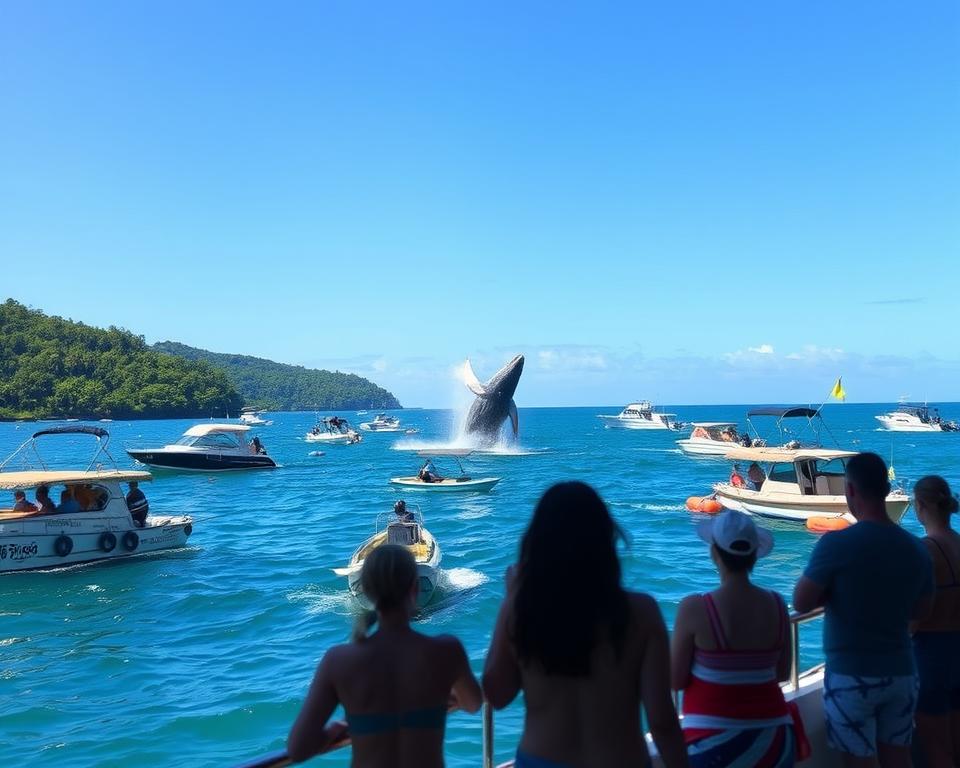
Ever wondered why Costa Rica is a top spot for whale watching? It’s because of its special migration patterns and beautiful coasts. Here, you can see humpback whales from both hemispheres at different times. Seeing these whales up close, especially mothers with their babies, is truly unforgettable.
Want to know the best months to see these amazing creatures? This guide will show you the best times, places, and more in Costa Rica’s clear waters.
Introduction to Whale Watching in Costa Rica
Whale watching in Costa Rica is a big hit with eco-tourists and marine fans. The country’s rich marine life draws about 10,000 whales every year. This makes it a top spot for this thrilling activity.
The best time for whale watching is from January to March and July to October. During these months, tours offer amazing chances to see whales, dolphins, sea turtles, and more. These tours are unforgettable.
Marina Ballena National Park is a standout for whale watching. It’s where humpback mothers teach their calves important skills. The local community makes sure these experiences are safe and sustainable.
Costa Rica’s unique landscape means it has one of the longest whale-watching seasons. It attracts many whale species, including California and Antarctic Humpback Whales. Tours start from places like Uvita, Drake Bay, and the Gulf of Papagayo, making it easy to join in.
Understanding Whale Migration Patterns
Whale migration in Costa Rica is a remarkable sight. Humpback whales travel long distances to find breeding and calving grounds. They migrate twice a year: south from July to October and north from late December to late February.
This migration allows people to see different whales during their visits. The southern migration brings whales from the Antarctic to Costa Rica’s warm waters. This journey is crucial for their breeding, with the best times to see them from August to October.
One humpback whale can travel up to 5,160 miles (8,300 km) for this trip. It’s the longest migration of any mammal. The northern migration includes whales from Alaskan waters, happening from December to April.
In Costa Rica, the double migration makes it a great place to see humpback whales. The best months to see them are August and September. During these months, many whales gather in the area.
Seeing humpback whales from the northern migration in Costa Rica can be tough from April to June. But the southern migration overlaps with the best whale watching season. This makes it easier to see these amazing creatures.
Dolphins add to the excitement, with three species often seen with the whales. Costa Rica’s rich marine life makes it a top spot for whale watching. It’s a place where you can truly see the wonders of the ocean.
Best Months for Whale Watching in Costa Rica

Whale watching in Costa Rica is an exciting adventure, especially during the best months. Knowing when to go is key for those eager to see whales. The top months for whale watching in Costa Rica match the country’s whale watching season perfectly.
Peak Months: January, February, August, and September
January, February, August, and September are the best months for whale watching in Costa Rica. These months attract many humpback whales. They come to mate and give birth, making it the best time to see them.
Why These Months are Ideal for Sightings
Several reasons make these months great for whale watching. In January and February, whales from the North arrive. August and September see whales from the South return. This leads to amazing displays of breaching and tail slapping.
The clear waters and active marine life make these months unforgettable. They are the best time to see whales in Costa Rica.
Humpback Whale Migration in Costa Rica
Costa Rica is key in the humpback whale migration. It hosts two groups of these amazing creatures. One comes from southern Chile and Antarctica, and the other from California. This lets Costa Rica see both migrations, from December to April and again from July to November.
In summer, humpbacks from the south arrive in Costa Rica. They stay until fall. Meanwhile, humpbacks from the north come from Christmas to Easter. This makes Costa Rica a top spot for whale watching, lasting several months.
Marino Ballena National Park is famous for humpback whale sightings. It’s about an hour west of San Isidro, easy to get to via Highway 34. The best time to see these whales is from December to April. The park’s entry fee is around $10, not including whale watching tours.
Costa Rica’s marine ecosystem is rich, with species like sei whales and killer whales. Golfo Dulce is special because both northern and southern humpbacks come to give birth to their young. Southern whales are there from August to November, and northern whales from November to March.
Where to See Whales in Costa Rica
Costa Rica is a great place for wildlife lovers to see whales. The country’s coast has many spots perfect for whale watching. These places are especially good during the whales’ migration times.
From the Pacific Ocean to marine parks, you can see whales in their home. It’s a chance to see these amazing animals up close.
Uvita: The Best Location for Whale Watching
Uvita is a top spot for whale watching in Costa Rica. It’s in the Marino Ballena National Park, a huge area of ocean. This park is a safe place for humpback whales to migrate.
There are two times of year when whales are easy to see in Uvita. From December to April and again from July to November. Tours here last three to four hours. You might see humpback whales, dolphins, and more.
Other Notable Whale Watching Spots
Uvita isn’t the only place to see whales in Costa Rica. Other spots include:
- Drake Bay: Located on the Osa Peninsula, close to Cano Island Marine Sanctuary.
- Gulf of Dulce: Known for its rich marine life, including pilot whales.
- Gulf of Papagayo: Famous for whale sightings and diverse sea life.
- Manuel Antonio National Park: Offers chances to see whales and dolphins along its coast.
Tour companies offer different experiences at these top spots. Prices for tours range from $56 to $250. This depends on the tour length and what’s included, like snorkeling or meals. So, you can find the perfect tour for your whale watching adventure.
Types of Whales Commonly Seen in Costa Rica
Costa Rica is a top spot for seeing different whales. Many types of whales live in its warm waters. Whale watching tours here are thrilling for nature lovers.
Humpback Whales
The humpback whale is often seen in Costa Rica. It’s famous for its cool tricks like breaching and fluke flipping. Scientists think these tricks might be a way for whales to talk to each other.
Every year, about 1,000 humpback whales come from the north to Costa Rica’s warm waters. They come to breed from December to March. This means you can see whales from both the Northern and Southern Hemispheres all year.
Other Species: Pilot Whales, Orcas, and Bryde’s Whales
Costa Rica is also home to other whales like pilot whales and orcas. Pilot whales look like big dolphins and are often seen in groups. Orcas are rare but add to the area’s marine life.
Bryde’s whales also live in Costa Rica’s waters. They add to the variety of marine life you can see.
If you want to see these amazing creatures, whale watching locations in Costa Rica offer great tours. The Osa Peninsula and Marino Ballena National Park in Uvita are the best places to see whales.
Whale Watching Tours in Costa Rica
Costa Rica has many whale watching tours for all tastes and times. You can choose from half-day to full-day trips. The best whale-watching tours in Costa Rica feature expert guides. They teach you about whales and how to protect them.
Top spots for these tours are Uvita, Manuel Antonio, and the Gulf of Papagayo. They offer Costa Rica whale-watching packages that include the Marino Ballena National Park. Tours run from July 15th to October 15th, at 8:30 am and 1:00 pm every day.
Foreign visitors pay $79.00 to enter. Kids aged 6 to 12 get in for $67.80. Costa Rican residents pay less, $53.00 for adults and $50.00 for kids. This makes it easier for locals to join in.
Tours last about 2.5 hours, with snacks and drinks. You’ll see places like the Whale’s Tail and Tres Hermanas Stone. Boats are safe, and swimming with whales is not allowed for safety.
People love these tours, with 100% positive feedback. Guides like Josue are praised in 90% of reviews. Swimming in bioluminescent waters is also a big hit.
40% of reviews say private tours are worth it. They offer a more personal experience. For more adventures, check out the great places to explore in Costa.
Eco-Friendly Whale Watching Practices
Eco-friendly whale watching in Costa Rica is key to saving marine life and promoting green tourism. Companies like Bahia Aventuras lead the way with sustainable tours. They follow rules to keep whales safe, cut down on noise, and support marine conservation.
These tours also teach guests about whales and their homes. This learning experience makes the trip better and helps people understand why marine conservation is crucial. Companies like Bahia Aventuras work with groups like MarViva to teach sustainable ways.
- Bahia Aventuras holds a maximum of 3 stars in the Sea Star System Costa Rica certification for excellent marine practices.
- The company has been certified with Level 4 by the CST Sustainability program Certification, confirming its dedication to responsible tourism.
- By supporting local service providers, Bahia Aventuras enhances community life in Uvita – Bahia Ballena, showing dedication to local economies.
- The Bahia Ballena Plastic-Free initiative discourages single-use plastics, aiming to reduce environmental footprints.
These green efforts are vital for keeping marine wildlife healthy. Visitors can support marine life by choosing tours that care about conservation. Learn more about these efforts in this resource.
Tips for a Successful Whale Watching Experience
Getting ready for a whale watching trip in Costa Rica needs some planning. Knowing the right things can help you see these amazing creatures. It also makes your trip more fun and comfortable.
When to Book Your Tour
Booking your whale watching tour at the right time is key. Try to book early, especially from December to March and July to mid-November. These times are the best for spotting whales. Also, keep an eye out for whale festivals, like the one in Bahía Ballena in September. They often have cheaper tour prices.
What to Bring on Your Whale Watching Tour
When packing for your whale watching trip, focus on the essentials. Here’s what you should bring:
- Sunscreen to protect against the tropical sun
- Water to stay hydrated during the tour
- Comfortable clothing suitable for the weather
- A camera to capture unforgettable moments
- Binoculars for enhanced viewing of distant whales
- A hat and sunglasses for additional sun protection
- A light jacket in case of unexpected weather changes
With these tips, you can make the most of your whale watching adventure. Costa Rica’s marine life is truly stunning. For more tips on the best places to see, check out this resource.
Marine Life and Whale Watching Season in Costa Rica
Costa Rica’s whale watching season is a special time. It’s when you can see a lot of marine life. This is because humpback whales migrate here, along with other species.
The longest whale season in Costa Rica is from late July to November and again from December to April. In the warmer months, humpback whales come from South America. This makes it the best time to see them, especially between August and October.
Tour operators highlight the chance to see whales and other marine life. This includes dolphins, manta rays, and sea turtles. They make sure to mention the marine life in Costa Rica.
Knowing when whales migrate is key to a good tour. The warm waters are perfect for baby humpback whales to grow. With over twenty species of whales and dolphins, the experience is unforgettable.
Tours last 5 to 6 hours. They are designed not to disturb the whales and dolphins. By going during the peak months, you get to see the amazing marine life along Costa Rica’s coast.
Conclusion
Costa Rica is a top spot for whale watching. The humpback whale season runs from December to mid-March and mid-July to mid-October. This means visitors can see these amazing creatures in their natural home.
Knowing the best times to visit is key. January, February, August, and September are the best months. This way, you can have unforgettable moments with these whales.
Uvita is the best place for whale watching all year. Other great spots include the Osa Peninsula and the Gulf of Papagayo. When planning your trip, choose eco-friendly tours. This helps protect these incredible animals for future generations.
Remember, whale watching is unpredictable. But picking the right tour in the peak months increases your chances of a great experience.
Exploring Costa Rica’s waters is more than just seeing whales. It’s a chance to connect with nature. Whale watching is thrilling and peaceful at the same time. It teaches us to love and protect our oceans.
Learn more about the unforgettableCosta Rica whale watching experiences
Source Links
- https://mytanfeet.com/about-cr/whales-in-costa-rica/
- https://www.richcoastdiving.com/post/whale-watching-tours-costa-rica
- https://www.samaraadventures.com/post/costa-rica-whale-watching-tours-best-places-time-of-year
- https://costaricaexperts.com/costa-rica-whale-watching-tour-guide/
- https://www.thecostaricatoursite.com/san-jose/tours/Costa-Rica-Whale-Watching-from-San-Jose.php
- https://villafirenzecr.com/everything-you-need-to-know-for-a-whale-watching-tour-in-costa-rica/
- https://www.thecostaricaonline.com/blog/whales-in-costa-rica
- https://www.twoweeksincostarica.com/whale-watching-costa-rica/
- https://www.costaricadiveandsurf.com/humpback-whales-migration/
- https://www.puravidamoms.com/whale-watching-uvita-tour-guide/
- https://www.findmycostarica.com/blog/best-time-for-whale-watching-costa-rica/
- https://www.govisitcostarica.com/blog/post/go-whale-watching-in-marino-ballena-national-park.aspx
- https://www.osatourism.com/costa-rica-whale-watching/
- https://www.stayintamarindo.com/blog/humpback-whale-watching-near-tamarindo-costa-rica
- https://capturetheatlas.com/whale-watching-in-costa-rica/
- https://www.alongdustyroads.com/posts/uvita-whale-watching-costa-rica
- https://www.billbeardcostarica.com/blog/humpback-whales-costa-rica/
- https://costa-rica-guide.com/nature/wildlife/whale-watching/
- https://www.specialplacesofcostarica.com/things-to-do/whale-watching/
- https://www.costaricadiveandsurf.com/whale-watching/
- https://www.raccoontravels.com/tour/costa-rica-whale-watching-tour-from-pochote-beach/
- http://www.bahiaaventuras.com/about/responsible-tourism/
- https://soulfulconcepts.com/2023/11/27/costa-rica-eco-tourism-sustainable-adventures-and-green-accommodation/
- https://www.qm2tours.com/your-ultimate-guide-to-whale-watching-in-costa-rica/
- https://girlswanderlust.com/whale-watching-in-uvita/
- https://edventure-travel.com/blog/whale-watching-in-costa-rica/
- https://www.copadearbol.com/dolphin-whale-watching-costa-rica/
- https://www.destinationcr.com/post/guide-to-costa-rica-whale-watching-tours
- https://www.gviusa.com/blog/smb-whale-watching-in-costa-rica-a-memorable-journey-with-gentle-giants/
- https://ballenatourcostarica.com/blog/whale-watching-in-uvita/
Article by Glenn Tellier (Founder of CRIE and Grupo Gap)
Don't wait, contact us right now!
Call or WhatsApp Costa Rica +506 8373 2085 or +506 8706 3888
Call USA/Canada +1 305-906-6784