

Costa Rica is a beautiful country famous for its lush rainforests and stunning beaches. It is also home to several active volcanoes. For those who travel there or call it home, understanding this geological reality is key.
Volcanoes like Poás, Turrialba, and Arenal are part of the landscape. The country has strong monitoring systems to track their activity. For example, Poás Volcano had a RED alert in April 2025, leading to park closures. Despite such events, airports in San José and Liberia typically operate normally.
This guide offers practical information about volcanic risks and safety. It helps you stay informed and make smart decisions. You can learn more about essential precautions for visiting volcanoes to ensure a safe adventure.
Latest Activity Reports and Safety Guidelines
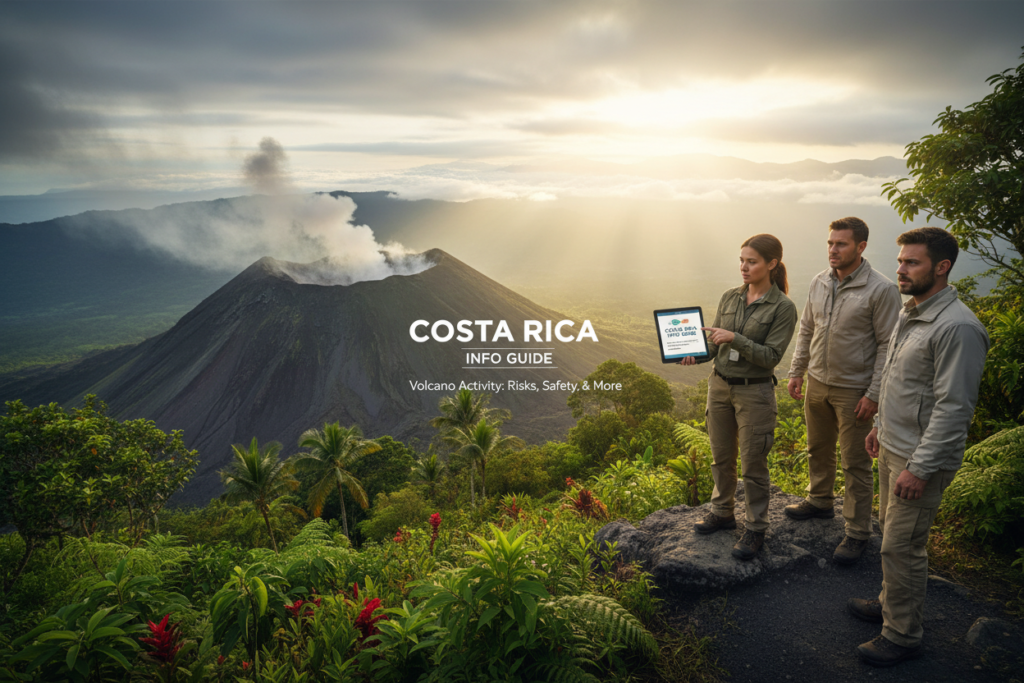
Current volcanic alerts in Costa Rica provide crucial safety information for residents and travelers. As of late April 2025, authorities have issued specific warnings for different regions.
Recent Alerts and Observation Data
A RED alert is active for Poás Volcano National Park, meaning the park is completely closed. Do not attempt to visit. An ORANGE alert is in effect for the Grecia and Sarchi areas, requiring increased caution.
A YELLOW alert covers Alajuela, Poás, Naranjo, Rio Cuarto, and Zarcero. People in these areas should stay informed. Poás has shown ongoing activity since January 5, 2025.
Government Recommendations and Emergency Contacts
For scientific data, check the Volcanological and Seismological Observatory of Costa Rica (OVSICORI) website. The National Emergency Commission (CNE) issues official alerts and evacuation orders.
U.S. citizens can contact the Embassy in San José at +506 2519-2000 during an emergency. If ash falls, keep windows and doors closed. Cover your nose and mouth with a damp cloth.
Monitor local media and radio for real-time updates in English and Spanish. Both international airports generally operate normally, but flights can be delayed by ash clouds.
Tracking costa-rica-volcano-activity: Alerts and Local Guidance
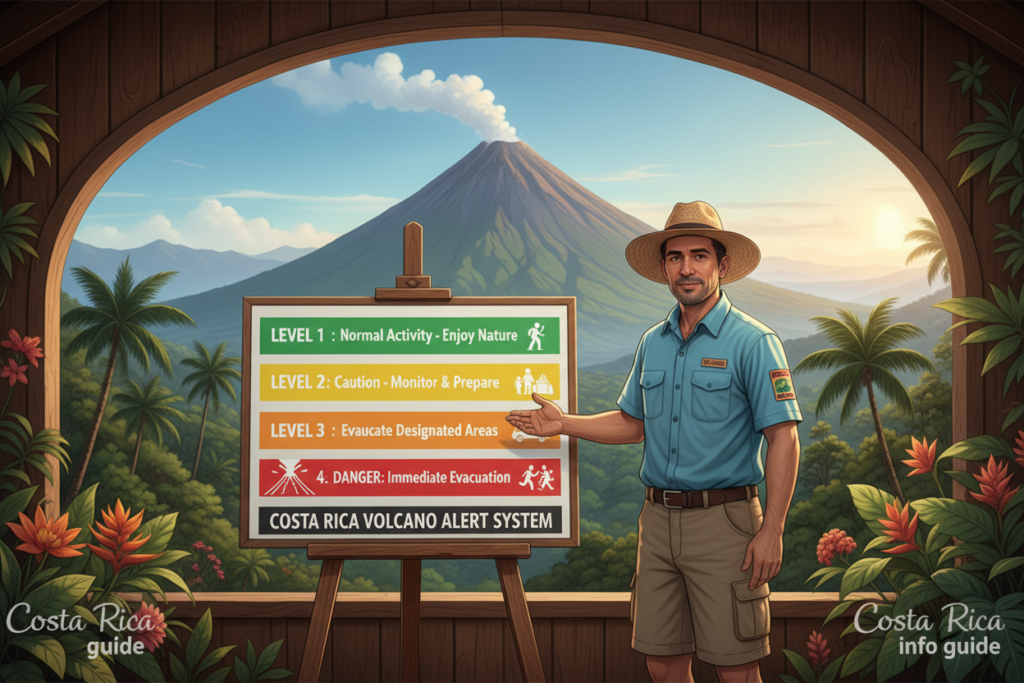
The color-coded alert levels used by Costa Rican authorities offer clear guidance during volcanic unrest. Knowing what each color means helps people stay safe.
Understanding Alert Levels – Red, Orange, and Yellow
Costa Rica uses a simple three-tier system. Each level tells you what to do.
| Alert Level | Meaning | Recommended Action |
|---|---|---|
| RED | Immediate danger exists. | Do not enter the area. Evacuate if ordered. |
| ORANGE | Increased alert and monitoring. | Restrict access. Prepare to leave and stay updated via news. |
| YELLOW | Elevated awareness. | Continue normal activities with caution. Have an emergency plan ready. |
These alerts are based on data from the Volcanological and Seismological Observatory of Costa Rica (OVSICORI).
Real-life Examples from Poás, Turrialba, and Other Volcanoes
Poás Volcano entered a RED alert in April 2025. Activity had increased since January. This shows how conditions can change over weeks.
Turrialba had eruptions from 2010 to 2022. Ash sometimes affected nearby communities. Daily life saw temporary changes.
Rincón de la Vieja showed confirmed activity from 2021 to 2024. The observatory monitored periodic eruptions. They rarely threatened populated areas.
Historical data shows patterns. Some volcanoes are frequently active. Others, like Arenal, have been quiet since 2010.
During a volcanic event, Costa Rican emergency services give clear instructions. They use multiple media channels in Spanish and English. For broader safety tips, consider this complete safety guide for La Fortuna.
Practical Tips for Navigating Volcano Areas
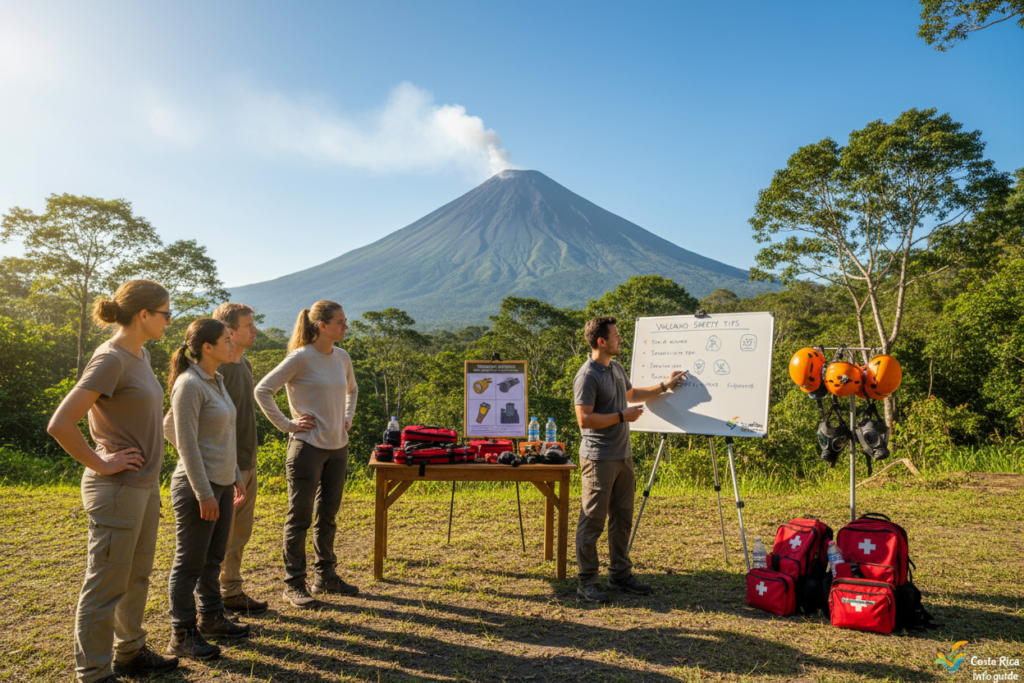
When exploring volcanic landscapes, having a practical safety plan is essential. These straightforward steps help protect you and your family.
They focus on prevention and clear action during events.
Do’s and Don’ts for Staying Safe
Follow these key actions to minimize risk.
- DO monitor official websites daily when alerts are active.
- DO keep emergency supplies like water and a flashlight at your site.
- DO inform your family of your location if traveling near volcano areas.
- DON’T enter closed zones, no matter how calm they appear.
- DON’T ignore changing alert levels or rely only on social media.
- DON’T approach an eruption for photos.
Local Authority Advice and Safety Practices
If ash begins to fall, go indoors immediately. Close all windows and doors.
Cover your nose and mouth with a damp cloth. Protect your family by keeping children and elderly members inside.
Travelers should stay close to hotel staff and tour operators. They get direct updates from local authorities.
Both San José and Liberia airports usually continue operations. Ash clouds can delay flights within minutes.
Check your flight status before heading to the airport. Contact your airline’s customer service about flexible rebooking.
U.S. citizens can enroll in the Smart Traveler Enrollment Program (STEP) for security updates. Call local authorities at 911 if you need evacuation help or see unreported activity.
Staying Informed and Prepared for Future Events
The key to confidently living in or visiting Costa Rica’s volcanic landscapes is a simple, proactive approach to information. The country’s advanced monitoring systems provide timely warnings, but your personal readiness is essential.
Use this quick checklist:
✓ Bookmark the OVSICORI and CNE websites for official updates.
✓ Save emergency contacts, including the U.S. Embassy.
✓ Prepare a basic supply kit and know your local alert zone.
✓ Enroll in the STEP program for security alerts.
Frequently Asked Questions
How often do eruptions happen? Frequency varies. Some volcanoes show regular activity, while others remain quiet for years.
Are San José airports safe during an event? Yes, operations typically continue. Flights may be delayed only if ash clouds are present.
Where can I find updates in English? Follow the U.S. Embassy alerts, the Tico Times, and use translation tools on government sites.
Understanding volcano safety is part of adapting to life here. For residency questions, CRIE offers expert service to help you navigate the process.
Costa Rica’s decades of experience and clear communication systems ensure you can enjoy this beautiful country safely by staying informed.
FAQ
How can I get the most current alerts about volcanic events in the country?
What do the different volcanic alert colors mean for visitors?
Are there specific safety rules for visiting national parks with volcanoes?
What should I do if volcanic ash starts falling in my area?
Which sources offer reliable eruption forecasts and scientific data?
Article by Glenn Tellier (Founder of CRIE and Grupo Gap)
Don't wait, contact us right now!
Call or WhatsApp Costa Rica +506 8373 2085 or +506 8706 3888
Call USA/Canada +1 305-906-6784