

Visiting as a Tourist vs. Becoming a Resident
It is essential to understand the difference between visiting Costa Rica as a tourist and living there as a legal resident. These are two distinct immigration statuses with different rights and limitations.
Tourist Status for U.S. Citizens
U.S. citizens do not need a visa to enter Costa Rica for tourism. Upon arrival, you will receive an entry stamp in your passport, which typically allows for a stay of up to 180 days. However, the exact duration is always at the discretion of the immigration officer. You must have a valid passport and proof of onward travel (a return ticket or a ticket to another country) to be granted entry. As a tourist, you are not permitted to work or earn an income in Costa Rica.
Legal Residency
Legal residency is for those who intend to live in Costa Rica long-term. It grants you the right to live in the country, and depending on the category, may allow you to work or own a business. Obtaining residency is a formal legal process that involves submitting an application and meeting specific requirements set by the Costa Rican government (DGME). This is the only legal way to live in Costa Rica permanently.
Main Residency Categories for U.S. Citizens

Costa Rica offers several temporary residency categories tailored to different circumstances. After three years of holding temporary residency, you can apply for permanent residency. Here are the most common options for U.S. citizens:
1. Pensionado (Retiree) Residency
This is one of the most popular options for retirees. To qualify, you must demonstrate a stable, permanent monthly income of at least $1,000 USD from a pension, Social Security, or other retirement fund. This category is not limited by age and can include a dependent spouse and children under 25.
2. Rentista (Independent Income) Residency
The Rentista category is for individuals with a stable, unearned monthly income of at least $2,500 USD for a period of 24 months. This income must come from a guaranteed source such as investments, annuities, or rental properties. Alternatively, an applicant can make a deposit of $60,000 USD in a Costa Rican bank. This is a great option for those who are not yet retired but have a reliable income stream.
3. Inversionista (Investor) Residency
This category is for those who wish to make a significant investment in Costa Rica. As of 2025, the minimum investment amount is $150,000 USD. The investment can be in real estate, an active business, or other qualifying projects. The Inversionista visa is an excellent path for entrepreneurs and those looking to contribute to the Costa Rican economy.
4. Family-Based (Vínculo) Residency
If you have a first-degree relative who is a Costa Rican citizen or legal resident (such as a spouse or parent), you can apply for residency based on your family connection. This is a common path for those who marry a Costa Rican citizen.
The Residency Application Process: A Step-by-Step Overview
Navigating the residency process can be complex, but it can be broken down into several key steps. CRIE specializes in managing this entire process for our clients, ensuring a smooth and efficient experience.
- Document Gathering and Apostilles: You will need to gather essential documents from the U.S., such as your birth certificate, marriage certificate (if applicable), and a federal criminal background check. All of these documents must be apostilled in the U.S. to be considered valid in Costa Rica.
- Translation: Once apostilled, all documents must be officially translated into Spanish by a certified translator in Costa Rica.
- Application Filing: The complete application package, including all documents, translations, and required forms, is submitted to the Dirección General de Migración y Extranjería (DGME), Costa Rica’s immigration authority.
- Enrollment in CAJA: All legal residents are required to enroll in the Caja Costarricense de Seguro Social (CAJA), the national public healthcare system. This is a mandatory step for residency approval.
- Receiving Your DIMEX Card: Once your residency is approved, you will be issued a DIMEX (Documento de Identidad Migratorio para Extranjeros), which is your official residency identification card.
- Renewals: Temporary residency is typically granted for two years and must be renewed. After three years of temporary residency, you are eligible to apply for permanent residency, which does not require renewal.
How CRIE Can Help
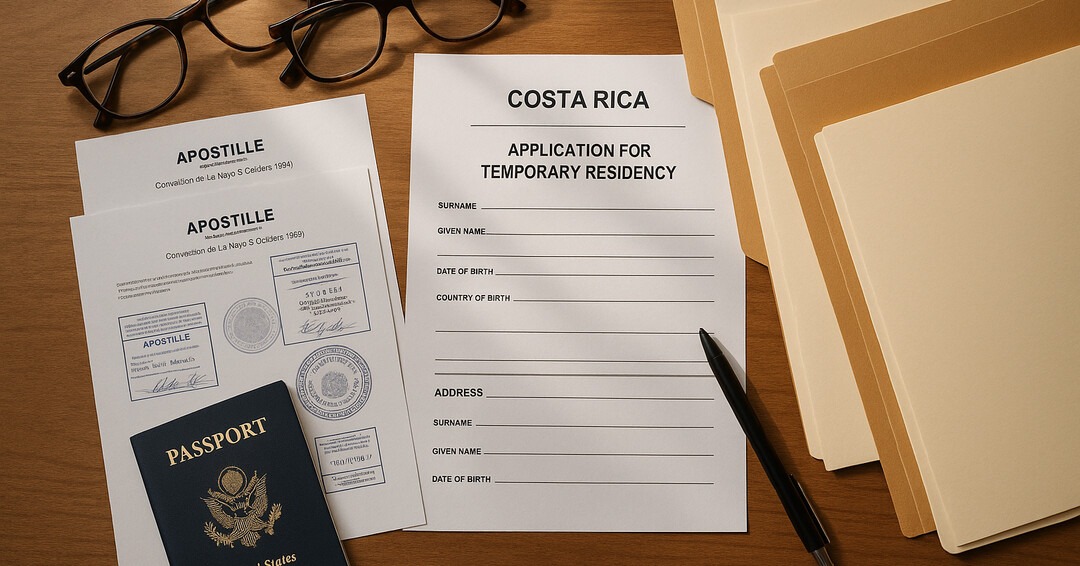
The Costa Rican residency process involves precise legal requirements and bureaucratic steps that can be challenging to navigate alone. As your dedicated immigration experts, CRIE handles every detail, from document review and translation to application submission and follow-up with the DGME. We provide the expertise and peace of mind you need to make your dream of living in Costa Rica a reality. For more information on how we can assist you, please see our overview of immigration services.
Frequently Asked Questions (FAQ)
How long does the residency process take?
The process can take anywhere from 6 to 12 months, depending on the category and the DGME’s processing times.
Can I work in Costa Rica with temporary residency?
It depends on the category. Pensionado and Rentista residents are generally not permitted to work as employees, but they can own a business and receive income from it.
What is an apostille?
An apostille is a form of authentication issued to documents for use in countries that participate in the Hague Convention of 1961. It certifies the authenticity of the signature on the document.
Do I have to be in Costa Rica to start the process?
You can begin gathering your documents from the U.S., but the final application must be submitted while you are legally in Costa Rica.
-
Is the $1,000 for Pensionado residency per person or per couple?
The $1,000 USD monthly income can cover both the primary applicant and a dependent spouse.
Your Journey to Pura Vida Starts Here
Moving to a new country is a major life decision, and the legal process is the most critical part of the journey. By understanding the options and partnering with an experienced immigration firm, U.S. citizens can confidently and legally establish a new life in Costa Rica. Contact CRIE today for a free assessment and let us help you begin your Pura Vida adventure.
WhatsApp: +506 8706 3888
Email: info@crie.cr
Website: crie.cr
AI-Generated Image Disclaimer: Please note that the images in this article are AI-generated for illustrative purposes and are inspired by business environments in Costa Rica.
Article by Glenn Tellier (Founder of CRIE and Grupo Gap)
Don't wait, contact us right now!
Call or WhatsApp Costa Rica +506 8373 2085 or +506 8706 3888
Call USA/Canada +1 305-906-6784