
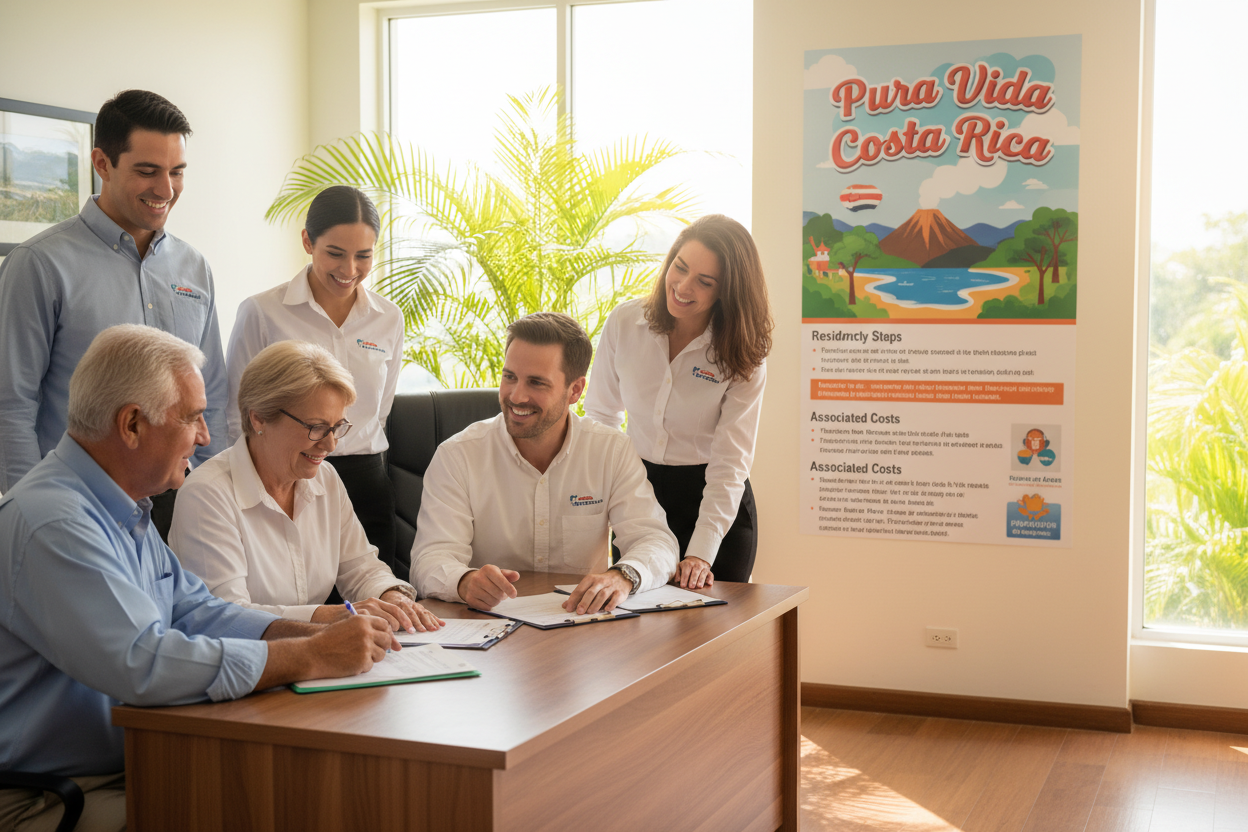
Welcome to your starting point for understanding legal residence in Costa Rica. We are CRIE, your dedicated guide through the country’s immigration system. This resource focuses on formal residency—the official path to staying long-term.
Many visitors enter as tourists, often receiving a 90-day stamp. While extensions are possible, perpetual tourist status isn’t a permanent solution. To establish true roots, you must transition to a formal residency status.
Foreign nationals and expats typically pursue one of three main pathways: Pensionado (retiree), Rentista (income-based), or Inversionista (investor). Each has specific financial requirements. The most efficient approach is to begin gathering your documents—like apostilled birth certificates—from your home country.
The process is structured and requires patience. We provide clear, step-by-step guidance based on current regulations from migracion.go.cr. Our role is to inform and prepare you—the final approval always rests with Costa Rican authorities.
Exploring Costa Rica Residency Options (Residencia Costarricense)

Costa Rica offers three distinct pathways to formal residency, each tailored to different financial profiles. Understanding these categories is the first step in your application process.
Pensionado Requirements (Pensionado: US$1,000+/month)
The Pensionado option is for retirees. It requires proof of a guaranteed pension income of at least $1,000 per month. This can come from Social Security or a private plan.
Official letters from your pension administrator are needed. For married couples, one qualifying pension can support both applications.
Rentista and Inversionista Criteria (Rentista: US$2,500/month & Investor: US$150,000 minimum)
The Rentista pathway suits those with stable income. You must show $2,500 per month for two years. A common method is depositing about $60,000 in a local bank.
The Inversionista category requires a $150,000 minimum investment. Approved areas include real estate or a business. A critical rule: any property must be in your personal name.
Note that a Digital Nomad visa is a temporary work permit. It does not lead to permanent residency. Remote workers seeking a lasting solution should consider the Rentista option instead.
All categories require enrolling in the national health system (CCSS). Initial residency is typically granted for one or two years. After this period, you must renew your status.
We outline the ongoing costs for each pathway. This includes renewal fees and mandatory health contributions. Planning for these expenses is essential for a smooth residency process.
Step-by-Step Guide to Applying for Residency
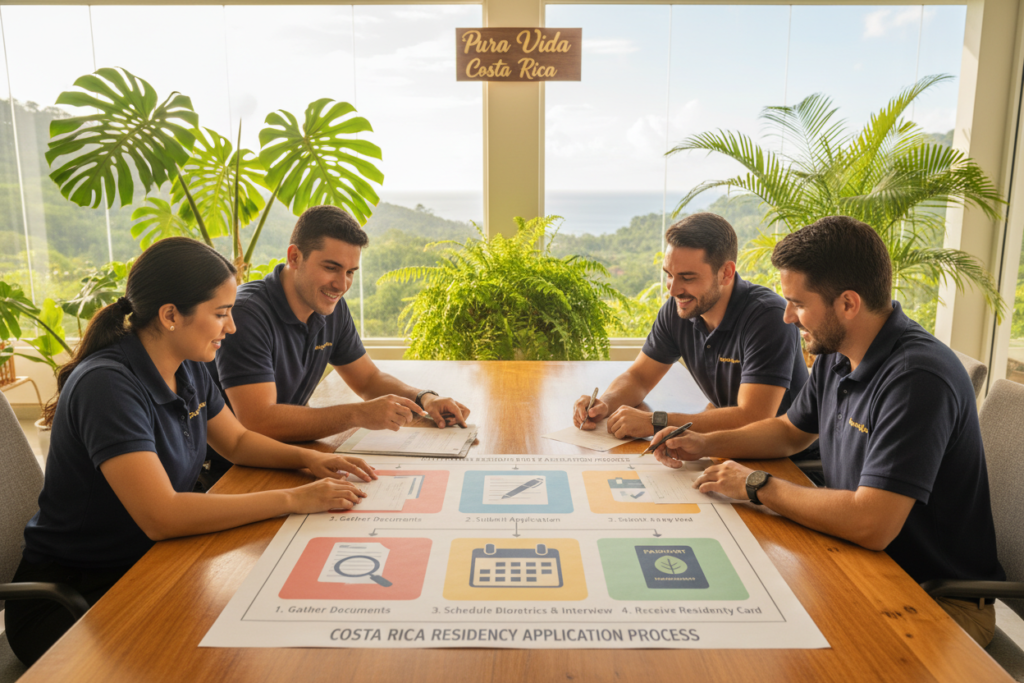
Applying for residency requires careful preparation, starting with determining which category fits your situation. We guide foreigners through this structured immigration process.
Who Qualifies for Residency?
Foreign nationals from most countries can apply. You must meet the financial requirements for your chosen category. A clean criminal background from your home country is also essential.
Preparing Your Documents (Apostilles & Translations)
Gather required documents like birth certificates and police checks. These need an apostille from your country’s authority. This authentication is mandatory.
All documents must be translated into Spanish by a certified translator in Costa Rica. This step usually happens after you arrive. Having everything ready beforehand saves significant time.
Once your application is filed, your legal status changes. You can stay in the country beyond your initial tourist days. The review process takes several months to over a year.
We recommend checking migracion.go.cr for the latest official requirements. Proper preparation is the best way to navigate this immigration journey.
Understanding costa-rica-visa-overstay-rules-fines-what-you-need-to-know
The practice of extending a tourist stay through repeated exits, known as a border run, faces increasing scrutiny under proposed regulations. Most visitors receive an entry stamp for up to 180 days, though officers can grant shorter durations.
Overstaying your authorized period incurs fines—currently $100 per month. Proposed law changes could raise this to $300 monthly. For a comprehensive detailed guide to overstay rules and, review current official sources.
Avoiding Common Mistakes
A major error is relying on perpetual tourism. Leaving every 180 days for a fresh stamp is becoming riskier. New rules may impose a 90-day wait before re-entry.
This strategy is not a substitute for legal residency. It offers no path to citizenship and complicates banking. Another mistake is confusing a Digital Nomad visa with permanent residency status.
Do not wait until your stamp expires to start the residency process. Arriving without apostilled documents ready causes significant delays. Plan ahead to transition smoothly.
Timeline and Process Overview
Monitor your entry stamp’s expiration date closely. As you approach your 180-day limit, you have a clear choice. You must either leave the country or begin a formal residency application.
Filing that application changes everything. Once submitted, you are legally allowed to remain during the review, regardless of your original tourist visa duration. Overstay concerns become moot at that point.
We advise starting the process well before your time runs out. Proposed changes with stricter fines and monitoring make the border run timeline unreliable for long-term planning.
Tips for Starting the Process from Home
The most strategic move for securing residency begins long before you board your flight to Costa Rica. We advise starting your document preparation domestically. This saves time and avoids the challenges of coordinating international requests from abroad.
Getting Your Documentation in Order
Begin by gathering vital records like birth and marriage certificates. Obtain police background checks from your home country. These documents typically need an apostille from your national authority.
For visitors from many countries, the Hague Apostille Convention streamlines this. Financial proof—pension letters or bank statements—should also be organized at home. This gives you direct access to institutions.
Time these requests wisely. Police checks often expire within six months. Having everything apostilled before travel is the efficient approach.
Key Resources: crie.cr and migracion.go.cr
Use crie.cr for step-by-step guidance through the immigration process. We specialize in Costa Rica residency and can help navigate each stage. Always verify current requirements at the official migracion.go.cr government site, as laws can change.
Common challenges include language barriers and complex bureaucratic procedures. Our expertise helps streamline this. You can enter as a tourist with your prepared documents.
Then, begin Spanish translations and file your application locally. This allows you to stay legally during the review. For a deeper look at the journey, explore this guide on how to gain residency in Costa Rica.
Wrapping Up Your Costa Rican Residency Journey
Forget managing visa expiration dates. Formal residency grants you the authority to stay and build your life in Costa Rica. The three primary pathways—Pensionado ($1,000+ monthly pension), Rentista ($2,500 monthly income), and Inversionista ($150,000 investment)—provide this legal status.
Starting your document preparation from home is key. Apostilled birth certificates and police checks streamline the application process. The result is worth the effort: lasting stability instead of temporary tourist permissions.
We guide expats through each step, though government timelines vary. For personalized support on your journey, contact us via WhatsApp at +506 8706 3888 or email info@crie.cr. Always verify current rules at migracion.go.cr. Your path to a secure future in this beautiful country begins with proper residency.
FAQ
How long can I legally stay in Costa Rica as a tourist?
What happens if I overstay my tourist visa in Costa Rica?
What is "perpetual tourism" and is it a safe long-term strategy?
Can I apply for residency from within Costa Rica on a tourist visa?
What are the main residency categories for retirees and investors?
FAQ
How long can I legally stay in Costa Rica as a tourist?
As a tourist, you can stay for a period determined by the immigration officer at your point of entry, which is typically 90 days. However, the maximum stay granted by law is 180 days. The exact duration will be stamped in your passport. You must leave the country or have your status legally changed before this stamp expires.
What happens if I overstay my tourist visa in Costa Rica?
Overstaying your visa is a violation of immigration law. You will face fines when you leave the country. The fine is currently 0 USD per month of overstay. You must pay this fine directly at the immigration office at the airport or border crossing before you can receive your exit stamp. Persistent overstaying can lead to future entry being denied.
What is "perpetual tourism" and is it a safe long-term strategy?
“Perpetual tourism” refers to the practice of leaving Costa Rica for a short trip every 90 or 180 days to reset your tourist visa. While some foreigners do this, it carries significant risk. Immigration authorities are increasingly scrutinizing this pattern. It offers no legal residency rights, complicates practical matters like banking, and a border agent can deny you re-entry at their discretion. We advise pursuing formal residency for long-term stability.
Can I apply for residency from within Costa Rica on a tourist visa?
Yes, you can initiate the residency process while in the country on a tourist stamp. This is a common path. Once you submit a complete residency application to Migración, you receive a temporary document that legally allows you to remain in the country while your file is processed, even if your original tourist stamp expires. You cannot leave during this review without special permission.
What are the main residency categories for retirees and investors?
The two most common categories are Pensionado and Rentista. The Pensionado visa requires a guaranteed lifetime pension of at least
FAQ
How long can I legally stay in Costa Rica as a tourist?
As a tourist, you can stay for a period determined by the immigration officer at your point of entry, which is typically 90 days. However, the maximum stay granted by law is 180 days. The exact duration will be stamped in your passport. You must leave the country or have your status legally changed before this stamp expires.
What happens if I overstay my tourist visa in Costa Rica?
Overstaying your visa is a violation of immigration law. You will face fines when you leave the country. The fine is currently $100 USD per month of overstay. You must pay this fine directly at the immigration office at the airport or border crossing before you can receive your exit stamp. Persistent overstaying can lead to future entry being denied.
What is "perpetual tourism" and is it a safe long-term strategy?
“Perpetual tourism” refers to the practice of leaving Costa Rica for a short trip every 90 or 180 days to reset your tourist visa. While some foreigners do this, it carries significant risk. Immigration authorities are increasingly scrutinizing this pattern. It offers no legal residency rights, complicates practical matters like banking, and a border agent can deny you re-entry at their discretion. We advise pursuing formal residency for long-term stability.
Can I apply for residency from within Costa Rica on a tourist visa?
Yes, you can initiate the residency process while in the country on a tourist stamp. This is a common path. Once you submit a complete residency application to Migración, you receive a temporary document that legally allows you to remain in the country while your file is processed, even if your original tourist stamp expires. You cannot leave during this review without special permission.
What are the main residency categories for retirees and investors?
The two most common categories are Pensionado and Rentista. The Pensionado visa requires a guaranteed lifetime pension of at least $1,000 USD per month. The Rentista visa requires proof of a $2,500 USD monthly income for two years, guaranteed by a bank. For investors, the Inversionista category requires a minimum investment of $150,000 USD in approved Costa Rican assets or businesses.
What is the most common mistake people make with Costa Rican immigration?
The biggest mistake is underestimating the document preparation process. All foreign-issued documents, like birth certificates and police records, require an apostille (or authentication) and an official translation into Spanish by a certified translator in Costa Rica. Starting this process from your home country before you move can save months of delay and uncertainty.
,000 USD per month. The Rentista visa requires proof of a ,500 USD monthly income for two years, guaranteed by a bank. For investors, the Inversionista category requires a minimum investment of 0,000 USD in approved Costa Rican assets or businesses.
What is the most common mistake people make with Costa Rican immigration?
The biggest mistake is underestimating the document preparation process. All foreign-issued documents, like birth certificates and police records, require an apostille (or authentication) and an official translation into Spanish by a certified translator in Costa Rica. Starting this process from your home country before you move can save months of delay and uncertainty.
What is the most common mistake people make with Costa Rican immigration?
Article by Glenn Tellier (Founder of CRIE and Grupo Gap)
Don't wait, contact us right now!
Call or WhatsApp Costa Rica +506 8373 2085 or +506 8706 3888
Call USA/Canada +1 305-906-6784