
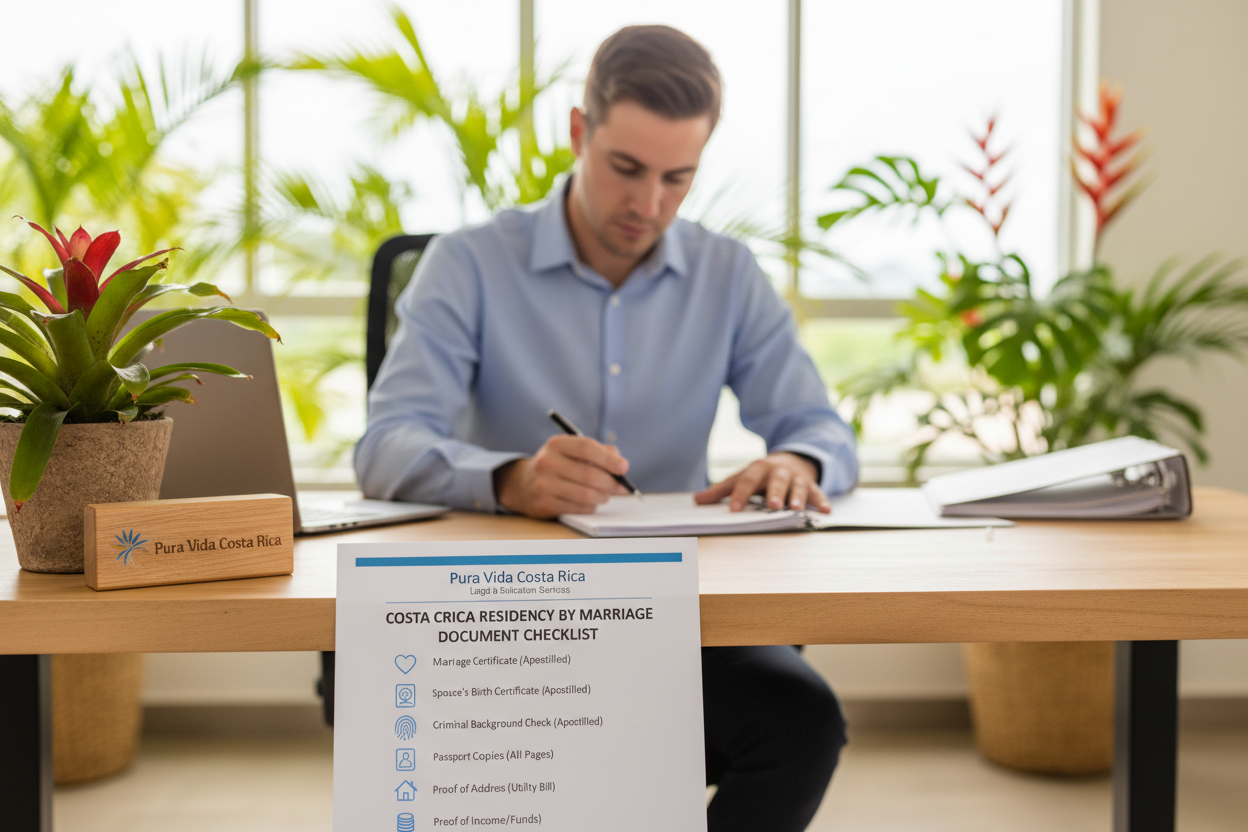
If you’re legally married to a citizen of this beautiful country, the spousal category (Matrimonio) offers a direct pathway to legal status. Unlike other options, it doesn’t require meeting pension or investment thresholds.
This guide is designed to help you prepare a clean, organized document package before you arrive. Proper preparation reduces delays caused by missing steps or incomplete authentication.
We understand this process is detail-sensitive. Most setbacks stem from civil registry issues or submitting files that don’t match what authorities expect.
At CRIE, we guide couples through marriage registration and the specific evidence needed to demonstrate a genuine relationship. Let’s walk through who qualifies and what you need.
This page will explain the documents to prepare at home, how apostilles and translations work, and realistic timelines. We’ll also cover common mistakes that cause delays.
Starting your document preparation from your home country is crucial. Properly authenticated birth certificates and police clearances help avoid months of back-and-forth.
We’ll clarify how spousal status differs from categories like Pensionado or Rentista. We’ll also explain why the Digital Nomad visa doesn’t count toward permanent status.
Understanding Spousal Residency in Costa Rica
Legal marriage to a Costa Rican citizen opens the door to spousal residency, a category distinct from other immigration options. This pathway, formally called Matrimonio, is designed for foreign nationals who want to build a long-term life here. It does not require meeting pension or investment thresholds that other visa types demand.
Who Qualifies for Spousal Residency?
You must be legally married to a Costa Rican citizen. Your union must be verifiable through the country’s official civil records.
If you married abroad, that marriage typically needs proper registration here before filing. Authorities may also request evidence of a genuine, ongoing relationship.
This option is ideal for couples establishing their home in the Central Valley, Guanacaste, or coastal areas. It suits those seeking stability without the financial conditions of other categories.
Legal Marriage and Registration Requirements (Matrimonio)
The core requirement is a valid marriage registered in Costa Rica’s Civil Registry. This step is a common source of delay if overlooked.
Contrast this with other common categories. The Pensionado category requires a minimum monthly pension. The Rentista category demands a guaranteed income.
The Inversionista category needs a significant capital investment. Importantly, the Digital Nomad visa is not a residency pathway and does not count toward permanent status.
Spousal residency permits annual renewal. After three consecutive years, many plan a smooth transition to permanent status.
A key advantage is that, unlike some other types, this category may allow you to work legally once properly documented. This makes it practical for couples where employment is part of their life plan.
Preparing Your Documents and Required Apostilles

To avoid months of delays, the most critical step begins in your home country: securing official records with the correct authentication. A clean, pre-arrival document plan is your best defense against avoidable setbacks with immigration authorities.
Essential Home Documents: Birth, Marriage, and Police Certificates
Start by collecting core civil records. You need an official, certified copy of your birth certificate. A police clearance certificate from your country of origin or legal residence is also mandatory.
This police document is valid for only six months from its issue date. Timing its request is crucial. You will also need a clear scan of your passport’s identity page.
Marriage documentation requirements depend on where your union occurred. All names and dates must match perfectly across every paper.
Notarization, Apostilles, and Translations Explained
Foreign documents require a specific authentication chain. Papers without a government seal must first be notarized by a local notary public.
In the U.S. and many nations, notarized documents then go to the Secretary of State for an apostille. If apostilles aren’t available, your local Costa Rican consulate must consularize them.
Any text not in Spanish needs an official translation. This must be done directly into Spanish by a certified translator or a consulate. English translations are not accepted.
For the latest official details, you can always verify processes at migracion.go.cr.
Costa Rica Residency by Marriage Document Checklist: Step-by-Step Guidance
A step-by-step checklist serves as your essential guide. It aligns your case with current DGME expectations from start to finish.
Checklist for Documents to Prepare Before Arrival
Begin with core papers from your home country. You need an authenticated birth certificate and a police clearance valid for six months.
Include a clear passport scan and your marriage documentation. If married abroad, plan for its registration here.
Gather practical proof of your shared life. This can be a joint lease or utility bills in both names.
Timeline Overview and Process Milestones
The first step confirms your legal basis and identifies any risk points. Next, we build a controlled checklist for your exact situation.
We then prepare a consistent filing package. After submission, you receive official proof your case is in process.
Authorities may request an interview or additional evidence. Once approved, you complete post-approval steps to obtain your DIMEX card.
Processing times vary. The best way to reduce delays is to file a clean, consistent package. For the latest details, verify requirements at migracion.go.cr.
This temporary status renews annually. After three consecutive years, many plan a smooth transition to permanent residency.
Common Mistakes and How to Avoid Delays
Avoidable mistakes in civil registry and authentication can add months to your processing time. Most delays stem from preventable errors couples make when they assume the process is simpler than it is.
Issues with Civil Registry and Inconsistent Information
The top error is not registering a foreign union here. Your marriage certificate from abroad often needs a local registration step before filing.
Even small name variations between your passport, birth certificate, and other records can trigger formal requests for clarification. Immigration expects perfect consistency across all papers.
Expired Items and Mismanaged Authentication
Police clearances are only valid for six months from issue. Ordering them too early or too late wastes time and money.
Missing apostilles or incorrect translations also cause setbacks. Every foreign document must follow the proper authentication chain.
We review your package early to catch these issues. This helps you submit a clean, consistent application from the start.
Your Next Steps to Starting Your Residency Journey
The path to building a life together in Costa Rica starts with a clear, organized approach to immigration paperwork. The spousal category offers a direct route to legal status without income thresholds. Success hinges on clean civil records and properly authenticated documents from your home country.
We guide you through each step. We confirm eligibility, build a tailored checklist, and review your package for consistency. This beautiful nation offers incredible benefits for residents, from natural beauty to welcoming communities.
Other categories like Pensionado or Rentista have different financial requirements. After three years of temporary status, many plan a transition to permanent residency. For personalized guidance, contact us via WhatsApp +506 8706 3888 or info@crie.cr. We provide realistic expectations. Official rules can change, so we align your file with current DGME expectations.
FAQ
What are the main document requirements for applying through marriage?
How long does the entire spousal residency process typically take?
Can I work in the country with this type of residency?
What is the most common mistake that causes application delays?
Do I need to prove financial income or assets for this application?
What happens if my foreign-issued documents expire during the process?
Is there an interview as part of the application process?
Article by Glenn Tellier (Founder of CRIE and Grupo Gap)
Don't wait, contact us right now!
Call or WhatsApp Costa Rica +506 8373 2085 or +506 8706 3888
Call USA/Canada +1 305-906-6784