

Navigating a new country’s legal system can feel overwhelming. We’re here to provide clarity. This guide offers step-by-step insights for self-employed professionals exploring residency in Costa Rica.
CRIE brings over twenty years of experience to this process. We act as your trusted partner, cutting through the complexity with practical, actionable advice. Our goal is to build your confidence—no unrealistic promises, just grounded expertise.
Costa Rica attracts entrepreneurs and freelancers for many reasons. Its stunning natural beauty and mild climate are just the start. The country offers a stable democracy and a genuinely business-friendly environment.
Multiple residency pathways exist here. They are tailored to different financial situations and professional circumstances. Understanding which option fits you is the first crucial step.
This comprehensive resource addresses the real questions you have. We’ll cover visa categories, financial requirements, and essential documentation. You can—and should—begin much of the preparation from your current home.
We combine professional immigration knowledge with plain-language explanations. Our approach helps you move forward with clarity, avoiding common pitfalls. Let’s explore what makes Costa Rica a compelling destination for your next chapter.
Understanding Costa Rica’s Immigration Landscape for Self-Employed Professionals
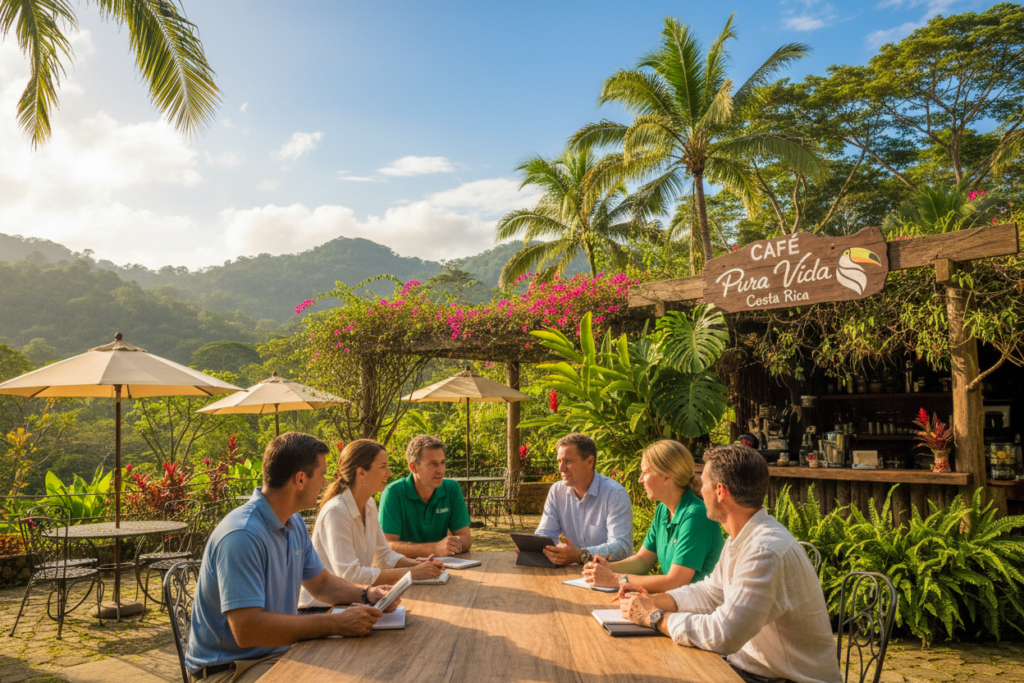
For freelancers and entrepreneurs, Costa Rica’s residency policies have undergone notable modernization. The country now actively welcomes self-employed professionals and digital entrepreneurs. These individuals bring international income without competing for local jobs.
We see clearer guidelines and more efficient processing times today. The system is designed for flexibility, offering various visa options for foreign professionals. This evolution makes planning your move more straightforward than in the past.
A major advantage is the territorial taxation system. Income you earn from clients outside Costa Rica is not subject to local income tax. This can mean substantial savings, though maintaining clear documentation of your foreign income is essential.
The appeal extends beyond finances. The country offers a stable democracy, excellent healthcare, and the celebrated “Pura Vida” work-life balance. Multiple residency pathways exist, each tailored to different financial situations like pension, stable income, or investment.
Navigating these options requires current, accurate information. With two decades of experience, we guide clients through this evolving landscape. For detailed key insights for self-employed individuals, our expertise provides clarity grounded in today’s requirements.
Residency Categories Explained: Pensionado (Pensionado), Rentista (Rentista), and Inversionista (Inversionista)

Understanding the specific financial pathways to residency is the first practical step for self-employed professionals considering Costa Rica. The three primary categories each have clear financial thresholds and documentation requirements.
Eligibility Thresholds and Requirements
The Pensionado (Pensionado) category requires proof of a lifelong pension of at least $1,000 per month. This suits retirees with stable pension income.
For active professionals, the Rentista (Rentista) category is common. It demands $2,500 in verifiable monthly income for two years. Alternatively, a $60,000 deposit in a Costa Rican bank meets the requirement.
Understanding Category-Specific Criteria
The Inversionista (Inversionista) category needs a minimum $150,000 investment. A critical rule: if investing in property, it must be in your personal name, not a corporation.
All categories grant temporary residency initially. Applicants become eligible for permanent residency after maintaining this status for three years.
Step-by-Step Guidance for Your Residency Application
A clear, methodical approach to the application process is your best defense against delays. The entire journey, from gathering your initial paperwork to receiving your DIMEX card, typically spans four to six months. We guide applicants through each phase to ensure nothing is overlooked.
Who Qualifies for Residency
Qualification hinges on your financial profile. The Pensionado category requires a permanent pension of at least $1,000 monthly. The Rentista option needs proof of $2,500 in stable foreign income each month.
Alternatively, the Inversionista pathway demands a $150,000 investment. All applicants must also provide clean police records and meet basic health requirements. Determining your correct category is the first critical step.
Checklist of Required Documents
Your documentation forms the backbone of your application. The core list includes your valid passport, birth certificate, and marriage certificate if applicable. You must also provide a police clearance and proof of financial means.
Every document issued outside Costa Rica requires an apostille from your home country. All non-Spanish paperwork needs official translation. We strongly advise starting this preparation from home to prevent frustrating hold-ups later in the process.
Preparing Essential Documentation: Apostilles, Translations, and More
The foundation of a successful residency application lies in meticulous document preparation. This phase is where many applications encounter avoidable delays. Getting it right from the start saves significant time and frustration.
Obtaining Apostilles and Translations
An apostille is an international certification. It authenticates your documents for use in Costa Rica and other Hague Convention countries. You obtain this stamp from the appropriate authority in your home country.
In the United States, this is typically your state’s Secretary of State office. Common documents needing apostilles include your birth certificate, marriage certificate, and police clearance. Financial proof for your application category may also require this step.
After apostilling, every non-Spanish document needs an official translation. This must be done by a translator authorized by the Costa Rican Ministry of Foreign Affairs. Using a recognized professional is mandatory for your paperwork to be accepted.
Organizing Your Paperwork Effectively
Create both physical and digital copies of every document. Organize them chronologically and maintain a detailed checklist. This checklist should track what has been apostilled, translated, and submitted.
We strongly recommend completing this entire process from home, before you arrive. This preparation allows you to submit your Costa Rican application promptly. It prevents the need for expensive international trips later to obtain missing documents.
Always keep backup copies of everything. For comprehensive support with this crucial stage, explore our additional services. Proper organization is your best defense against administrative delays.
Application Timeline and Key Milestones
Setting realistic expectations for your residency application timeline is crucial for a smooth transition. The entire process, from initial preparation to receiving your DIMEX card, typically spans four to six months. Understanding each phase helps you plan effectively and avoid unnecessary stress.
Document Submission and Review Process
After you submit your application, either online or in person, officials conduct a preliminary review. This initial check ensures all required documents are present and properly formatted. It usually takes one to two weeks.
The comprehensive evaluation period follows. Authorities verify your financial proof and conduct background checks. This deeper assessment can take two to three months. Be prepared for possible requests for additional documentation during this phase.
Processing Time Expectations
Once your application receives approval, you will schedule a biometric appointment. Fingerprints are taken, and your official residency ID card is processed. This final step typically adds another two to four weeks to the timeline.
We always advise checking the official migracion.go.cr website for current processing times. Application volume and your documentation completeness can cause variations. Patience and prompt responses to any requests are key to a smooth application process in Costa Rica.
Common Pitfalls and Mistakes to Avoid
We consistently see the same handful of mistakes derail applications, creating months of unnecessary delay. Being aware of these common errors is your first line of defense in the residency process.
Incomplete documentation is the top cause of delays. Missing a single apostille or submitting an expired police clearance can set your application back months. Always double-check every item against the official requirements list.
Many applicants underestimate the timeline, expecting approval in weeks. The reality is a 4-6 month process. Planning for this longer duration prevents stress and allows for realistic life arrangements.
For Rentista applicants, failing to document that your income originates from outside Costa Rica is a frequent issue. Maintain clear records of client contracts and international payment sources. Inversionista applicants must purchase qualifying property in their personal name, not through a corporation.
Once you have temporary residency, you must visit Costa Rica at least once per year. Missing this requirement can lead to cancellation. Also, budget for mandatory Caja (social security) enrollment, as monthly contributions are not optional for residents.
Navigating Legal Requirements with CRIE’s Expertise
Navigating the legal intricacies of Costa Rica’s residency system is a task best undertaken with seasoned professional support. The country’s immigration regulations are not static; they evolve. With over twenty years in this field, we provide the current knowledge and established relationships that smooth the application process.
Understanding the specific rules that apply to your case is crucial. Requirements can shift, and yesterday’s information may not suffice today. Our team maintains direct connections with Costa Rican immigration officials and continuously monitors policy updates.
Staying Updated with Immigration Laws
This proactive approach ensures our guidance reflects the latest legal landscape. We don’t make unrealistic promises about approval. Instead, we offer expert strategies to strengthen your application based on your unique circumstances.
We clarify critical details, like work permissions tied to your temporary residency status. Compliance extends beyond the initial filing—it involves annual visits, Caja enrollment, and proper tax reporting. Our role is to guide you through each step, connecting you with trusted local professionals when needed.
Costa Rica Immigration for Self-Employed Individuals: Key Insights with CRIE
Self-employed professionals exploring Costa Rica find distinct advantages in the residency framework. Your foreign-sourced income typically isn’t taxed locally under the territorial system. This creates significant financial benefits for consultants, freelancers, and digital entrepreneurs.
The Rentista category often serves as the ideal pathway. It requires demonstrating $2,500 in stable monthly income from clients outside the country. You prove this through contracts, invoices, and consistent bank statements.
Self-employed individuals face more rigorous documentation requirements than salaried employees. Officials expect to see tax returns, business registration, and detailed financial records. Presenting variable income effectively is a common challenge we help clients overcome.
Understanding work permissions is crucial. Your residency status may limit local employment, but managing an international business is generally permitted. For those considering expansion, the Inversionista option requires a $150,000 investment.
Success hinges on thorough preparation and honest financial assessment. With twenty years of experience, we guide self-employed professionals through these specific legal requirements. Our expertise turns complex verification into a manageable process.
Residency vs. Digital Nomad: Clarifying Your Options
For digital nomads dreaming of a future in Costa Rica, understanding what the visa does not provide is as important as knowing what it does. A common confusion we clarify is that the Digital Nomad Visa is not a residency visa. It does not count toward permanent residency or citizenship timelines.
The Digital Nomad Visa, officially an “Estancia,” allows remote workers to stay for one year, renewable for a second. It requires proof of $3,000 monthly foreign income ($4,000 for families), health insurance, and a clean record. This is a temporary stay permit, not formal residency.
For digital nomads seeking a long-term path, the Rentista category is the closest residency option. It requires demonstrating $2,500 in stable monthly income for two years. The key difference is that Rentista grants actual temporary residency status.
Time under the Rentista visa counts toward your three-year requirement for permanent residency. Time on a nomad visa does not. We typically recommend the Rentista path if you are serious about making Costa Rica your home.
The Digital Nomad Visa makes sense for a shorter, one-to-two-year experience. We can assess your situation to see which option aligns with your income structure and long-term goals in this beautiful country.
Financial Stability and Tax Considerations for Expats
Establishing your financial stability is the cornerstone of a successful residency application in Costa Rica. Officials need clear evidence you can support yourself without seeking local employment. This involves two key areas: proving your income and understanding the tax landscape.
Demonstrating Proof of Income
Self-employed individuals must provide more documentation than salaried employees. For the Rentista category, you prove $2,500 in stable monthly income. This requires 6-12 months of bank statements, client contracts, and invoices.
If your income fluctuates, show your average meets the threshold. Alternatively, a $60,000 deposit in a Costa Rican bank serves as a financial guarantee. This option suits those with variable earnings.
Tax Planning and Compliance
Costa Rica uses a territorial tax system. Income earned from business outside the country is not subject to local income tax. This is a major advantage for freelancers and consultants.
You must still file an annual tax return, even if you owe nothing. Maintain clear records proving your income originates from foreign clients. Also, budget for mandatory Caja contributions, which are based on your reported income.
We recommend consulting tax professionals familiar with both Costa Rican and your home country’s laws. Proper planning ensures full compliance and protects your financial interests.
Initiating Your Process from Home with Ready Documents
Your journey to Costa Rican residency doesn’t start at the border; it starts at your home office or kitchen table. The most effective strategy is to complete the bulk of your document preparation before you relocate. This front-loaded approach means you arrive ready to submit, not scramble to gather paperwork.
Begin by obtaining apostilles and police clearances from your home country. You have easier access to these services now. Completing this critical documentation phase from home prevents expensive trips back later.
Costa Rica’s Digital Immigration Portal allows for online application submission. Official translations can also be arranged remotely. This means much of the administrative process can be handled before your move.
This preparation transforms a complex transition into a manageable one. You shift from applicant to resident more smoothly. We provide remote consultations to guide your entire preparation from home, ensuring your application is complete and correct from the start.
Key Resources: crie.cr and migracion.go.cr for Guidance
Two essential online resources will serve as your primary guides throughout the Costa Rica residency process. You need both official government information and expert professional support. Bookmark these sites for reliable immigration guidance.
The official source is migracion.go.cr. This is the website of Costa Rica’s immigration authority. Use it to verify current requirements, download forms, and check your application status.
For personalized services and interpretation, turn to crie.cr. We provide comprehensive consultations and document preparation guidance. Our team helps you navigate the official requirements with clarity and confidence.
We recommend checking the official site for policy updates. Then, contact us for practical assistance tailored to your case. Ready for clear guidance? Reach out via WhatsApp at +506 8706 3888 or email info@crie.cr.
Embarking on a New Life in Costa Rica with CRIE Support
Achieving residency in Costa Rica is a clear, step-by-step process that becomes manageable with the right support. This move represents a significant life decision. It requires careful planning and realistic expectations.
We provide the expert guidance you need. With over twenty years of experience, we have helped thousands of professionals successfully navigate their application. Our role is to be your knowledgeable partner, not to make unrealistic promises.
Costa Rica offers a stable, beautiful environment for your new life. The key to a smooth transition is starting your documentation preparation from home. This proactive approach sets the foundation for success.
Ready to begin your pathway? Contact us for a personalized consultation on our services. Reach CRIE via WhatsApp at +506 8706 3888, email info@crie.cr, or visit crie.cr.
FAQ
What are the main residency options for self-employed professionals moving to Costa Rica?
Can I work for my foreign clients or company while on a residency visa?
How long does the residency application process typically take?
What is the most common mistake applicants make?
Do I need to translate all my documents into Spanish?
How does CRIE assist throughout the immigration process?
What are the tax implications for self-employed residents?
Should I choose the Digital Nomad Visa or a residency category?
Article by Glenn Tellier (Founder of CRIE and Grupo Gap)
Don't wait, contact us right now!
Call or WhatsApp Costa Rica +506 8373 2085 or +506 8706 3888
Call USA/Canada +1 305-906-6784