
Let’s clear up a major point first. The remote worker visa launched here in 2022 is a temporary permit. It allows you to live and work remotely for one year, with a potential extension.
It requires proof of a steady monthly income. However, this visa is not a form of legal residency. It does not create a path toward permanent status or citizenship in this country.
This guide focuses on the real, long-term pathways offered by Costa Rica’s immigration system, known as CRIE. We’ll explore the main residency categories for those seeking stable legal footing.
These include options for retirees, those with stable income, and investors. Each has specific financial requirements you must meet.
The most critical step begins at home, long before you arrive. Successful applications are built on perfectly organized documents. These often need official stamps and certified translations.
We are here to walk you through this complex landscape. Think of us as your straightforward guide, providing clear maps without unrealistic promises.
Overview of Costa Rica Residency and the CRIE Process
The CRIE system represents the sole authorized framework for obtaining legal residency. Managed by the General Directorate of Immigration, it is the only legitimate pathway to stable status in the country.
This official process is fundamentally different from temporary permits. It establishes your full legal rights and obligations as a resident.
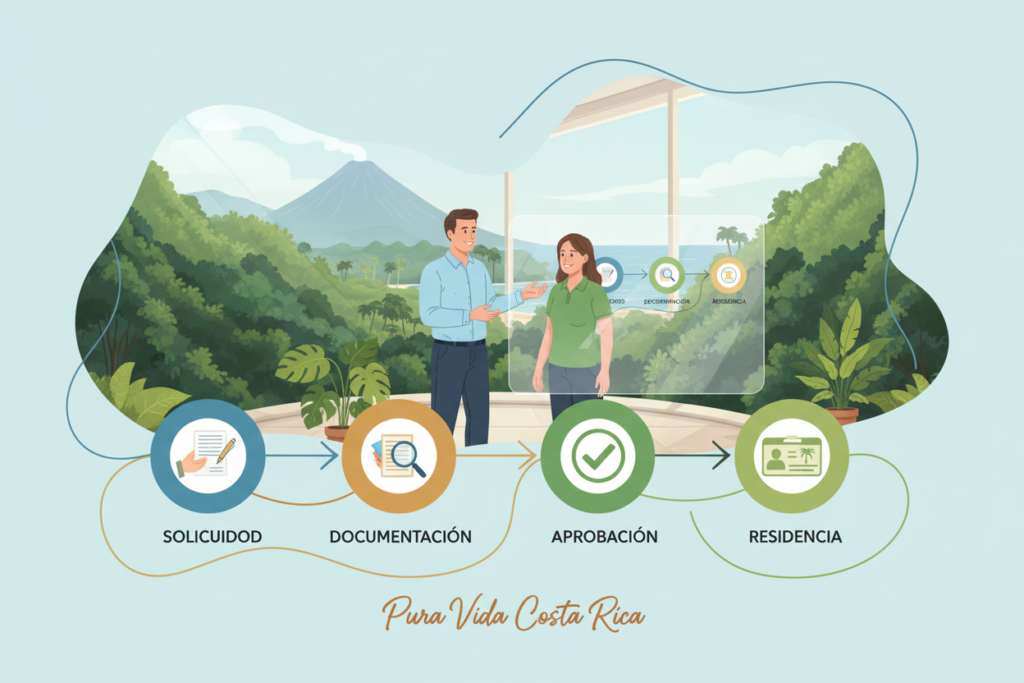
The CRIE application involves multiple stages. You begin with an eligibility assessment and meticulous document preparation in your home country.
Next comes the formal submission, a thorough immigration review, and finally, receiving your physical residency card.
Processing times are not fixed. They depend on your chosen category, how complete your file is, and current government workload. Expect the journey to take several months.
All official rules and your status can be tracked at migracion.go.cr. We strongly recommend using this source to verify current requirements.
The system demands precision. Your papers need apostilles and certified translations. Incomplete submissions almost always cause major delays.
We emphasize transparency. There are no guaranteed approvals or legal shortcuts within this immigration framework.
Understanding Digital Nomad vs. Residency Options

The immigration landscape here presents two clear paths. One is for a temporary stay, and the other is for permanent settlement.
Why the Digital Nomad Visa Is Not Considered Residency
We must be direct. The digital nomad visa is a temporary authorization. It allows remote workers to live here for one year, with one possible renewal.
It requires proof of foreign income. However, this nomad visa explicitly does not grant residency status. Time spent on it does not count toward permanent residency or citizenship.
Comparing CRIE Residency with Other Visa Types
True legal status comes from the CRIE system. For remote workers seeking a real pathway, the Rentista category is often the closest match.
It requires demonstrating a guaranteed monthly income. Other options include Pensionado for retirees and Inversionista for investors. These categories grant full resident rights and a path forward.
The key difference is foundational. CRIE residency allows you to build a permanent future, while a temporary visa does not.
Step-by-Step Preparation for Your CRIE Application
The foundation of a successful CRIE application is built long before you submit your paperwork. We cannot stress this enough—rushing this process is the biggest mistake applicants make. Proper preparation begins in your home country, often months before your planned move.
Who Qualifies? (¿Quién califica?)
Your eligibility depends entirely on which financial category fits your situation. The Pensionado category requires a verifiable pension of at least $1,000 USD monthly.
The Rentista option needs proof of guaranteed income of $2,500 monthly for two years. For investors, the Inversionista category demands a minimum $150,000 investment in personally-titled assets.
Required Documents: Apostilles and Official Translations
All applicants will need core documents like a valid passport, birth certificate, and police clearances. These papers must be apostilled according to the Hague Convention.
This stamp confirms authenticity for international use. After apostilling, every non-Spanish document requires an official translation.
You must use a certified translator registered with Costa Rica’s Ministerio de Relaciones Exteriores. Financial proof, like 12 months of bank statements, also needs this careful preparation.
Starting early with these steps is crucial for a smooth application process.
Income Thresholds & Eligibility: Pensionado, Rentista, Inversionista
Navigating the financial requirements for residency begins with understanding the three core pathways. Each category has specific thresholds you must prove to qualify.
Minimum Income Requirements and Documentation
The Pensionado category requires a verifiable pension of at least US$1,000 per month. You need official award letters and 12 months of bank statements as proof.
For the Rentista option, you must show a guaranteed income of US$2,500 each month for two years. This requires detailed bank records plus contracts or statements proving future stability.
The Inversionista pathway demands a minimum investment of US$150,000. Crucially, any property must be in your personal name, not a corporate entity.
All financial proof must be current, complete, and clear. Authorities assess the stability of your income, not just the amount.
Costa Rica Digital Nomad Renewal Guide: Essential Steps for Renewal
Many remote workers reach a crossroads after their initial year in the country. If you are looking to stay beyond the two-year maximum, you need a different legal path. The temporary visa can be renewed once for a second year.
This requires 180 days of physical presence, a $90 fee, continued income proof, and valid health insurance. After that, no further extensions are possible. Your search for a long-term solution means transitioning to official residency.
Starting at Home: Organize Your Documentation
This critical transition must start at “home.” We mean beginning the process while you still have legal status. You will need to request apostilled birth certificates and police clearances from your country of citizenship.
Organize 12+ months of bank statements and income proof. Secure certified translations for every non-Spanish document. Assemble a complete application package before submitting anything to immigration authorities.
Mistakes to Avoid During the Application Process
Common errors cause immediate rejection. Submitting documents without proper apostilles is a top mistake. Using a non-certified translator will get your papers returned.
Providing incomplete bank statements or showing gaps in income creates problems. Another frequent error is misunderstanding property ownership rules for the investor category. Time spent on your temporary visa does not count toward future citizenship.
Treat the process with seriousness. Create a master file with clear sections. Maintain both physical and digital copies. There are no shortcuts or guarantees, but proper preparation improves your chances significantly.
Timelines & Critical Deadlines for CRIE Applications
The journey to legal residency is measured in months, not days. This timeframe is the first major difference from temporary permits.
Understanding Processing Timeframes and Milestones
A temporary remote work visa can be reviewed in about 15 calendar days. In stark contrast, a CRIE residency application typically takes three to six months from submission to final approval.
The pre-application phase itself often requires two to four months. This includes obtaining police clearances, apostilles, and certified translations.
Renewal of a temporary visa requires 180 days of physical presence in the first year. The residency process has no such short milestone but leads to permanent status.
There are no guaranteed timelines. Processing speeds change with application volume. Always verify status at migracion.go.cr, the official source.
If you are in the country on a temporary permit, maintaining legal status throughout is critical for your stay in Costa Rica.
Detailed Overview of Required Documentation Before Arrival
Your application’s success hinges on a single, non-negotiable factor: a perfectly prepared document portfolio. We see more delays from incomplete paperwork than any other issue. Gathering everything correctly before you arrive is non-negotiable.
Checklist for Preparing Your Papers
Universal requirements form your core file. You need a valid passport with six months’ validity. An apostilled birth certificate and police clearances from any country you’ve lived in recently are mandatory.
Financial proof varies by your chosen category. Pensionado applicants need pension award letters. Rentistas must show guaranteed income contracts. All require detailed, official bank statements covering many months.
You must also provide proof of qualifying health insurance coverage. Every document not in Spanish requires an official apostille and a certified translation. This step cannot be skipped.
Specific needs can change. Always verify the latest Costa Rican immigration requirements at the official website. Professional guidance ensures your package meets all current standards.
Best Practices to Prevent Common Application Errors
We consistently see the same few mistakes derail otherwise strong applications for legal status. Understanding these pitfalls before you submit is your best defense against costly delays.
Identifying Common Pitfalls in Documentation and Submission
Apostille errors top the list. Submitting a notarized document instead of one with the proper international apostille will stop your file immediately.
Translation problems are equally critical. Using informal services instead of a certified professional leads to instant rejection. Financial statements must show 12 full, consecutive months without gaps.
Tips for a Smooth, Error-Free Process
Start gathering documents at least three months before you plan to apply. Use only translators certified by Costa Rican authorities.
Create a master checklist and organize every paper logically. Perform a final quality check—ensure every page is legible and every name matches exactly.
While there are no guarantees, this meticulous approach significantly improves your outcome. Careful preparation turns a complex process into a manageable one.
Leveraging Online Platforms and CRIE Resources
In today’s digital age, navigating Costa Rica’s immigration system requires mastering its official online tools. These platforms provide accurate, up-to-date information essential for a smooth application process.
Using migracion.go.cr and Other Official Tools
The primary source is migracion.go.cr. This government website lists current requirements, forms, and processing times. Bookmark it and check regularly for updates.
For some procedures, you might use tramiteya.go.cr. Always verify the correct platform for your specific residency category. Another key resource is crie.cr, which offers detailed guidance on CRIE pathways.
We must emphasize using only these official sources. Unofficial websites often give outdated or incorrect advice. This can lead to application rejection.
Never submit documents or payments through third-party sites. There are no legitimate “fast-track” options in the immigration system.
If you need help, contact authorized professionals. Email info@crie.cr or reach out via WhatsApp at +506 8706 3888. They provide assistance based on current regulations.
Mapping the Path from Residency to Citizenship Considerations
For those planning a long-term future, understanding the pathway from residency to citizenship is crucial. It’s a multi-year journey that begins with securing legal status through the CRIE system.
Time spent on a temporary remote work permit does not count toward this goal. Your clock only starts ticking once you obtain official residency.
Understanding Residency Steps Before Considering Citizenship
The typical timeline spans over seven years for most applicants. You must first hold temporary residency, then qualify for permanent status after several years.
Only then can you apply for naturalization. This process involves language tests and cultural integration exams.
We must be clear—citizenship is never guaranteed. It is granted at the discretion of authorities based on your integration into society.
Next Steps After Successfully Obtaining Residency
Your immediate focus should be on securing and maintaining your legal status. Receive your residency card and understand its renewal schedule.
Open local bank accounts and consider registering for national healthcare. Obtain a driver’s license and keep meticulous records of your presence in the country.
Building a stable life here is the priority. Citizenship becomes a distant possibility to consider much later.
Final Guidance: Embarking on Your Costa Rica Residency Journey
As you consider making this country your long-term base, remember that preparation is the key. The temporary visa for remote workers is not a residency pathway. It offers no future toward citizenship.
True legal status comes from the CRIE system. Options like Pensionado, Rentista, and Inversionista provide a permanent home. They require meeting specific income or investment thresholds.
Your journey must start at home. Gather apostilled documents and certified translations before you arrive. Organized financial proof is non-negotiable for approval.
The benefits of residency are significant. You gain stable legal footing, access to national healthcare, and a potential path to citizenship. It allows your family to build a life here.
We offer honest guidance through this complex process. For personalized help, contact us via WhatsApp at +506 8706 3888 or email info@crie.cr.
FAQ
What’s the main difference between a digital nomad visa and official residency?
Can I apply for residency from within the country on a tourist visa?
What are the minimum income requirements for common residency categories?
FAQ
What’s the main difference between a digital nomad visa and official residency?
The key distinction is permanence and intent. A digital nomad visa is a temporary permit for remote workers, allowing a stay of up to one year with the possibility for a single renewal. It’s not a path to permanent status. Official residency, like the Pensionado or Rentista categories, is a long-term immigration status with a defined route to permanent residency and, eventually, citizenship. It requires a more rigorous application process through immigration authorities.
Can I apply for residency from within the country on a tourist visa?
No, you cannot initiate the process while in the country as a tourist. You must begin by gathering and authenticating all required documents in your home country. This includes obtaining apostilles and official Spanish translations for key papers like birth certificates and police records. The physical submission to immigration typically happens after you enter on a valid visa.
What are the minimum income requirements for common residency categories?
The financial thresholds are set by the government and are non-negotiable. For the Pensionado (Pensioner) category, you must prove a lifetime pension of at least
FAQ
What’s the main difference between a digital nomad visa and official residency?
The key distinction is permanence and intent. A digital nomad visa is a temporary permit for remote workers, allowing a stay of up to one year with the possibility for a single renewal. It’s not a path to permanent status. Official residency, like the Pensionado or Rentista categories, is a long-term immigration status with a defined route to permanent residency and, eventually, citizenship. It requires a more rigorous application process through immigration authorities.
Can I apply for residency from within the country on a tourist visa?
No, you cannot initiate the process while in the country as a tourist. You must begin by gathering and authenticating all required documents in your home country. This includes obtaining apostilles and official Spanish translations for key papers like birth certificates and police records. The physical submission to immigration typically happens after you enter on a valid visa.
What are the minimum income requirements for common residency categories?
The financial thresholds are set by the government and are non-negotiable. For the Pensionado (Pensioner) category, you must prove a lifetime pension of at least $1,000 per month. For the Rentista category, you need to demonstrate a guaranteed income of $2,500 per month for two years. These funds must be verifiable through bank statements or official letters.
How long does the entire residency application process take?
You should prepare for a lengthy procedure. From the moment your complete dossier is submitted to immigration, the review and approval process can take between 6 to 12 months, and sometimes longer. There are no guaranteed fast tracks, so we advise planning your life and travel around this extended timeline.
What is the single most common mistake people make in their application?
The most frequent and critical error is submitting documents that are not properly apostilled or translated by an official Costa Rican translator. Every foreign-issued document, from your birth certificate to a proof of income letter, must have an apostille from the issuing country and a certified translation. Submitting the original English version alone will cause an immediate rejection.
Do I need to hire a local lawyer to manage my residency application?
While it’s not a legal requirement, the process is highly administrative and complex, conducted entirely in Spanish. The vast majority of successful applicants use a qualified local immigration attorney. They navigate the system, ensure your paperwork meets exact standards, and communicate directly with authorities, which significantly reduces the risk of costly delays or denials.
What happens after my temporary residency is approved?
Once approved, you’ll receive a cédula de residencia (residency ID card). This is typically valid for one to three years. Before it expires, you must apply for renewal to maintain your status. After successfully renewing your temporary residency for several periods, you become eligible to apply for permanent residency, which is a separate application with its own requirements.
,000 per month. For the Rentista category, you need to demonstrate a guaranteed income of ,500 per month for two years. These funds must be verifiable through bank statements or official letters.
How long does the entire residency application process take?
You should prepare for a lengthy procedure. From the moment your complete dossier is submitted to immigration, the review and approval process can take between 6 to 12 months, and sometimes longer. There are no guaranteed fast tracks, so we advise planning your life and travel around this extended timeline.
What is the single most common mistake people make in their application?
The most frequent and critical error is submitting documents that are not properly apostilled or translated by an official Costa Rican translator. Every foreign-issued document, from your birth certificate to a proof of income letter, must have an apostille from the issuing country and a certified translation. Submitting the original English version alone will cause an immediate rejection.
Do I need to hire a local lawyer to manage my residency application?
While it’s not a legal requirement, the process is highly administrative and complex, conducted entirely in Spanish. The vast majority of successful applicants use a qualified local immigration attorney. They navigate the system, ensure your paperwork meets exact standards, and communicate directly with authorities, which significantly reduces the risk of costly delays or denials.
What happens after my temporary residency is approved?
Once approved, you’ll receive a cédula de residencia (residency ID card). This is typically valid for one to three years. Before it expires, you must apply for renewal to maintain your status. After successfully renewing your temporary residency for several periods, you become eligible to apply for permanent residency, which is a separate application with its own requirements.
How long does the entire residency application process take?
What is the single most common mistake people make in their application?
Do I need to hire a local lawyer to manage my residency application?
What happens after my temporary residency is approved?
Article by Glenn Tellier (Founder of CRIE and Grupo Gap)
Don't wait, contact us right now!
Call or WhatsApp Costa Rica +506 8373 2085 or +506 8706 3888
Call USA/Canada +1 305-906-6784