
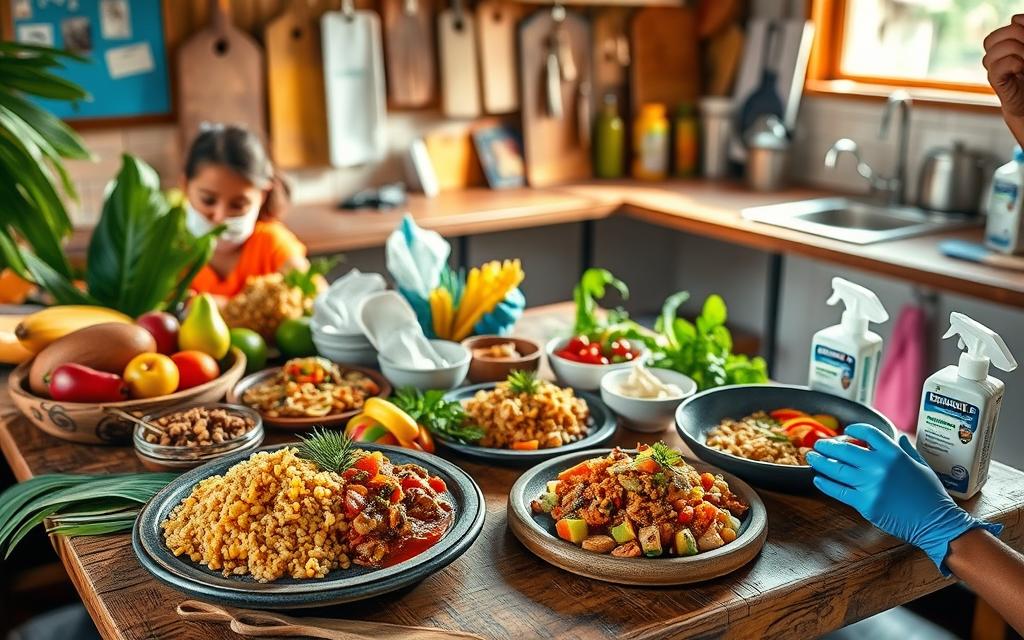
Have you ever wondered why Costa Rican food is so loved for its bold tastes and focus on safety? This mix of tasty recipes and health care is at the core of Costa Rica’s food culture. The country’s dishes, like gallo pinto and casado, highlight the fresh, local ingredients that are key to its traditional food.
These dishes not only delight your taste buds but also make food safety important for travelers. They want to enjoy this food safely.
In the next parts, you’ll find out about tasty traditional dishes and important food safety tips. These tips help make sure your meals are both fun and safe. Whether you’re trying chifrijo or drinking agua de pipa, knowing how to eat healthy in Costa Rica is as important as enjoying your food. Explore the world of flavors and safety together, making your food adventure both safe and satisfying. For those interested in a healthier lifestyle, check out more about eating habits in Costa Rica.
Introduction to Costa Rican Culinary Culture
The food scene in Costa Rica is a lively mix of cultures and a love for the earth. Every dish opens a window into the soul of Costa Rican cooking. It shows off a variety of traditional tastes and ingredients.
At the heart of Costa Rican food is the use of fresh, local ingredients. This choice makes meals not only healthy but also full of flavor. With vast jungles and a fifth of the world’s biodiversity, the variety of ingredients is key to the local food scene.
Costa Rican food brings together different cultures in a beautiful way. Simple yet hearty dishes like Gallo Pinto and Casado are made with rice and beans. These dishes show how basic ingredients can create warm and satisfying meals. The cooking traditions passed down through generations are still alive today, enriching our dining experiences.
This strong bond with food connects Costa Ricans to their land and heritage. The country’s efforts to protect its environment, like banning single-use plastics, show its commitment. Costa Rica’s food culture is more than recipes; it’s a reflection of a nation that values its environment and history.
Traditional Dishes of Costa Rica
Exploring Costa Rica’s traditional dishes shows the heart of its food culture. These dishes use local ingredients and mix indigenous, Spanish, and Afro-Caribbean flavors.
Gallo Pinto: A Breakfast Staple
Gallo pinto is a favorite breakfast dish, loved by about 60% of Costa Ricans. It’s a mix of rice and beans, key to many people’s diets. It gives them about 30% of their daily calories. It’s often served with scrambled eggs and natilla, making for a tasty and healthy breakfast.
Casado: The Classic Combo Plate
Casado is a classic Costa Rican meal. You can find it in “sodas,” casual eateries. It’s a mix of rice, beans, salad, fried plantains, and meat or veggies. It’s both affordable and nutritious, loved by locals and visitors.
Chifrijo: The Popular Bar Snack
Chifrijo is a tasty snack in Costa Rica’s bars. It’s a blend of fried pork, beans, rice, and fresh pico de gallo. It shows the lively flavors of the area. Chifrijo is great as a snack or part of a meal, showing the variety in Costa Rican dishes.

Local Ingredients in Costa Rican Cuisine
Costa Rican food is proud of its local ingredients. These ingredients come from the country’s rich farms and seas. Beans, rice, and fresh produce are the base of many dishes, celebrating Costa Rica’s abundance.
Beans, Rice, and Fresh Produce
Beans and rice are key in Costa Rican meals. Gallo pinto, the national dish, is made with black beans and rice. It’s often mixed with sautéed onions, bell peppers, and Salsa Lizano.
Every family has its own twist on this recipe. This shows the personal touches in traditional cooking.
- Black and red beans are widely consumed, with red beans representing the Guanacaste region’s specialty.
- Fresh produce in Costa Rican cooking includes staples like plantains, commonly prepared as patacones or maduros, and various vegetables that accompany meals.
- Crops such as yucca and corn are vital, contributing flavors and textures to many dishes.
Seafood and Tropical Fruits
The Pacific coast is rich in fresh seafood. Ceviche, a dish marinated in lime juice, is a favorite. It combines local traditions with regional flavors.
Tropical fruits like mangos, pineapples, and avocados add sweetness and flavor to dishes.
- Fruits are typically featured in refreshing drinks called frescos, made from the ripest and most succulent options.
- Beyond seafood, dishes such as rondón, a coconut-based seafood stew, capture Caribbean influences while utilizing local ingredients.
- Alongside fresh seafood, meals infuse flavors from ingredients like garlic, chilies, and cilantro, creating inviting dishes and dips.
Exploring Costa Rican Gastronomy
Costa Rican food is a mix of flavors from different cultures. It combines indigenous, Spanish, and Afro-Caribbean tastes. This blend makes dishes that everyone loves. Food tours and classes let you learn from local chefs.
Popular dishes like gallo pinto, casado, and tamales are common in Costa Rica. Gallo pinto is a favorite breakfast with a fried egg. Casado is a lunch favorite with rice, beans, and meat. Olla de carne is a hearty dish with slow-cooked beef and veggies.
Costa Rica’s food varies by region. Guanacaste is known for corn dishes, while the Pacific coast has fresh seafood. The Caribbean coast loves coconut in its recipes. Street foods like chifrijo and patacones are also popular.
Visitors enjoy the food safety in Costa Rica. The use of pure water helps. The country also exports fruits like pineapples and mangoes. Don’t miss the desserts like dulce de leche and tres leches cake.

Costa Rica Cuisine and Food Safety
Costa Rica is famous for its lively food culture and strict food safety rules. These rules are key to keeping everyone healthy. Travelers can enjoy their meals more by knowing and following these safety tips.
Food Hygiene Standards in Restaurants
In Costa Rica, restaurants must meet strict cleanliness rules. They get checked often to make sure they follow these rules. The staff learns how to handle food safely, which helps prevent sickness.
Local laws require clean water, safe food storage, and proper cooking. These steps help make sure the food is safe to eat.
Safe Food Handling Practices for Travelers
Travelers should take steps to handle food safely in Costa Rica. Washing your hands before eating is a must. It’s also important to choose places known for their cleanliness.
Be careful with street food. Instead, pick vendors who handle food right. This way, you can enjoy Costa Rican food without worrying about getting sick.
Food Safety Regulations in Costa Rica
Costa Rica has strict food safety rules to protect everyone. These rules make sure all food places follow health standards. This helps keep food safe and prevents illnesses.
Compliance with Health Standards
The government checks if food places follow health rules. They look at cleanliness, how food is stored, and how employees stay clean. This includes restaurants, markets, and street vendors.
By doing this, people trust the food they eat. It shows that food safety is a top priority.
Monitoring Foodborne Illnesses
Costa Rica works hard to prevent food illnesses. They find the cause of outbreaks, teach about safe food, and act quickly. They also work with the community to spread the word about food safety.

The Dining Experience in Costa Rica
Exploring Costa Rica’s dining culture reveals the country’s lively local customs. The best dining experiences are found at local sodas, small family-run spots known for tasty and affordable meals. These places are community hubs, offering a true taste of Costa Rica’s traditions. The focus on fresh, local ingredients makes for a memorable culinary journey.
Visiting Local Sodas: Authentic Dining
Eating at local sodas shows a true interest in Costa Rican food. You’ll find dishes like gallo pinto, casado, and chifrijo, all made with care and tradition. Talking with locals adds to the fun, as they share their favorite recipes and stories. Sodas also reflect the country’s love for family and community, making meals feel like a warm welcome.
Understanding Tipping and Etiquette
Tipping is key in Costa Rica’s dining etiquette. It’s common to leave about 10% in restaurants. Knowing when to eat, like dinner from 7 PM to 9 PM, can also make your meal better. For more on these customs, check out understanding cultural norms in Costa Rica.

Popular Costa Rican Foods to Try
Costa Rica’s food scene is filled with traditional dishes that show off the country’s rich land and diverse tastes. Two must-try dishes are olla de carne and sopa negra. These dishes are not just tasty but also capture the heart of local flavors.
Olla de Carne: A Hearty Stew
Olla de carne is a true Costa Rican classic. It’s a hearty stew made with beef and fresh veggies like carrots, potatoes, and yuca. It’s a perfect meal for family dinners. The slow cooking process makes the flavors blend perfectly.
Trying olla de carne lets you experience Costa Rica’s love for food. It’s a dish that brings people together, making every meal special.
Sopa Negra: A Comforting Soup
Sopa negra is another favorite in Costa Rica. It’s a simple yet flavorful soup made mostly of black beans. It’s topped with a hard-boiled egg and fresh cilantro, making it a warm and nourishing choice.
This soup is loved, even more, during the rainy season. It’s a true example of traditional Costa Rican cooking, highlighting the importance of beans in their cuisine.

Food Safety Tips for Travelers in Costa Rica
Travelers in Costa Rica should take steps to stay healthy when eating out. Knowing how to eat safely in Costa Rica can make your trip better. It also helps avoid getting sick from food. Following these food safety tips will make your food adventures in Costa Rica more enjoyable.
Choosing Safe Eating Establishments
Finding the right place to eat is key to avoiding foodborne illnesses. Look for places with good hygiene ratings and positive reviews. Cleanliness is important, and busy restaurants usually have a good reputation.
Stay away from quiet places and choose busy spots instead. This can help ensure the food is safe to eat.
Precautions When Consuming Street Food
Street food is a fun part of local culture, but it needs extra care. Choose vendors who prepare food openly. Look at how clean the stall and the vendor are. This can show if the food is safe.
Avoid raw or undercooked foods and choose dishes that are freshly made. Always use bottled water, not tap water, in places like Limón and Puntarenas. For more health tips on traveling to Costa Rica, check out vaccinations for Costa Rica.

Healthy Eating in Costa Rica
Costa Rica is a haven for those who love healthy food. It’s all about using fresh, local ingredients. This makes it easy for everyone to eat better. The country’s food culture is all about fruits, veggies, and foods without added stuff.
Emphasis on Fresh and Local Ingredients
In Costa Rica, fresh food is everywhere. Foods like rice and beans, found in dishes like Gallo Pinto, are full of nutrients. Meals often mix veggies with lean proteins like fish or chicken, helping people stay healthy.
Locals take long lunch breaks to enjoy meals made from local ingredients. At the Central Market in San Jose, people buy fresh produce and chat with friends. This shows the heart of Costa Rica’s food culture.
Finding Vegetarian and Vegan Options
More and more young people in Costa Rica are choosing plant-based meals. Over the last 20 years, the number of veggie and vegan spots has grown. These places serve dishes with tropical fruits, legumes, and whole grains, key to Costa Rican diets.
Farmers markets, or ‘ferias,’ in smaller towns offer organic produce and local crafts. This supports the community’s healthy living goals. With over 30% of visitors opting for veggie or vegan meals, Costa Rica is a top spot for healthy food lovers. The country’s goal to be carbon neutral means organic farming will play a big role in promoting healthy eating.

Cultural Significance of Costa Rican Cuisine
The costa rican culinary heritage is a lively reflection of the country’s history and values. Traditional dishes show the importance of farming and family ties. Meals often include beans and rice, found in 80% of meals.
Food in Costa Rica is more than just eating. It’s about enjoying life, as seen in the phrase “pura vida.” The Fiesta del Maíz celebrates this, bringing people together with local food. Gallo pinto, eaten by 65% of Costa Ricans, shows how food can bring people together.
The variety in Costa Rican food comes from different cultures, like Indigenous and Afro Costa Ricans. This diversity is seen in dishes like olla de carne and ceviche. Each dish connects past and present, showing food’s role in keeping culture alive.

Conclusion
Costa Rica has a lively food scene, filled with dishes that show off its culture and care for food safety. From Gallo Pinto to Olla de Carne, the food is a mix of flavors that will excite anyone. It’s important for travelers to know how to enjoy local food safely.
When you visit markets and local sodas, you can taste fresh ingredients while keeping food hygiene in mind. Costa Rica’s focus on safe food practices and stable dining environments lets you enjoy meals without worry. With some basic precautions, every meal is a chance to explore new tastes.
Costa Rica’s food is a special mix of tradition, freshness, and safety. This lets travelers dive into the country’s best food. By trying local flavors and eating mindfully, you can really get to know the heart of Costa Rica’s cuisine.
Article by Glenn Tellier (Founder of CRIE and Grupo Gap)
Don't wait, contact us right now!
Call or WhatsApp Costa Rica +506 8373 2085 or +506 8706 3888
Call USA/Canada +1 305-906-6784