
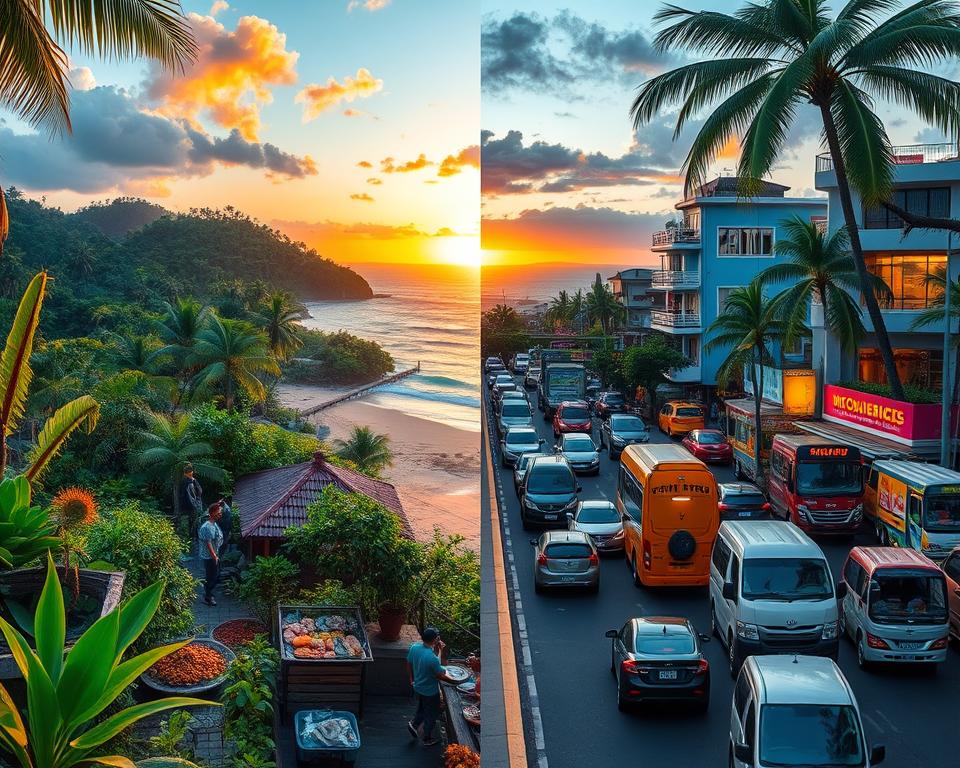
Is the beauty of Costa Rica’s landscapes and culture worth the challenges? This Central American gem is known for its “pura vida” lifestyle. It’s a mix of stunning nature and a relaxed pace. But, there are also downsides like job scarcity and expensive imports.
Thinking about moving to Costa Rica? It’s important to know both the good and the bad. This guide will help you understand what to expect. It’s all about making the right choice for your new home.
Key Takeaways
- Costa Rica boasts an incredible biodiversity, accounting for over 5% of the world’s species.
- The average temperature ranges from 70°F to 81°F, ensuring a warm climate year-round.
- While healthcare is affordable and accessible, challenges like earthquakes and a pricey automotive market exist.
- Adapting to local customs and overcoming language barriers can present hurdles for newcomers.
- The scenic beauty and “pura vida” lifestyle cultivate a unique living experience, though it comes with its own set of challenges.
Introduction to Living in Costa Rica
Moving to Costa Rica is a growing trend for those looking for a new life. The country’s stunning landscapes and rich biodiversity are big draws. It also offers a stable political climate.
The expat lifestyle in Costa Rica is known for its relaxed pace. It aligns with the Pura Vida philosophy, which many locals follow. This philosophy emphasizes living in the moment and enjoying life.
The Costa Rica expat experience comes with both good and bad sides. Expats often enjoy the local culture and outdoor activities. But, the cost of living has gone up, making it less affordable than before.
When thinking about moving, it’s important to understand the housing market. Real estate prices have risen due to more expats wanting to live here. Rent can be expensive, with prices in places like Tamarindo ranging from $800 to over $2000 a month.
Basic needs like utilities and internet also add to living costs. This makes careful budgeting crucial for a smooth transition.
Moving to Costa Rica offers a life filled with natural beauty and opportunities for growth. Expatriates can create lasting memories as they explore this new environment. It’s a journey of discovery and adventure.
Understanding the Pura Vida Lifestyle
The Pura Vida lifestyle is all about living simply and being part of a community in Costa Rica. It’s about enjoying the small things, like sharing meals with friends or exploring nature. People moving to Costa Rica often find this way of life refreshing after their fast-paced lives.
Living Pura Vida is more than just enjoying the scenery. It’s about slowing down, being in the moment, and connecting with others. This leads to strong friendships and personal growth. Many find new hobbies and deeper connections with the community.
- The focus on community and relationships makes it easy for newcomers to feel at home.
- Outdoor activities are a big part of life, with 800 miles of coastline and many national parks.
- Simple joys, like a traditional casado meal for about $6, are a big part of everyday life.
While the Pura Vida lifestyle is rewarding, it also has its challenges. About half of expats leave within 2-3 years, often due to cultural or lifestyle adjustments. Understanding this lifestyle can help make the transition smoother, leading to a fulfilling life in Costa Rica.
Pros of Living in Costa Rica: Exploring the Benefits
Costa Rica is a magnet for expats and retirees. It offers natural beauty, an affordable lifestyle, and a welcoming community. These elements make it a top choice for those looking for a new home.
Natural Beauty and Outdoor Activities
Costa Rica’s stunning landscapes are a big draw. You’ll find rainforests, beaches, and volcanoes. These settings offer endless opportunities for outdoor fun like hiking, surfing, and wildlife watching.
Affordable Cost of Living
Costa Rica’s cost of living is a big plus. Housing prices are lower than in the U.S. or Western countries. This means you can enjoy a good life without breaking the bank.
Friendly Local Community
The Ticos, Costa Rica’s people, are known for their warmth. They live by the “Pura Vida” philosophy, which is all about enjoying life. This makes it easy for newcomers to make friends and feel at home.
Cons of Living in Costa Rica
Living in Costa Rica has its perks, but there are downsides to consider. Knowing these can help you decide if this tropical paradise is right for you.
Limited Job Opportunities
One big challenge is finding jobs, mainly in specialized fields. Expats might struggle to find work in areas needing specific skills or advanced degrees. While teaching English is common, finding jobs in tech or finance can be tough.
High Cost of Imported Goods
Another issue is the high cost of imported goods. Prices for many items are 30% to 50% higher than in North America. This can be hard on expat budgets, making everyday items more expensive than expected.
Infrastructure Challenges
Costa Rica’s infrastructure also poses challenges. While improvements have been made, issues like bad roads and unreliable utilities still exist. Delays in services like transport and internet can be frustrating. Knowing these challenges can help you adjust to life in Costa Rica.
Climate and Weather Considerations
The climate in Costa Rica is mostly tropical. It has two main seasons: the dry season from December to April, and the rainy season from May to November. The temperatures stay between 70°F and 81°F all year, making it great for both locals and visitors.
March is usually the driest month. The coasts see temperatures rise from 85°F to 95°F, which is very inviting.
September is wetter, with rain all over the country. October is the rainiest month, with big downpours everywhere. But the Caribbean coast stays sunny.
As November comes, the weather starts to get drier again. This marks the beginning of Costa Rica’s dry season, known for its pleasant weather.
The Central Valley has a moderate climate. During the dry season, it’s around mid 70s°F during the day and the 60s°F at night. Guanacaste is warmer, with a longer dry season. The Nicoya Peninsula has similar weather, with daytime temperatures in the low to mid 80s°F.
Expats should watch out for high humidity and severe storms in the rainy season. Getting used to these weather conditions is key for a comfortable life. For those thinking about moving, there are resources like safety considerations for expats.
Knowing about Costa Rica’s climate and weather helps newcomers prepare for the seasons. This makes living in this beautiful country even better.
Healthcare System: Advantages and Disadvantages
The healthcare system in Costa Rica is known for its quality, affordability, and easy access. Expats in Costa Rica enjoy a strong healthcare network with both public and private options. The Caja Costarricense de Seguro Social (CCSS) offers full coverage, funded by employees, employers, and the government. Monthly premiums are a small percentage of income, making it a good deal for many.

Private insurance, like INS, can cover up to $200,000 a year. International insurance can go up to $1 million annually. This gives expats more choices. The cost of private insurance varies, depending on age and the level of care needed.
Despite being one of the best in Latin America, Costa Rica’s healthcare faces challenges. The public system can have long wait times, sometimes up to three years for specialist visits. Doctor visits cost between $50 to $120, so planning is key.
Some important things to consider for expat healthcare include:
- Emergency services may require a security deposit before treatment, which can vary greatly.
- Routine check-ups range from $60 to $75, showing lower costs than in the U.S.
- Special treatments, like knee replacements, cost about $12,000, much less than in the U.S.
Despite some challenges, Costa Rica’s healthcare is a great option for expats. To learn more about healthcare in this beautiful country, visit this guide on healthcare in Costa.
Cultural Adjustment: Embracing New Norms
Living in Costa Rica comes with its own set of cultural challenges. One big hurdle is the language barrier, mainly for those who don’t speak Spanish well. This makes everyday tasks, like buying groceries or getting services, harder. Knowing the local language helps expats connect with locals and feel part of the community.

Language Barrier
The language barrier in Costa Rica is a big issue for newcomers. While some locals speak English, not all do. It’s helpful for non-Spanish speakers to take language classes or practice speaking. This is key for both everyday needs and building friendships with Costa Ricans.
Customer Service Expectations
Expatriates might find customer service different here than back home. In Costa Rica, it’s about building personal relationships, not just getting things done fast. Getting used to this can make life easier and improve daily interactions. Being flexible and patient is important in these situations.
For more tips on adjusting to life in Costa Rica, check out this link for info on housing costs and budgeting.
Traffic and Transportation Issues
Transportation in Costa Rica faces many challenges, mainly in cities where traffic jams are a big problem. Every day, the country sees between 100 and 150 small traffic accidents. This shows the ongoing traffic challenges for both locals and travelers. Even though the number of accidents has gone down, aggressive driving is still a big issue, with 1,000 cases in 2020.
To tackle these problems, the government has set up better monitoring on key roads like Los Hatillos and Route 27. The Ministry of Security uses aerial surveillance to watch traffic in real-time. This helps spot areas with heavy traffic. The goal is to make roads safer and manage traffic better.
Public transport is key in Costa Rica. Buses are the most common choice, offering a cheap and reliable way to get around. Other options like licensed taxis, Uber, and Lyft are also available. While not many, trains are popular for their scenic views, and walking, biking, and flying are good alternatives too.
Another option is renting a car, which costs about $35 a day. But, four-wheel drives are best for rough roads, mainly during the rainy season. Young drivers should know they might pay extra fees if they’re under 25. With over 1.5 million people in San José, knowing when traffic is worst is important. It’s usually from 5 to 8 AM and 3 to 6 PM on weekdays.
Getting around in Costa Rica needs a smart plan and knowing the road and traffic conditions.
Natural Disasters and Environmental Concerns
Knowing about natural disasters in Costa Rica is key for those thinking of moving there. The country faces many environmental risks, like earthquakes and volcanic eruptions. Being aware of these dangers helps you prepare and make smart choices.
Earthquakes and Volcanic Activity
Costa Rica has about 150 volcanoes, some close to cities. Earthquakes are common due to the area’s tectonic activity. While big earthquakes don’t happen often, they can be very damaging.
Volcanic eruptions are rare but watched closely by authorities. The National Emergency Commission keeps everyone updated on these risks. This shows how important it is to stay informed.
Heavy Rainfall and Flood Risks
Heavy rain causes flooding and landslides, mainly in rainy seasons. Places like Guatuso, Upala, and Turrialba are at high risk. Flash floods are common in mountains, made worse by blocked drains.
In 2021, over 1.5 million people were affected by natural disasters. Knowing these risks helps communities prepare. This can lessen the impact of disasters in Costa Rica. For more on safety, check out this resource.

Safety and Crime Rate: What to Expect
Safety concerns in Costa Rica have become more pressing as crime rates change. The 2024 Global Peace Index shows Costa Rica ranks 58th out of 163 countries. This indicates it’s safer than many places. Yet, areas like Quepos, Tamarindo, Jaco, and parts of San Jose have seen more crime.
The homicide rate in 2023 was 17.3 per 100,000 people. This is a worrying trend.

Expat safety issues often involve theft and scams. These include tire slashing and money scams aimed at tourists. It’s crucial for everyone to stay alert, more so in quiet places and at night. Women should be extra careful due to the increase in sexual assault cases.
- Maintain awareness of surroundings.
- Avoid displaying valuable items.
- Utilize reputable transportation options.
To call for help, dial 911 for medical emergencies and 128 for ambulances. Costa Rica’s Fuerza Pública is known for being reliable and professional. This can offer some comfort. Even though crime rates are lower than in the U.S., it’s important to stay informed and ready. For more on living in Costa Rica, click here.
Conclusion
Deciding to move to Costa Rica involves many factors. The country’s stunning natural beauty, with 25% of its land as national parks, is a big attraction. Yet, there are also downsides like limited job opportunities and infrastructure issues.
The cost of living is low, and the country is stable, making it feel safe. But, crime and healthcare access can be concerns. It’s important to think about these things before making a decision.
Thinking about moving to Costa Rica means considering both the good and the bad. The local culture and way of life can make a big difference. Embracing the “Pura Vida” lifestyle can open up new opportunities. But, being ready for challenges is key.
For a full view of what living in Costa Rica is like, check out life in Costa Rica summary. This will help you make a well-informed choice.
In the end, the decision to live in Costa Rica depends on what you value most. With the right knowledge, you can start your adventure here with confidence. You’ll fit right in with the lively culture of this beautiful country.
Article by Glenn Tellier (Founder of CRIE and Grupo Gap)
Don't wait, contact us right now!
Call or WhatsApp Costa Rica +506 8373 2085 or +506 8706 3888
Call USA/Canada +1 305-906-6784