
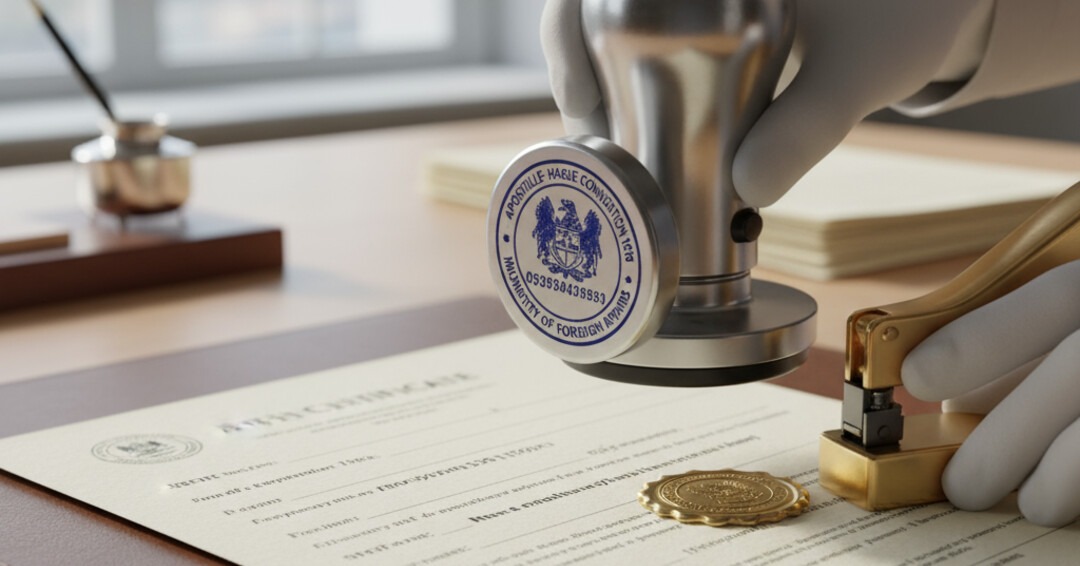
When applying for residency in Costa Rica, one of the most critical and often confusing steps is the legal validation of your foreign documents. The Costa Rican Immigration Department (DGME) requires that all official documents from your home country, such as birth certificates and criminal background checks, be properly authenticated to be considered valid. This process is handled in one of two ways: apostille or authentication (legalization). Understanding the difference and knowing which process applies to you is essential for a smooth and successful residency application.
Apostille vs. Authentication: What’s the Difference?
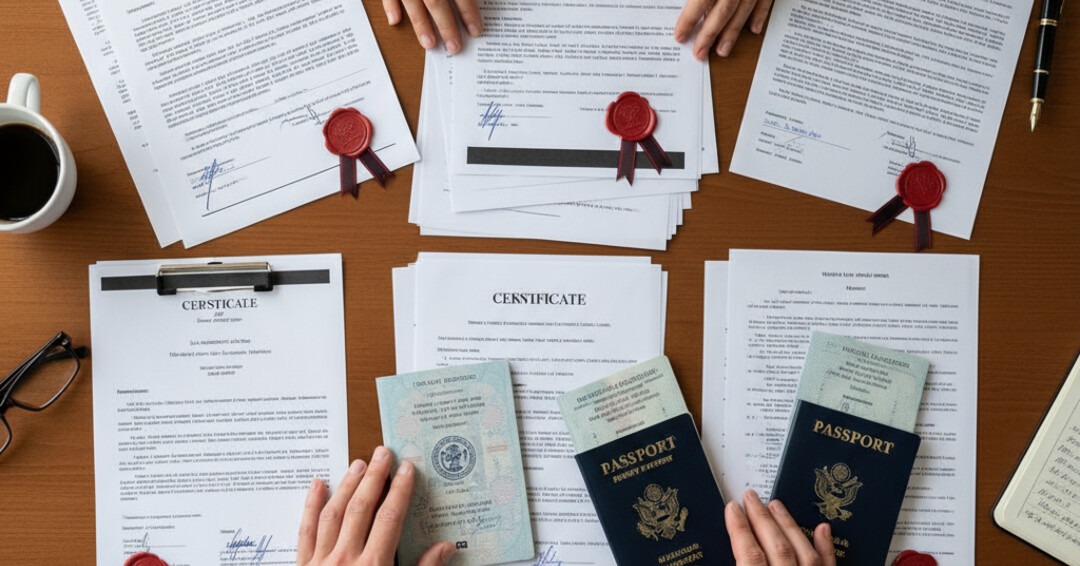
The method you use depends entirely on whether your home country is a member of the Hague Apostille Convention. This international treaty, signed in 1961, simplified the cumbersome, multi-step legalization process that was previously the only option.
The Apostille Process (For Hague Convention Member Countries)
An apostille is a standardized certificate of authentication that is recognized by all member countries of the Hague Convention. If your documents are from a member country (such as the United States, the United Kingdom, or most of Europe), you only need an apostille. This is a much simpler, one-step process.
How it Works: A designated authority in your home country (e.g., the Secretary of State in the U.S.) attaches the apostille certificate directly to your document. This single certificate is all that is needed for the document to be legally recognized in Costa Rica.
The Authentication (Legalization) Process (For Non-Member Countries)
If your documents are from a country that is not a member of the Hague Convention (such as Canada), you must go through the traditional, multi-step authentication process, often called legalization.
How it Works: This process involves a chain of authentications:
- The document is first authenticated by a relevant authority in your home country.
- It is then sent to the Costa Rican consulate or embassy in your home country for their official stamp (consularization).
- Finally, upon arrival in Costa Rica, the document must be authenticated by the Ministry of Foreign Affairs (Casa Amarilla) in San José.
Country-Specific Rules: USA vs. Canada
For Documents from the United States (Apostille)
Since the United States is a member of the Hague Convention, all official documents from the U.S. must be apostilled. The authority responsible for issuing the apostille depends on the type of document:
- State-Issued Documents: Birth certificates, marriage certificates, and divorce decrees are apostilled by the Secretary of State of the state where the document was issued (e.g., a California birth certificate must be apostilled by the California Secretary of State).
- Federally-Issued Documents: Documents issued by the federal government, such as an FBI background check, must be apostilled by the U.S. Department of State in Washington, D.C.
For Documents from Canada (Authentication/Legalization)
As of 2025, Canada is still not a signatory to the Hague Apostille Convention. Therefore, all Canadian documents must go through the full authentication and legalization process. This involves sending your documents to be authenticated by Global Affairs Canada and then legalized by the Costa Rican Consulate in Canada before they can be used for your residency application.
Critical Rule: The 6-Month Validity Period
For Costa Rican immigration purposes, most foreign documents have a strict expiration date. According to Article 10 of the Immigration Regulations, all documents submitted must have been issued no more than six (6) months prior to the date you file your residency application.
Important: The 6-month clock starts from the date the original document was issued, not the date it was apostilled or legalized. For example, if your birth certificate was issued on January 1, 2025, you must file your residency application by July 1, 2025, regardless of when the apostille was obtained.
- Exception for Background Checks: Criminal background checks have an even shorter validity period of only three (3) months from their issuance date.
FAQ: Your Top Questions About Apostilles and Authentication
How do I find out if my country is a member of the Hague Apostille Convention?
You can find the complete and updated list of all member countries on the official website of the Hague Conference on Private International Law (HCCH).
Can the Costa Rican embassy in my country issue an apostille?
No. An apostille is always issued by a designated authority within the country where the document originated. Embassies and consulates are involved in the authentication (legalization) process for non-member countries, but they do not issue apostilles.
What if my birth certificate is very old? Do I need a new one?
Yes. For immigration purposes in Costa Rica, you must obtain a newly issued copy of your birth certificate. The 6-month validity rule applies, so an old family copy, even if in perfect condition, will not be accepted.
Does a notarized document count as apostilled?
No. Notarization is a separate process where a notary public verifies the identity of a signatory. An apostille is a higher level of authentication that verifies the authority of the public official who signed the document (e.g., the county clerk who signed the birth certificate). Most documents must be notarized before they can be apostilled.
Can I get my documents apostilled once I am in Costa Rica?
No. The apostille must be obtained in the country where the document was issued. You must complete this process before you bring your documents to Costa Rica for your residency application.
What is the most common mistake people make in this process?
The most common and costly mistake is misunderstanding the 6-month validity rule. Many applicants get their documents apostilled, wait too long to file, and then discover their documents have expired, forcing them to start the entire process over again.
Does a translation of my document need to be apostilled?
No. The original document in its original language is what needs to be apostilled or legalized. Once you are in Costa Rica, the apostilled document must then be officially translated into Spanish by an official translator certified by the Ministry of Foreign Affairs.
What if my document is from a country that has no Costa Rican consulate?
In this rare situation, you would need to find the nearest Costa Rican consulate that has jurisdiction over your country. This can create significant logistical challenges, which is why it is crucial to plan this process well in advance.
Avoid Costly Mistakes with CRIE
The document legalization process is rigid and unforgiving. A small mistake can lead to months of delays and added expense. The experts at CRIE have managed this process for thousands of clients and can ensure your documents are prepared correctly the first time.
- Email: info@crie.cr
- Website: crie.cr
Article by Glenn Tellier (Founder of CRIE and Grupo Gap)
Don't wait, contact us right now!
Call or WhatsApp Costa Rica +506 8373 2085 or +506 8706 3888
Call USA/Canada +1 305-906-6784
1 Comment
Charles Ring Diana Ring
Certify 2-Birth Certificates and 1-FBI Background Check, existing English to Spanish Translations. Must be Ministry of Foreign affairs Certified. I will bring the documents to you.Gracius