
Families moving to Costa Rica can use AI tutors and online classes, but only on top of a legal school path, never instead of one. School is compulsory here, so your child should be enrolled in a Costa Rican public or private school, or in an accredited foreign school whose studies MEP (the Ministry of Public Education) can recognise. Once that is in place, AI gives your child one-to-one help with maths, reading, science and Spanish in any town, from Escazú to a small village in the hills.
“Are there good schools for my children?”
It is the first question almost every family asks us. In the past the answer depended on where you lived, because the big bilingual and international schools are mostly in and around San José and the Central Valley. AI tutors change that. A child in Atenas, Grecia or a small coffee town can now get patient help every evening, at their own level, in English or Spanish.
What AI does not change is the law. Before you plan your child’s learning, plan the legal side: which school your child is enrolled in, and how their studies will be recognised in Costa Rica and back home.
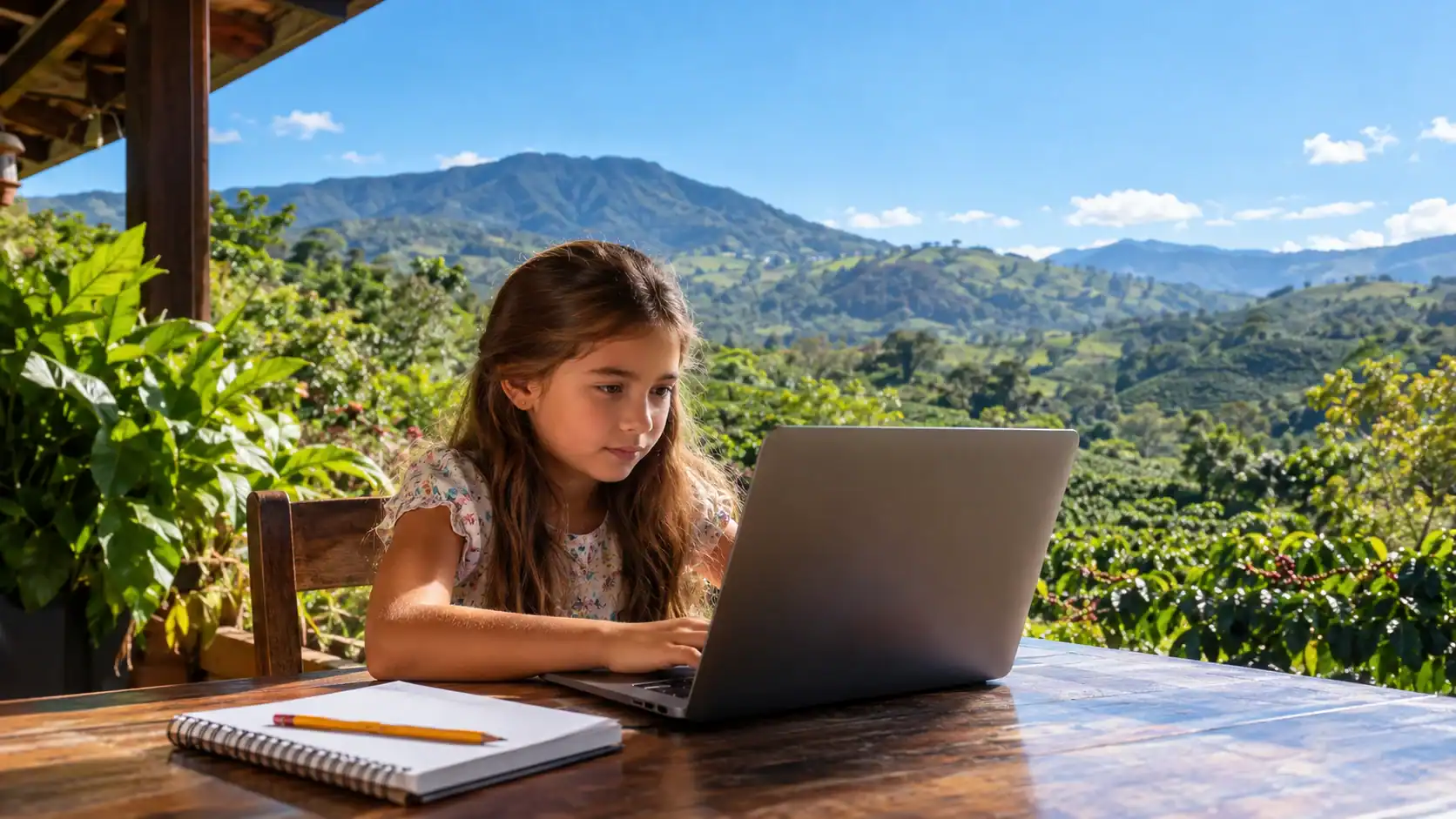
School is compulsory in Costa Rica
Article 78 of the Constitution makes preschool and general basic education (first to ninth grade) compulsory. We have found no published MEP procedure that registers a family as homeschoolers, so do not assume that an AI program or a home curriculum on its own meets that duty. Our guide to homeschooling in Costa Rica lists the questions to put to MEP before you take a child out of school.
The legal paths for your child
1. A Costa Rican public school
Every child has the right to free public education. MEP’s enrolment rules (Executive Decree 40529-MEP, Article 5) say this right can never depend on the child’s migration status or on the child coming from abroad. So your child can start school while your residency is still being processed.
A parent or guardian enrols the child in person. Bring proof of where you live (schools give priority to children who live nearby), an official document showing the child’s age, and the child’s latest school report. Children starting first grade must be six by 15 February of that school year, and children entering seventh or tenth grade need the certificate for the cycle they finished. A child arriving from abroad before 30 April has their level set during the first term.
Public school classes are in Spanish, and this is where AI shines: a daily AI Spanish tutor helps a new child catch up fast.
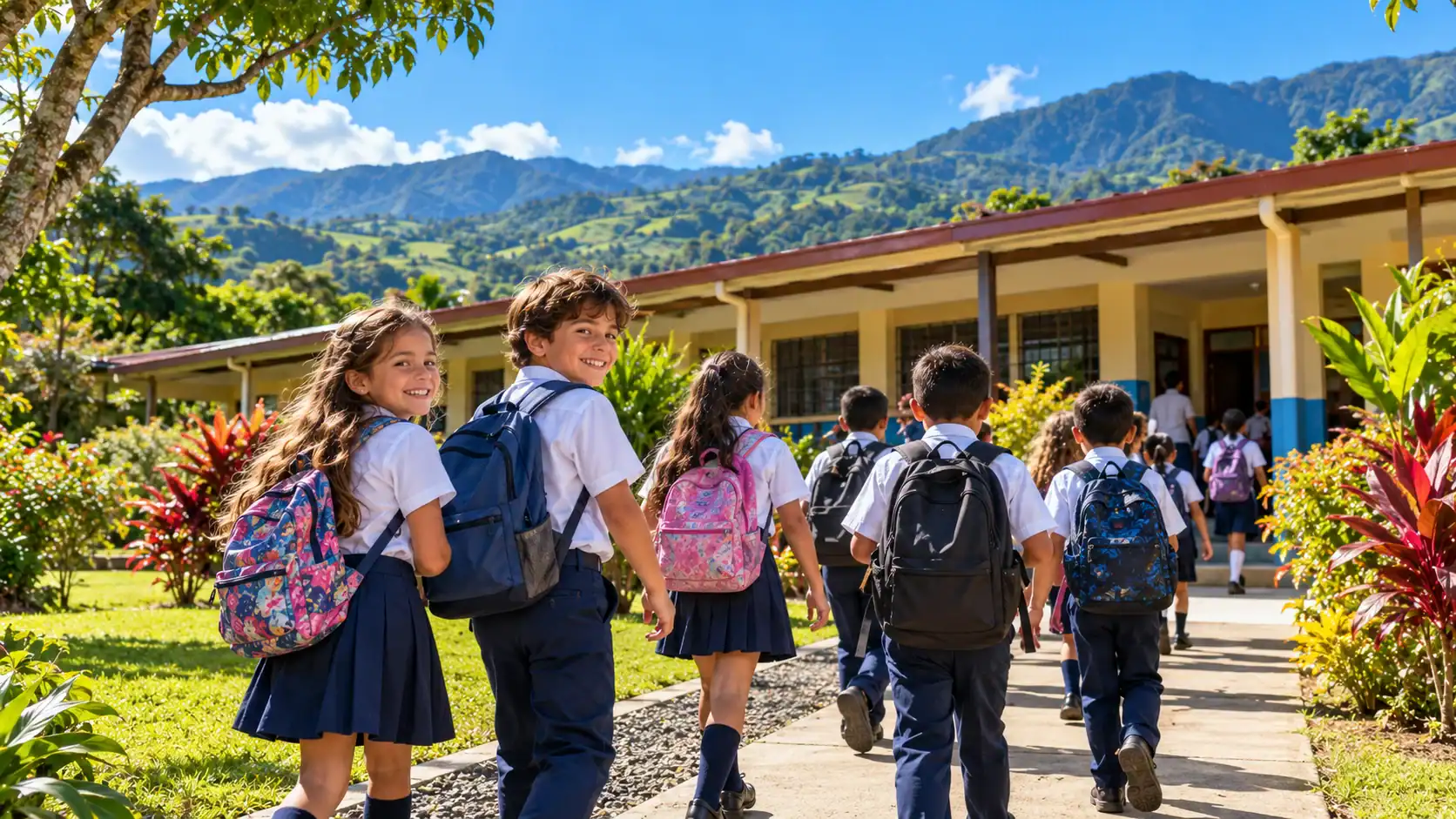
2. A private or international school
Private bilingual and international schools (IB, US and British programmes) are concentrated in the Central Valley, especially Escazú, Santa Ana and the areas around San José. See our guide to international schools in Costa Rica. Many families combine a private school with AI tutoring at home for extra practice.
3. An accredited foreign online school, recognised by MEP
Some families keep their children in an accredited online school from the United States, Canada or elsewhere. If you want those studies to count in Costa Rica, for example to move into a local school, sit Costa Rican exams or go to a Costa Rican university, MEP’s Department of Evaluation and Certification (DGEC) must recognise them through “reconocimiento y equiparación de estudios”. MEP’s 2026 application form asks for:
- the student’s identity document;
- the diplomas or certificates and grade transcripts, apostilled or authenticated;
- an official Spanish translation by a translator authorised by the Ministry of Foreign Affairs;
- for US studies, a certificate from the Educational Advisory Office of the Centro Cultural Costarricense Norteamericano confirming the school is accredited in the United States;
- for US studies done online, by homeschool or by correspondence, certified entry and exit records from Migración for the study period.
The documents are delivered in person, or by someone you authorise, and a parent makes the request for a minor. MEP says it answers in about 10 business days. The form covers complete levels (primary, ninth grade and high school) and single grades from sixth to eleventh, so ask DGEC which one fits your child before you move. Contact: dgec.reconocimientos@mep.go.cr, tel. 2547-5600.
The Migración records are one more reason to keep every family member’s legal stay or residency in order while your children study.
For teenagers and adults: open education exams
MEP’s Educación Abierta lets teenagers (generally from age 14) and adults study on their own and sit official exams. For high school, the Bachillerato por Madurez Suficiente is open to people 18 or older who hold their ninth-grade certificate. MEP accepts a passport or DIMEX to register, and the subjects are Spanish, English or French, maths, a science (biology, physics or chemistry), social studies and civics. An AI tutor makes a great study partner here, but the exam, not the AI, gives the certificate.
How to use AI the right way
- Spanish first. Use an AI tutor for daily Spanish conversation and reading, so your child settles in at school and makes friends.
- A homework helper, not a homework writer. Ask the AI to explain the steps and quiz your child, not to hand over answers.
- Follow the school’s programme. Tell the AI your child’s grade and subjects (MEP’s or the online school’s), so practice matches what they will be tested on.
- Exam practice. AI can make practice questions for MEP exams or the Bachillerato por Madurez.
- A parent in charge. Check each AI tool’s age rules (many need a parent’s account for younger children), keep the device in a shared room and set daily time limits.
- Real friends, real life. School, sport and the local community are a big part of why families move here. Do not let screens replace them.
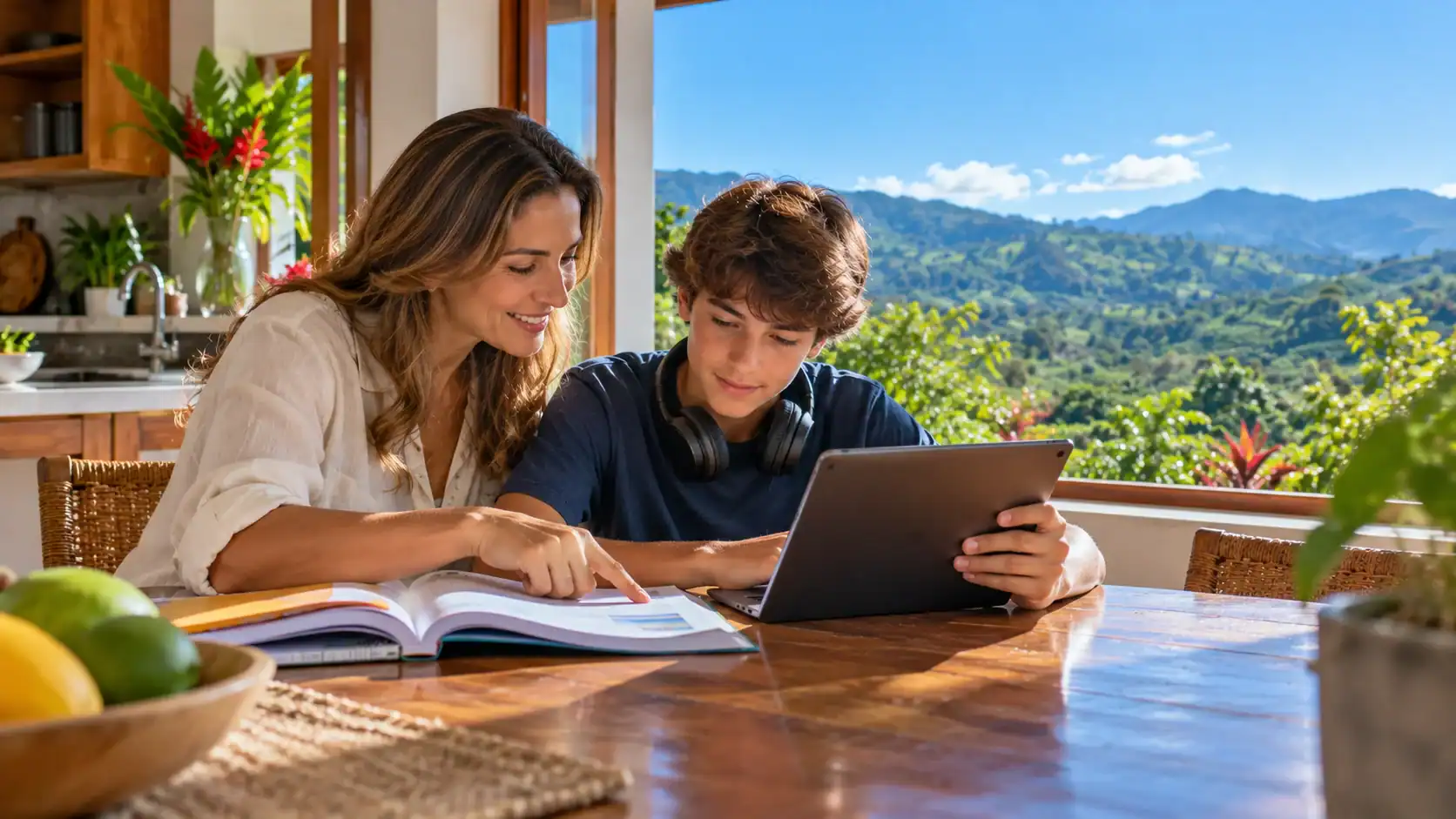
Living in the Central Valley with AI learning
The Central Valley gives you both: the widest choice of public, private and international schools, and spring-like weather that turns a porch into a classroom. Towns like Escazú, Santa Ana, Ciudad Colón, Atenas and Grecia are all within easy reach of schools and services. Before you rent or buy, test the internet at the exact house, because online classes and video lessons need a steady connection. Our guide to the Costa Rica education system and our article on public and private education explain the school system in more detail.
Your child’s residency
Children can be included as dependents on a parent’s residency. See dependent residency for children and adding dependents to a residency application. Plan school and residency together: get MEP’s answer for school questions and Migración’s answer for immigration questions.
Frequently asked questions
Can my child learn only with AI in Costa Rica?
No. School is compulsory, and an AI tutor is not a school. Use AI on top of enrolment in a Costa Rican school or an accredited foreign school whose studies MEP can recognise.
Can foreign children go to public school without residency?
Yes. MEP’s enrolment rules say a child’s right to free public education cannot depend on migration status or on coming from abroad.
Will MEP recognise my child’s US online school?
It can, through DGEC’s reconocimiento y equiparación. For US studies MEP asks for proof that the school is accredited in the United States, apostilled documents with an official Spanish translation and, for online or homeschool studies, Migración entry and exit records.
When does the Costa Rican school year start?
In February. MEP uses 15 February as the cut-off date for the minimum ages to start preschool and first grade.
Is it legal to use AI tutors at home?
Yes. Using AI to help your child learn at home is fine. Just use it alongside an approved school, not in place of one.
Sources: Constitution of Costa Rica, Article 78; Executive Decree 40529-MEP (enrolment rules), Articles 5, 11, 12 and 15; MEP DGEC 2026 recognition and equiparación form; MEP DGEC Bachillerato por Madurez Suficiente call 02-2026. Reviewed 22 October 2026.
Thinking of moving to Costa Rica?
Get a free residency assessment. Tell Johanna, our immigration expert, about your situation, and she will tell you which residency fits you and what you need.
WhatsApp Johanna: +506 8373 2085Free assessment
Or email info@crie.cr