
Building a home in Costa Rica starts with checking the property and the professionals, before choosing finishes or paying a builder. A construction proposal should explain what can be built, which approvals are needed, who is responsible and how payments relate to completed work. A low initial price is not a substitute for that information.
Check the land before designing the house
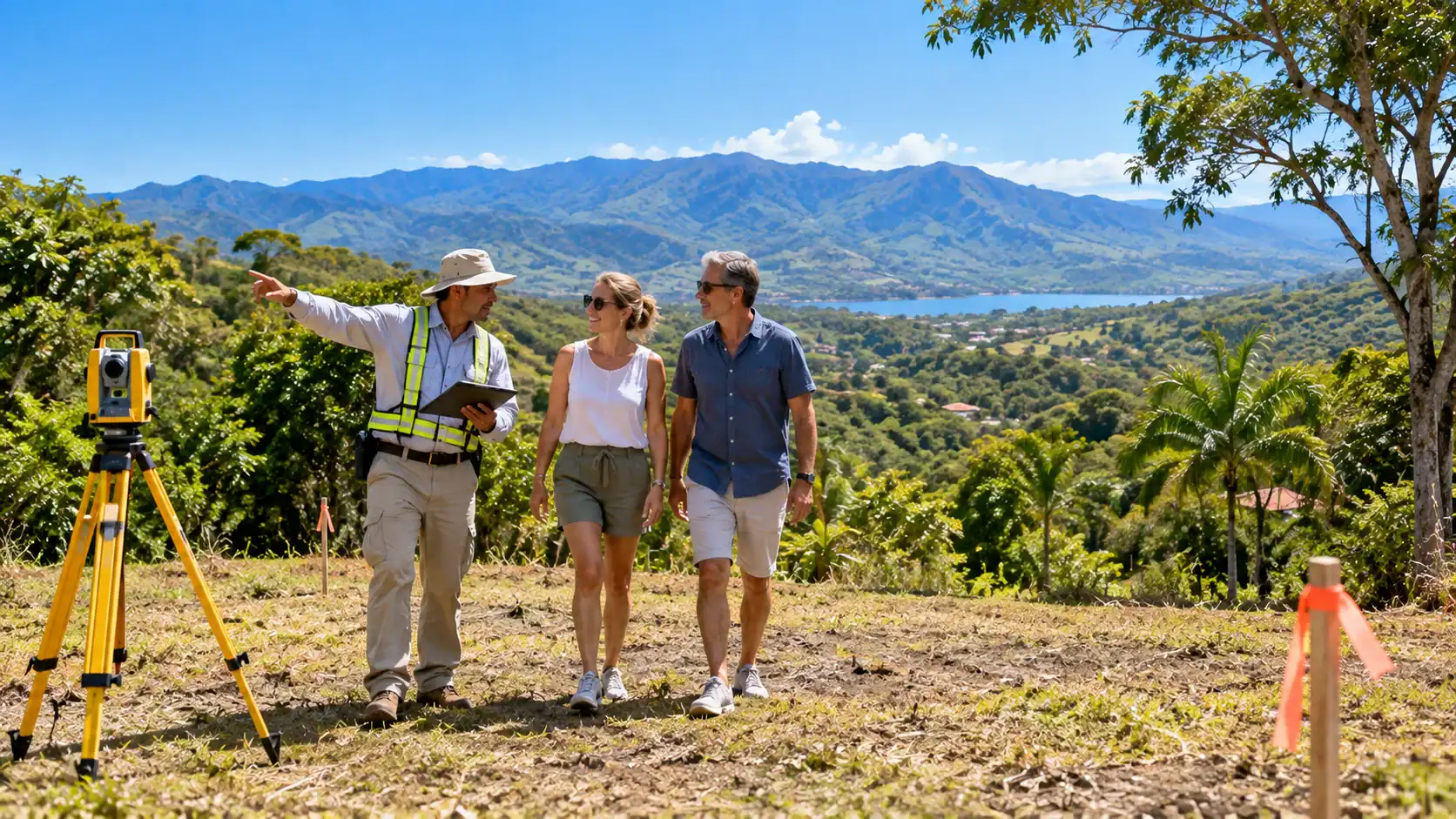
Ask an independent lawyer and a qualified design professional to review the property documents and the proposed use. Resolve questions about boundaries, registered access, easements, water availability, drainage and applicable land-use restrictions before committing to a design. A property being advertised as a building lot does not establish that your particular project can be approved.
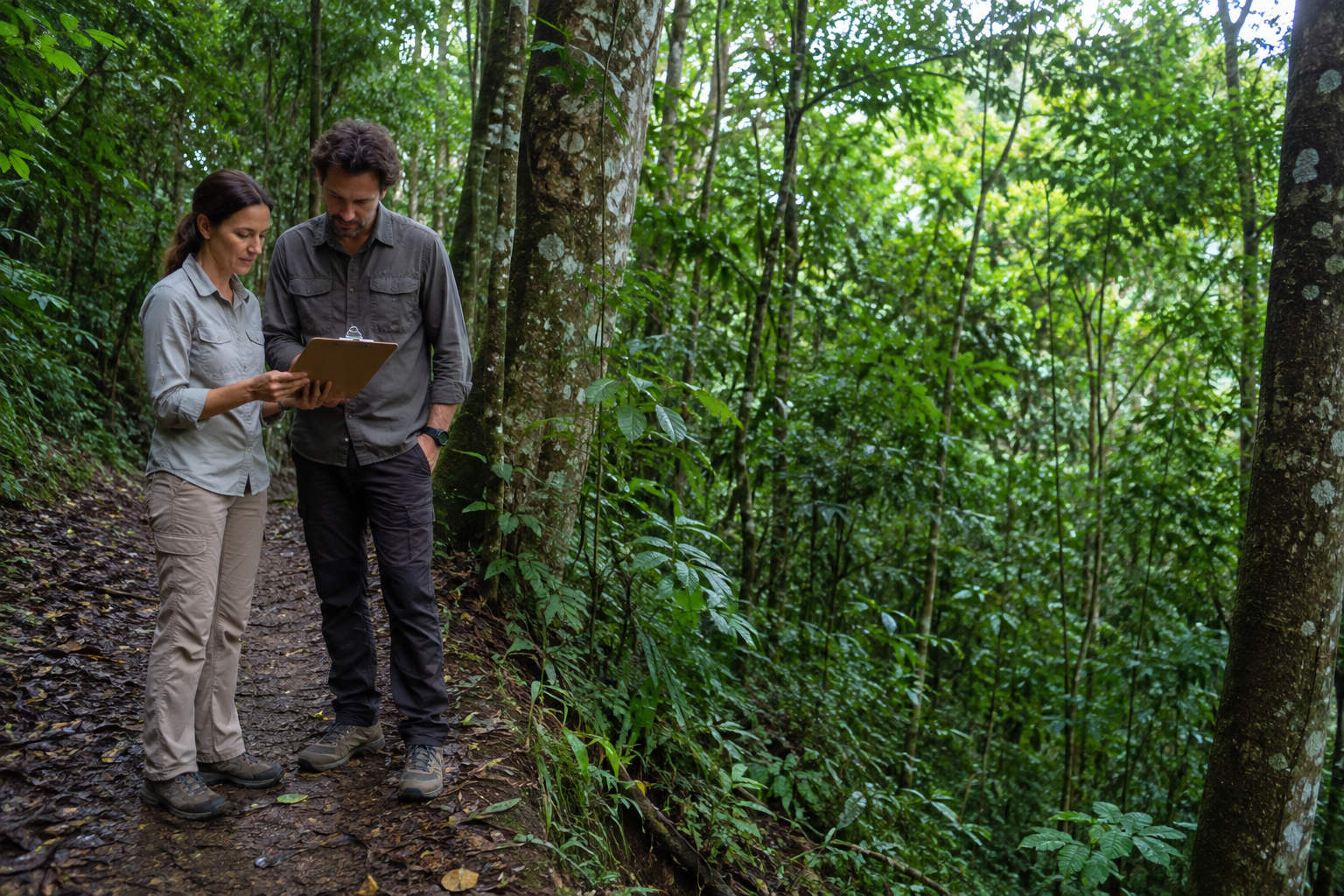
Give your professional the cadastral plan, location and intended project. Tell them about streams, steep slopes, existing structures and any coastal or protected-area concerns. The applicable approvals depend on the site and project type; a neighbour’s permit is not a checklist for your land. See our property ownership guide for the separate purchase questions.
How to check construction companies in Costa Rica
Use the CFIA company directory to check the exact business name or corporate identification number. CFIA explains that engineering and architecture consulting or construction companies must be registered under its governing law. Its directory identifies Inscrita as the status authorizing a company to exercise those activities; other listed statuses do not mean the company is currently authorized.
CFIA registration is a professional-regulation check, not a recommendation of a particular contractor or a guarantee about workmanship, price or finances. Also identify the individual professionals responsible for your project and verify their current standing. CFIA’s company-registration guidance explains the role of enabled responsible professionals.
- Ask for references from comparable completed projects and, with permission, speak with previous clients.
- Compare written proposals against the same drawings and specification, including exclusions.
- Confirm who employs and supervises subcontractors and who handles corrections.
- Identify the contracting legal entity and payment recipient before transferring money.
- Ask how the builder documents progress, variations, insurance and handover.
Do not rely only on a social-media portfolio, an English-speaking salesperson or an unusually low estimate. This guide does not rank or endorse construction companies.
Design review and municipal building permission
CFIA’s technical-services page provides access to APC, APC Requisitos, the project logbook and professional or company searches. Ask your professional to identify the applicable route and required institutional checks for your project. The documents for one residential project may differ from those for a condominium, coastal site or another category.
Keep professional registration, institutional requirements and municipal permission separate in your planning. Do not treat a CFIA project reference or plan seal alone as proof that construction may begin. Request the actual applicable municipal permission and clarify any outstanding conditions with the municipality and responsible professional.
CFIA’s APC Municipal instructions explain how the responsible user can find a project with permission and download its municipal-permit PDF. Ask for a copy for your records. Use the current procedure for your municipality rather than assuming every location or project follows an identical online process.
Write a construction contract that can be checked
Have your lawyer review the agreement before signing. The contract and its attachments should clearly identify the parties, drawings, specification, price basis, payment stages, exclusions and procedure for changes. Agree who obtains each approval and who is responsible for site supervision, insurance and required employment arrangements.
Clarify how delays, price changes, defective work and disputes are handled. A quoted completion date should be supported by a schedule and assumptions about approvals, weather, materials and access. Do not assume an oral promise is included in the written price.
Build a complete budget
Request separate figures for professional services, site preparation, construction, utility connections, permits and other project-specific charges. Ask whether the quote includes taxes, transport, equipment, fixtures, landscaping, waste removal and final inspections. Keep a contingency appropriate to the assessed risks; an unfinished site or difficult access can change the budget substantially.
There is no dependable single cost per square metre for every Costa Rican home. Location, ground conditions, structure, finishes and the scope included in a quote all matter. Compare dated estimates for the same specification instead of applying an old online average to your project.
Monitor progress and document changes
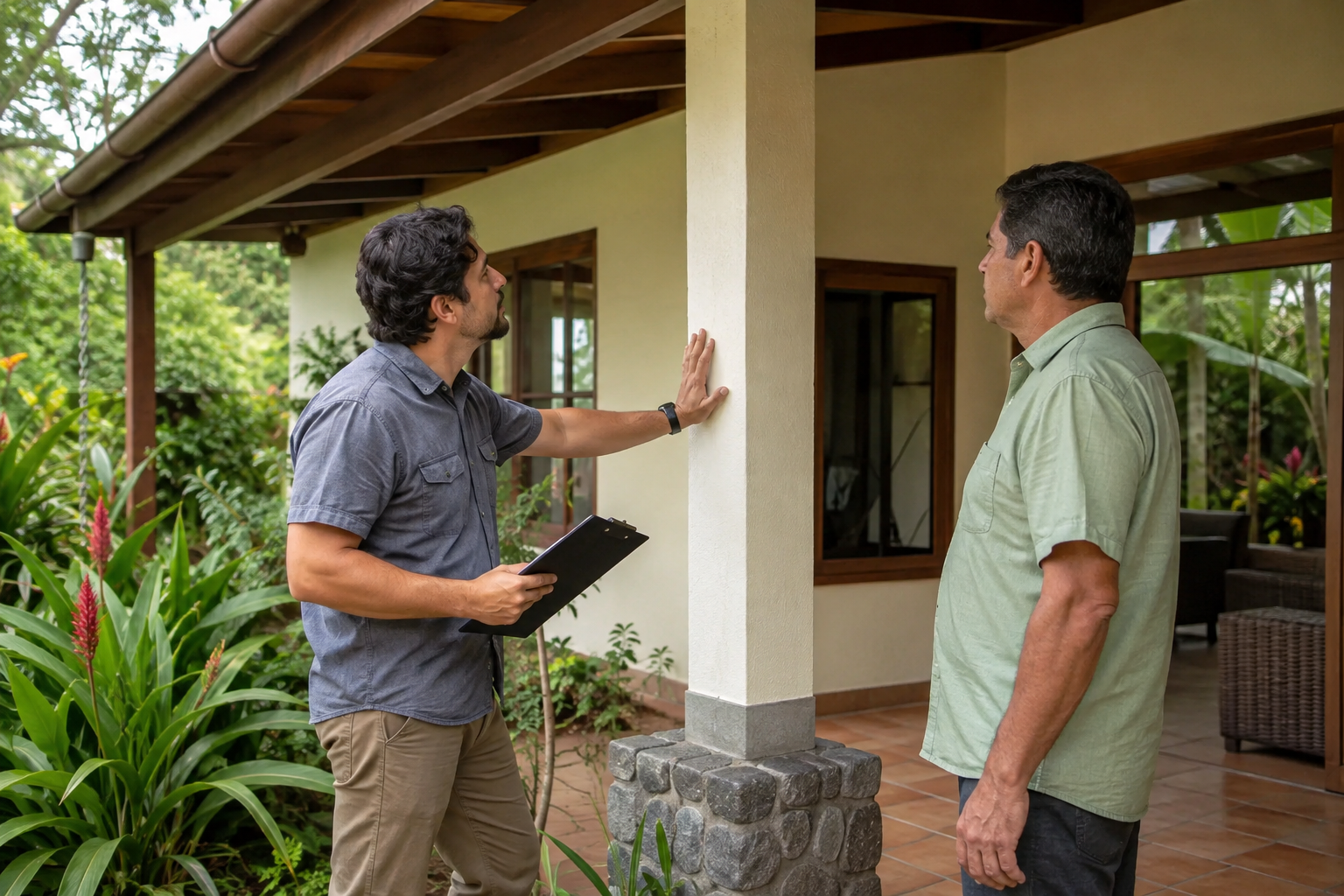
Arrange independent professional checks at agreed milestones. Keep drawings, approved variations, invoices, progress photographs and inspection records together. Ask the responsible professional how the project’s official logbook is maintained. When a change affects cost or timing, agree its written scope before authorizing the work.
For final handover, use a written list of outstanding items, warranties, equipment instructions and applicable completion documents. Confirm how problems will be reported and corrected. If you will live abroad during construction, define who can approve changes and the spending limits of that authority.
Construction and immigration are separate decisions
Building or buying a house does not itself establish permission to live or work in Costa Rica. If your plans also involve an immigration application, review the separate property-investment residency guide and current DGME requirements. A builder’s construction quote is not an immigration eligibility assessment.
Official CFIA sources reviewed on 8 September 2026. The CFIA technical-services page was updated in January 2026; the linked municipal-download instructions explain a procedure, not a universal permit checklist. Confirm the current requirements for your particular site with the municipality and qualified professionals.
Thinking of moving to Costa Rica?
Get a free residency assessment. Tell Johanna, our immigration expert, about your situation, and she will tell you which residency fits you and what you need.
WhatsApp Johanna: +506 8373 2085Free assessment
Or email info@crie.cr