
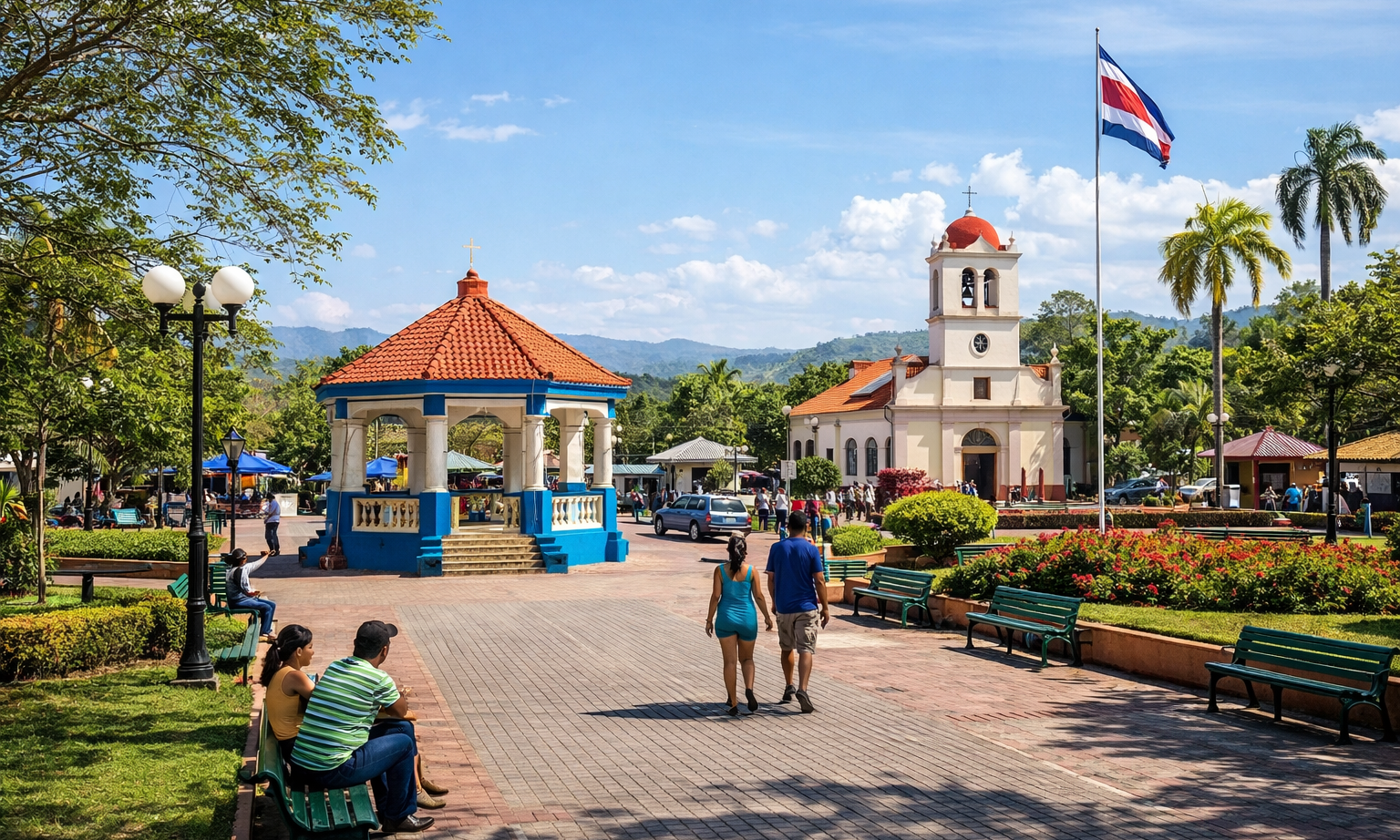
English-language worship exists in Costa Rica, and finding it is easier than it looks — but there is one piece of context worth having first, because it shapes everything about how religion works here.
Costa Rica has an official state religion
It is the only country in the Americas that does.
Article 75 of the Constitution reads, in the original: “La Religión Católica, Apostólica, Romana, es la del Estado, el cual contribuye a su mantenimiento, sin impedir el libre ejercicio en la República de otros cultos.”
In plain terms: Roman Catholicism is the religion of the State, the State contributes to its upkeep, and the free exercise of other faiths is not impeded.
Both halves of that matter to a newcomer. The state funds one church — but religious freedom is constitutionally protected, and in practice Costa Rica is an easy country in which to worship however you wish. Protestant, evangelical, Jewish, Quaker, Baha’í and other communities have been established here for generations, several of them founded by foreign residents.
What the article does mean is that Catholicism is woven into public life in ways that surprise people from countries with formal separation: in school calendars, in civic ceremonies, in the patron-saint fiesta that shuts your town for a week.
And the country in the pews is changing fast
The constitutional position and the actual religious make-up of Costa Rica have drifted a long way apart.
A national survey by the Escuela Ecuménica de Ciencias de la Religión and IDESPO at the Universidad Nacional — 1,302 people interviewed between 18 and 31 October 2024, margin of error 2.8% — found 50% Catholic, 33% evangelical, and 16% who believe but claim no religion.
The regional and generational splits are the striking part. Catholic identification runs at 68% in Cartago and 31% in Limón. Among people aged 55 and over it is 62%; among 18- to 24-year-olds it is 35%.
The practical upshot for anyone looking for a congregation: the evangelical and Protestant world here is large, well established and growing, not a fringe. Roughly a third of the country. That is where most English-language services turn out to be.
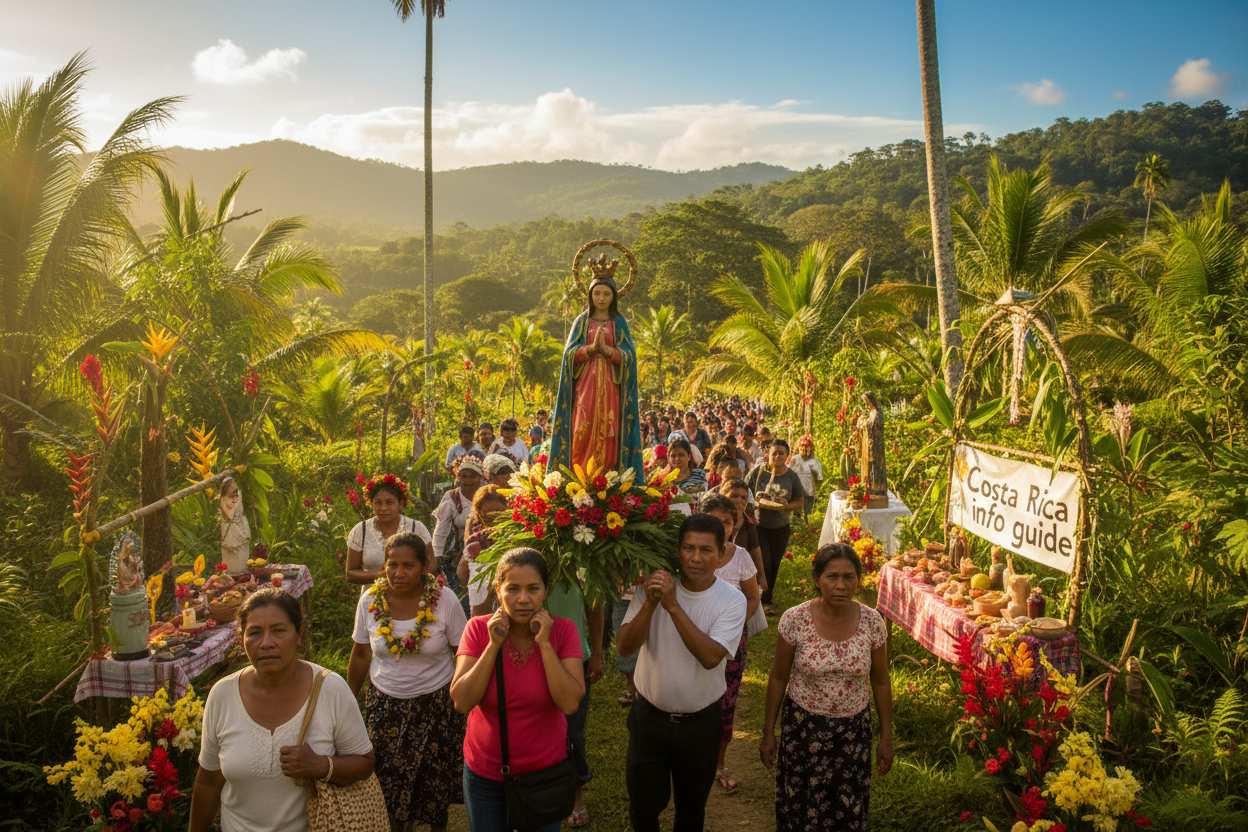
Where English-language worship actually is
It follows the foreign population almost exactly, which means four clusters:
The Central Valley — Escazú, Santa Ana, Heredia, San José. The widest choice by a distance. International and interdenominational congregations, English-language Catholic Mass, Anglican and Episcopal churches, several large evangelical churches with English services or live translation, and the long-established Jewish and Quaker communities.
Guanacaste and the northern Pacific coast. Tamarindo, Playas del Coco, Nosara and the surrounding towns have English-speaking congregations that have grown with the foreign population, often meeting in hotels, schools or community halls rather than church buildings.
The Central and southern Pacific. Jacó, Manuel Antonio, Dominical, Uvita and the Ojochal area — smaller, often bilingual, and frequently the practical social centre of the foreign community as much as its religious one.
Arenal and La Fortuna, and the Southern Zone. Smaller again, usually one or two congregations, and worth asking about locally rather than searching for.
Outside those clusters, English-language services thin out quickly. In much of the country the honest answer is that there is not one, and the choice is a Spanish-language congregation.
How to find one, and why we are not printing a list
Small congregations move. They change meeting places, change service times, merge, and are often run by one or two people who are not maintaining a website. Any published list of Costa Rican English-language churches with addresses and times is out of date within a year, and following a dead list to an empty building on a Sunday morning is a miserable way to start.
What works instead:
- Ask a person, not a search engine. In any town with a foreign community, someone at the hardware shop, the café or the school knows exactly where and when.
- Look for the denominational body rather than the local church. The Anglican, Lutheran, Methodist and Baptist structures in Costa Rica can point you to their nearest congregation, and they stay current.
- Check the local community group. Almost every foreign-resident cluster has one, and service times are among the most frequently asked questions in them.
- Just turn up at the Catholic parish and ask. Parish offices generally know what else is going on in town, including in other traditions.
The case for the Spanish service
Worth putting on the table, because a lot of people never consider it.
A Mass or a service in Spanish is one of the most forgiving language environments you will ever sit in. The structure is familiar and repetitive, the words recur every week, everyone else is following the same text, and nobody expects you to say anything unprompted.
It is also, unlike an English-language congregation, a room full of your actual neighbours. For people who want to belong to the town rather than to the foreign community inside it, that is not a small distinction.
Plenty of foreign residents do both.
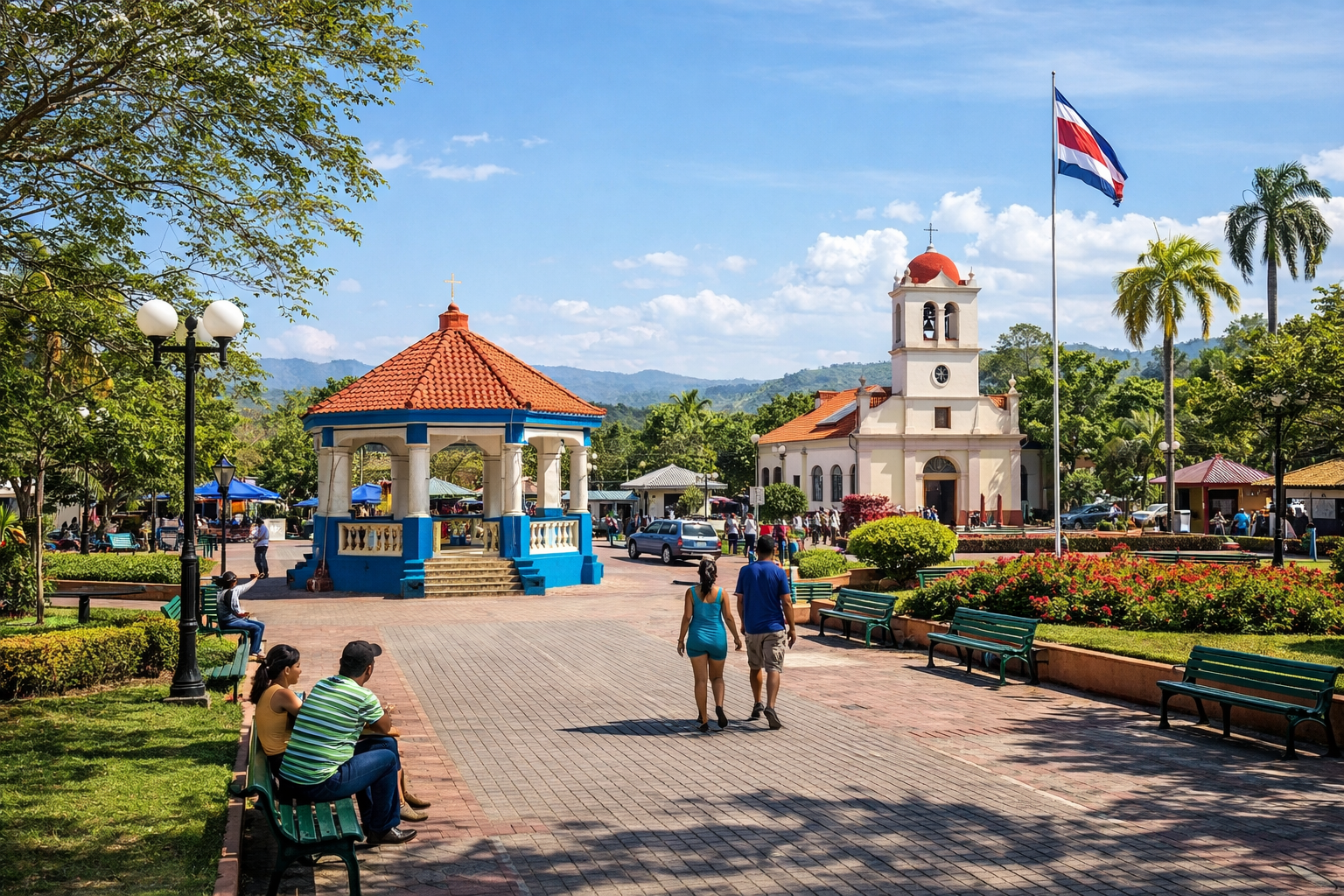
A few things that catch newcomers out
- The patron-saint fiesta is a civic event. Every town has one, and it is as much a fair, a bullring and a food market as a religious observance. Turning up is the single easiest way to meet your neighbours.
- Semana Santa is the big one. Holy Week reshapes the whole country — processions, closures, and much of the population somewhere other than home.
- 2 August, the Virgen de los Ángeles. The romería to Cartago is one of the largest religious gatherings in Central America, and people walk to it from all over the country.
- Services run long. An hour is a short one.
Putting down roots
CRIE — Costa Rica Immigration Experts handles residency applications, renewals, permanent residency and citizenship for people settling in Costa Rica.
See the types of residency in Costa Rica, or get in touch.
Constitutional text from Article 75 of the Constitución Política de Costa Rica. Survey figures from the Escuela Ecuménica de Ciencias de la Religión and IDESPO, Universidad Nacional, fieldwork October 2024. Congregations and service times change — confirm locally.
Article by Glenn Tellier (Founder of CRIE and Grupo Gap)
Don't wait, contact us right now!
Call or WhatsApp Costa Rica +506 8373 2085 or +506 8706 3888
Call USA/Canada +1 305-906-6784