
The honest answer is: in most places, with ordinary care, yes — and the numbers behind that answer are more reassuring than the headlines suggest, once you understand what they actually measure.
Costa Rica’s homicide rate has risen sharply. It is also true that almost none of that violence is directed at people like you. Both statements are supported by the same official data, and holding them together is the only way to think about this sensibly.
What happened to the numbers
Homicides in Costa Rica went from 564 in 2019 to 905 in 2023 — a rise of about 60% in four years, taking the rate to 17.2 per 100,000.
Then it stopped climbing. 2024 closed at 879, down about 3%. 2025 closed at roughly 873, down again slightly. Two consecutive falls, at a level that remains far above Costa Rica’s historical norm.
So: a serious deterioration, followed by a plateau. Not a country spiralling, and not the country it was ten years ago either.
The number that actually answers your question
In 2024, 74% of homicides were classified by the authorities as ajuste de cuentas — score-settling. In 2023 the figure was 70%. These are killings within and between criminal networks, overwhelmingly connected to drug trafficking and territorial disputes.
The victim profile follows from that. Around 90% of homicide victims are male. About 60% are aged between 12 and 35. Firearms are used in roughly seven of every ten.
This is the thing that most reporting leaves out, and it changes the meaning of the headline rate entirely. The violence that pushed Costa Rica’s numbers up is not distributed evenly across the population and it is not random. A retired couple walking back from dinner is not in the group the statistics describe.
Meanwhile, the crime you are exposed to has barely moved
While homicides rose 60%, recorded property crime rose 4.7% between 2019 and 2024 — essentially flat. Robberies of homes actually fell 34% over the same period.
The 2024 totals give a sense of scale: about 13,700 thefts, 12,200 vehicle thefts, 8,400 robberies of a person, and around 5,000 home burglaries.
Two different things have been happening at once, and only one of them is aimed at the general public.
Where the risk actually sits
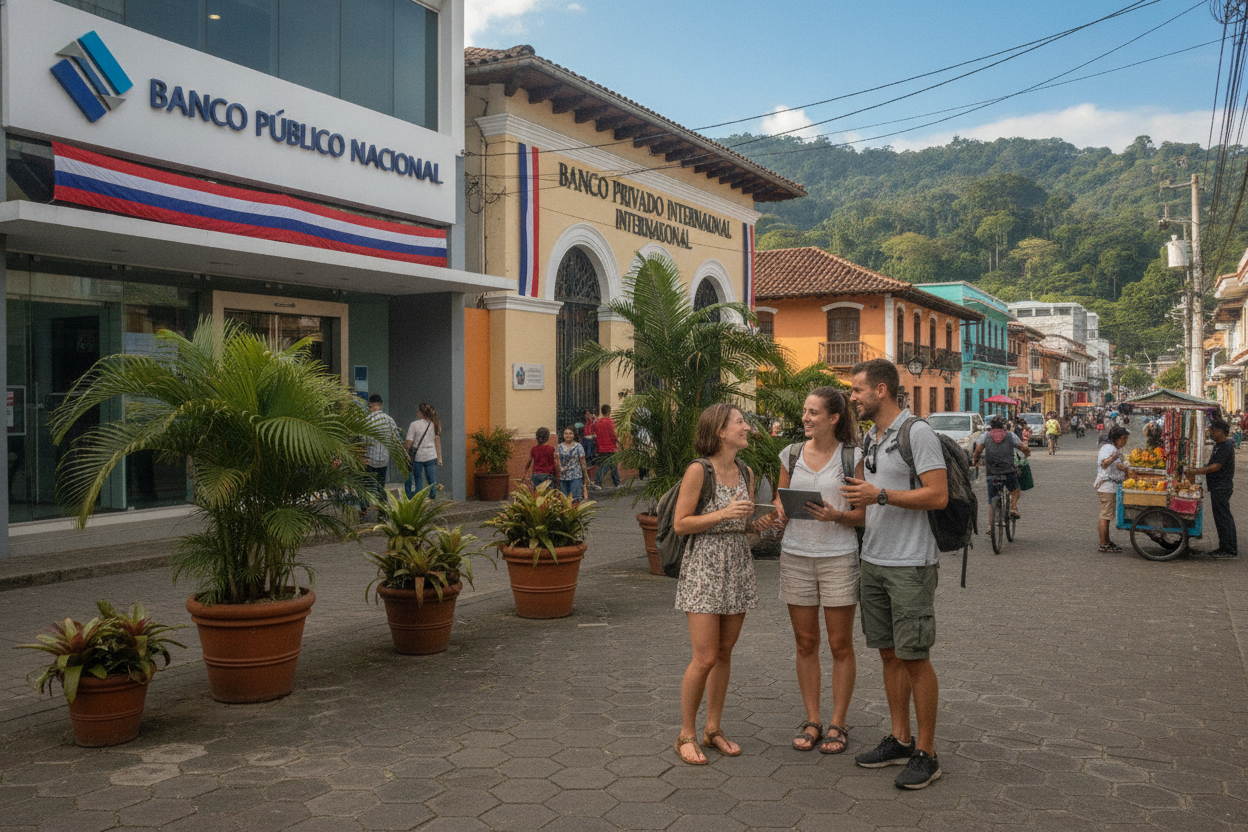
Geography matters more here than almost anything else.
In 2023, Limón province had a homicide rate of 44.9 per 100,000 — roughly three times the national figure. Puntarenas was 29.1 and Guanacaste 24.6. Heredia and Cartago were consistently the lowest.
In 2025, three provinces — San José, Puntarenas and Limón — accounted for 68% of all homicides in the country. Within them the concentration is tighter still, in specific districts: Limón centro, Pavas, Hatillo, San Felipe de Alajuelita, Chacarita, Quepos.
Those are not the districts most foreign residents live in or visit. That is not a coincidence — it reflects where the drug economy operates.
What actually happens to foreigners
The realistic threat is not violence. It is distraction theft.
The OIJ describes the dominant pattern against tourists as el método del descuido — taking advantage of a moment’s inattention to lift a chain, a camera, a phone. Around 900 robberies against foreign tourists were recorded in 2025, with no significant change year on year, the largest concentration in San José.
There is also a pattern of robberies at rental properties, targeting cash, jewellery, cameras and watches. Which is an argument for a safe, and for not leaving valuables visible through a window.
The one piece of official advice worth memorising
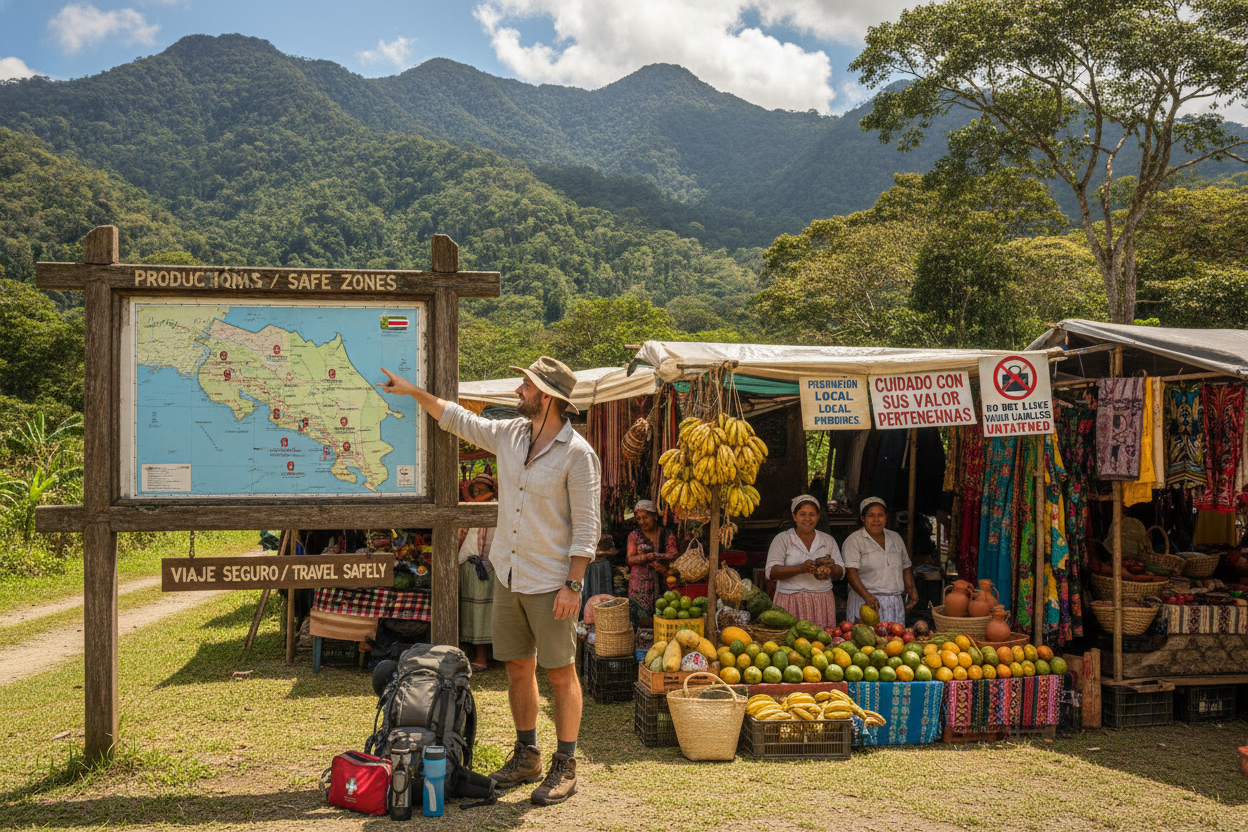
The OIJ’s own guidance to assault victims is blunt and it has not changed: do not resist. Their figure is that four in ten victims who confront their attacker are injured. A phone is replaceable.
Alongside it: do not display valuables, do not walk along using your phone, and stay aware of what is around you. Unglamorous, and it is what the people who investigate these crimes actually say.
San José after dark
Central San José is a working city that empties in the evening, and the areas to be careful in are the predictable ones — around the bus terminals, the markets, and the central parks once the shops have shut. The OIJ has historically identified the area around Parque Central, Parque La Merced, the Coca Cola and Borbón markets, and the terminal areas as the highest-incidence points for assaults.
The residential and restaurant districts foreign residents actually use — Escazú, Santa Ana, Barrio Escalante, Rohrmoser — are a different proposition entirely. So is a coastal town in season.
The practical rule most residents settle on: walking after dark in a neighbourhood you know is normal; crossing central San José on foot late at night is not, and a taxi or Uber costs very little.
The tourist police exist, and speak English
Costa Rica maintains a dedicated Policía Turística, a specialised unit of the Fuerza Pública part-funded by the tourism board. As of 2024 it had 294 officers across the main tourism regions, of whom 55 are fully bilingual in English and a further 177 have basic English.
They are, by a wide margin, the police unit most likely to be able to help you in your own language. Delegations operate in Guanacaste, the Central Pacific, the Caribbean, the Northern Zone, the Southern Zone and the Central Valley, with newer posts at Cahuita and Santa Teresa.
So, is it safe to walk around at night?
In the neighbourhood where you live, in a residential or restaurant district, on a normal evening — yes, and hundreds of thousands of people do it every night.
Across central San José late at night, through a bus terminal area, or in one of the districts that carries most of the country’s violence — no, and residents there would tell you the same.
The country’s problem is real, it is concentrated, and it is largely internal to a criminal economy that has no interest in you. Treat the geography as the information it is, keep your phone in your pocket, and take the taxi.
Working out where in Costa Rica to live?
Safety, like water quality and healthcare access, varies far more between cantons than the national figures suggest. It is worth understanding the map before choosing an address.
CRIE — Costa Rica Immigration Experts handles residency applications, renewals, permanent residency and citizenship for people making the move.
See the types of residency in Costa Rica, or get in touch.
Figures are taken from the Poder Judicial’s homicide analyses, the Observatorio de la Violencia of the Ministerio de Justicia y Paz, and the Instituto Costarricense de Turismo. Tourist-victim figures are OIJ data as reported in the Costa Rican press. General information only.