
Costa Rica’s National Animals and What They Represent
Costa Rica has five legally designated animal symbols. Yet lists online regularly get them wrong.
The resplendent quetzal is not one of them. Neither is the scarlet macaw, the red-eyed tree frog or the crocodile. All are important parts of Costa Rica’s wildlife, but they do not hold the same legal status.
The five official animal symbols were chosen for reasons that say something meaningful about the country: ordinary life, conservation, marine protection, practical wildlife safety and the natural beauty Costa Ricans share with the world.
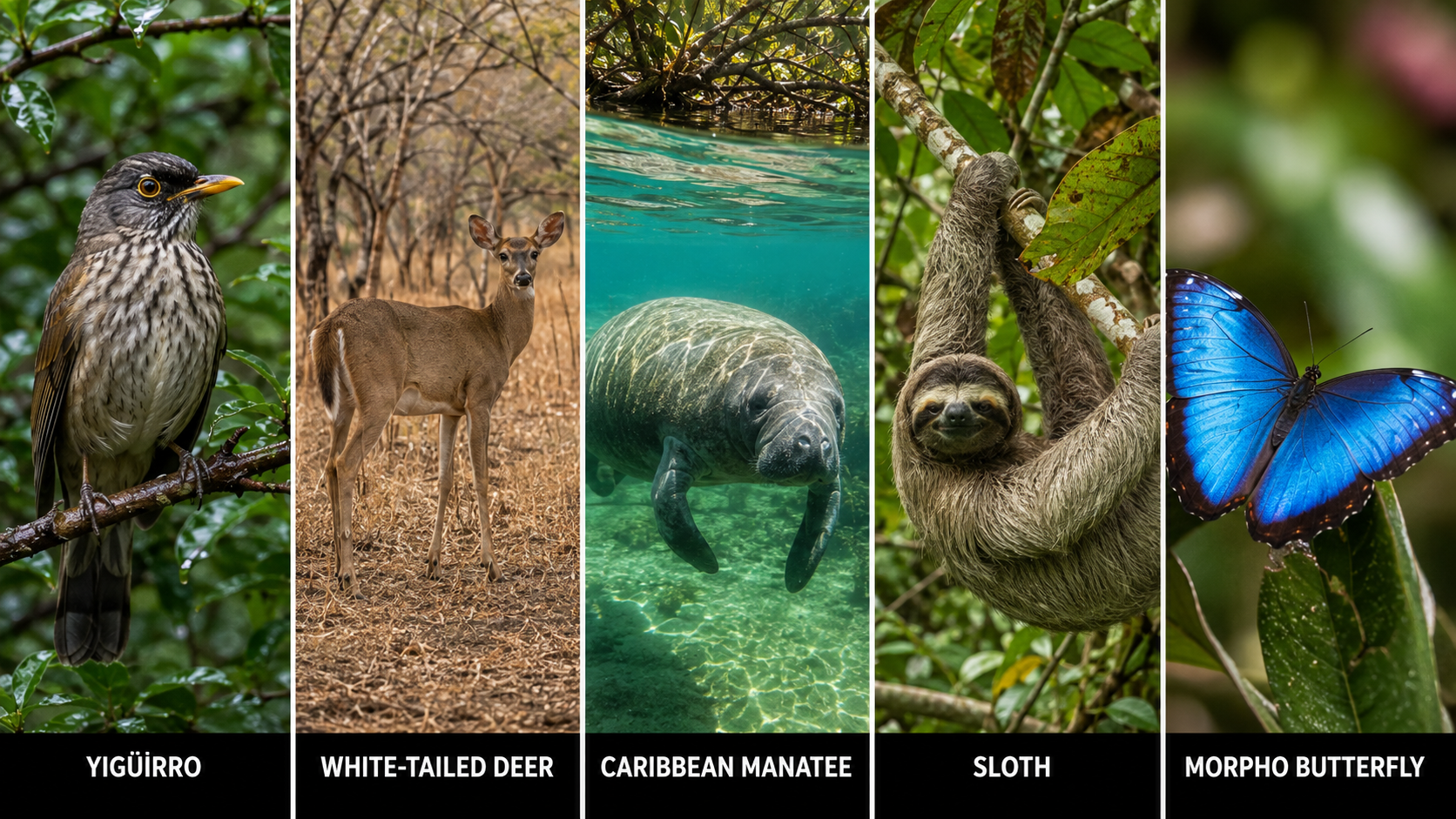
The five official animal symbols
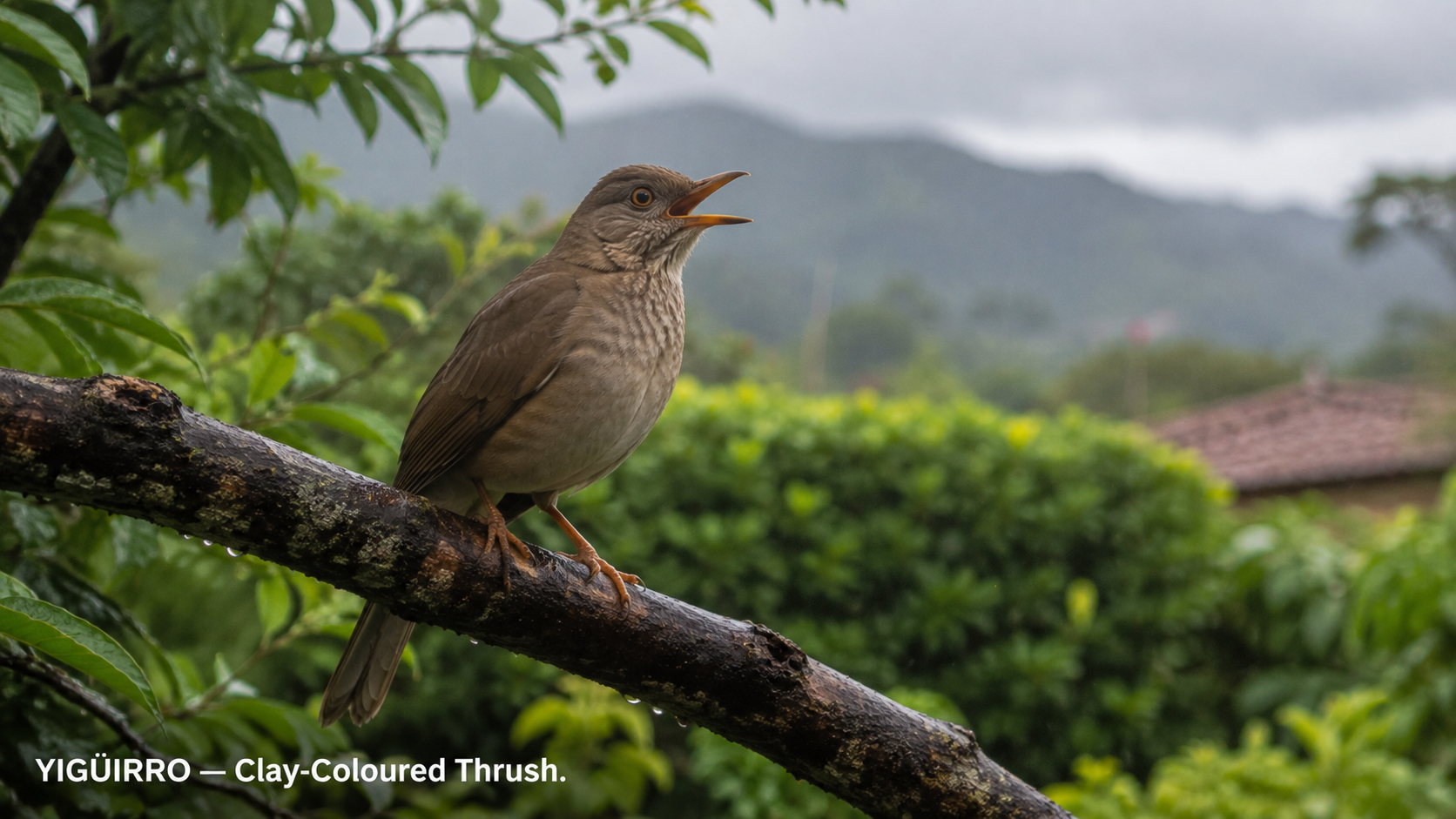
Yigüirro: Costa Rica’s national bird
The yigüirro, or clay-coloured thrush (Turdus grayi), became Costa Rica’s national bird in 1977.
It is not the most colourful bird in the country. It is brown, common and often found close to homes, gardens, hedges and town parks. That was part of the point. The yigüirro was chosen over more spectacular birds because it represented an ordinary, familiar Costa Rica rather than a showpiece.
Its song is closely associated with the beginning of the rainy season. In the Central Valley, many people hear it before the first sustained May rains arrive.
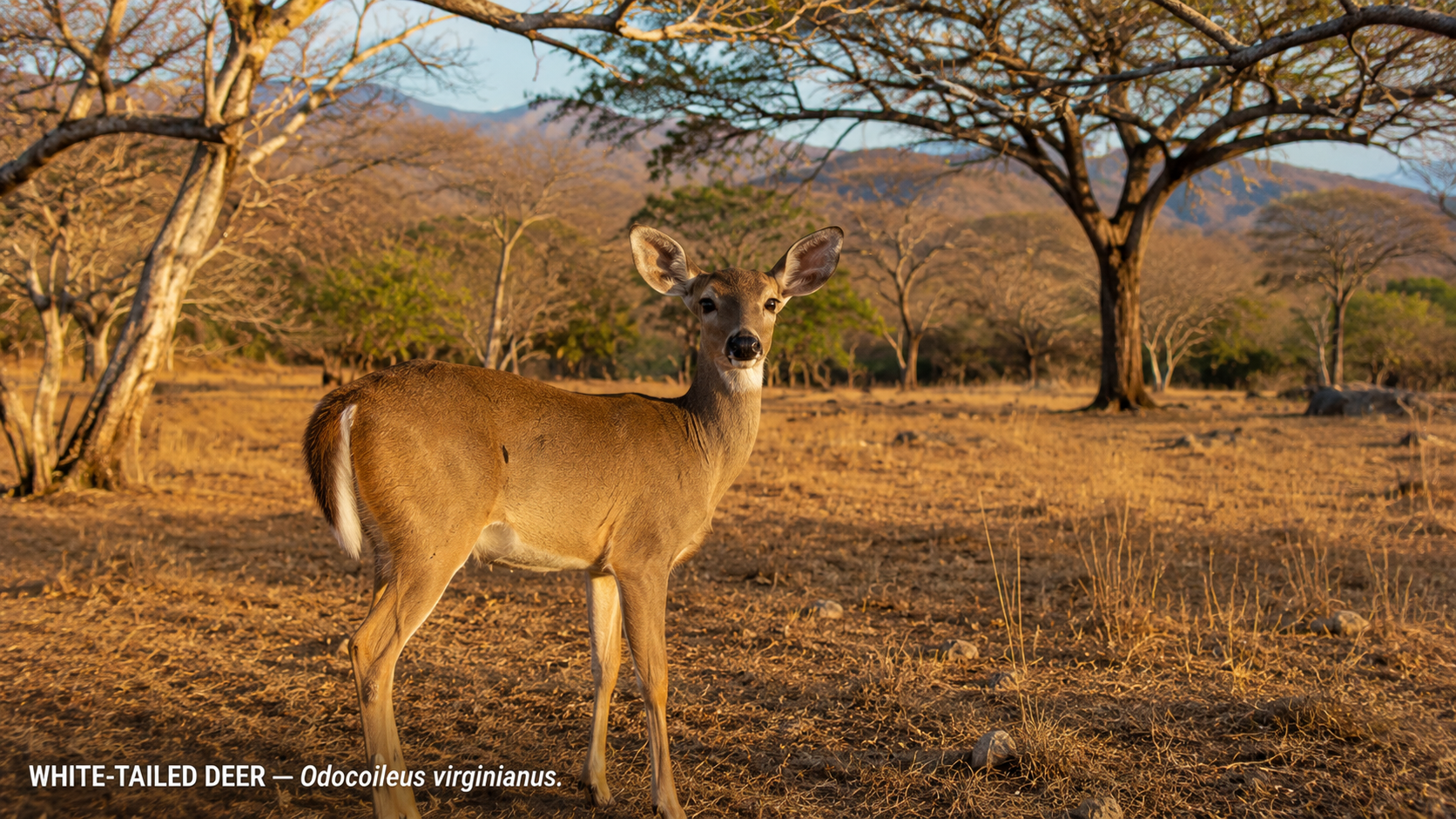
White-tailed deer: national symbol of fauna
The white-tailed deer (Odocoileus virginianus) became Costa Rica’s national symbol of fauna in 1995.
The designation was intended to support conservation at a time when illegal hunting was placing pressure on the species. Today, the deer is most closely associated with Guanacaste and Costa Rica’s north-western dry forest.
It is not a common urban sight, but visitors may see one in national parks, protected areas or quiet rural land. The dry season is often the best time to spot deer in Guanacaste because the forest opens up when many trees lose their leaves.
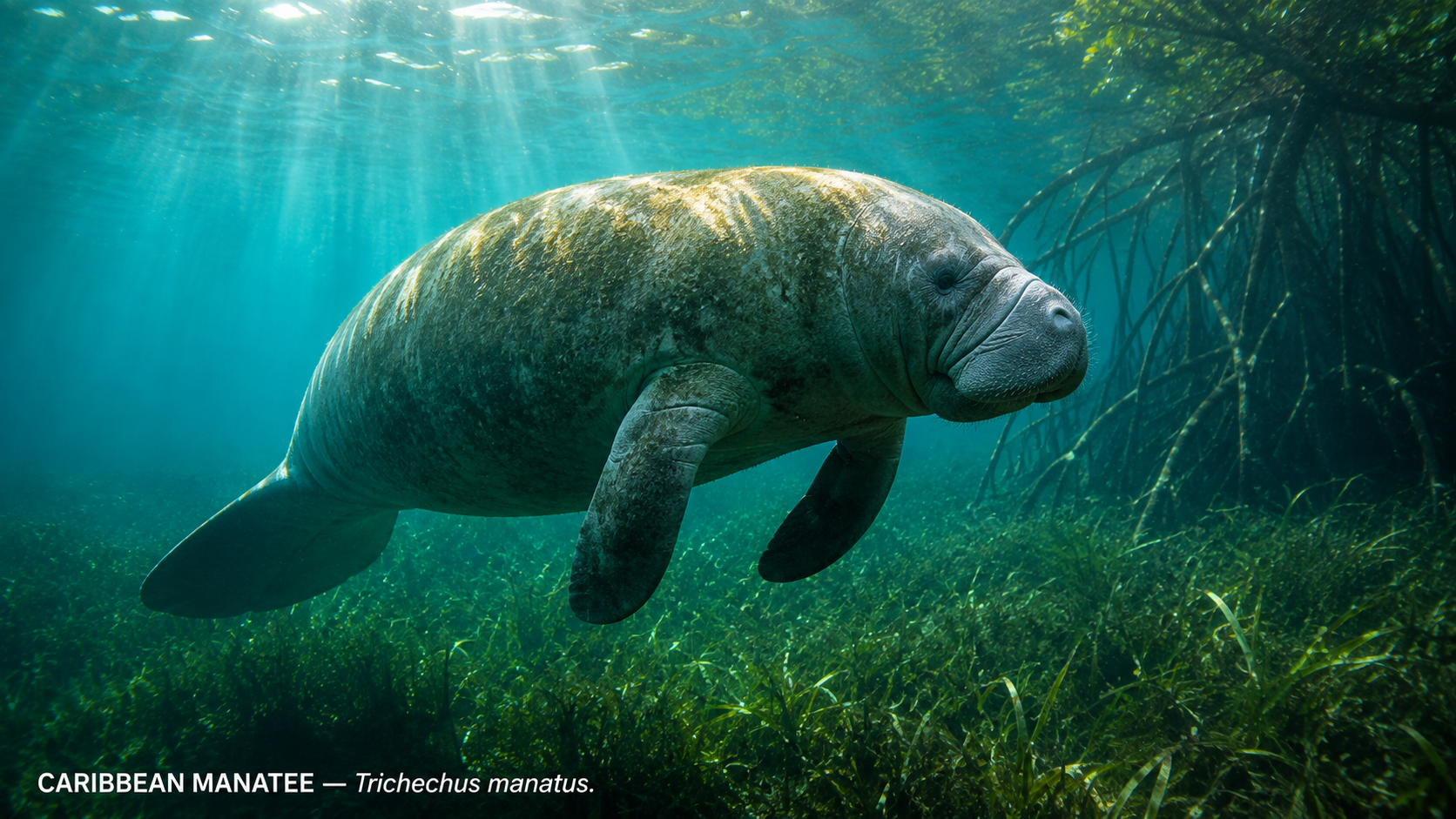
Caribbean manatee: symbol of marine fauna
The Caribbean manatee (Trichechus manatus) became Costa Rica’s symbol of marine fauna in 2014.
This is one of the most commonly misunderstood designations. The manatee did not replace the white-tailed deer. The deer remains the national symbol of fauna in general, while the manatee represents marine fauna specifically.
The manatee also has one of the best stories on this list. Its designation came from a citizen initiative promoted by schoolchildren in Limón. They chose a shy, threatened animal that few people ever see, but one that belongs to Costa Rica’s Caribbean wetlands and deserves protection.
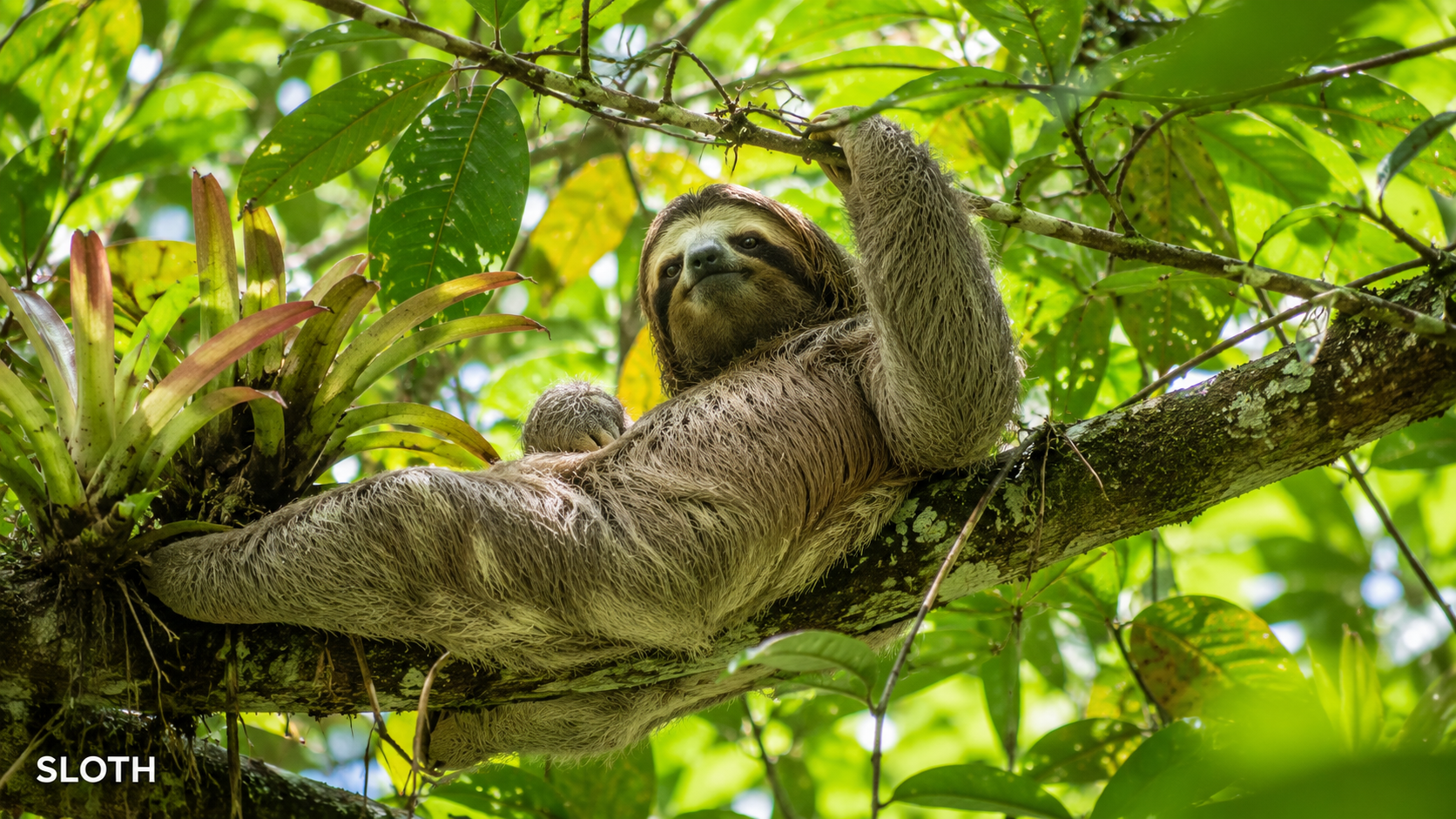
Sloths: national symbols since 2021
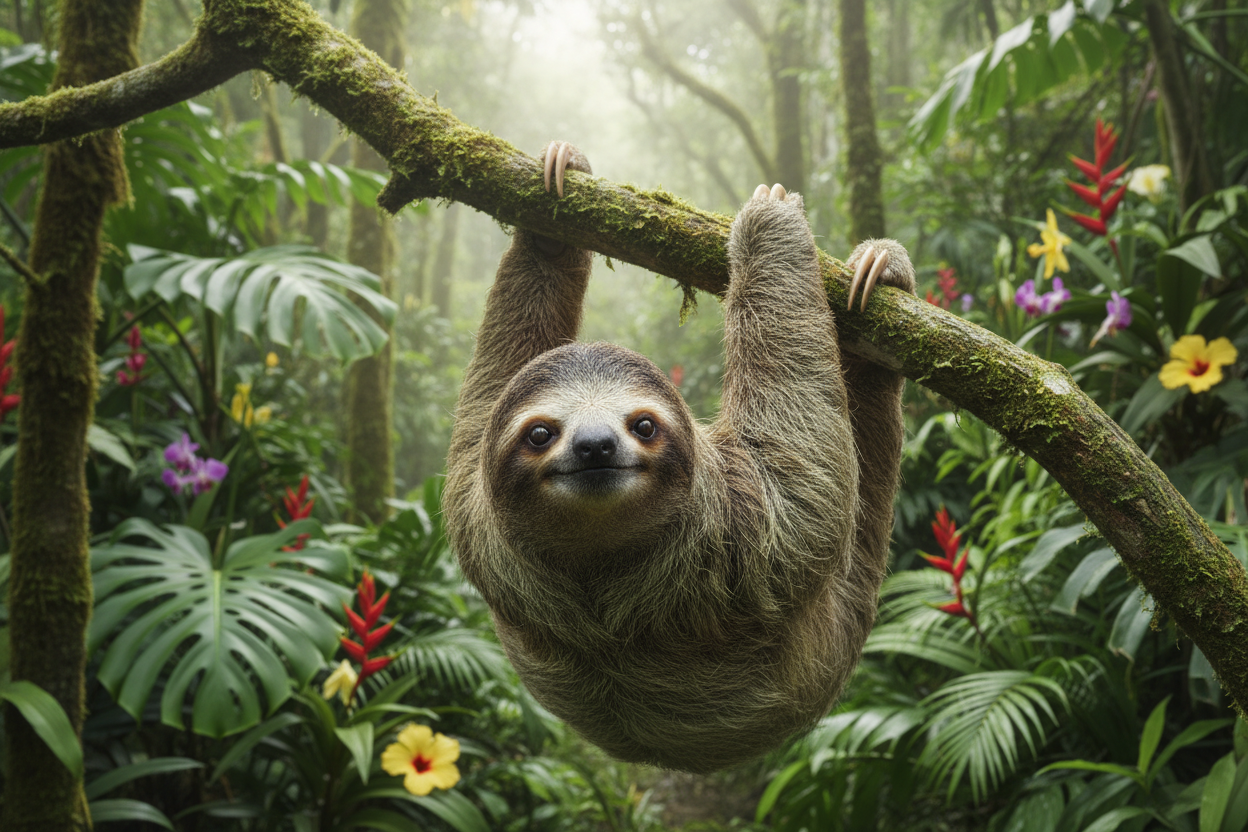
Both two-toed and three-toed sloths became national symbols in 2021. The designation reflects how strongly Costa Ricans and visitors connect with these quiet rainforest animals.
The law also addressed real threats to sloths, including vehicle speed in sloth habitat and the danger created by electrical lines. This was more than a symbolic gesture. It linked the country’s affection for sloths to practical protection.
Sloths are found in the Caribbean lowlands and on the Pacific side of Costa Rica. They are easier to spot with a good local guide than on your own, because they blend remarkably well into the canopy.
Morpho butterfly: symbol of lepidopteran fauna
The morpho butterfly became Costa Rica’s symbol of lepidopteran fauna in 2022. The best-known species is the brilliant blue Morpho helenor.
Its colour is not created by ordinary blue pigment. Instead, microscopic structures on the wings reflect light, producing the electric-blue flash people see along rainforest trails and forest edges.
A morpho is often visible for only a second: a bright blue flicker in the green forest, then gone as the wings change angle.
Two hummingbirds proposed as future symbols
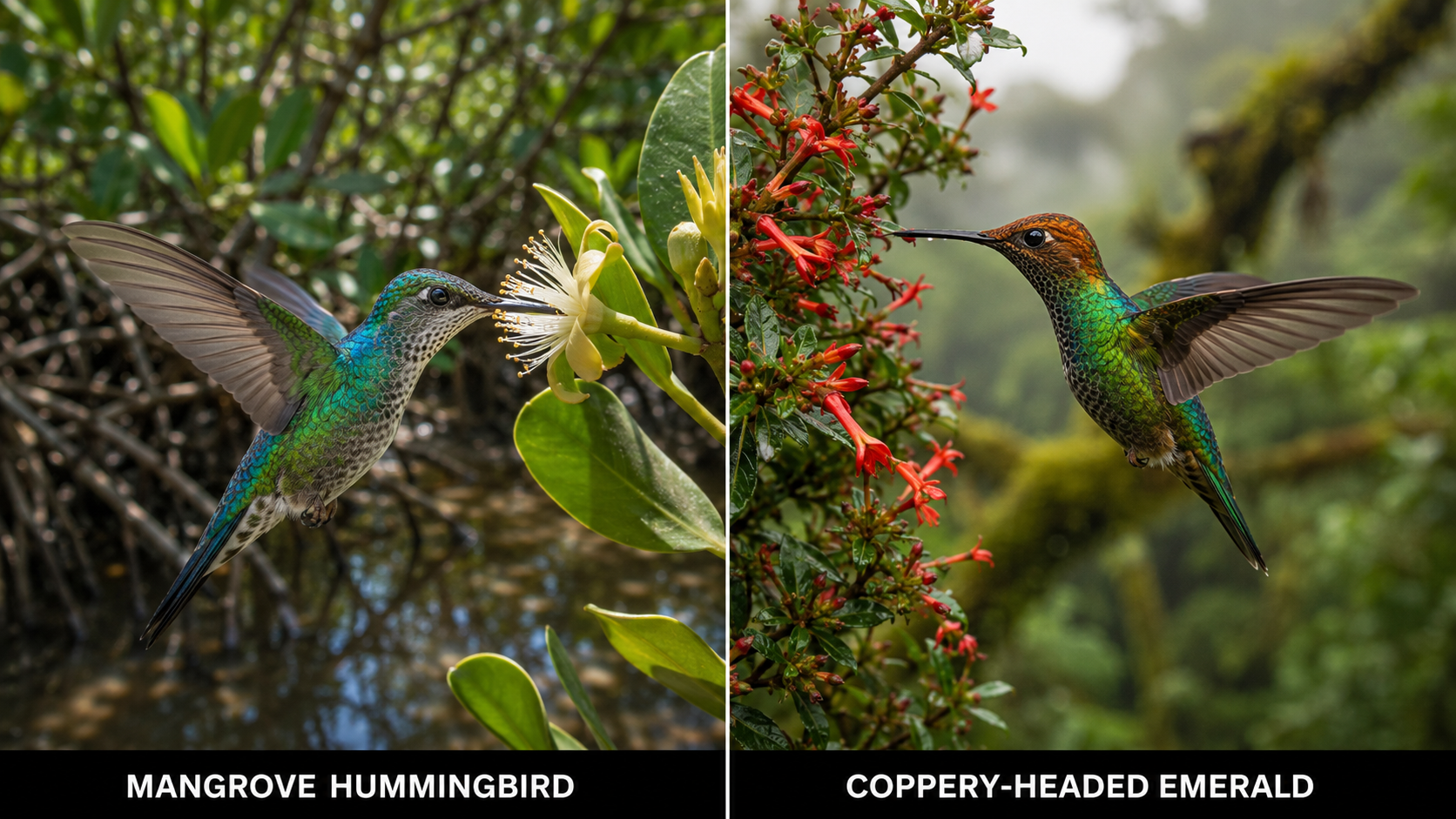
In February 2024, the Legislative Assembly approved in first debate a proposal involving two endemic Costa Rican hummingbirds: the mangrove hummingbird and the coppery-headed emerald.
They are exceptional choices because both are found only in Costa Rica. The mangrove hummingbird depends on Pacific mangrove habitat, while the coppery-headed emerald is associated with highland forest and flowering plants.
For now, it is best to describe this proposal carefully as having passed first debate. It should not be described as an enacted national designation unless final passage and publication are confirmed.
Where you are most likely to see the official animals
- Yigüirro: Gardens, parks, hedges and neighbourhoods throughout much of the Central Valley.
- White-tailed deer: Guanacaste dry forest, protected areas and quiet rural land.
- Caribbean manatee: Canals, lagoons and wetlands on the Caribbean coast. This is the hardest of the five to see.
- Sloth: Caribbean lowlands, Pacific rainforest and many wildlife areas where a guide can point them out.
- Morpho butterfly: Forest edges, rainforest trails and tropical gardens across many parts of the country.
Animals that are important—but not official national symbols
Costa Rica has many famous animals that appear constantly in tourism photographs, souvenir shops and online lists. They are still not legally designated national animal symbols.
The resplendent quetzal
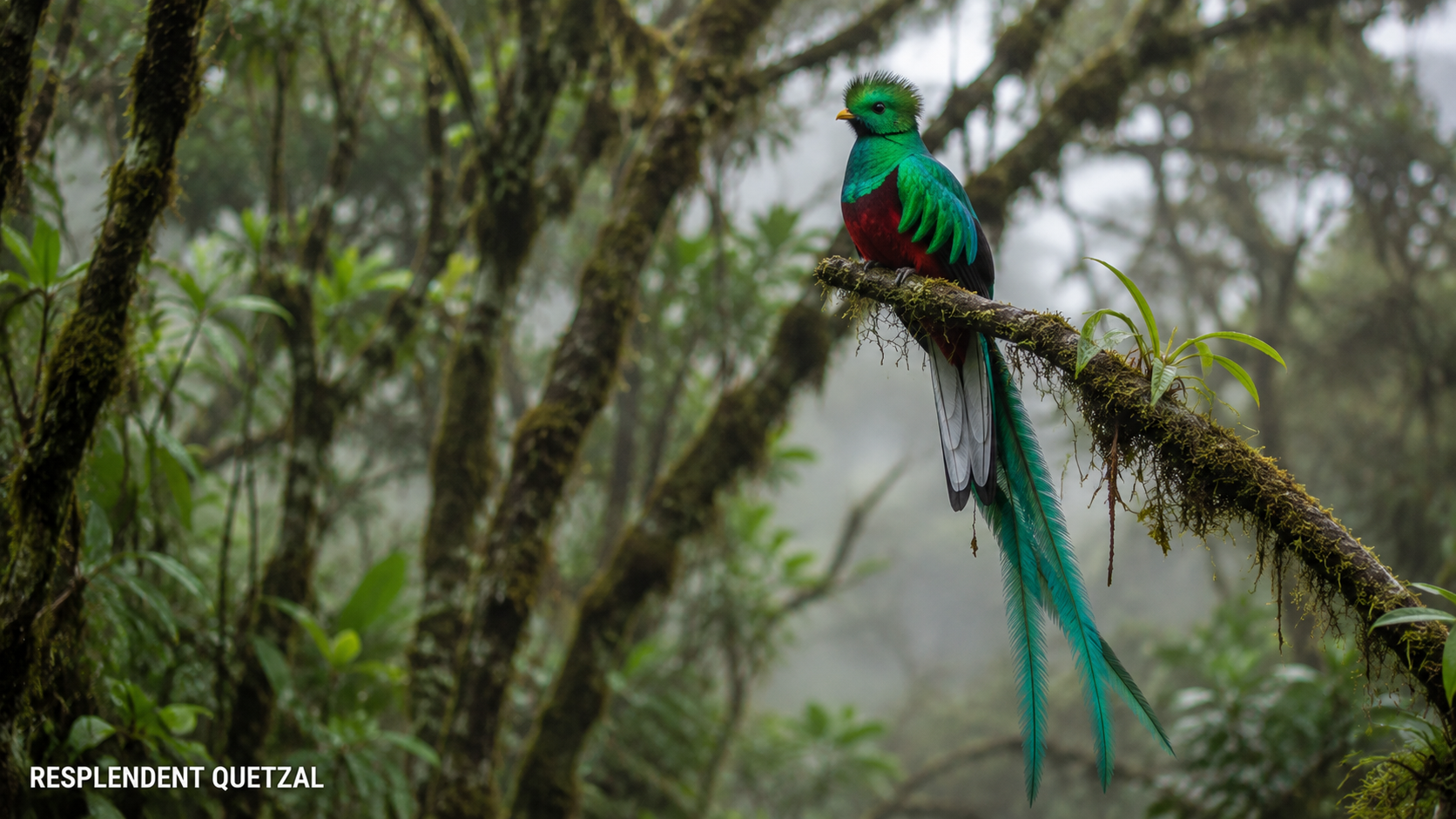
The quetzal is one of the country’s most beautiful birds and a treasured cloud-forest sighting. It is strongly associated with Monteverde, San Gerardo de Dota and higher-elevation forests.
It is not Costa Rica’s national bird. That designation belongs to the yigüirro. The quetzal is Guatemala’s national bird.
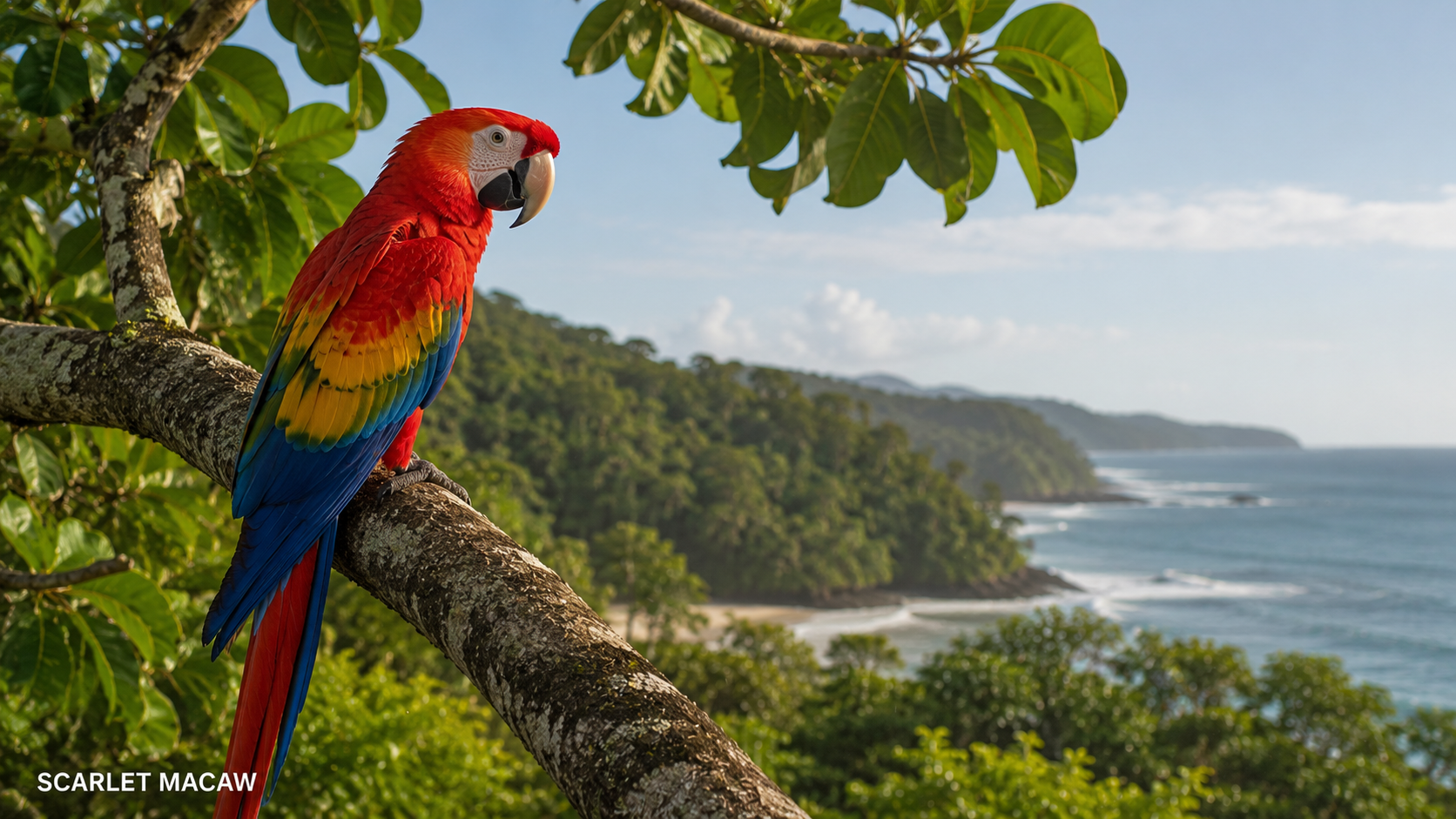
The scarlet macaw
The scarlet macaw is another Costa Rican wildlife icon, especially on the Central and South Pacific coasts. Its red, yellow and blue plumage makes it impossible to miss.
It is not an official national animal symbol. It is, however, a remarkable conservation success story in areas where habitat protection and reintroduction work have supported local populations.
The red-eyed tree frog
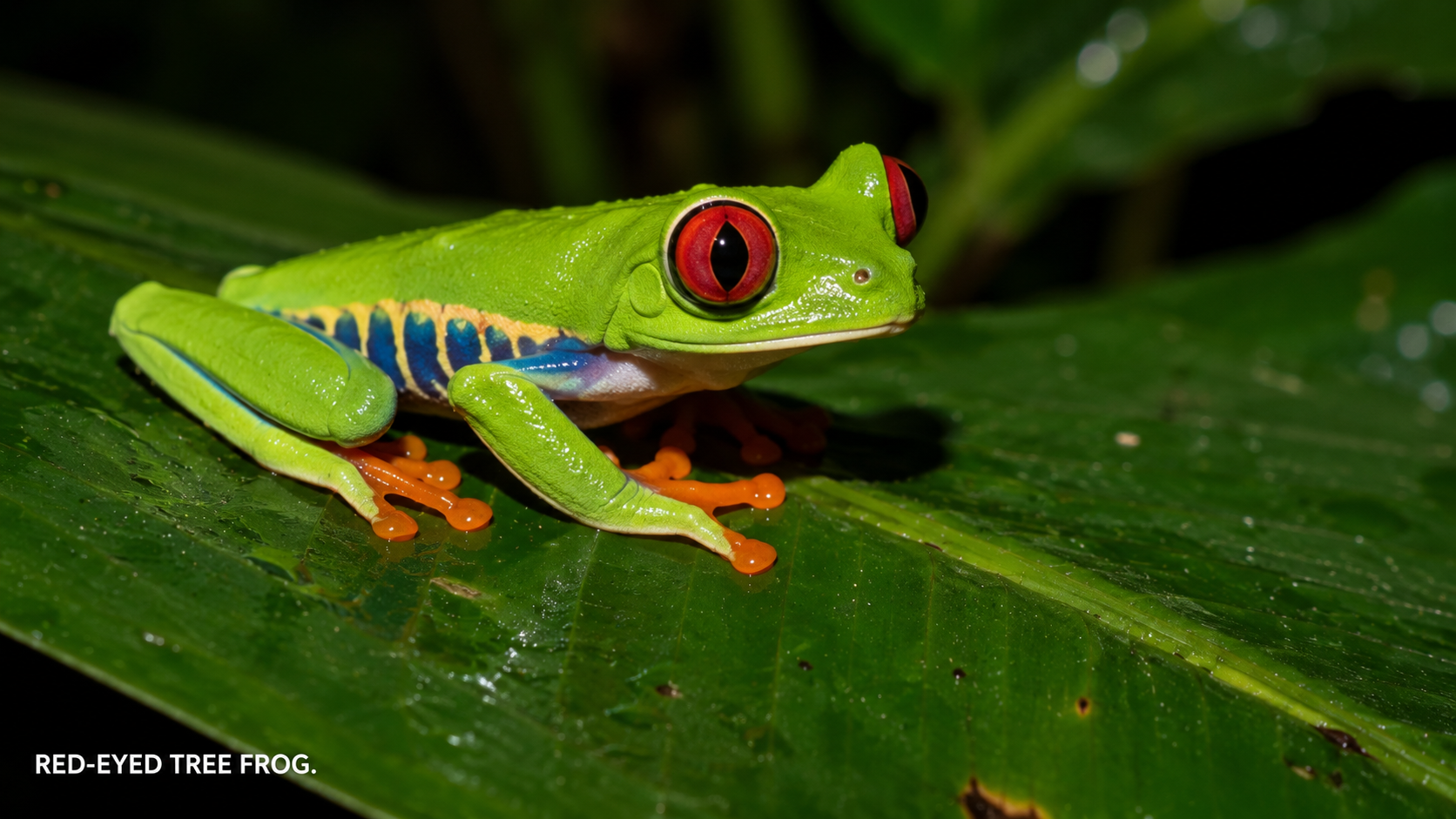
The red-eyed tree frog may be the most photographed animal in Costa Rican tourism. Its bright red eyes, green body and blue-and-yellow sides have become a familiar symbol of tropical rainforest life.
It is not a legally designated national animal symbol. It is simply one of Costa Rica’s most recognisable and photogenic residents.
The American crocodile
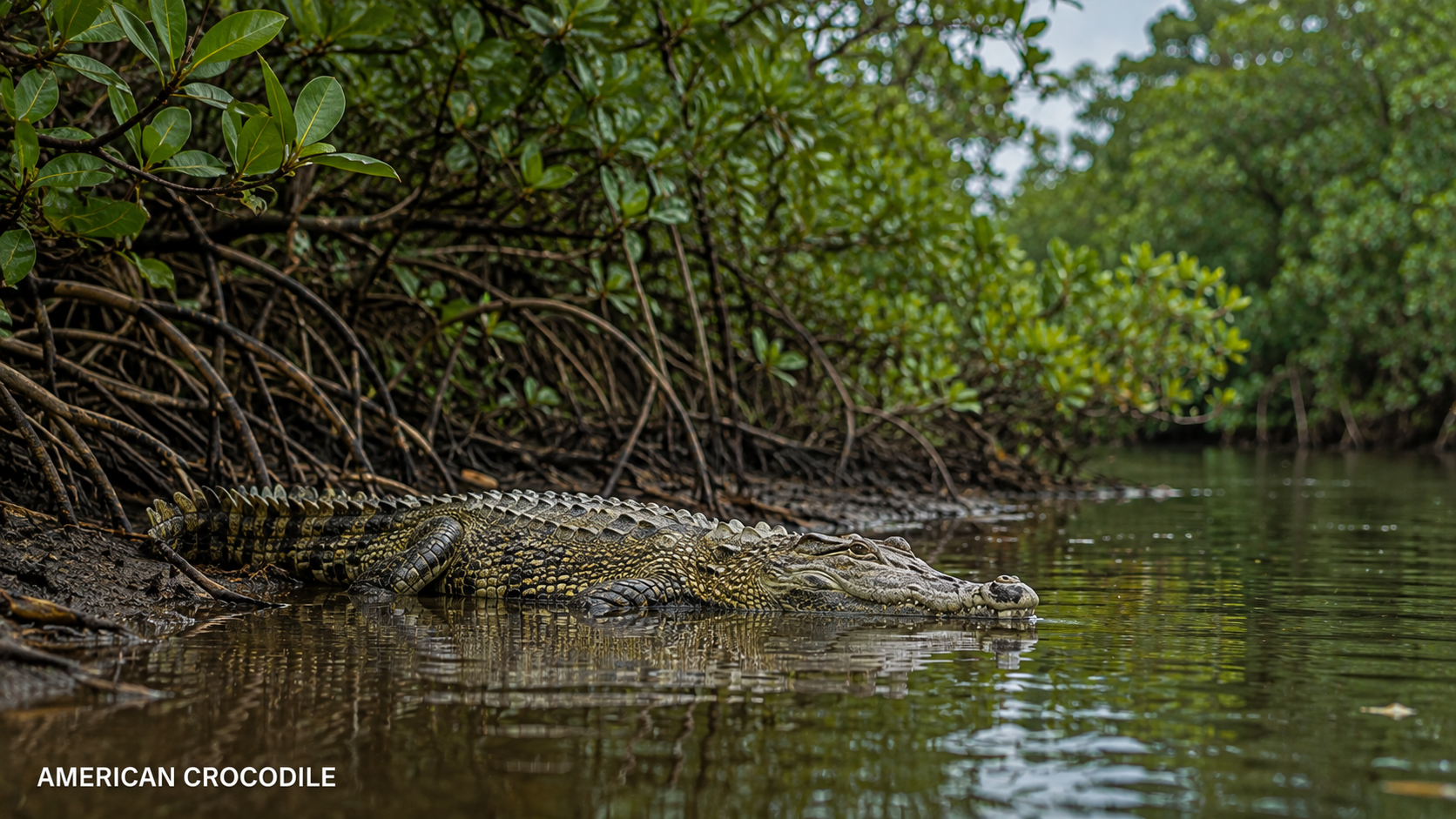
The American crocodile is a major part of Costa Rica’s river, mangrove and estuary ecosystems. It is real wildlife, not a tourist display, and it deserves distance and respect.
It is not an official national animal symbol. If you see one near a river mouth or mangrove channel, do not approach it, feed it or enter the water nearby.
What the five official choices say about Costa Rica
These choices are revealing. Costa Rica did not select only the showiest animals.
Its national bird is a plain brown thrush that lives close to people. Its marine symbol is a shy manatee that most residents will never see. Its sloth law included practical protection from roads and electrical lines. Its butterfly symbol is beautiful, but it also represents the complexity and importance of healthy forest habitat.
Together, the five symbols reflect a country that values wildlife not simply because it is photogenic, but because it is familiar, shared and worth protecting.
Planning to make Costa Rica home?
CRIE — Costa Rica Immigration Experts helps people with Costa Rica residency applications, renewals and citizenship.
See the residency options in Costa Rica, or contact our team to discuss your situation.
Thinking About Making Costa Rica Home?
Thousands of expats, retirees, and investors have made Costa Rica their permanent home. If you are considering residency, CRIE’s licensed immigration attorneys can walk you through your options — Pensionado, Rentista, Investor, or family-based — and handle every step of the process.