

Welcome to our comprehensive guide on the relationship between taxes and residency in Costa Rica. This beautiful Central American country offers a unique opportunity for those looking to relocate. Understanding the local tax system is essential for anyone considering a move.
Costa Rica operates on a territorial tax system. This means that only income earned within the country is subject to taxation. Andrew Coleman, a CPA, highlights that the tax year runs from January 1 to December 31. This information is crucial for new residents and those planning long-term stays.
In this guide, we will explore how residency status affects your tax obligations. We aim to provide clear and factual information to help you navigate the complexities of moving to Costa Rica. By understanding these elements, you can prepare for a smooth transition to your new home.
Overview of Costa Rica’s Tax System and Residency Requirements
Understanding the tax framework and residency criteria in Costa Rica is essential for newcomers. This beautiful country operates on a territorial tax system. This means that only income earned within its borders is subject to local taxation.
You are considered a tax resident if you spend more than 183 days in Costa Rica during a single fiscal year. Interestingly, this classification is independent of your immigration status. Therefore, even if you do not hold permanent residency, you may still be liable for local taxes.
It is crucial to grasp these requirements for effectively managing your tax obligations while living in Costa Rica. Additionally, different residency classifications will impact how you interact with the local tax system and what documentation you must maintain annually.
Understanding taxes-costa-rica-residency for Expats
For those relocating to Costa Rica, tax obligations can be complex yet manageable. It is vital to differentiate between local income earned within the country and foreign income, which is exempt from local taxation. This distinction is crucial for expatriates to understand.
Your residency status plays a significant role in how you are taxed. Residents must file annual tax returns, while non-residents are subject to withholding tax. This means that maintaining your resident status requires attention to specific tax obligations linked to your immigration category.
Moreover, the tax system in Costa Rica treats foreign-sourced income as fully exempt. This feature provides substantial benefits for retirees and remote workers living in the country. Remember, your tax status is independent of your immigration status, which necessitates careful management of both legal requirements.
Navigating Costa Rica’s Territorial Tax Model

Navigating the intricacies of Costa Rica’s tax model can significantly impact your financial planning. The country’s territorial tax system ensures that only income earned within its borders is subject to local taxation. This means foreign income remains completely exempt, a significant advantage for many expatriates.
For 2026, personal income tax rates range from 0% to 25%, based on progressive brackets adjusted for inflation. High earners in Costa Rica will face the top rate of 25%. Understanding these brackets is essential for effective financial management.
Non-residents also encounter specific withholding tax dynamics. Taxes on interest, dividends, and royalties are deducted directly at the source, with rates varying between 8.5% and 30%. This system requires non-residents to be aware of their obligations to avoid unexpected tax liabilities.
How CRIE Assists with Costa Rica Residency and Immigration
The path to securing residency in Costa Rica can be made smoother with expert guidance. For over 20 years, we at CRIE have assisted individuals and families in navigating the complex immigration landscape of Costa Rica.
Our services focus exclusively on residency and immigration. We ensure you have the correct information for your residency application. Every case is unique, depending on your nationality, family situation, and immigration history.
We provide personalized support throughout the process, helping you save time by streamlining the documentation required for your residency application. With our expertise, you can navigate the residency process with confidence.
Preparing Your Documentation for Residency and Tax Filing
Gathering the right documentation is crucial for anyone aiming to establish residency in Costa Rica. Proper preparation can make your transition smoother and help you avoid unnecessary delays.
Start by collecting essential items like birth certificates and criminal background checks from your home country. Remember, criminal background checks are valid for only six months and must be apostilled for use in Costa Rica.
Each document needs to be translated into Spanish by an authorized translator in Costa Rica. This ensures compliance with the strict requirements of the immigration office.
We recommend creating a detailed checklist to manage your expenses and ensure no critical information is missing from your application. Avoiding common errors, such as using expired background checks, is vital for a smooth residency application process.
With proper preparation, you can navigate the requirements effectively and secure your residency in Costa Rica.
Step-by-Step Guide to Filing Taxes in Costa Rica
To successfully file taxes in Costa Rica, it’s important to follow a clear set of steps. The process begins with the D-101 annual income tax return, which must be submitted by March 16 for the previous fiscal year. Understanding this deadline is crucial for compliance.
We provide a step-by-step guide to help you navigate the online filing procedures required by the tax administration. All residents must use the Ministry of Finance’s digital platform for electronic filing.
Knowing your tax obligations also includes being aware of specific deadlines for monthly and annual forms. If a tax deadline falls on a weekend or public holiday, the due date shifts to the next business day.
Accurate reporting of your income is essential to ensure full compliance with Costa Rican tax laws. For more detailed information on residency and tax obligations, visit our comprehensive guide.
Managing Income and Property Taxes as a Costa Rican Resident
As a resident in Costa Rica, grasping the nuances of income and property taxes is vital for your financial well-being. Understanding these taxes will help you navigate your obligations effectively.
Managing your property taxes involves paying 0.25% of the registered cadastral value to your local municipality on a quarterly basis. This small percentage can add up, so it’s essential to keep track of your property’s value.
Additionally, as a Costa Rican resident, you must account for the 13% IVA rate applied to most goods and services. This tax affects your everyday purchases and should be factored into your budget.
Income tax rates in Costa Rica are progressive. You must ensure your net income is calculated correctly after allowable deductions. The value of your real estate is updated every five years, impacting your annual property tax obligations.
We provide insights into how these taxes affect your overall financial planning while living in Costa Rica.
Key Considerations for Digital Nomads and Remote Workers
For digital nomads, Costa Rica offers a unique blend of natural beauty and favorable tax conditions. This country has become a popular destination for those who work remotely. The digital nomad visa is an excellent option for many.
To qualify for this visa, individuals must demonstrate a stable monthly income of at least $3,000. Families need to show a minimum of $4,000. This requirement ensures that applicants can support themselves while living in Costa Rica.
One of the primary benefits of this program is the tax exemption on foreign-source income. This means that income earned outside of Costa Rica is not taxed. However, it’s important to maintain valid health insurance throughout your stay to meet visa requirements.
While enjoying these tax benefits, you must still comply with your home country’s tax obligations. For example, US citizens are required to file a return regardless of their foreign income. The digital nomad visa allows for a flexible lifestyle without the need to contribute to the local social security system.
Comparing Tax Obligations for Residents vs. Non-Residents
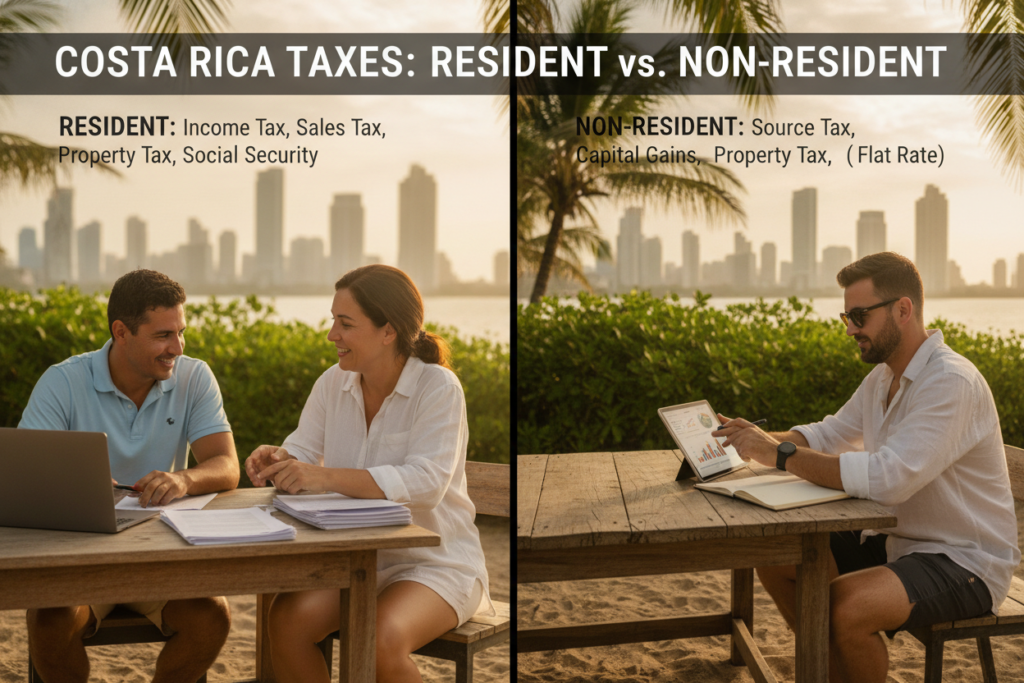
When moving to Costa Rica, understanding the differences in tax obligations for residents and non-residents is crucial. Both groups are taxed only on income earned within Costa Rica. However, their filing requirements differ significantly.
The absence of a tax treaty between the United States and Costa Rica means that expats must use unilateral mechanisms to avoid double taxation. This can include using Form 1116 or Form 2555 for US citizens to manage their tax obligations effectively.
Residents are required to file annual returns, while non-residents face withholding tax on their Costa Rican-source income. Proper planning is essential to ensure compliance with both Costa Rican and your home country’s tax laws.
We help you understand how to manage your tax obligations effectively, regardless of your residency status in Costa Rica.
Tips for Staying Compliant with Costa Rican Tax Deadlines
Staying on top of tax filing dates is vital for both personal and business finances in Costa Rica. Proper management of these deadlines can help you avoid unnecessary penalties.
To ensure compliance, remember that the D-151 form, which summarizes payments and withholdings, is due on the last business day of February. Submitting this form on time is essential for accurate reporting.
Here are some tips to help you manage your tax obligations effectively:
- Keep accurate records of your expenses to ensure timely submissions.
- Consider hiring a professional advisor to help with your tax information.
- Regularly monitor your tax deadlines to maintain good standing.
- Be aware that late payments incur a penalty of 1% per month on the outstanding balance.
By following these guidelines, you can navigate the tax landscape in Costa Rica with confidence. For more detailed information on residency and tax obligations, visit our comprehensive guide.
Connect with CRIE for Personalized Residency and Tax Guidance
Connecting with CRIE can make your journey in Costa Rica smoother. Our team specializes in personalized residency and tax guidance tailored to your unique situation.
Every residency case depends on your nationality, family situation, and immigration history. For pricing and next steps, please speak with Johanna Alvarez, our dedicated immigration expert.
You can reach us via WhatsApp at +506 8706 3888 or email us at info@crie.cr to discuss your specific needs. Visit our website at crie.cr to learn more about our professional services.
We provide practical support to help you navigate the residency process and understand your tax obligations in Costa Rica.
FAQ
What is the tax system in Costa Rica?
Costa Rica operates on a territorial tax system, meaning residents are taxed only on income earned within the country. Income generated outside of Costa Rica is generally not subject to taxation.
How does residency status affect tax obligations?
Residency status plays a crucial role in determining tax obligations. Residents are taxed on local income, while non-residents are taxed differently, primarily on income sourced within Costa Rica.
What are the different classifications of residency in Costa Rica?
There are several classifications of residency, including temporary and permanent residency. Each classification has its own requirements and impacts on tax obligations.
What documents do we need to prepare for residency and tax filing?
Essential documents include proof of income, identification, and any relevant financial statements. It’s important to have these organized for a smooth application process.
How do we file taxes in Costa Rica?
Filing taxes involves completing specific forms and submitting them by designated deadlines. We can navigate the online filing procedures for convenience.
What are the income and property tax rates for residents?
Income tax rates in Costa Rica are progressive, ranging from 0% to 25%, depending on income levels. Property taxes are generally assessed at a rate of 0.25% of the property’s value.
What are the benefits of the Digital Nomad Visa in terms of taxation?
The Digital Nomad Visa allows foreign-source income to be exempt from local taxation, providing significant tax benefits for eligible individuals working remotely while living in Costa Rica.
How can we avoid penalties related to tax compliance?
Staying organized and aware of filing dates is essential. We recommend setting reminders for deadlines and ensuring all submissions are made on time to avoid penalties.
How can CRIE assist us with residency and tax matters?
CRIE offers over 20 years of expertise in navigating residency and tax requirements. They provide tailored guidance to ensure compliance and streamline the application process.
Article by Glenn Tellier (Founder of CRIE and Grupo Gap)
Don't wait, contact us right now!
Call or WhatsApp Costa Rica +506 8373 2085 or +506 8706 3888
Call USA/Canada +1 305-906-6784