
Are you considering a fresh start in a vibrant new country? Many Americans are drawn to the stunning landscapes and relaxed lifestyle that await in Central America. Costa Rica, known for its rich biodiversity, offers a unique blend of natural beauty and cultural charm.
This small nation, roughly the size of West Virginia, boasts two international airports in San Jose and Liberia, making travel from North America easy and convenient. Before you embark on your journey, it’s crucial to understand the various climates and regions available to new residents.
Living in Costa Rica provides a sense of security, thanks to its stable democracy and welcoming community. The local culture emphasizes family and togetherness, often referred to as the Pura Vida lifestyle. Our goal is to equip you with essential knowledge to navigate the complexities of life in this beautiful country.
For more insights, check out our guide on costs to relocate your family of 4 to Costa.
Understanding the relocating-to-costa-rica-from-the-us-what-you-need-to-know Process
Starting a new chapter in a different country can be an exciting adventure. However, the journey involves a structured immigration process that requires patience and organization.
Before packing your bags, there are several things to consider. You need to manage your finances and understand your legal status while living abroad. Researching local laws is crucial to ensure your documentation is ready before your move.
It’s essential to allocate enough time for the bureaucratic steps involved in obtaining legal status. Rushing through these steps can lead to unnecessary complications. Each case in Costa Rica is unique, depending on your nationality, family situation, and immigration history.
Overview of Costa Rican Residency and Immigration
Imagine stepping into a world filled with lush landscapes and vibrant culture. Understanding the residency options in Costa Rica is essential for a smooth transition. For over 20 years, CRIE has been a trusted partner for individuals and families navigating the complexities of residency and immigration.
It’s crucial to differentiate between a tourist visa and formal residency. A tourist visa allows for short-term stays, typically up to 180 days, but it does not provide the same benefits as residency. Many people mistakenly think that border runs can serve as a permanent solution, but immigration officials are now stricter with 180-day entry stamps.
Obtaining legal residency is the most reliable way to secure your status in Costa Rica. This status not only simplifies access to banking and local services but also offers peace of mind. CRIE focuses solely on residency and immigration services, ensuring clients receive specialized guidance throughout their application journey.
Navigating Immigration with a Trusted Expert
Embarking on a new journey in a foreign land can feel both thrilling and daunting. The immigration landscape in Costa Rica can be challenging, prompting many to seek guidance from a trusted expert.
Working with a professional can help streamline the process. They ensure that your paperwork meets the specific standards required by immigration authorities. This attention to detail is vital for a smooth transition.
Every expat has a unique situation. Having an expert to guide you is a practical way to avoid common pitfalls and delays. We recommend consulting with a specialist who understands the nuances of the system.
By working with an expert, you can focus on settling into your new life in Costa Rica. Let them manage the technical details while you embrace your new adventure.
Exploring Residency Pathways for US Citizens
Considering the diverse residency options available can help you find the best fit for your lifestyle in this beautiful country. Costa Rica offers several pathways for US citizens, each with unique requirements and benefits.
The Pensionado residency is ideal for retirees. To qualify, you must prove a lifetime pension of at least $1,000 per month. This option allows you to enjoy a comfortable retirement in a welcoming environment.
For Rentista residency, DGME requires documentation issued by a competent authority showing that the applicant will receive stable and permanent income of at least US$2,500 per month for at least two years.
For those with capital, the Inversionista residency requires a minimum investment of $150,000 in real estate or approved projects that benefit Costa Rica economically.
Lastly, the Digital Nomad Visa caters to remote workers. It requires proof of $3,000 in monthly income from outside sources, or $4,000 for a family. This option allows you to live and work in Costa Rica while enjoying its vibrant culture.
Preparing Your Documentation for a Smooth Transition
Navigating the path to a new life abroad requires careful planning and organization. One of the most critical aspects of relocating is ensuring that all necessary documents are prepared and authenticated.
All foreign documents must be apostilled by the US Department of State and translated into Spanish by an official translator in Costa Rica. Gathering your documents is a time-consuming process that requires attention to detail, including obtaining FBI criminal background checks for all applicants.
Every document must be properly apostilled in the United States before it can be accepted by the immigration authorities in Costa Rica. Many people find that building in extra time for document authentication and official translations is the best way to avoid unnecessary stress.
Keeping your birth certificates, marriage certificates, and police records organized will significantly speed up the application process for your residency. We advise that you verify the expiration dates on all your documents, as immigration in Costa Rica has strict rules regarding the age of background checks.
Insights on Costa Rica’s Cost of Living and Budgeting
Understanding the financial landscape in a new country is essential for a smooth transition. The cost of living in Costa Rica can vary widely based on your lifestyle choices. Monthly rent for housing can range from $300 in rural areas to over $2,000 in popular tourist beach towns.
When budgeting for housing, it’s important to account for utilities. Electricity costs can be high, especially if you rely on air conditioning in warmer regions. Many couples find they can live comfortably on $2,000 to $3,000 per month.
Fresh produce is quite affordable at local farmers markets, which helps keep overall living costs lower than in the United States. However, imported goods tend to be pricier, so shopping locally can help manage your expenses.
Your total monthly budget will depend on whether you choose to live in the Central Valley or a more expensive coastal tourist destination.
Understanding Local Laws and Practical Considerations
Transitioning to a new country involves understanding its laws and customs. In Costa Rica, it’s vital to know that you cannot legally work for a local employer unless you hold permanent residency or citizenship.
Many people choose to work remotely for companies based outside the country. This is a legal way to earn income while enjoying life in this beautiful nation. Respecting local laws is a fundamental part of the Pura Vida lifestyle.
We recommend taking the time to learn about local customs and regulations. This knowledge can help avoid misunderstandings during your transition. Staying compliant with immigration rules ensures you can continue to enjoy your new life here.
Settling In: Finding a Home and Community
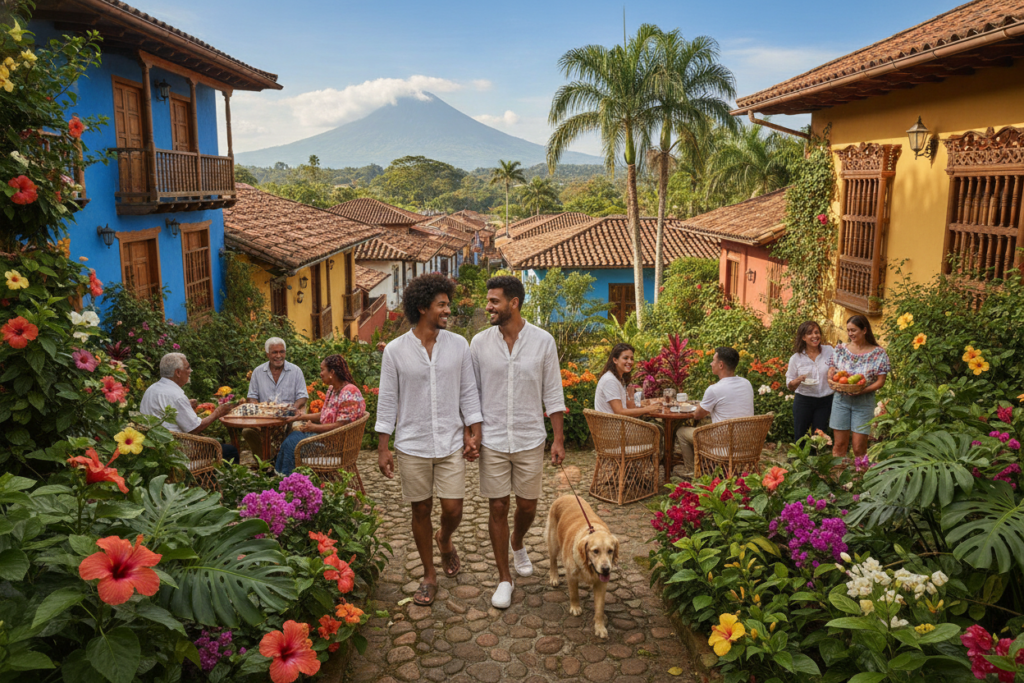
Finding a new home in a different country is an exciting journey filled with opportunities. We recommend renting before making a purchase. This allows you to experience various neighborhoods and microclimates in Costa Rica.
Joining a local community or expat group can provide valuable insights into the best places to live. It’s a great way to connect with others who have made similar transitions.
Whether you are drawn to the Central Valley or the stunning beaches, each area has its own charm and amenities. Many newcomers discover their preferences change after spending some time in different regions.
Working with a reputable real estate professional can simplify your search. They can help you navigate the local market and find a property that suits your needs.
Digital Nomad and Remote Work Options
For many, the allure of a new life in a tropical paradise is hard to resist. The digital nomad visa is a fantastic option for those who want to live in Costa Rica while maintaining their remote employment. This visa allows remote workers to stay for one year, with the option to renew for a second year.
To qualify for this nomad visa, you must prove a stable monthly income of at least $3,000 from sources outside of the country. Meeting these income requirements is essential for the approval of your application and your continued stay in the country.
Many remote workers find that the reliable internet available in areas like the Central Valley makes it easy to maintain their professional productivity. This visa provides a flexible way to experience the culture without the immediate need for full residency, provided you meet all legal requirements.
Essential Everyday Services: Healthcare and Banking
Understanding essential services is key to settling comfortably in a new country. In Costa Rica, accessing the healthcare system is a major benefit for residents. The country offers both public and private medical options, making healthcare accessible to everyone.
Once we become residents, we will contribute to the Caja Costarricense de Seguro Social (CCSS). This system provides universal healthcare coverage that includes a wide range of medical services. Many expats choose to supplement the public system with private insurance. This ensures faster access to specialists and English-speaking doctors.
Opening a local bank account is also necessary for managing our daily expenses. This account will help us pay our monthly Caja contributions efficiently. We recommend bringing your medical records and a supply of prescription medications to cover your needs during the initial transition period.
For more information on when to enroll in the Caja system, check out our guide on Caja enrollment after residency approval.
Adapting to the Pura Vida Lifestyle: Culture and Community
Adapting to life in a new country allows us to discover the beauty of diverse cultures. In Costa Rica, the Pura Vida lifestyle is more than just a saying; it embodies a way of life that prioritizes family and community.
The local people, known as Ticos, are incredibly welcoming. They value togetherness and are always ready to help newcomers integrate into their vibrant communities. Embracing a slower pace of life means spending quality time with family and friends.
Learning even a little bit of Spanish can enhance our experience. It shows respect and helps us connect more deeply with the people around us. Whether we live in the mountains or by the sea, the culture encourages us to enjoy the natural beauty that surrounds us.
Participating in local events and festivals is a fantastic way to feel at home. These gatherings allow us to immerse ourselves in the local culture and create lasting memories.
Practical Tips for a Successful Move
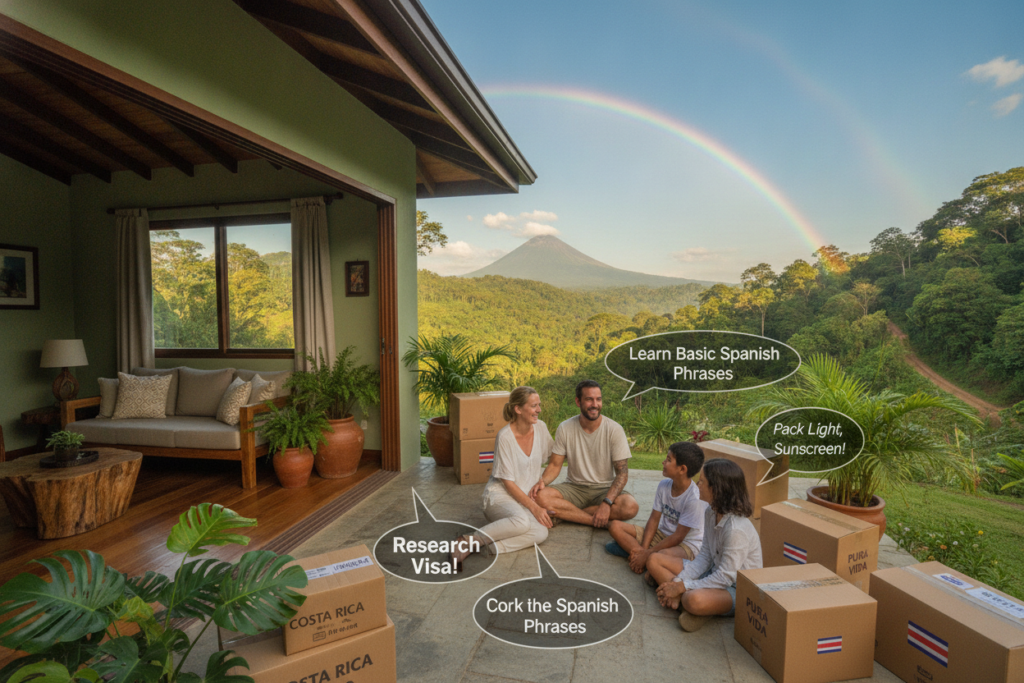
Successfully relocating involves understanding the various elements that contribute to a smooth transition. Planning your move requires careful attention to your finances, especially regarding potential taxes on imported household goods.
For retirees and investors, there may be a one-time tax exemption on the importation of household goods and up to two vehicles. Staying organized with your residency renewals is a critical process that ensures compliance with immigration regulations.
We suggest keeping a detailed record of all your documents and application dates. This will help manage the renewal process without any stress.
Budgeting for your monthly costs is easier when you have a clear understanding of your expected expenses and potential tax obligations. Taking the time to prepare your finances before you leave will provide the stability needed for a successful transition.
For more insights on customs duties, check out our guide on custom duties in Costa Rica.
Ready to Make the Leap? Reach Out to CRIE for Personalized Guidance
Taking the plunge into a new life can be both exciting and overwhelming. If you are ready to start your journey to Costa Rica, we are here to provide the personalized guidance you need for your residency.
Every case is unique, and our team is dedicated to helping people navigate the immigration process with clarity and professional support. We understand that changing your life is a big step, and we are committed to making the residency application as smooth as possible.
For specific pricing and to discuss your next steps, please reach out to our immigration expert, Johanna Alvarez, for a consultation. You can contact us via WhatsApp at +506 8706 3888, email info@crie.cr, or visit our website at crie.cr to learn more today.
FAQ
What are the main residency options available for US citizens moving to Costa Rica?
US citizens can choose from several residency options, including Pensionado, Rentista, and Inversionista. Each has specific income requirements and benefits tailored to different lifestyles.
How long does the residency application process typically take?
The residency application process can take anywhere from a few months to over a year, depending on the type of residency and the completeness of the documentation submitted.
What is the cost of living like in Costa Rica compared to the US?
The cost of living in Costa Rica can be significantly lower than in the US, especially in terms of housing and daily expenses. However, it varies by region, with urban areas generally being more expensive.
How do we access healthcare services in Costa Rica?
Costa Rica offers a public healthcare system known as Caja, which provides affordable medical services. Many expats also opt for private healthcare for quicker access and additional services.
What are the key documents needed for residency applications?
Key documents typically include a valid passport, proof of income, police clearance, and birth certificates. It’s essential to have these documents authenticated before submission.
Can we rent a property before deciding to buy?
Yes, renting is a common practice for newcomers. It allows us to explore different areas and understand the local lifestyle before making a long-term commitment to purchase.
What are the benefits of the Digital Nomad Visa?
The Digital Nomad Visa allows remote workers to live in Costa Rica while working for foreign companies. Benefits include the ability to stay for up to two years and potential tax exemptions on foreign income.
How do we open a bank account in Costa Rica?
Opening a bank account in Costa Rica usually requires a valid passport, proof of residency, and a minimum deposit. It’s advisable to research banks that cater to expats for easier services.
What cultural adjustments should we expect when moving to Costa Rica?
Adjusting to the Pura Vida lifestyle involves embracing a slower pace of life, valuing community, and enjoying nature. It may take time to adapt, but many find it rewarding.
What are some practical tips for budgeting our move?
We recommend creating a detailed budget that includes moving costs, initial living expenses, and potential emergencies. Planning ahead can help ensure a smoother transition.
Rentista financial requirement checked against DGME: Regularización Migratoria → Residencia Temporal → Rentista y sus Dependientes on 6 September 2026.