
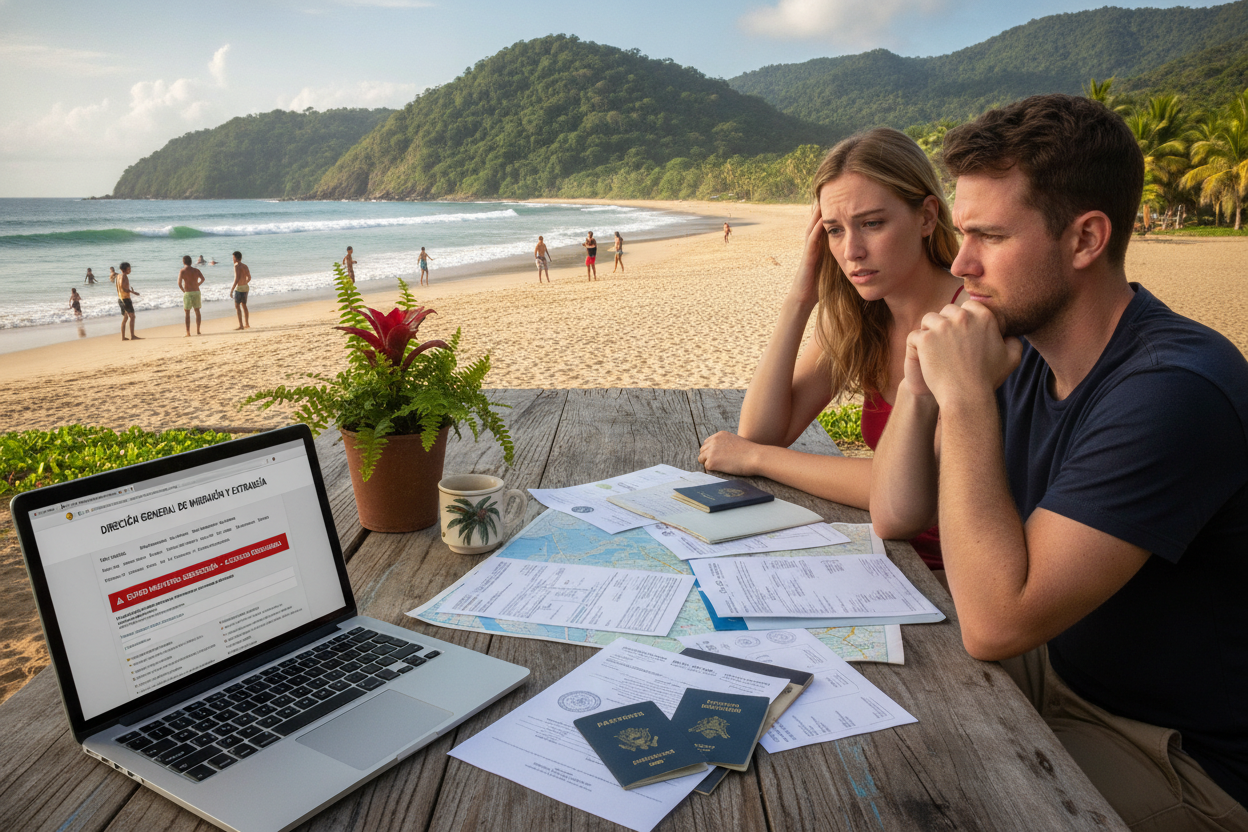
Traveling to Costa Rica is an exciting adventure for many. Most visitors receive a 180-day tourist visa upon arrival at the airport or border. This visa allows you to explore the beauty of this vibrant country. However, understanding the rules surrounding your stay is crucial to avoid complications.
When you land at San José, immigration officials will grant you a tourist visa. It’s essential to ensure that your passport is valid for the entire duration of your stay. This step is vital to prevent any issues during your entry into the country.
Every traveler must also receive the correct entry stamp in their passport. This stamp verifies your legal status while in Costa Rica. We aim to provide clear information to help you navigate these immigration regulations smoothly.
Understanding Visa Overstay in Costa Rica
It’s important for visitors to grasp the legalities surrounding visa overstays. In Costa Rica, a visa overstay occurs when a traveler remains in the country beyond the expiration date of their tourist visa. This can lead to serious consequences, making it essential to understand the rules.
According to Article 33 of the Immigration Law, foreigners must leave the country once their authorized period of stay has expired. Since March 1, 2010, the Costa Rican government has imposed a fine of $100 per month for any overstay. Those who fail to pay this fine may face denial of entry for three times the duration of their overstay.
To avoid complications, it’s vital for all tourists to monitor their passport expiration date and visa status. Understanding these rules is crucial, as the immigration process is strictly enforced to ensure compliance with national regulations.
Navigating the Residency Process with CRIE
Navigating the immigration landscape in Costa Rica can be a complex journey. For over 20 years, our team at CRIE has guided individuals and families through the intricacies of obtaining legal residency. We understand that moving to a new destination involves significant planning and preparation.
We provide clear guidance on the specific requirements for various types of residency visas. Many expats transition from being tourists to residents to avoid the ongoing costs and logistical challenges associated with frequent border runs. Our experience allows us to assist you in gathering the necessary documentation, such as your passport and other vital records, to support your residency application.
We focus on offering practical information to help you understand the residency process. However, we cannot guarantee government approval timelines. For more detailed insights, visit understanding the immigration approval timeline.
Practical Steps to Avoid Overstay Complications
To avoid complications while enjoying your stay, it’s crucial to manage your visa effectively. Tourists can apply for a 60-day extension to their visa for a fee of $100. This extension must be requested before your current visa status expires.
If you cannot secure an extension, you must leave the country. Be prepared to pay the required departure tax, which is $29 by air and between $7 and $12 by land or sea.
Managing your time effectively is essential. The application process for an extension requires notarized forms and proof of your departure date. We recommend addressing your visa status early to meet the immigration office’s specific documentation requirements.
If you choose to leave the country to renew your visa, ensure your passport is stamped correctly upon re-entry. This step is vital to avoid future legal complications.
Our goal is to help you understand these rules so you can minimize the risk of paying a fine or facing other legal consequences. For more information on handling overstays, visit this helpful guide.
overstaying-visa-in-costa-rica: Key Considerations for Foreigners
Understanding the intricacies of visa regulations is vital for a smooth experience in Costa Rica. Many travelers opt for border runs to renew their tourist status. However, customs requires 72 hours to reset your duty-free exemption, which can complicate your plans.
While the law allows for border runs, it is not a substitute for legal residency. Immigration officials may scrutinize your entry history, so it’s essential to ensure your passport is valid for the entire period of your stay.
We advise keeping track of your entry date and the number of days spent in the country. This helps avoid accidentally overstaying your visa. If you are considering a border run, be aware that the process can be unpredictable, depending on the mood of the Costa Rican immigration official.
Our focus is on providing factual information to help you understand the risks and requirements associated with maintaining your legal status. For more information on overstaying, visit this helpful guide.
Essential Residency Preparation for Compliance
Proper preparation is key for a smooth transition to residency in Costa Rica. Gathering the right documentation is essential to meet immigration requirements. This includes your passport and other vital records.
Once you obtain your DIMEX (Immigration Identity Document for Foreigners), you will have a formal identity document. This confirms your legal status and simplifies your life in the country.
We assist expats in understanding the documentation process. This includes the need for official translations and notarized copies of every page of your passport. Compliance with immigration rules is crucial to avoid fines or loss of residency status.
Whether you are moving to popular destinations or quieter towns, having your paperwork in order ensures a smooth transition. We provide guidance on the residency process to help you avoid common pitfalls faced by many foreigners trying to stay long-term.
Connect with CRIE for Personalized Residency Guidance
For countless tourists, the allure of Costa Rica lies in its breathtaking scenery and vibrant lifestyle. To ensure a smooth transition to residency, personalized guidance is essential. Every case depends on your nationality, family situation, and immigration history.
For accurate pricing and next steps, please speak with Johanna Alvarez, our dedicated CRIE immigration expert. You can reach us via WhatsApp at +506 8706 3888, by email at info@crie.cr, or by visiting our website at crie.cr for more information.
With over 20 years of experience, we have helped many people navigate the complexities of residency in Costa Rica. Contact us today to ensure you have the correct information regarding your passport, entry requirements, and the time needed for your residency application.
FAQ
What happens if we overstay our tourist visa in Costa Rica?
How long can we stay in Costa Rica on a tourist visa?
What are the steps to extend our tourist visa?
Can we leave the country and re-enter to reset our tourist visa?
What documentation do we need for residency applications?
How can we avoid fines for overstaying our visa?
What should we do if we realize we have overstayed our visa?
Article by Glenn Tellier (Founder of CRIE and Grupo Gap)
Don't wait, contact us right now!
Call or WhatsApp Costa Rica +506 8373 2085 or +506 8706 3888
Call USA/Canada +1 305-906-6784