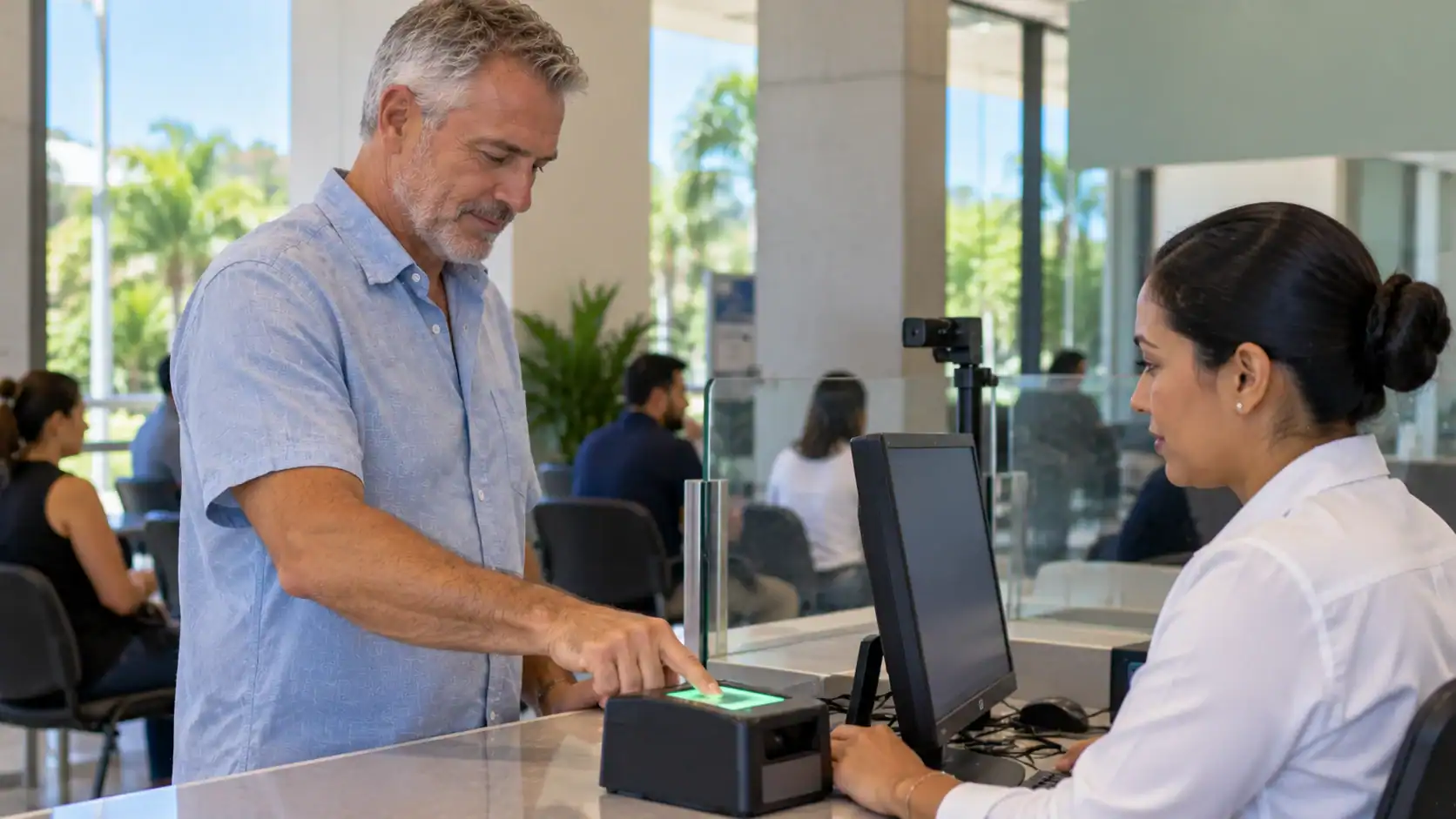
Planning to live in beautiful Costa Rica long-term? Understanding the fingerprint requirements is essential for your residency application. This process involves a mandatory in-country biometric appointment for background verification.
In this article, we will provide a clear overview of the steps involved in the residency process. We aim to help you navigate the legal path to living in this vibrant country. Key steps include the required background check and the specific fingerprinting procedure mandated by immigration authorities.
Our goal is to equip you with the right information to manage your residency application confidently. By following this guide, you will learn how to organize your documents and plan your timing for a successful transition to Costa Rica.
Understanding Costa Rica Residency: Our CRIE Approach
Are you dreaming of making a permanent home in this vibrant country? For over 20 years, we at CRIE have guided individuals and families through the intricacies of moving to and living in Costa Rica. Our extensive experience enables us to provide clear and practical advice tailored to your needs.
We focus on educating you about the immigration process without acting as a law firm or government agency. This means you can rely on us for straightforward, verified information. Our goal is to help you prepare your documentation effectively before your arrival.
Success in your residency journey begins with careful preparation and understanding of the official rules. We are here to support you, ensuring you manage your expectations throughout the entire residency application process.
Overview of Residency Categories in Costa Rica
Considering a new chapter in your life in the picturesque landscapes of Costa Rica? Understanding the various residency categories is crucial for your application process. The main options available are Pensionado, Rentista, and Inversionista, each designed for different financial situations.
The Pensionado category is tailored for retirees. To qualify, applicants must provide proof of a guaranteed lifetime pension of at least US$1,000 per month. This option is ideal for those who have a stable income from retirement funds.
On the other hand, the Rentista category requires applicants to demonstrate a stable monthly income of US$2,500 for two years. This income must be unearned, meaning it cannot come from employment.
Lastly, the Inversionista route is for those willing to invest in Costa Rica. Applicants must make a minimum investment of US$150,000, which should be held in their personal name. Understanding these categories helps ensure you choose the right path for your residency journey.
Essential Document Preparation: Apostilles and Translations
If you’re preparing to embark on your residency journey, understanding document preparation is key. Each document plays a vital role in your application process.
First, every official document from your home country, such as a birth certificate, must receive an apostille from the issuing authority. This process authenticates your documents for use in Costa Rica.
Additionally, all English paperwork requires an official Spanish translation. You must ensure that every English document is processed by an official translator to provide a certified Spanish translation for your application.
To avoid delays, we recommend creating a comprehensive checklist of all required documents. This will help ensure nothing is missed during your preparation phase.
Lastly, using an unapproved translation service for your document package is a common error. Such mistakes can lead to significant delays in your residency file.
Navigating costa-rica-residency-fingerprint-requirements
Embarking on a new adventure in a tropical paradise requires careful planning. One essential step in the residency process is fingerprinting, which is mandatory for all applicants. This step ensures thorough background verification and must be completed in-country.
Timing is crucial. You must schedule your fingerprinting appointment after legally entering the country. It’s important to remember that this requirement cannot be fulfilled from abroad. Therefore, plan your travel accordingly to allow for this essential biometric appointment.
By addressing this step early in your residency planning, you can keep your application on track and avoid unnecessary delays. Taking the time to understand and prepare for this requirement will help ensure a smoother transition to life in Costa Rica.
Scheduling and Completing Your Fingerprint Appointment
Securing your fingerprint appointment is a crucial step in your residency application. You must appear in person at the designated police station in San José, located directly in front of Central Park, to complete your fingerprints.
Appointments are released in small batches. Therefore, you need to be flexible with your travel plans when booking your slot. This flexibility will help you secure a time that works best for you.
Booking Your Slot at the Local Police Station
During the biometric process, a staff member will use traditional ink to record your fingerprints on the official government form. The entire visit to the police station typically takes between 20 and 35 minutes, provided you arrive at least 15 minutes early.
What to Expect During the Biometric Process
Upon completion, you will receive a small paper receipt that serves as proof of your residency fingerprinting. This receipt must be included in your application file to ensure your residency process continues smoothly.
Detailed Steps for Background and Criminal Checks

When applying for residency, a thorough understanding of background checks is vital. These checks are a standard requirement in the residency process.
Obtaining an FBI background check is a critical step and can take between 8 and 12 weeks to process. You must ensure that this check is recent, as expired documents will not be accepted.
Additionally, the FBI background check must be apostilled in the United States before you bring it to Costa Rica for your residency file. This step is crucial for ensuring your documents are valid.
We advise applicants to coordinate their FBI background check requests carefully. This will help avoid bottlenecks in the overall residency application timeline.
These criminal background checks are essential for verifying your history and ensuring compliance with residency standards. For more information on police clearance, visit this link.
Managing Timelines and Avoiding Common Pitfalls
Timing is everything when navigating the residency application process. The entire residency journey typically spans 12 to 18 months. During this time, preparation from your home country will take about 3 to 4 months.
One common pitfall is arriving in Costa Rica without fully prepared, apostilled paperwork. This often forces applicants to return home to correct errors, causing unnecessary delays.
To avoid such setbacks, it’s wise to build buffer time into your schedule. Government processing for residency applications can take 6 to 12 months after submission. Always maintain your legal tourist status throughout the residency process to avoid potential fines.
Additionally, be aware that a temporary digital nomad visa is not the same as a permanent residency path. They have different long-term implications for your status.
Organizing Your In-Country Residency Application Process
To ensure a successful residency application, organization is key. Start by gathering all your apostilled documents. This preparation is essential for submitting your application to the immigration office in Costa Rica.
You will need to complete the Hoja de Filiacion, the official application form. This form captures your personal details for the government, making it a crucial part of your application.
Keeping your residency documents in a secure, organized folder will help you manage the various steps required during your time in the country. This practice minimizes confusion and keeps everything in one place.
We recommend verifying the latest requirements on the official immigration website. This ensures that you are fully prepared to submit your final residency application package.
Proper organization of your residency file is the best way to ensure that your status is processed without unnecessary delays or requests for more information.
Integrating with Costa Rican Local Systems and Registration

Integrating into a new culture is a vital part of establishing your life in Costa Rica. Once you have achieved residency status, you are required to register with the Caja Costarricense de Seguro Social. This registration is essential to access the local healthcare system.
Your residency status provides you with legal access to healthcare, which is a significant benefit of completing the application process. To finalize your registration with local authorities, you will need to provide proof of your residence, such as a lease agreement or utility bill.
Maintaining your residency status requires timely renewals and ongoing contributions to the Caja. This ensures that your benefits remain active and accessible. Integrating into the Costa Rican system is a final, important step that solidifies your long-term commitment to living in the country.
Final Steps and Next Moves for Your Residency Journey
As you approach the final stages of your journey toward residency, understanding the next steps is crucial. After your application enters the review queue, authorities will verify your documents, including your FBI background check and birth certificate. This process confirms your residency status.
Successful applicants will receive their DIMEX card, which serves as official proof of legal residency. Each residency case is unique, depending on your nationality, family situation, and immigration history. Therefore, personalized guidance is invaluable.
For tailored assistance, pricing, and next steps, please contact our immigration expert, Johanna Alvarez. You can reach her via WhatsApp at +506 8706 3888 or email info@crie.cr. Additionally, visit our website at crie.cr to learn more about navigating the residency process.
FAQ
What are the fingerprint requirements for residency in Costa Rica?
How long does the background check process take?
Do we need to have our documents translated?
What is an apostille, and do we need one?
Can we apply for residency while living outside of Costa Rica?
What types of residency categories are available?
What should we expect during the fingerprinting process?
How can we avoid common pitfalls in the residency application process?
Article by Glenn Tellier (Founder of CRIE and Grupo Gap)
Don't wait, contact us right now!
Call or WhatsApp Costa Rica +506 8373 2085 or +506 8706 3888
Call USA/Canada +1 305-906-6784