Embarking on the journey to secure residency in Costa Rica involves several important steps. One of the most crucial requirements is proving a clean criminal history. This is mandatory for all foreign nationals over the age of 16.

The immigration authority strictly enforces these background checks. It is essential to understand the specific documentation needed for your residency application. By navigating this complex legal landscape, you can avoid unnecessary delays.

We aim to simplify this process by breaking down the necessary steps. Starting your preparation from your home country is the most effective way to ensure a smooth application. This guide will help you understand the essential requirements and assist you in securing your legal status.

Understanding the Costa Rican Residency Landscape

Navigating the path to residency in Costa Rica requires understanding several key elements. The country offers various residency categories, each with specific requirements. This knowledge is essential for a successful application.

One popular option is the Pensionado visa. This category is for retirees who can prove a monthly income of at least US$1,000. Under Article 81 of Law 8764, this ensures that applicants can support themselves financially.

Another category is the Rentista residency. This requires proof of a stable income of US$2,500 per month for two years. It is ideal for individuals who wish to live independently in Costa Rica.

For those interested in investment opportunities, the Inversionista category mandates a minimum investment of US$150,000 in real estate or approved business ventures.

A clean criminal record is a mandatory requirement for all applicants. This demonstrates good moral character to the Costa Rican immigration authorities. Understanding these categories and their legal basis is crucial for a smooth application process.

The Role of Police Clearance in Your Residency Application

A police clearance certificate plays a pivotal role in ensuring a smooth residency application process. This document is essential for demonstrating your clean criminal history to immigration authorities.

Every applicant over the age of 16 must provide this certificate from the country where they have legally resided for the past three years. It is not just a formality; it is a critical component of your immigration file that validates your eligibility for legal status.

We must emphasize that the immigration authority strictly enforces the submission of this certificate. This requirement helps maintain the safety and integrity of the residency system. Failing to provide a valid police certificate will result in an incomplete application, which can lead to significant delays in your overall process.

Mastering costa-rica-residency-police-clearance-requirements

A photorealistic image of a "Police Clearance Certificate for Residency Application" displayed on a wooden desk, with lush green tropical plants and a clear blue sky visible through an open window in the background. The certificate is a formal document featuring official elements such as a seal, signature, and a watermark, with a muted background pattern of Costa Rican landscapes subtly showing them on a wall behind the desk. Natural light filters in, creating a warm and inviting atmosphere. The foreground focuses on the certificate, emphasizing its details and importance, while the middle ground showcases office supplies like a pen and a small stack of papers, and the background enhances the Costa Rican ambiance without distractions. No text or branding should be present.

Securing your police clearance certificate is a crucial step in the residency process. This document must meet specific international standards to be accepted by the immigration authority.

To ensure compliance, applicants should coordinate with their local issuing authority. This helps confirm that the certificate is properly apostilled, which is essential for all foreign-issued documents.

We guide you through verifying that your paperwork remains valid throughout your residency application timeline. Maintaining the validity of your documents is vital, as the immigration authority will reject any certificate that does not meet their strict standards.

By following these key steps, you can avoid common errors that often lead to delays for many applicants. Proper preparation is the key to a smooth application process.

Essential Documents for a Complete Application

To complete your residency application, understanding the required documents is essential. Each document plays a vital role in validating your eligibility and ensuring a smooth process.

Core Certificates and Personal Records

Your residency application must include core documents such as an apostilled birth certificate. This document serves as a foundational record for your file.

The Registro Civil in San José provides the necessary certified copies of vital records that the government requires for all residency applicants.

Apostilles and Official Translations

Every foreign document must receive an apostille, an international authentication stamp that confirms the legitimacy of your records for use in Costa Rica.

Additionally, official translations into Spanish are mandatory for all documents. We advise using certified services to ensure the accuracy of your paperwork.

We help you organize these records to ensure that your birth certificate and other vital documents are correctly authenticated before you submit them.

Step-by-Step Process to Secure Your Police Clearance

To navigate the police clearance process effectively, it’s essential to understand the steps involved. For applicants from the United States, the process begins online.

U.S. applicants must visit the FBI website at edo.cjis.gov to request their official Identity History Summary. This document is crucial for your immigration application.

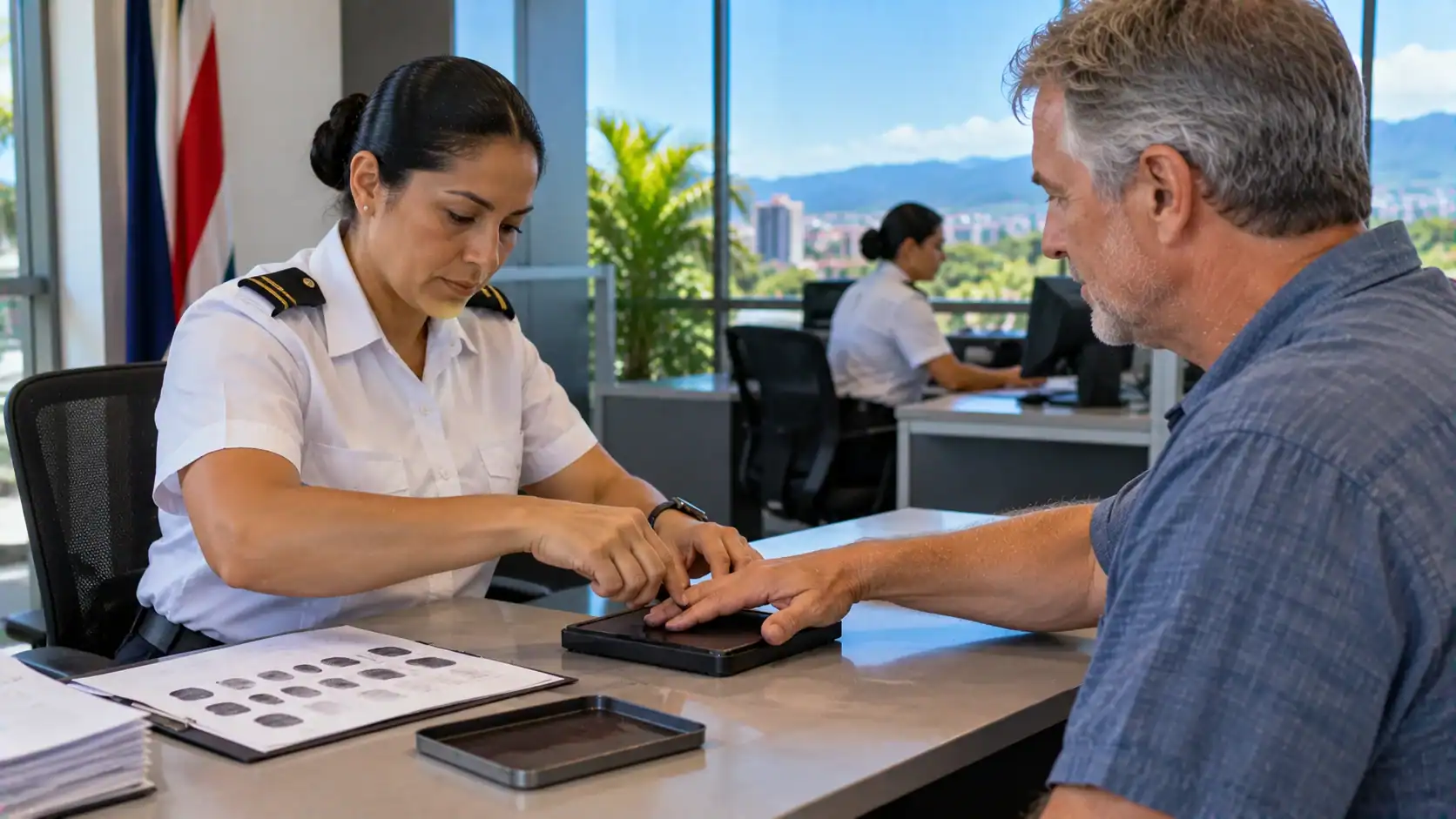
After submitting your request, you need to visit a participating U.S. Post Office location to have your fingerprints taken. This step is necessary to complete the FBI background check process.

Once you receive your FBI report, it must be sent to the U.S. Department of State for the required apostille. This apostille is essential for your police certificate to be accepted in Costa Rica.

We guide you through every step of this process to ensure your documents meet all federal standards and are ready for submission to the Costa Rican authorities.

Managing Timelines and Document Expirations

A detailed desk scene depicting a professional workspace focused on managing timelines for residency applications in Costa Rica. In the foreground, a neatly organized desk featuring a laptop displaying spreadsheets with deadlines, a calendar with marked dates, and various documents, including a police clearance requirement form. In the middle ground, a potted Costa Rican plant adds a touch of local flora. In the background, a subtle view of a sunny, vibrant Costa Rican landscape through a window, showcasing lush greenery and mountains, under natural light. The atmosphere is focused and productive, capturing the essence of careful planning and organization. The image should have a warm and inviting feel, with soft but clear lighting enhancing the space without shadows.

Understanding the timeline for your residency application can help streamline the process. One key aspect to consider is the validity of your police certificate. This document is only valid for three months from the date of issue. Therefore, careful scheduling is essential to prevent expiration before you submit your application.

The entire residency process typically takes 9 to 12 months to complete. We recommend starting your document collection 3 to 6 months before your move. This approach ensures you have ample time to secure all necessary records.

By planning your application timeline backward from your submission date, you can ensure that your police certificate remains valid throughout the review. Our team monitors your file to prevent delays caused by expired documents, keeping your residency application on track for approval.

Avoiding Common Pitfalls in Document Preparation

When preparing your documents for residency, it’s crucial to avoid common mistakes. These errors can lead to significant delays or even rejection of your application.

One of the most frequent issues is submitting documents with an outdated apostille. The immigration authority will reject these as invalid. We meticulously check your paperwork to ensure that your full name matches exactly on every certificate, as discrepancies can halt your application.

Additionally, any omission of your personal history can result in the automatic rejection of your residency file. We help you avoid these errors by verifying that every document is current and that your apostille is valid for the required purposes.

By addressing these common mistakes early, we ensure that every applicant presents a complete and accurate record to the government. For more guidance, visit our page on immigration interviews.

Preparing Your Residency Application Package

Creating a well-structured application package is a vital step in your residency journey. A comprehensive checklist will help ensure that every required document is accounted for before submission.

Starting your document preparation 3 to 6 months before your move is crucial. This timeline allows you to gather all necessary paperwork without feeling rushed.

Our team provides the information you need to monitor your file. We utilize online tracking systems to verify the status of your government authentication, making the process smoother.

Having every document in perfect order is the best way to secure your legal status. This preparation helps avoid issues with the immigration authorities.

We also organize all category-specific requirements for your residency application. This turns a complex administrative process into a manageable journey for you and your family.

How CRIE Supports Your Residency Journey

As you embark on your residency journey, expert support can make all the difference. For over 20 years, we have helped individuals and families navigate the complex immigration process in Costa Rica. Our focus is on providing clear, educational guidance tailored to your specific residency category.

We assist you in managing the timeline of your entire application. This helps prevent delays and ensures your documents are accurate. Additionally, we provide the necessary information to answer your specific questions about the residency process.

Our role is to guide you through each document, turning the residency application into a clear, manageable journey for you and your family.

Ready to Embark on Your Residency Journey?

Starting your residency application in this beautiful country can be an exciting yet complex process. Each residency case depends on your specific nationality, family situation, and documents. Timing and immigration history also play crucial roles.

To discuss your pricing and next steps for your residency application, you can speak directly with Johanna Alvarez, our CRIE immigration expert. Reach out via WhatsApp at +506 8706 3888 or email info@crie.cr for personalized guidance on your residency journey.

We encourage you to visit our website at crie.cr to learn more about how we can support your move. Please remember to verify the latest details at the official immigration website, migracion.go.cr, to ensure your residency status remains compliant.

FAQ

What is the police clearance requirement for residency in Costa Rica?

The police clearance requirement is a document that verifies your criminal record status. It is essential for various residency categories in Costa Rica, ensuring that applicants have a clean background.

How do we obtain a police clearance certificate?

To obtain a police clearance certificate, we must contact the relevant authorities in our home country. This may involve submitting personal information and possibly undergoing a background check.

Is a police clearance certificate necessary for all residency categories?

Yes, a police clearance certificate is typically required for all residency categories in Costa Rica. This ensures that the government can assess the applicant’s suitability for residency.

How long does it take to receive the police clearance certificate?

The processing time for a police clearance certificate can vary depending on the country of origin. Generally, it may take anywhere from a few weeks to several months.

What documents do we need to accompany our residency application?

Along with the police clearance certificate, we need to submit a birth certificate, proof of income, and other personal records. It’s crucial to ensure all documents are complete and valid.

What is the role of an apostille in this process?

An apostille is a form of authentication for documents used internationally. It is often required for the police clearance certificate and other official documents to be recognized in Costa Rica.

How can we prevent delays in our residency application?

To prevent delays, we should ensure that all documents are up-to-date and properly translated if necessary. Additionally, scheduling our clearance process in advance can help avoid last-minute issues.

What should we do if our police clearance certificate is outdated?

If our police clearance certificate is outdated, we need to request a new one from the issuing authority. It’s essential to have current documentation to avoid complications in our residency application.

How does CRIE assist with the residency application process?

CRIE provides expert guidance throughout the residency application process, helping us navigate the necessary steps and ensuring that our documentation is complete and accurate.

Article by Glenn Tellier (Founder of CRIE and Grupo Gap)

Don't wait, contact us right now!
Call or WhatsApp Costa Rica +506 8373 2085 or +506 8706 3888
Call USA/Canada +1 305-906-6784

See If You Qualify For Residency Today!