
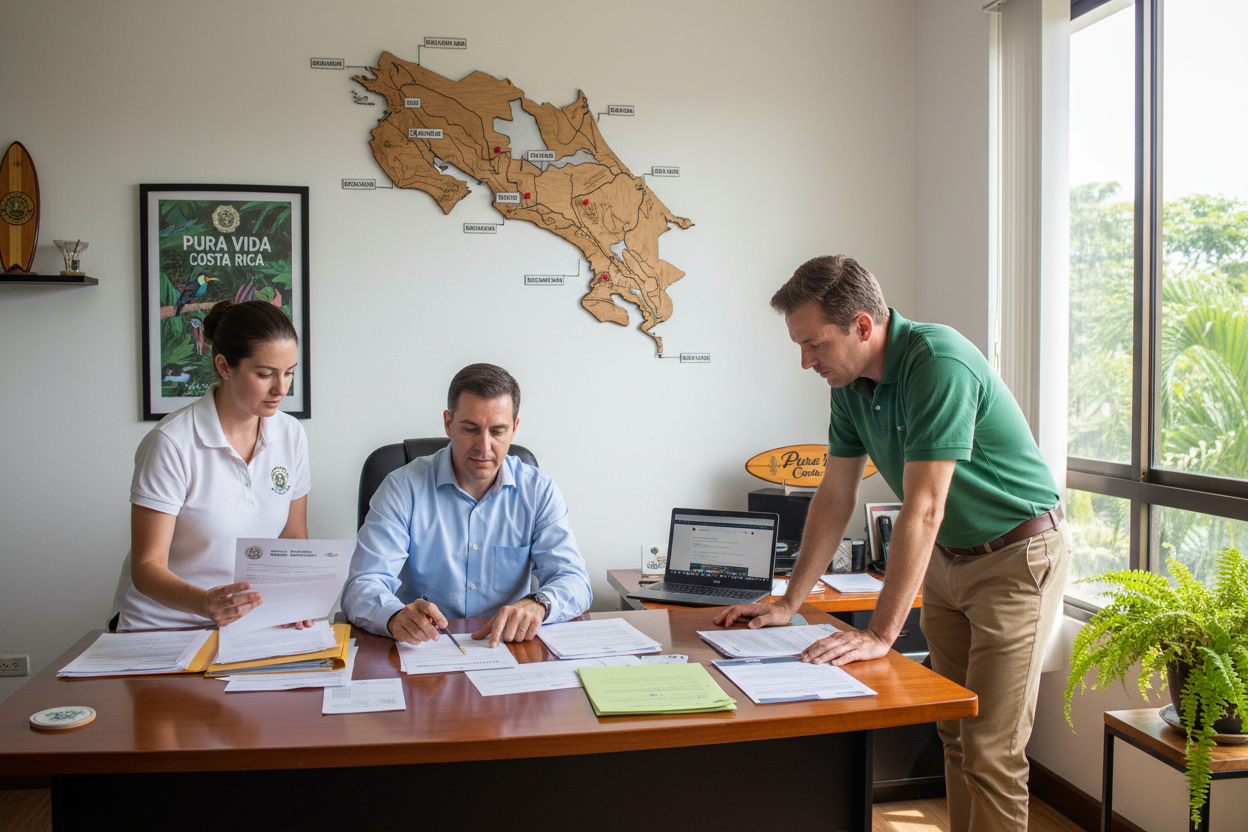
Applying for residency in a new country involves several important legal steps. One of the most critical is proving you have a clean criminal history. For Costa Rica, this is not just a formality—it’s a mandatory requirement for nearly all applicants.
The law is specific. If you are a foreign national over 16, you must submit a criminal background check. This certificate must come from the country where you lived legally for the three years before your application. The validity of this document is strictly enforced by the immigration authority.
This step is foundational. It demonstrates your good moral character to the local government. Starting this process from your home country is the most effective path. It can take several months to complete, so we advise beginning well ahead of time.
We at CRIE help you navigate this requirement. Our team ensures your name and personal history are accurately represented. We manage the timeline of your entire residency application to prevent delays. Our goal is to guide you through each document, turning a complex process into a clear, manageable journey.
Introduction to the Costa Rica Residency Process

Before gathering a single document, it’s crucial to map out the Costa Rican residency landscape and identify which visa option aligns with your long-term plans.
Navigating a new immigration system can feel overwhelming. We believe the best strategy is to start your preparation from home, with a clear understanding of your goals.
Overview of Residency Options
Costa Rican law offers several main residency categories, such as Pensionado, Rentista, and Inversionista. Each has specific financial requirements.
It is vital to understand that a Digital Nomad visa is not a residency pathway. This temporary permit does not count toward permanent residency or citizenship status.
Starting Your Application from Home
Beginning your document preparation early is a significant advantage. This gives every applicant ample time to collect the required paperwork before arriving in the country.
We simplify the entire process by breaking it into manageable steps. This creates a clear roadmap for your future.
Our team provides the necessary information to answer your specific questions. Contact us at info@crie.cr for professional guidance on your best path forward.
Understanding Eligibility for Costa Rica Residency

Costa Rican immigration authorities assess applicants based on concrete financial thresholds for each residency category. Your choice depends on your personal circumstances and long-term goals.
Pensionado Criteria and Monthly Pension Requirement
The Pensionado visa is for retirees with a stable lifetime income. You must prove a guaranteed pension of at least US$1,000 per month. This income must be permanent to secure your status.
Rentista and Inversionista Financial Thresholds
The Rentista category requires proof of US$2,500 in monthly income for two years. It’s designed for those with independent means who aren’t retirees.
For the Inversionista visa, a minimum investment of US$150,000 in your name is mandatory. This could be in real estate or a business venture approved by the authorities.
We also assist with the Vinculo category for applicants with family ties to a Costa Rican citizen. Each path has specific documentation needs that must be met precisely.
Understanding these requirements is crucial for a successful application. We provide clear information to answer your questions. For detailed guidance, consider our immigration interview preparation service.
Essential Document Preparation for Your Application
The strength of your residency file depends entirely on the quality and completeness of your supporting paperwork. This preparation phase is where many applications succeed or face delays.
We advise starting this critical work from your home country. Having your documents ready before you travel removes a major logistical hurdle.
Core Document Checklist
Every applicant needs a core set of personal records. This includes an apostilled birth certificate and, if applicable, a death certificate for a spouse.
The apostille is an international authentication stamp. It tells the immigration authority your documents are legitimate and valid for use.
Pre-Departure Preparation Strategy
Official translation into Spanish is a mandatory visa requirement. We provide guidance on using certified translation services for accuracy.
Preparing from home lets you work with familiar issuing authorities. You avoid the stress of securing records in a new country.
Our team ensures your checklist is complete. We help maintain the validity of your paperwork throughout the entire process.
Step-by-Step Guide to police-clearance-costa-rica for U.S. Applicants
U.S. nationals must navigate a specific federal process to obtain the criminal history report required by Costa Rican immigration. This step is distinct from local checks and is mandatory for your residency file.
Obtaining the FBI Background Check Process
Every applicant from the United States needs a federal-level police certificate. You must prove a clean record to the immigration authority. The process starts at the official FBI website, edo.cjis.gov.
Follow the instructions to submit your application electronically. You will then get your fingerprints taken at a participating U.S. Post Office location. This creates your official Identity History Summary.
Once you receive this document, the next step is crucial. You must send it to the U.S. Department of State for an apostille. This certification validates the paper for use under international law.
We guide you through each phase to ensure your police clearance meets the strict three-month validity rule. Keeping several certified copies of your FBI report is also essential. These documents support your visa application and final status.
Do you have questions about how to obtain your police certificate? We provide clear information and support for the entire process. Contact us via WhatsApp at +506 8706 3888 for direct assistance with your requirements.
The Role of Apostilles and Legalizations for U.S. Documents
The journey from a U.S. issued certificate to an immigration-ready document involves two critical phases: apostille and translation.
This process validates your paperwork under international law. It is a mandatory step for all foreign applicants.
Understanding Apostille Requirements
An apostille is an official authentication stamp. It confirms your document’s legitimacy for use in Costa Rica.
For individuals from the United States, the U.S. Department of State is the primary issuing authority. This applies to your birth certificate and federal background check.
The local government requires this stamp. It is a non-negotiable part of your visa application.
Certification and Verification Steps
You must complete the apostille before any translation into Spanish. The sequence is strictly enforced by the immigration authority.
We help you verify the stamp is clear and contains all necessary seals. Maintaining document validity throughout this time is our priority.
We provide clear information on this certification process. Our team guides you to ensure your paperwork meets every requirement.
Timeline, Validity, and Pre-Departure Planning
A meticulously planned timeline prevents the frustration of expired documents and government processing delays. The validity period of your official records dictates your entire submission schedule.
Scheduling and Timing Your Applications
Your police certificate is only valid for three months from its issue date. We recommend planning backward from your intended submission date to avoid expiration.
The entire residency process in Costa Rica typically takes 9 to 12 months to complete. Starting your document collection 3 to 6 months before you move provides a crucial buffer.
We help you manage this timing. Our team ensures your certified copies and other paperwork remain valid throughout the immigration processing period.
Obtain your police certificate 4 to 6 weeks before your submission date. This careful scheduling ensures your visa application is accepted without issue.
We provide the information you need to navigate these deadlines. Contact us at info@crie.cr for professional guidance on your residency journey.
Common Pitfalls and Mistakes to Avoid in Document Preparation
Even the most meticulously prepared residency application can be derailed by simple, avoidable errors in document preparation. We see applicants stumble over the same technicalities every year. Understanding these common pitfalls is your best defense against delays or rejection.
Avoiding Invalid Translations and Outdated Apostilles
One critical error is submitting documents with an outdated apostille. This stamp has a strict validity period under immigration law. An expired certification will not be accepted by the issuing authority.
Similarly, using non-certified translation services creates invalid documents. The local government requires precise, official Spanish versions. We ensure your paperwork uses only certified services to meet this criteria.
Reconciling Name Discrepancies on Documents
Your full name must match exactly on every certificate and form. Even a minor variation between your birth certificate and police certificate can halt the process. We meticulously check all your certified copies for consistency.
Full disclosure of your personal history is mandatory. Any omission discovered by authorities can lead to automatic rejection of your application. We help you present a complete and accurate record.
Timing is also crucial. Your police certificate is valid for only three months from its issue date. We monitor your timeline to prevent expiration before submission. If you have questions about this process, our team provides clear information. For those also considering work authorization, understanding the Costa Rica temporary worker permit requirements is advisable.
Navigating Income and Investment Thresholds per Category
Demonstrating financial stability is as critical as presenting a clean criminal record. The immigration authority sets specific monetary benchmarks for each residency category.
Your choice of visa depends on your ability to meet these requirements precisely. We help applicants understand and document their financial profile correctly.
Minimum Financial Requirements for Pensionado and Rentista
The Pensionado category requires proof of a guaranteed lifetime pension. You must show at least US$1,000 per month to qualify for this visa.
For the Rentista visa, the law mandates proof of US$2,500 in monthly income. This income must be verifiable for a period of two years.
Both pathways demand official bank statements and letters from financial institutions. These documents form the core of your economic eligibility.
Documenting Financial Stability for Inversionista Applications
The Inversionista category involves a significant capital investment. A minimum of US$150,000 in real estate or a business is required.
This investment must be held in your personal name, not through a corporation. Proper property titles and registered deeds are essential documents.
We guide you through gathering the necessary certificates and proof of funds. Ensuring your application meets all financial criteria is our priority. For a comprehensive overview of all paperwork, refer to our detailed permanent residency document checklist.
Gathering Additional Vital Records (Birth and Death Certificates)
The Registro Civil in San José is the official issuing authority for vital records in Costa Rica. These certificates are foundational documents for your residency application.
We help you obtain certified copies of your birth and death certificates from this source. Each document must be authenticated to meet strict immigration law.
Verifying and Obtaining Certified Copies
You must verify your birth certificate is a literal copy. This specific requirement applies to applicants petitioning based on family relationships.
Our team manages the authentication process to ensure validity. We secure the necessary stamps and seals for your file.
Starting this process early is crucial. It prevents delays and keeps your application timeline on track.
We provide clear guidance on navigating the Registro Civil system. For questions about obtaining these vital records, contact us at info@crie.cr.
Preparing for the Complete Application Process
Organizing your documents with a clear checklist transforms a complex process into a manageable one. This final preparation phase ensures every required piece of paperwork is accounted for before you submit your file to the immigration authority.
Creating a Detailed Pre-Arrival Checklist
We help you build a comprehensive checklist tailored to your residency category. Starting this work 3 to 6 months before your move is crucial. It provides ample time for the processing of your police certificate and other vital records like birth certificates.
Online tracking for government authentication is a key tool. We provide the information you need to monitor your document’s progress. This ensures your visa application stays on schedule for a smooth arrival in the country.
Having every document in perfect order is the best way to secure your legal status. This is especially important for family-based residency, such as residency as a child of a Costa. Our team organizes all category-specific requirements for you.
If you have questions about your pre-arrival checklist, contact us at info@crie.cr. We provide the guidance needed for a successful application process from start to finish.
Your Next Steps in Building a Successful Residency Application
With a clear understanding of the requirements, your path to residency now focuses on executing your personalized application strategy. We provide the expert guidance needed to navigate this final phase successfully.
Your next steps involve gathering foundational documents like your birth certificate and police certificate. Managing their validity is crucial, especially for applicants from the United States.
Our team helps you meet all immigration requirements for your chosen category. We offer the information and support necessary for your unique circumstances.
Contact us via WhatsApp at +506 8706 3888 or email info@crie.cr for personalized support. Always verify the latest details at the official immigration website, migracion.go.cr. We look forward to helping you secure your legal status in this beautiful country.
FAQ
How do I get a police clearance certificate for my Costa Rica residency application from the United States?
U.S. applicants must obtain an Identity History Summary, often called an FBI background check. You apply directly through the FBI, either online or by mail, providing fingerprints. Once you receive the report, it must be apostilled by the U.S. Department of State to be valid for use in Costa Rica.
How long is a police clearance certificate valid for my residency application?
The police certificate must be issued within three months of your official application submission date to Costa Rican immigration. This strict validity period is a common reason for delays, so timing this step correctly is crucial.
Does every family member need their own police clearance document?
Yes. Every applicant listed on the residency file who is over 18 years of age must provide their own separate police certificate from their country of residence. This includes a spouse and any adult dependents.
What if I have lived in multiple countries recently?
Costa Rican immigration law requires you to provide a police certificate from every country you have lived in for more than six months in the last two years. You may need to initiate multiple background check processes.
Why is an apostille required on my U.S. police clearance?
An apostille is an international certification that verifies the authenticity of the signature and seal on your document. Without this step from the U.S. Department of State, Costa Rican authorities cannot validate your FBI background check, and your application will be incomplete.
What is the most common mistake people make with this document?
The most frequent errors are getting the certificate too early (so it expires), forgetting to get the apostille, or having minor name discrepancies between the police report and your birth certificate. We help you coordinate these steps to avoid such pitfalls.
Can I start the process for the police clearance before I arrive in Costa Rica?
Absolutely. In fact, we strongly recommend it. You can and should initiate the FBI background check and apostille process from the U.S. as part of your pre-departure checklist, as it can take several weeks.
What are my next steps after receiving the apostilled police certificate?
Once you have the apostilled FBI report, it must be professionally translated into Spanish by a certified translator in Costa Rica. This final, translated document is then ready to be included in your complete residency application package submitted to Migración.
Article by Glenn Tellier (Founder of CRIE and Grupo Gap)
Don't wait, contact us right now!
Call or WhatsApp Costa Rica +506 8373 2085 or +506 8706 3888
Call USA/Canada +1 305-906-6784