
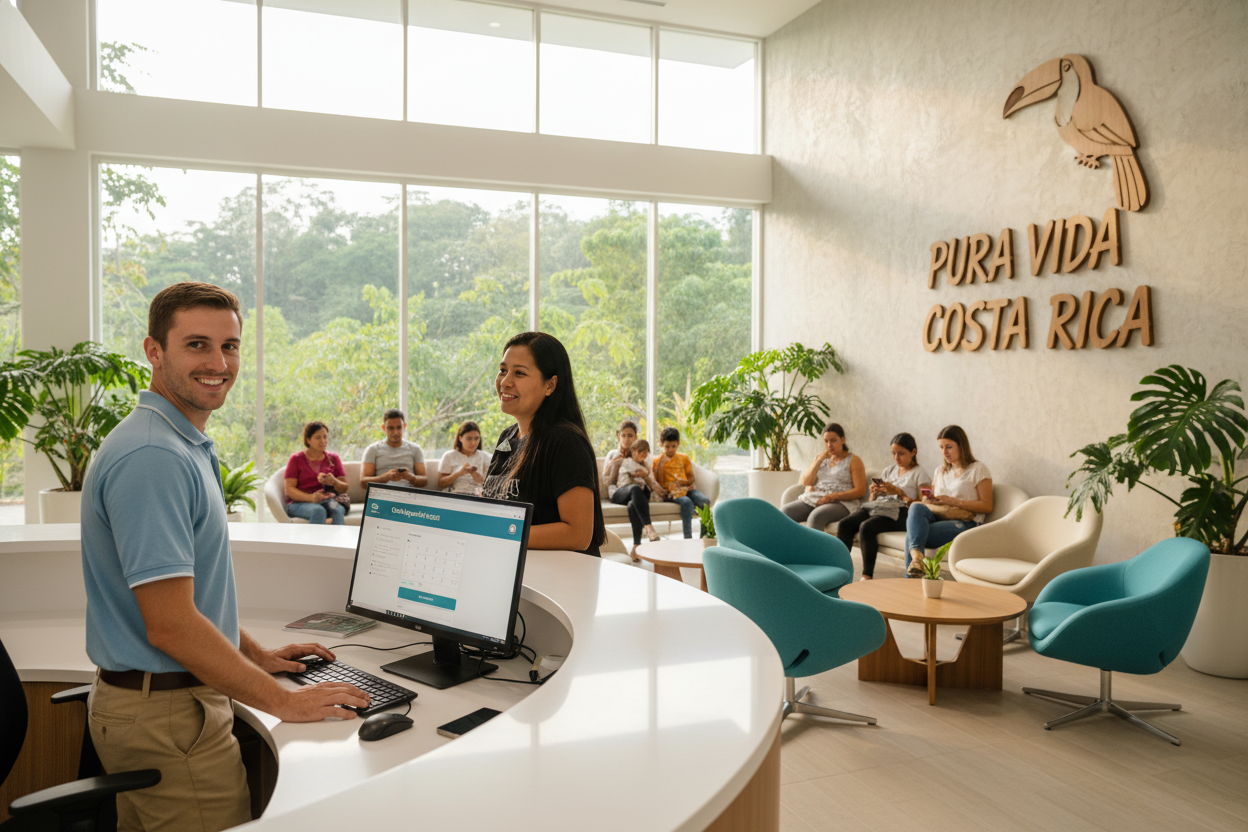
Navigating the path to legal residence in Costa Rica starts with the official CRIE system. This platform, crie.cr, is your gateway for residency applications in San Jose and across the country. Our guide focuses solely on this process—it does not cover U.S. visa matters.
We will walk you through securing legal status, whether for Pensionado, Rentista, or Inversionista categories. We use both English and Spanish terms so you are fully prepared. Understanding your eligibility, income thresholds, and required paperwork is the crucial first step.
The booking process is just one part of a larger journey. Successful applications depend on thorough preparation—gathering documents, obtaining apostilles, managing translations, and meeting financial requirements long before your scheduled date.
We provide clear, actionable information based on current procedures. We are not here to make guarantees, but to offer a realistic roadmap. Starting your preparation from home is the key to avoiding frustrating delays and moving smoothly toward your goal.
Understanding Costa Rica Residency Eligibility (Residencia Costarricense)

Eligibility for Costa Rican residency is defined by clear, non-negotiable financial thresholds across distinct pathways. Your correct category determines the documents you need and sets the stage for a smooth process.
Qualifying Categories: Pensionado, Rentista, Inversionista
The Pensionado (Pensionado) category is for retirees. It requires a verifiable pension of at least US$1,000 monthly from a government or institutional source.
The Rentista (Rentista) pathway suits those with stable income. Applicants must prove US$2,500 per month for two years from reliable sources.
The Inversionista (Inversionista) route demands a minimum US$150,000 investment in Costa Rica. A critical detail: the property must be in your personal name, not a corporation’s.
Key Thresholds and Requirements
We must address a common question. Digital Nomad status is not a residency category. It does not count toward permanent residence or citizenship.
For long-term goals, the Pensionado, Rentista, or Inversionista routes are your actual options. Specific requirements vary by the applicant’s circumstances, age, and country of origin.
Gathering this information upfront is crucial. It saves considerable time and frustration later in the process.
Step-by-Step Guide to Booking Your Appointment

The online booking process is a critical step that demands careful attention to detail and prior organization. We provide clear instructions to navigate the CRIE website successfully.
Online Registration and Initial Setup
Begin at the official CRIE website. Have your passport, residency category, and proof of financial qualification ready. The system will ask for this information during registration.
Create a checklist before you start. Confirm your documents are apostilled and translated. This preparation prevents errors that delay your application.
Confirming Your Appointment Details
After submitting your request, you will receive confirmation details. Save this information from the website portal or email. Verify every detail—name spelling, passport numbers, and category selection.
Appointments can fill quickly. Secure your slot as soon as your paperwork is complete. For the latest instructions, always check the official migracion.go.cr website.
Document Preparation and Translation Essentials
Properly preparing your official records is the single most important factor in avoiding delays. This entire phase must be completed in your home country before you travel.
We see many applicants create setbacks of months by arriving with incomplete paperwork. Starting early from home eliminates the need for costly international shipments or return trips.
Gathering Required Documents and Apostilles
Every official record from your home country requires an apostille. This international certification authenticates documents like birth certificates, marriage certificates, and police clearance certificates.
Financial records need special attention based on your residency category. Pension verification, two years of income proof, or property titles each have specific requirements.
Police records present a unique challenge. Their validity is often only three to six months. You must time your application process carefully around these expiration dates.
Ensuring Accurate Spanish and English Translations
Translation requirements are non-negotiable. All documents not originally in Spanish need certified translations. These translations must match the original records with exact accuracy.
The document gathering process takes significant time. You are coordinating with multiple agencies, translation services, and apostille offices across different systems.
Common required records include birth certificates, police clearances, and financial statements. Each has its own apostille and translation instructions.
Following these instructions precisely is critical. A missing apostille or an expired document can halt your entire application. The time investment for proper preparation typically ranges from six weeks to three months.
Navigating Timelines and Scheduling Details
Timelines for securing legal status are rarely linear and require strategic planning from the outset. A realistic view of the entire process prevents frustration and lets you orchestrate your move effectively.
Estimating Processing and Appointment Times
The journey has distinct phases, each with its own variable clock. Preparing documents and obtaining apostilles in your home country typically demands six to twelve weeks.
Once your paperwork is complete, securing a slot through the official system can take from a few weeks to several months. Seasonal demand and government capacity directly influence this wait.
After your scheduled date, the final residency processing often requires an additional three to six months. Complex cases or high application volumes can extend this period further. These timeframes fluctuate based on factors like staffing levels and policy changes.
Planning Ahead from Home with Documents Ready
We emphasize this point because it’s the most common pitfall. Applicants who arrive expecting to finalize documents locally face severe, costly delays.
Starting the entire preparation process from home is your single best strategy. It builds in essential buffer time for unexpected snags. For the most current processing time information, always consult the official migracion.go.cr website.
Understanding this full timeline—from initial gathering to final approval—is crucial for managing housing, finances, and your transition.
How to Book a Costa Rica Immigration Appointment
The official CRIE platform at crie.cr serves as the primary portal for initiating your residency application with Costa Rican authorities. This government service is dedicated to scheduling your required meeting. We will walk you through its interface and requirements.
Understanding the Booking Process via CRIE (crie.cr)
This website is the official service for securing your slot. You must create an account or log in to begin. The system will guide you through several screens.
It collects personal details, passport information, and your chosen residency category. Have all your application information organized beforehand. This includes document reference numbers and financial proof.
Select your preferred date from the available options. Be prepared for common technical issues. Session timeouts and browser compatibility can occur.
We recommend saving your progress frequently. Using an updated browser helps avoid frustrations. The system may also undergo occasional maintenance.
After submitting your request, you receive a confirmation. It lists your appointment date, time, and location in San Jose. A required documents list and reference number are included.
Verify every detail on this confirmation immediately. Check that your name matches your passport exactly. Ensure your residency category is correct.
Cross-reference these instructions with the official migracion.go.cr website. This ensures you have the latest requirement updates. This service is specifically for residency applications in Costa Rica.
Avoiding Common Mistakes and Pitfalls
The most frequent roadblocks we observe stem not from complex rules, but from simple, preventable oversights. Addressing these issues upfront saves significant time and frustration later.
Documentation Errors and Oversights
Missing apostilles or incorrect translations top the list of errors. Officials require certified translations that match original documents word-for-word. Using non-certified work leads to immediate rejection.
Expired documents, particularly police records, are another major pitfall. Their validity window is short. You must track these dates and time your entire application process accordingly.
Tactical Advice for Smooth Scheduling
Selecting the wrong residency category creates severe complications. For example, the Inversionista route demands property in your personal name, not a corporation’s. Financial proof must meet the exact thresholds without ambiguity.
Our key tactical advice is simple. Only book your appointment after confirming every document is complete and verified. Build buffer time for unexpected delays. Rushing to meet a deadline often creates errors that force you to restart the entire process.
This information prepares you realistically. The process rewards careful attention to detail and penalizes hasty shortcuts.
Preparing for Your Interview and Residency Process
Successfully navigating your residency interview depends on a clear checklist and understanding process boundaries. This final phase brings your preparation to a practical test.
Pre-Interview Checklist and Medical Exam Guidelines
Your pre-interview checklist is non-negotiable. Bring original documents with apostilles, certified translations, financial proof, your passport, and confirmation number to your appointment in San Jose.
Please note that medical exam guidelines for this process are specific. Requirements like health certificates vary by your age and country of origin. Always verify current rules through migracion.go.cr.
Clarifying Steps if Citizenship Is Mentioned
If Costa Rican citizenship is your ultimate goal, residency is the mandatory first step. You cannot apply for citizenship without first completing years of legal, continuous residence.
We need to clarify a common point of confusion. The U.S. Embassy in San Jose handles visa applications for entry into the United States. This is a completely separate process from securing residence within Costa Rica.
Please visit the appropriate authority for your goal. Focus on becoming a permanent resident here first. That foundation is essential for any future steps.
Final Steps and Contact Information
The concluding phase focuses on verification, security, and accessing support. Cross-check all your paperwork against the latest rules at the official government website, migracion.go.cr. Requirements can update at any time.
Before your meeting in San Jose, organize your original documents and copies. If you need language help, arrange for an interpreter in advance. This ensures clear communication during your session.
Protect your personal information. Keep your appointment confirmation number secure. Be cautious with sensitive documents within Costa Rica.
Questions will arise. For guidance, contact us via WhatsApp at +506 8706 3888 or email at info@crie.cr. Our service provides accurate information to navigate the process. We do not make guarantees—final decisions rest with immigration authorities. For personalized support, consider consulting a Costa Rica immigration consultant.
Thorough preparation from home remains your most critical step for a smooth application.
FAQ
What are the main categories for obtaining residency in Costa Rica?
The primary pathways are Pensionado, Rentista, and Inversionista. The Pensionado category is for retirees with a guaranteed lifetime pension. Rentista is for individuals with stable, passive income. The Inversionista category requires a significant financial investment within the country. Each has specific financial thresholds and requirements set by immigration authorities.
How do I start the online booking process for my residency appointment?
You begin by registering on the official CRIE website (crie.cr). This portal is managed by the Costa Rican government for immigration services. You’ll create an account, fill out the initial application forms, and then be directed to the calendar to select an available date and time for your appointment at the immigration office.
What documents do I need to prepare and translate for my application?
You’ll need to gather several key documents, which typically include a passport, birth certificate, police clearance, and proof of income or investment. Most documents from outside Costa Rica require an apostille. Every document must be translated into Spanish by a certified translator registered with the Ministry of Foreign Affairs for the application to be valid.
How long does the entire residency process take from start to finish?
Timelines can vary, but you should plan for several months. After booking your appointment, processing can take weeks. We advise starting the document collection—including apostilles and certified translations—well before you schedule your appointment. Having everything ready beforehand prevents significant delays.
What is the most common mistake applicants make during this process?
A frequent error is submitting incomplete or incorrectly prepared documentation. This includes missing apostilles, using non-certified translations, or providing outdated financial records. Double-check all requirements on the official government website and consider having a professional review your dossier before submission to avoid costly setbacks.
What should I expect during the residency interview at the immigration office?
The interview is a formal part of the process where a officer reviews your application and verifies your documents. You must bring all original paperwork and translations. A medical exam from a Costa Rican doctor is also a standard prerequisite. Be prepared to answer questions about your financial stability and intentions for residing in the country.
Where can I find official contact information if I have questions?
For the most accurate and current information, always refer to the official Dirección General de Migración y Extranjería website or the CRIE online portal. Their contact details and service hours are listed there. For complex cases, consulting with a licensed immigration attorney in Costa Rica is often the most reliable path.
Article by Glenn Tellier (Founder of CRIE and Grupo Gap)
Don't wait, contact us right now!
Call or WhatsApp Costa Rica +506 8373 2085 or +506 8706 3888
Call USA/Canada +1 305-906-6784