
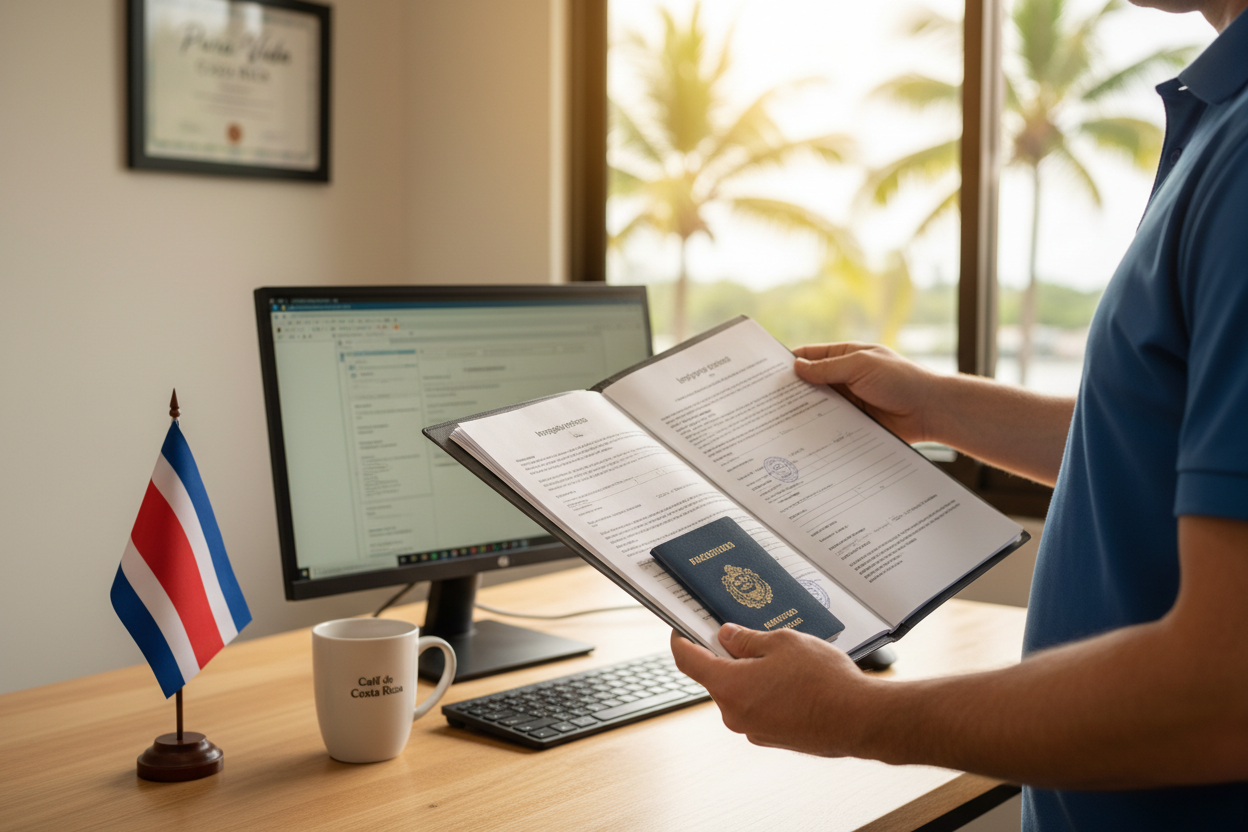
Your official documentation trail with the Dirección General de Migración y Extranjería is more than just paperwork. It’s your complete record of interaction with the authorities.
Having access to this information is crucial. It lets you verify received documents, spot missing items, and see your exact place in the processing queue.
The system here has its own specific request process. It is managed through official government portals and facilitated by experienced services.
We set realistic expectations from the start—this is not a quick procedure. Success depends on meeting legal requirements and government timelines.
Preparation should begin in your home country. This means gathering birth certificates, police clearances, and financial statements that need apostilles and certified translations.
Understanding your pathway—whether Pensionado, Rentista, or Inversionista—is the first step. A good starting point is our free residency assessment.
We must clarify a common point of confusion. The Digital Nomad status is not a residency pathway and does not count toward permanent residency or citizenship.
Our role is to be your guide. We provide transparent, step-by-step guidance through this complex system, helping you navigate with confidence.
Understanding Costa Rica Residency Pathways
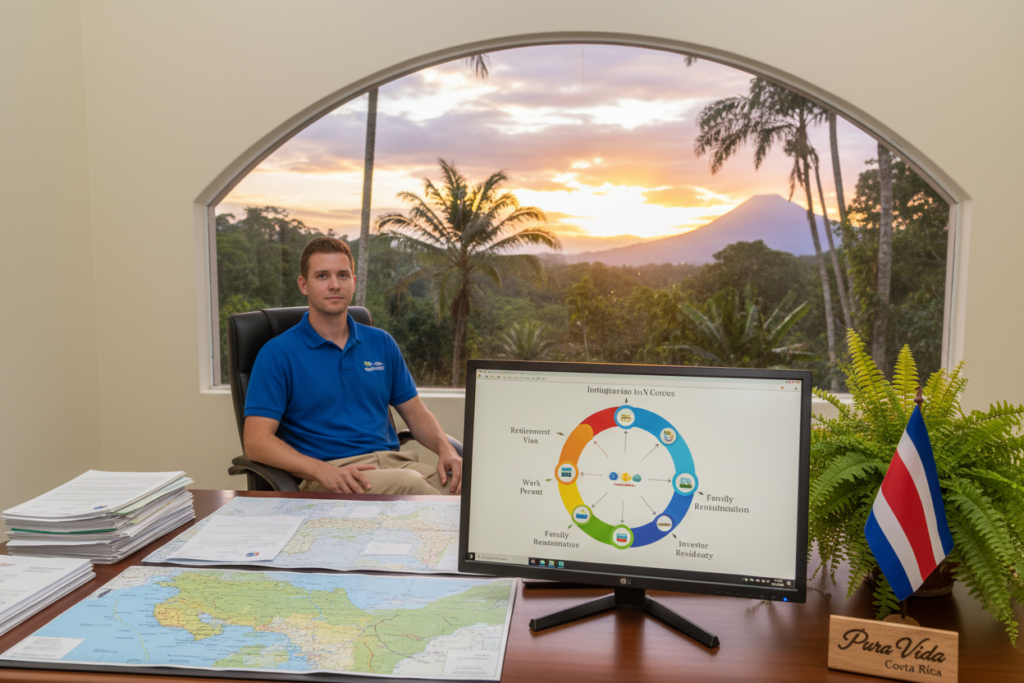
Before gathering any paperwork, identifying which residency category aligns with your financial profile is essential. The legal framework typically grants temporary status for two years initially. This is renewable before you can apply for permanent residency.
Overview of Residency Options
The three primary avenues are Pensionado, Rentista, and Inversionista. Each has distinct financial thresholds and documentation needs. Choosing correctly prevents delays in the immigration process.
Introducing Pensionado (Pensionado), Rentista (Rentista), and Inversionista (Investor)
The Pensionado (Pensionado) category requires a guaranteed pension of at least US$1,000 per month. Rentista (Rentista) demands proof of US$2,500 monthly income for two years.
Inversionista (Investor) needs a minimum US$150,000 investment. If this is in property, it must be in your personal name, not a corporation.
We must clarify a common point of confusion. The Digital Nomad visa is not a residency pathway. Time under this status does not count toward permanent residency or citizenship.
Who Qualifies for the Process?

Eligibility for residency hinges on meeting specific financial thresholds and providing verifiable proof of income or assets. The process involves a number of verification steps to ensure stability.
Income Thresholds and Personal Asset Requirements
The Pensionado category requires a guaranteed pension of at least US$1,000 per month. You must provide official documents from the issuing institution, apostilled and translated.
Rentista applicants need to demonstrate US$2,500 per month in guaranteed income for at least two years. This can be structured as a lump sum deposit or verifiable income streams.
For the Inversionista pathway, a minimum US$150,000 investment is mandatory. If using real estate, the property title must be in your personal name, not a corporation.
Exclusions: Why Digital Nomad Does Not Qualify
The Digital Nomad visa is a temporary remote work authorization. Time spent under this status does not accumulate toward permanent residency or citizenship eligibility.
We recommend the Rentista category as the closest fit for these individuals. If you can document the required income, it provides a true residency pathway.
Costa Rica Immigration File Copy Request Process
Accessing your complete administrative record with the Dirección General de Migración y Extranjería provides critical visibility into your case’s progress. This formal method lets you obtain the full dossier the government has on your residency application.
It operates through the official portal migracion.go.cr, not a U.S.-style FOIA request. The process is managed administratively and can be facilitated by authorized representatives.
When and Why to Request Your File Copy
You should seek these records to confirm all your paperwork was received. Mail can get lost, and verifying receipt is essential before deadlines.
If your application seems stuck, reviewing your complete file can reveal missing items. It shows if a document was rejected for a technical reason.
This step is also vital when preparing an appeal. You need to see the specific notes and concerns the officer documented.
The basic online status check shows a general stage. A full copy provides the detailed trail, including internal notes and dates.
Not every situation requires this action. If processing is normal, a request can divert staff attention and slow things down. We help you decide if it’s strategically necessary for your case.
Step-by-Step Guidance to Begin Your Application
Successfully navigating the application process requires meticulous preparation long before you set foot in the country. We guide you through each critical phase to build a solid foundation.
Identifying Eligibility and Gathering Personal Information
Begin with a candid self-assessment. Review the Pensionado, Rentista, and Inversionista categories to see which one your finances genuinely support.
Applying under the wrong category wastes months and often leads to denial. Your first forms and personal records must align with your chosen path.
Gather your birth certificate, marriage certificate if applicable, and police clearances. These core documents must be recent certified copies.
Preparing Essential Documents with Apostilles and Translations
Every document from your home country needs an Apostille certification. This is a specific authentication stamp from competent authorities.
Financial proof varies. Pensionado applicants need a pension provider letter. Rentista requires bank statements and income documentation.
Inversionista must show proof of investment. If using property, a local attorney prepares the title study.
All paperwork not in Spanish requires official translation. Use only translators authorized by the Ministry of Foreign Affairs.
Create a comprehensive checklist before arrival. This prevents expensive requests to replace missing items from abroad.
Essential Documentation and Preparation
The foundation of a successful application is built on documents prepared and authenticated before you depart. Much like a U.S. FOIA request reveals a detailed case history, the forms you submit here create your permanent legal record.
Required Forms and Records from Home
Core documents form your baseline. These include an apostilled birth certificate, police clearances from every country you’ve lived in, and specific passport photos.
Official forms collect your biographical details and financial declarations. You access them through the government portal. Accuracy is critical, as errors cause significant delays.
Category-specific proof is key. Pensionado requires a letter confirming a lifetime $1,000 monthly pension. United States Social Security can provide this.
Rentista needs proof of $2,500 monthly income. This often involves a bank guarantee or documented investment income.
Inversionista must show a $150,000 investment. Real estate titles or business capital proof is standard.
All foreign-language documents need official translation. Financial records often require notarization before the apostille. We help you navigate these authentication chains from your home country.
Timelines and What to Expect
While we cannot provide guarantees, we can outline the standard processing stages and common factors that influence how long your case will take. Realistic timelines depend on your application’s complexity, its completeness, and current government volumes.
Standard Processing Duration and Milestones
Standard processing typically spans six to twelve months from submission to final approval. This breaks into distinct administrative phases.
You will first undergo an initial document review, which usually takes one to two months. Shortly after submitting, you’ll receive a case number for basic online status tracking.
The first critical milestone is clearing this review without receiving a official request for more information or corrections. If you do receive one, the clock stops on your application until you respond.
Subsequent background checks often consume two to four months. Financial verification adds another one to three months to the timeline.
Factors That Could Cause Delays
Common delays stem from document issues. Incomplete apostilles or missing official translations can set you back by months.
Expired police clearances or minor name discrepancies between your passport and birth certificate also create significant hurdles. Each requires clarification.
The verification steps for background and finances are largely outside your control. Patience is essential during these periods.
While checking your status online is helpful, an unnecessary formal inquiry for your full dossier can actually slow the overall processing time for your case.
Common Pitfalls and Mistakes to Avoid
Many applicants inadvertently sabotage their own residency cases by repeating the same, avoidable errors. Just as a poorly structured FOIA request can delay access to U.S. records, small oversights here have major consequences.
Overlooking Documentation Nuances
The most frequent error is choosing the wrong category. Trying to qualify for Pensionado with non-pension income leads to automatic denial. This wastes months of processing time.
Apostilles must come from the correct Hague Convention authority in your home country. Translations require an official stamp from a translator approved by the local Ministry of Foreign Affairs.
Police clearances often expire within 90 days. Obtaining them too early forces a costly re-do. For investors, property must be held in your personal name, not a corporation.
Strategic patience is also key. Frequent status requests can slow your own case down. We help clients determine when an inquiry is truly necessary.
Starting from Home: Organize Your Immigration File
The most effective strategy for securing residency begins long before you pack your bags. Successful applicants complete nearly all document preparation in their home country. Trying to obtain apostilled records after you arrive multiplies the difficulty, cost, and time.
Creating a Personal Checklist
Start by building a category-specific checklist. It must include core items like birth certificates and police clearances. Also list each document’s authentication needs—notarization, apostille, and official translation.
Begin with items that have the longest acquisition times. This includes police clearances from slow bureaucracies or pension verification letters from large institutions. Tracking expiration dates in a spreadsheet is crucial.
Verifying Document Legitimacy Before Arrival
Legitimacy checks are vital before you depart. For U.S. citizens, the apostille process varies. State-issued documents are authenticated by the Secretary of State, while federal records go to the U.S. Department of State.
We strongly recommend a professional review of your complete package. Discovering a missing apostille or incorrect form while abroad creates serious delays. Our additional services include this essential verification step to save you months.
Navigating Online Resources with crie.cr & migracion.go.cr
Your primary digital resources for residency are the official government portal and expert guidance sites. Knowing how to use them effectively saves time and prevents errors.
The official migracion.go.cr website is your authoritative source. It houses current regulations, required forms, and a status tracker. Bookmark this page, as policies do change.
Key sections include “Trámites” for procedures and “Formularios” for downloads. Use the “Consulta” area to check your case status with your number. Remember, this shows a general stage, not detailed notes.
Utilizing Official Websites Effectively
The government site is in Spanish. If you’re not fluent, use a reliable translation tool. Misunderstanding a requirement here can create serious problems.
Our site at crie.cr provides clear English guidance. We explain residency categories, document needs, and realistic timelines. Think of migracion.go.cr as the official rulebook and crie.cr as your practical guide.
Always default to the official agency’s information. Forums and blogs often contain outdated data. For personalized help, contact us directly via WhatsApp or email.
Final Steps Before Submitting Your Application
A meticulous final review can mean the difference between a smooth process and months of frustrating delays. Cross-check every piece of your documentation against the official requirements. This is your last chance to catch a missing element before it halts your case.
Verify each apostille came from the correct authority in your home country. Confirm all translations carry the official stamp from a certified translator. Double-check that dates, especially for police clearances, are current and won’t expire during the expected processing timeline. Review every form for complete accuracy.
Time your submission strategically, considering document validity and standard processing periods. We offer a professional review of your complete package to identify potential issues. While we cannot guarantee approval, our guidance ensures you present the strongest possible application. Contact us via WhatsApp or email for this final verification step.
FAQ
What is a Costa Rica immigration file copy, and why would I need one?
Think of it as your official case record with the Dirección General de Migración y Extranjería. You might request this file copy to verify your application status, prepare for a legal appeal, or ensure all your documents are correctly archived. It’s a crucial step if you face a complex situation or need to provide proof of your immigration history.
Can I request my file if my residency application is still in process?
Yes, you can. We often advise clients to request their file copy during lengthy processing to understand its status. This proactive step can reveal if additional documents are needed or clarify your case’s position in the queue, helping avoid unexpected delays.
What’s the difference between the Freedom of Information Act (FOIA) and a direct request to Migración?
A FOIA request is a formal U.S. process for records held by agencies like U.S. Customs and Border Protection. For your Costa Rican immigration file, you must submit a direct request to the local authorities. The processes, response times, and required forms are entirely different, so it’s vital to use the correct system for each country.
How long does it typically take to receive the requested file copy?
A> Processing times vary, but you should generally expect a wait of several weeks to a few months. Factors like the complexity of your case, the agency’s current backlog, and whether you submitted a complete request all influence the timeline. We help clients set realistic expectations from the start.
What are the most common mistakes people make when requesting their immigration records?
The top pitfalls are submitting incomplete forms, forgetting to include proper identification, and not providing precise case details like your file number or exact dates. Another frequent error is not having documents translated or apostilled when required, which can halt the entire process.
I’ve had interactions with U.S. Immigration and Customs Enforcement (ICE). Will that appear in my Costa Rican file?
No, your Costa Rican file only contains records from your interactions with that country’s immigration system. Records from U.S. Immigration and Customs Enforcement, U.S. Customs and Border Protection, or a U.S. immigration judge are separate and must be requested through the appropriate U.S. Department of Homeland Security channels.
How can I best prepare my documents before starting the request process?
Start by creating a personal checklist. Gather all your prior application receipts, passport copies, and any official notices you’ve received. Verify that any documents from abroad, like police reports, have the necessary apostille and certified Spanish translations. This upfront organization prevents delays.
Where can I find the official forms and track my request status online?
The primary resources are the official government portals: `crie.cr` for initial applications and `migracion.go.cr` for general information. These sites provide the latest forms and, in some cases, portals to check your status. We guide our clients on navigating these sites effectively to get accurate information.
Article by Glenn Tellier (Founder of CRIE and Grupo Gap)
Don't wait, contact us right now!
Call or WhatsApp Costa Rica +506 8373 2085 or +506 8706 3888
Call USA/Canada +1 305-906-6784