
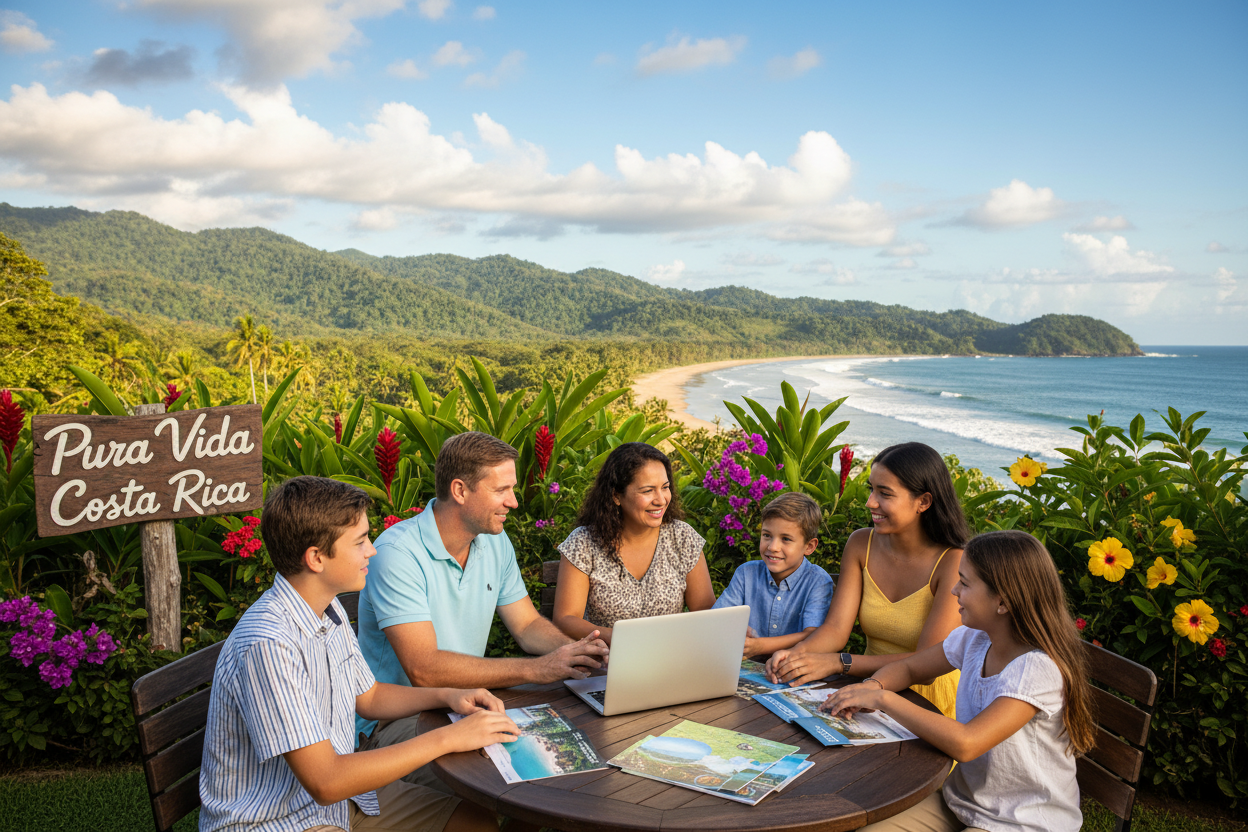

Many families dream of a new life in a country known for its lush landscapes and stable democracy. The appeal of excellent healthcare and a peaceful environment is strong. For blended families—those formed through remarriage or combining households—this dream comes with specific questions.
We understand that navigating immigration with stepchildren or multiple parental figures presents unique challenges. The legal definition of “family ties” is your starting point. Knowing this determines who can be included in your application.
This guide walks you through determining eligibility and preparing documents. We’ll cover key categories like Pensionado (Pensionado) and Rentista (Rentista), focusing on income requirements. The process emphasizes starting from home with apostilled and translated paperwork.
A successful application for a blended family hinges on proper preparation. Understanding what authorities expect avoids common delays. For related spousal pathways, explore our resource on residency for spouses. Always consult official sources at migracion.go.cr.
We’re here to provide expert guidance through each phase. For personalized support, contact our team.
Introduction to Costa Rica Residency for Blended Families

Relocating a household with diverse relationships demands a destination that values both community and clear legal pathways. This nation abolished its standing army over seven decades ago. That historic choice channeled resources into robust public health and education systems.
The result is a society known for its political stability and personal safety. These foundational benefits create a welcoming environment for newcomers from all backgrounds.
We recognize that combined households bring together stepparents, adoptive parents, and children from previous marriages. Costa Rican immigration law provides specific avenues to include these members under one application. This approach supports the goal of family unity during an international move.
It’s important to understand that legal definitions of kin here may differ from your home country. Not all relationships are recognized automatically. Setting realistic expectations from the start is crucial for a smooth process.
By grasping these nuances early, you lay a solid foundation for your application journey. The next section will clarify exactly who qualifies under local regulations.
Eligibility Criteria and Who Qualifies

Eligibility hinges on legal definitions of kinship that may differ from what you’re accustomed to. Local authorities require clear proof of relationship for every person included in an application.
We’ll clarify the specific criteria so you can assess your household’s standing from the start.
Defining Family Ties and Relationships
Immediate family members typically include a legally recognized spouse and children. The term “children” covers biological, adopted, and qualifying stepchildren.
For stepchildren, the legal marriage to the biological parent must be documented. The child must also be a dependent minor or meet other dependency rules.
Adopted children are treated identically to biological children for these purposes. Parents of the primary applicant can also qualify as dependents in many cases.
Additional Requirements for Special Categories
Special situations, like dependent adult children with disabilities, require extra proof. This often means providing medical reports or sworn affidavits of financial support.
The core requirement is an unbroken chain of official documentation. Every relationship link—from marriage certificates to birth records—must be authenticated and translated.
Gaps or inconsistencies in this paperwork are a common reason for delays. Understanding these criteria upfront saves significant time and effort later.
Document Preparation: Essential Paperwork, Apostilles, and Translations
Before setting foot in the country, assembling and authenticating your family’s paperwork is the most critical task. This preparation phase is where most delays occur. We strongly advise starting this process from your home country.
Gathering the correct documents takes weeks, sometimes months. A complete package submitted upfront prevents frustrating bureaucratic hold-ups.
Gathering and Authenticating Documents
Every applicant must provide a core set of personal records. This includes valid passports for all members. You also need birth certificates and marriage certificates as proof of relationship.
Police clearance certificates are required for those over twelve. Adoption decrees or dependency affidavits are needed for special cases.
Each foreign document requires authentication. If your country is part of the Hague Convention, you need an apostille. This official stamp verifies the document’s authenticity for international use.
For non-Hague countries, consular legalization at a local consulate is necessary. This step is non-negotiable for your application.
Official Translations and Apostille Procedures
Once apostilled, all non-Spanish documents need official translations. Only a certified translator authorized in Costa Rica can perform this work. Translations done elsewhere will not be accepted.
We recommend contacting a certified translator early. You can coordinate digitally or ship documents to them. This ensures the format meets strict immigration standards.
Time your police certificates carefully. They are typically valid for only six months from issuance. Your entire document package should be ready before you travel.
Proper preparation creates a smooth path. It allows you to submit your application soon after arrival. If you are uncertain about any requirement, consult official sources or seek expert guidance.
Understanding Residency Categories and Income Thresholds
Financial criteria define the primary avenues available for establishing long-term legal status. The government offers several distinct pathways, each with specific monetary requirements you must meet.
Your choice depends on your life stage and source of funds. We’ll outline the three most common options for households.
Pensionado (Pensionado) and Its US$1,000+ Threshold
This category is for retirees with a guaranteed lifetime pension. Applicants must demonstrate a minimum monthly income of at least US$1,000.
The funds must come from a government or qualified private pension plan. This pathway suits primary applicants who are retired.
Rentista (Rentista) and Inversionista (Inversionista) Requirements
The Rentista option requires proof of a stable US$2,500 monthly income for two years. Alternatively, a US$60,000 deposit in a local bank is accepted.
The Inversionista (Inversionista) category demands a minimum investment of US$150,000. Approved ventures include local real estate or businesses.
Critically, any property investment must be in the applicant’s personal name—not a corporate entity. These temporary statuses are typically granted for two years and require renewal.
You must maintain these financial thresholds throughout your stay. Careful assessment ensures you select the most stable pathway for your household.
Step-by-Step Guide to the Application Process
A clear roadmap transforms the complex task of securing legal status into manageable actions. We recommend dividing the entire endeavor into distinct phases.
Preparing Your Pre-Arrival Checklist at Home
Start by compiling all required personal records. This includes passports, birth certificates, and marriage certificates. Applicants must obtain apostilles or consular legalizations for each document.
Arrange for certified Spanish translations before you travel. This foundational work done from home prevents major delays later.
How to File Your Application with crie.cr
Next, draft a formal letter of request to immigration authorities. Assemble proof of your financial standing per your chosen category.
Pay the required deposit and keep the receipt. You can submit your complete package in person at local offices or through a consulate.
CRIE specializes in guiding households through this process. They help verify document completeness and coordinate submission. Contact them at info@crie.cr or WhatsApp +506 8706 3888 for tailored support.
During the review period, you may enter and exit freely as a tourist. Completeness at submission is critical to avoid delays.
Timelines: What to Expect During Your Residency Journey
We advise viewing the entire procedure as a multi-year project with clear milestones. The application process typically takes between six and twelve months from submission to final approval.
Timelines can vary based on application volume and document completeness.
Temporary status is usually granted for an initial period of two years. You must apply for renewal before your current legal standing expires.
Renewals require updated proof that you still meet income or investment thresholds.
Planning ahead is essential because certain documents have limited validity. Police clearance certificates are typically valid for only six months from issuance.
Time your submission to avoid expiration during processing.
After maintaining temporary status in good standing for three consecutive years, you become eligible to apply for permanent residency. This offers greater stability and long-term security.
Track your milestones carefully. Note your initial approval date, renewal deadlines, and eligibility dates for permanent status.
This avoids lapses that could delay your progression. During the processing period, you can enter and exit as a tourist.
Common Pitfalls and Mistakes to Avoid
Understanding where others have stumbled provides a clear advantage for your own residency application. We see several recurring issues that delay or derail the process for combined households.
Overlooking Key Documentation Details
Incomplete or improperly authenticated paperwork is the top cause of delays. Missing apostilles, expired police certificates, or unofficial translations lead to immediate rejection.
Many applicants underestimate the time needed. Starting document gathering at least six months before your move builds in a crucial buffer.
Misunderstandings in Income and Eligibility Requirements
A frequent error involves the Rentista category. The required US$2,500 monthly income must be personally demonstrated by the primary applicant.
Combined household funds do not qualify. For stepchildren, a clear legal chain proving dependency is mandatory.
Another common mistake is not budgeting for all costs. Government fees, translations, and legal assistance add up. Relying on outdated online advice instead of official sources also creates problems.
By anticipating these areas, you can navigate the requirements with greater confidence and fewer setbacks.
Strategies for a Successful Application
The difference between a straightforward application and a protracted ordeal often lies in the preparation phase. We recommend a strategic, checklist-driven approach to navigate the complexities. This method maximizes your chances for a smooth transition.
Preparing Documents Before Arrival
Begin gathering and authenticating your records months before your move. Completing apostilles and official translations from your home country is the single most effective step. It eliminates the stress of coordinating these tasks remotely.
Engage certified translators and legal professionals early in your process. They ensure your paperwork meets current immigration standards. This proactive work prevents submission errors that can delay your entire case.
Tips for a Smooth and Organized Process
Organize your submission package with clear logic. Use labeled folders for each family member and group documents by type. A concise cover letter summarizing your household structure aids officials during review.
We strongly advise partnering with experienced specialists who understand nuanced cases. Firms like CRIE offer tailored guidance to keep your application compliant and complete.
Maintain digital and physical copies of every submitted item. Stay informed on policy updates through official channels like migracion.go.cr. Finally, build flexible timelines and budgets to accommodate any unforeseen requests during the process.
Navigating Residency versus Digital Nomad Options
A common point of confusion is conflating the Digital Nomad visa with a pathway to permanent legal status. We need to be clear from the start.
Why Digital Nomad Status is Not Considered Residency
This program is a temporary work authorization. It allows individuals or families to live here for up to a year while working remotely for foreign companies.
Income thresholds are US$3,000 or US$4,000 monthly. However, this visa is not a formal residency status.
Time spent under it does not count toward requirements for permanent residency or citizenship.
Choosing the Closest Residency Option for Your Needs
For households seeking a permanent future, formal residency categories are the only viable pathway. The Rentista option is often the closest fit.
It requires proving US$2,500 in stable monthly income. This provides a clear track toward temporary and then permanent residency.
We often guide remote workers toward this category. It offers similar lifestyle flexibility while building your time toward long-term goals.
Understanding this distinction is critical for planning. If you’re uncertain which pathway suits your family, contact CRIE at info@crie.cr for personalized guidance.
Leveraging Official Resources and Expert Support
Combining authoritative information with personalized advice creates the strongest application strategy. We guide households to use both official channels and specialized assistance.
Insights from migracion.go.cr Guidelines
Your first stop must be the Dirección General de Migración y Extranjería website. This official portal provides current forms, procedural updates, and direct contacts.
The entire system is governed by Law N.° 9996. This law outlines all eligibility criteria and legal requirements for every residency category. Understanding this framework is essential.
Interpreting these official rules for a unique household structure can be complex. The guidelines provide the map, but applying them requires careful navigation.
Contacting crie.cr for Personalized Assistance
This is where expert support becomes invaluable. CRIE specializes in translating official rules into actionable steps for your specific case.
They help interpret legal requirements in plain language. Their team assists with document authentication, category selection, and coordinated submission.
We encourage you to reach out early in your planning. Contact CRIE via WhatsApp at +506 8706 3888 or email info@crie.cr. Get tailored guidance that complements the official resources.
This two-part approach gives your application a foundation built on both accuracy and practical execution.
Final Thoughts on Your Journey to Costa Rica Residency
This journey, while detailed, is fundamentally about building a durable foundation for your family’s next chapter. We’ve outlined the key steps: confirming eligibility, preparing documents, selecting a category, and navigating the process. Success hinges on starting early, staying organized, and leveraging expert guidance.
Remember, temporary residency is a first step. It leads to permanent status and, after seven years, the potential for citizenship. The country allows dual citizenship, letting your household enjoy those benefits while keeping your original nationality. Learn more about this path to citizenship.
We encourage you to view this as a partnership between your goals and the legal framework. With thorough preparation and the right support, you can achieve long-term stability. For personalized help, contact CRIE at info@crie.cr or WhatsApp +506 8706 3888.
FAQ
What defines a "blended family" for this residency pathway?
For immigration purposes, a blended family includes spouses and dependent children under 25. The key is proving legal relationships through marriage certificates and birth certificates. We help families gather the correct documentation to demonstrate these ties clearly to authorities.
What are the main financial requirements for the primary applicant?
The primary applicant must prove stable, permanent income. For the Pensionado category, this means a lifetime pension of at least
FAQ
What defines a "blended family" for this residency pathway?
For immigration purposes, a blended family includes spouses and dependent children under 25. The key is proving legal relationships through marriage certificates and birth certificates. We help families gather the correct documentation to demonstrate these ties clearly to authorities.
What are the main financial requirements for the primary applicant?
The primary applicant must prove stable, permanent income. For the Pensionado category, this means a lifetime pension of at least $1,000 monthly. The Rentista category requires a guaranteed $2,500 monthly income for two years. We guide clients in providing the proper bank letters and proof to meet these criteria.
How should we prepare our documents from abroad?
Start early by obtaining official, long-form versions of birth and marriage certificates. These documents must be apostilled (or authenticated) in their country of origin and then translated into Spanish by an official translator in our country. We always advise completing this step before arrival to prevent delays.
What is the difference between temporary and permanent residency status?
All new applicants first receive temporary residency, which is valid for one to three years and must be renewed. After maintaining that status for at least three years, you can apply for permanent residency. We help manage this timeline to ensure a smooth transition to permanent status.
Is the Digital Nomad Visa a substitute for a residency application?
No, the Digital Nomad Visa is a separate, non-resident status. It does not count toward permanent residency, nor does it allow you to sponsor family members under the same application. For blended families seeking long-term stability, a formal residency process is the correct pathway.
What is the most common mistake families make in their application?
A frequent error is submitting documents that are not properly apostilled or translated. Another is misunderstanding the income proof, such as providing sporadic bank statements instead of the required official guarantee letter. We meticulously review all materials to avoid these costly oversights.
How long does the entire process typically take?
After submitting a complete application package, the initial review by immigration can take 3 to 6 months. The entire journey from temporary to permanent residency spans several years. We set realistic expectations and provide ongoing support throughout each phase of this multi-year journey.
Where can we get official information and direct support?
The Dirección General de Migración y Extranjería (migracion.go.cr) is the official source for laws and requirements. For personalized guidance, you can contact our team at CRIE via WhatsApp at +506 8706 3888 or email at info@crie.cr. We bridge the gap between official rules and your successful application.
,000 monthly. The Rentista category requires a guaranteed ,500 monthly income for two years. We guide clients in providing the proper bank letters and proof to meet these criteria.
How should we prepare our documents from abroad?
Start early by obtaining official, long-form versions of birth and marriage certificates. These documents must be apostilled (or authenticated) in their country of origin and then translated into Spanish by an official translator in our country. We always advise completing this step before arrival to prevent delays.
What is the difference between temporary and permanent residency status?
All new applicants first receive temporary residency, which is valid for one to three years and must be renewed. After maintaining that status for at least three years, you can apply for permanent residency. We help manage this timeline to ensure a smooth transition to permanent status.
Is the Digital Nomad Visa a substitute for a residency application?
No, the Digital Nomad Visa is a separate, non-resident status. It does not count toward permanent residency, nor does it allow you to sponsor family members under the same application. For blended families seeking long-term stability, a formal residency process is the correct pathway.
What is the most common mistake families make in their application?
A frequent error is submitting documents that are not properly apostilled or translated. Another is misunderstanding the income proof, such as providing sporadic bank statements instead of the required official guarantee letter. We meticulously review all materials to avoid these costly oversights.
How long does the entire process typically take?
After submitting a complete application package, the initial review by immigration can take 3 to 6 months. The entire journey from temporary to permanent residency spans several years. We set realistic expectations and provide ongoing support throughout each phase of this multi-year journey.
Where can we get official information and direct support?
The Dirección General de Migración y Extranjería (migracion.go.cr) is the official source for laws and requirements. For personalized guidance, you can contact our team at CRIE via WhatsApp at +506 8706 3888 or email at info@crie.cr. We bridge the gap between official rules and your successful application.
Article by Glenn Tellier (Founder of CRIE and Grupo Gap)
Don't wait, contact us right now!
Call or WhatsApp Costa Rica +506 8373 2085 or +506 8706 3888
Call USA/Canada +1 305-906-6784