
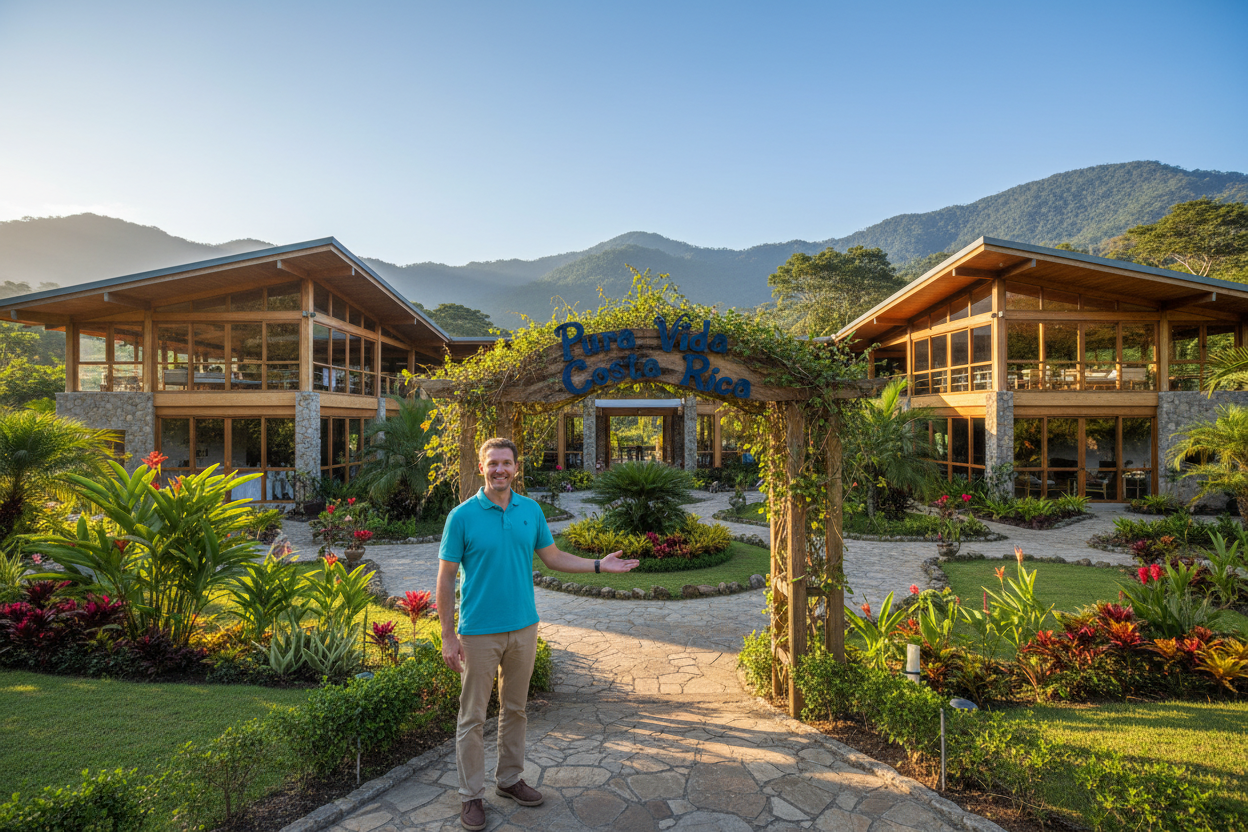
Dreaming of a new chapter under the sun? You’re not alone. Tens of thousands from the United States have made this vibrant nation their home, with numbers growing steadily each year.
This guide focuses on one specific legal pathway: the Rentista (Rentista) category. It’s designed for individuals with stable passive income—think younger professionals, entrepreneurs, or investors—who aren’t yet retired.
The program requires proving a consistent monthly income. We’ll walk you through the specifics, including the financial threshold and the meticulous document preparation required before you even arrive.
While the appeal of “pura vida” is undeniable, successful long-term living here depends on meeting specific legal and financial criteria. This isn’t a simple lifestyle change; it’s a formal immigration process.
Our goal is to provide a clear, honest roadmap. We’ll explain how this option differs from others, like the Pensionado, to ensure you’re pursuing the right path for your situation.
Understanding the Costa Rica Rentista Residency Fees

The financial commitment extends beyond a single application fee into distinct layers. We categorize these into three main areas: mandatory government charges, document preparation and authentication costs, and optional professional services. Understanding this structure helps you budget realistically, as total amounts can vary significantly.
Official fees are paid directly to immigration authorities. These cover application submission, final approval, and the issuance of your identification card. It’s crucial to verify the current amounts on the official migracion.go.cr website, as they are subject to change.
Document preparation is another key cost layer. This includes obtaining apostilles in your home country, official Spanish translations by certified Costa Rican professionals, and international courier fees. Factoring these in from the start prevents surprises.
Engaging expert guidance represents a strategic investment. Professional services manage the complex paperwork and submission process. This experienced support greatly reduces the risk of rejection or lengthy delays, protecting your overall effort.
Remember, securing your status includes ongoing financial responsibilities. These encompass mandatory social security payments and periodic renewal fees. Viewing the entire process as a long-term commitment ensures you’re fully prepared.
Who Qualifies for Rentista Residency

Eligibility hinges on two main pillars: a defined passive income stream and a clean legal background. We’ll break down the specific financial thresholds and other mandatory conditions you must satisfy.
Income Requirements and Financial Thresholds
The core financial requirement is non-negotiable. You must prove a stable monthly income of US$2,500, guaranteed for two years. This totals US$60,000.
This money must come from passive sources. Qualifying examples include investment dividends, rental property earnings, or annuity payments. Employment salary does not count.
It’s crucial to contrast this with the Pensionado category. That option requires only US$1,000 per month, but it must come from a formal pension or Social Security.
Additional Eligibility Criteria
Beyond finances, you need a spotless criminal record from any country you’ve lived in for the past three years. Your passport must be valid for at least six months.
Authenticated personal documents, like a birth certificate, are also mandatory. A common point of confusion involves the Digital Nomad visa.
That visa is for temporary stays only. It does not lead to permanent status. For remote workers with qualifying passive income, this residency pathway is the appropriate long-term choice.
We stress honest self-assessment. Attempting to apply with borderline income sources often leads to rejection and lost time.
Step-by-Step Application Process for Rentista Residency
A successful submission hinges on meticulous preparation long before you land. We break the journey into clear phases: pre-arrival document collection, in-country filing, and the final review period.
Document Preparation: Apostilles and Translations
Start in your home country. Gather your birth certificate, marriage documents, and criminal background checks. Each needs an apostille stamp for international validity.
After arrival, every apostilled paper requires an official Spanish translation. This must be done by a certified translator within the country. Budget for this essential step.
Submission and Follow-Up Procedures
Next, schedule an appointment with immigration authorities online. You’ll pay government fees at a designated bank branch beforehand.
At your appointment, submit all originals and copies. You’ll provide biometrics and receive a critical file number for tracking. This receipt allows you to stay legally during processing.
Expect to enroll in the national healthcare system. Processing times vary widely, so plan for flexibility. For expert navigation of this complex procedure, consider contacting professionals like CRIE.
Key Documentation to Gather Before Arrival
Your most powerful tool for avoiding delays is a complete and properly authenticated dossier. Gathering every required paper before you travel prevents expensive return trips and accelerates your entire timeline.
Essential Personal Documents
Start with your personal papers. You need a valid passport with over six months left. Obtain an apostilled birth certificate.
Include marriage or divorce certificates if they apply. Criminal background checks are mandatory. They expire just six months from issue.
Plan this step carefully. Your name must match exactly on every document. Even a middle initial difference can cause a problem.
Financial Documentation and Bank Requirements
You must provide solid proof of your passive income. This involves notarized letters from your bank or investment firm.
Six months of statements showing consistent deposits is strong evidence. You can also use rental property records or a certified CPA statement.
For a detailed paperwork checklist, review the guide on what you need to move. Thorough preparation is the key to a smooth process.
Understanding Different Costa Rican Residency Categories
Understanding the core differences between the primary categories prevents costly missteps. We’ll clarify the main pathways to establish a formal, long-term presence.
Pensionado (Pensionado) vs Rentista (Rentista) vs Inversionista (Inversionista)
The Pensionado category is for retirees. It requires a guaranteed monthly pension of at least US$1,000 from sources like Social Security.
The Rentista (Rentista) program targets individuals with stable passive income. You must prove US$2,500 per month for two years from investments or rentals.
The Inversionista pathway demands a minimum US$150,000 investment. This must be in local real estate held in your personal name, not a corporation.
Digital Nomad: Why It Doesn’t Qualify
Costa Rica’s Digital Nomad visa is a temporary permit. It does not count as a residency category and offers no path to permanent status.
For remote workers seeking actual residency, the Rentista (Rentista) option is the closest fit. This applies if you have qualifying passive income separate from your salary.
Family-based options also exist, like marriage to a citizen. Gaining citizenship first requires several years of temporary, then permanent, residency status.
Timelines and What to Expect During Your Application
The waiting period after submitting your paperwork can be the most uncertain phase of the entire journey. We provide realistic expectations to help you plan.
Processing Times and Key Milestones
Plan for the entire process to take 6 to 10 months from submission to final approval. Official estimates are often shorter than real-world experience.
Your first key document is the comprobante, or receipt. This proves your application is pending and grants legal stay during the review period.
A major milestone is provisional approval. This means your file is favorably reviewed. You will then need to enroll in the CAJA healthcare system.
After final approval, your DIMEX card is issued. The official production time is 22 business days. Actual waits often stretch to 1-3 months.
If you must travel abroad during this time, request an exit permit first. Also, book appointments well in advance due to common backlogs.
For the most current information on timeframes, check the official immigration website or consult with a trusted local expert.
Common Mistakes to Avoid in the Residency Process
Many hopeful applicants encounter avoidable roadblocks simply because they overlook critical details. We see most delays and rejections stem from preventable paperwork errors, not ineligibility.
Incomplete Documentation and Missed Apostilles
A common error is using expired criminal background checks. These documents are only valid for six months from their issue date.
Missing apostilles on vital records like marriage certificates is another major pitfall. All personal papers require this international certification from your home country.
Name inconsistencies across your various documents can also trigger fraud alerts. Ensure your full legal name matches exactly on every form.
Misunderstanding Income Requirements
The core financial requirement demands proof of stable, passive monthly deposits. Submitting a large bank balance alone does not satisfy this.
Authorities need evidence of reliable, ongoing streams. They specifically look for consistency over a two-year minimum.
Confusing which sources qualify for which category leads to automatic rejection. Passive investment earnings are key for this particular pathway.
Banking verification often causes complications. Professional guidance can help navigate these specific financial proof requirements smoothly.
Tips for Starting Your Application from Home
The most effective way to navigate the legal process is to start organizing everything from your current location. Successful long-term planning begins with thorough preparation before you travel.
Organizing Your Files and Documentation
Create a dedicated physical and digital folder for your application. Develop a category-specific checklist to track each required paper.
In the United States, birth certificates need an apostille from your state’s Secretary of State. FBI background checks require certification from the U.S. Department of State. Plan for this to take several weeks.
For financial proof, gather six months of bank statements. These should show consistent passive income deposits. Obtain notarized letters from your financial institutions confirming these sources.
We strongly recommend creating digital backups. Scan every original and apostilled document at high resolution. Store these copies securely in a cloud service you can access from Costa Rica.
Many applicants make a preliminary research trip. They then return home to finalize their dossier. Consulting with experts like CRIE early for a document review can identify potential issues and confirm you are pursuing the right options.
The Role of Proper Legal Guidance in Your Application
While not mandatory, engaging an expert familiar with local immigration systems offers distinct advantages. The legal process is complex and filled with specific requirements.
Professional guidance acts as a strategic advantage. It reduces the risk of costly errors and provides peace of mind.
Benefits of a Specialized Immigration Lawyer
Specialized attorneys provide comprehensive document review before submission. They identify missing apostilles or incorrect formats early.
They coordinate certified translations and manage appointments with authorities. This step-by-step support prevents common rejection patterns.
Firms like CRIE focus exclusively on Costa Rican immigration. This deep, current knowledge is invaluable for navigating policy changes.
Their services extend beyond the initial application. They assist with healthcare enrollment and manage biennial card renewals.
Think of this guidance as insurance. It protects your investment of time and money against larger potential losses from a rejected submission.
For a personalized assessment, you can contact CRIE directly. Reach out via email at info@crie.cr or WhatsApp at +506 8706 3888.
Navigating Bank Requirements and Proving Financial Stability
Meeting the financial criteria involves navigating specific banking or certification pathways. You must prove a guaranteed passive income of $2,500 monthly for a minimum of two years.
Establishing Consistent Monthly Income
Three primary methods satisfy this requirement under local law. The first uses a local financial institution. You deposit funds, and they issue a letter guaranteeing the monthly income.
Recently, these institutions have tightened their rules. They often require a larger sum to ensure the monthly amount comes solely from interest, not principal.
Alternatives include a notarized letter from your foreign bank or certification by a local CPA. Both options verify your passive income from investments, rentals, or dividends.
Authorities seek evidence of a sustainable, long-term stream. Six months of consistent deposit history strengthens any application. For expert navigation of these financial proof options, consulting a professional service for your rentista status is highly advisable.
Staying Updated with Costa Rican Immigration Policies
Official immigration rules are not set in stone. They evolve with legislative and administrative updates. Staying current is critical for your application’s success.
Consulting Official Sources: CRIE and migracion.go.cr
The authoritative source is the government’s Dirección General de Migración y Extranjería. Their website, migracion.go.cr, publishes all current regulations and fee schedules.
Navigating this official portal can be challenging. The legal language is complex and primarily in Spanish. Understanding how policies apply to your specific case requires expertise.
We caution against relying on expat forums or general blogs. These often contain outdated information that can mislead you. For accurate, current guidance, consult specialists like CRIE.
CRIE monitors policy changes continuously. They understand how new rules affect each residency program. Recent examples include 2024 fee adjustments and evolving banking requirements.
Even with official text, implementation can vary between officers. Expert guidance bridges this gap between government policy and practical application. For personalized help, contact CRIE at info@crie.cr or WhatsApp +506 8706 3888.
Final Insights and Steps to Secure Your Residency
With the right preparation, you can transition smoothly into your new chapter abroad. This legal pathway requires proving a stable passive income of US$2,500 monthly for two years.
Realistic expectations are crucial. The process typically takes 6 to 10 months. It involves mandatory healthcare enrollment and biennial card renewals.
After three years of temporary status, you become eligible for permanent residency. Spouses and children can be included in your application.
Citizenship may follow after seven total years, with language and civics requirements. Starting correctly prevents costly mistakes.
Gather documents early and consider expert guidance. For personalized assessment, contact specialists at CRIE via WhatsApp +506 8706 3888 or email info@crie.cr.
FAQ
What are the main government and legal fees for the Rentista application?
The primary government fee is paid to the immigration department, Dirección General de Migración y Extranjería. You must also budget for legal representation, document apostilles, and official translations. We provide clients with a detailed, current fee schedule upfront so there are no surprises.
How do I prove the required stable income for this program?
You must demonstrate a guaranteed, consistent monthly income from a legitimate source like investments, a trust, or a business. Proof involves notarized letters from your financial institution or pension administrator, along with recent bank statements. The funds must be deposited into a local bank account here.
Can my family members be included on my Rentista application?
A>Yes, your spouse and dependent children under 25 can be included as dependents on your initial application. You’ll need to provide additional documentation for each member, such as marriage and birth certificates, all properly apostilled and translated.
How long does the entire application process typically take?
From document preparation to final approval, the process generally takes between 6 to 9 months. This timeline includes gathering and legalizing your paperwork, submission, and the government’s review period. We manage follow-ups diligently to avoid unnecessary delays.
What’s the most common mistake people make in their application?
The most frequent error is submitting incomplete or incorrectly legalized documentation. Every foreign-issued document—from your birth certificate to bank letters—requires an apostille and an official Spanish translation. Missing this step is a guaranteed reason for rejection.
Why is working with a specialized immigration lawyer crucial?
Immigration rules and bank requirements here are complex and can change. A specialized lawyer ensures your financial proof meets the exact criteria, prepares a bulletproof application package, and navigates all government communications. This guidance significantly increases your chance of success.
Article by Glenn Tellier (Founder of CRIE and Grupo Gap)
Don't wait, contact us right now!
Call or WhatsApp Costa Rica +506 8373 2085 or +506 8706 3888
Call USA/Canada +1 305-906-6784