
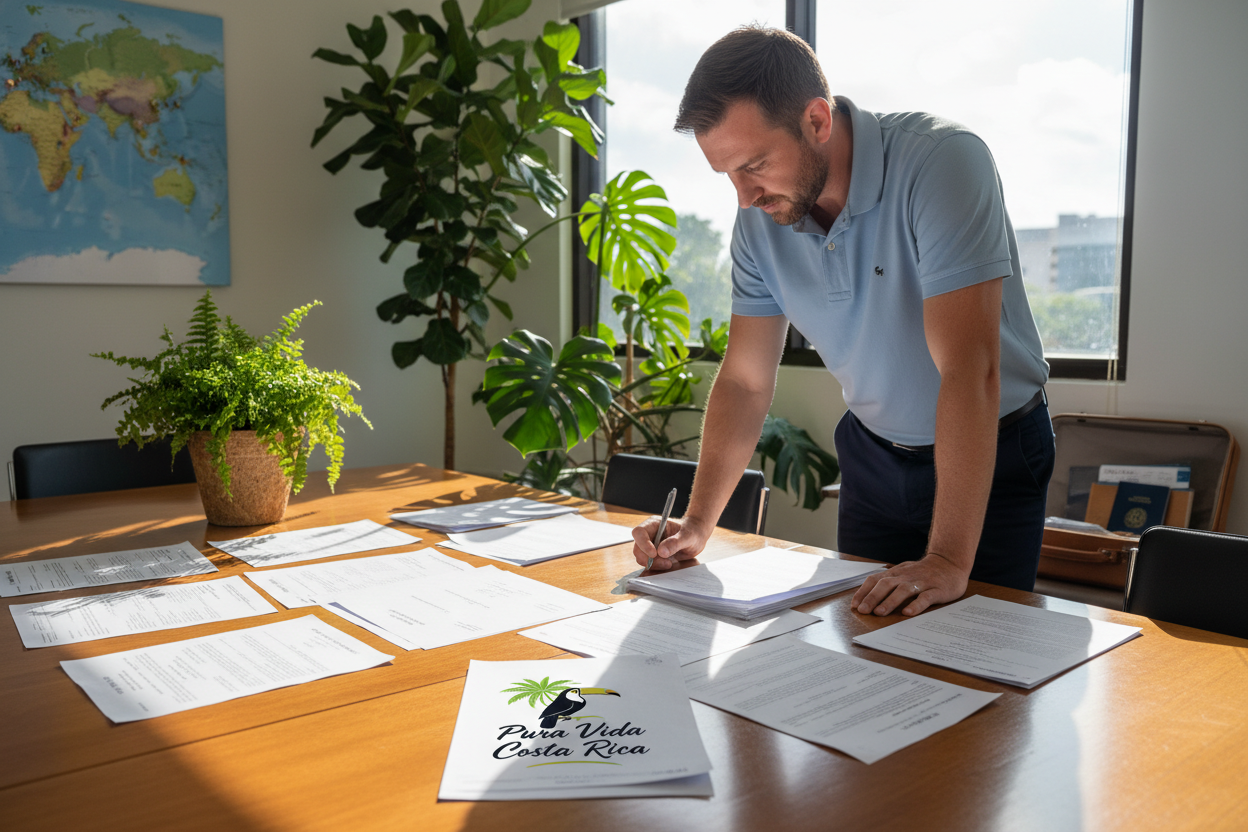
Navigating a new immigration system brings many questions. We at CRIE (crie.cr) serve as your exclusive guide for residency and immigration matters in this beautiful nation. This article provides clear, step-by-step guidance. We offer no pricing, quotes, or guarantees—just realistic information.
The path to legal status here requires meticulous management. It involves substantial documentation and varying government timelines. Understanding this process from the start is crucial for a smooth journey.
Recent changes offer more flexibility. Standard tourist visas now allow a 180-day stay. This is helpful context for many applicants. Furthermore, nearly 70,000 Americans now call this country home, with that community growing about 14% each year.
Realistic timelines are key. Processing can take from 4 to 12 months, depending on your category. Success hinges on starting your document preparation—including apostilles and translations—from your home country well in advance.
We’ll explore all aspects of establishing your life here. This includes addressing common questions about leaving the country during your application. For personalized support, contact CRIE directly.
Understanding Costa Rica Residency Options

The foundation of a successful application lies in understanding the distinct residency pathways available. Costa Rican law offers several formal categories, each designed for different financial situations.
Pensionado (Pensionado) and Rentista (Rentista) Explained
The Pensionado category serves retirees. It requires proof of a permanent monthly pension of at least US$1,000. This income must come from an official source like Social Security or a verified retirement fund.
For those with substantial passive income, the Rentista category is an option. It mandates proof of stable income of US$2,500 per month for two years. Alternatively, a US$60,000 deposit in a local bank can satisfy this requirement.
Investor (Inversionista) Criteria Overview
The Investor pathway requires a minimum capital injection of US$150,000. This investment can be in real estate, a business, or a government-approved project.
A critical rule is that any property purchased must be held in the applicant’s personal name. Using a corporate structure is a common error that leads to rejection.
Each residency category has specific documentation requirements. These include apostilled and translated financial proofs. We’ll detail these steps in a later section.
An Overview of the Costa Rica Immigration Process
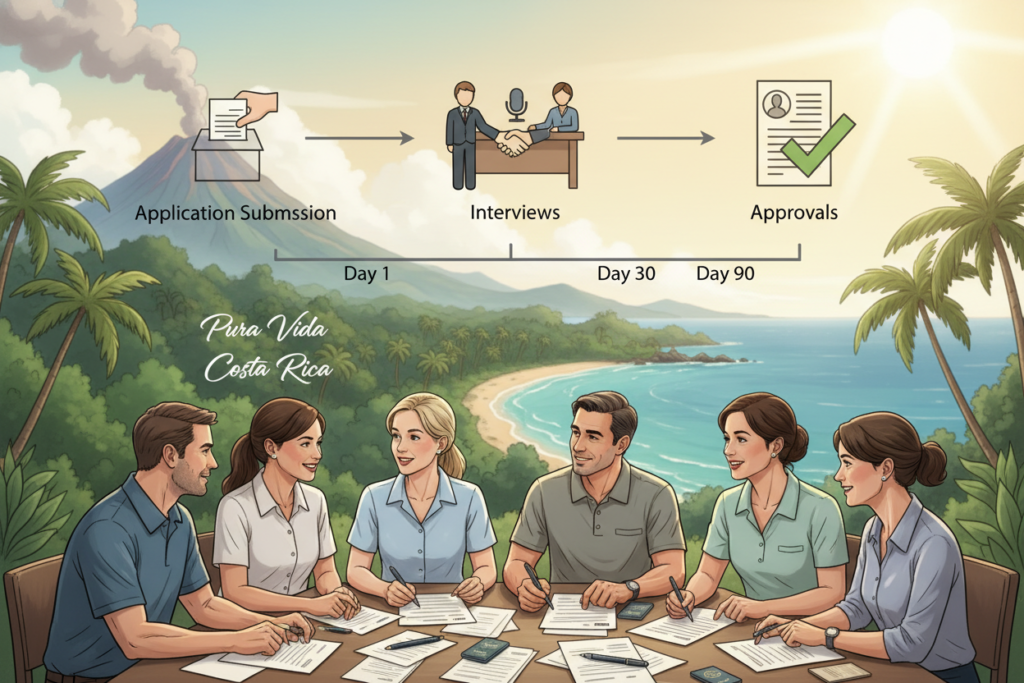
Gaining residency status is a procedural journey that starts long before you set foot in the country. The system is managed by the Dirección General de Migración y Extranjería (DGME). Understanding this official framework is essential for a smooth application.
Step-by-Step Application Guidance
Initial work happens in your home nation. You must gather original documents like birth certificates and police records. Each requires an apostille and official Spanish translation by a certified Costa Rican translator.
Next, schedule an appointment via the DGME website. San José offices often have a 3-4 week backlog. Pay the application fee, approximately $50, at Banco de Costa Rica. Attend your appointment to submit paperwork and provide biometric data.
You will receive an expediente number to track your file. The waiting period for a decision realistically spans 4 to 12 months. Upon provisional approval, enrollment in the CAJA healthcare system is mandatory. Final confirmation comes with your DIMEX identification card.
We guide clients through each phase but cannot control government processing times. For current updates, always verify information directly at migracion.go.cr. For a personalized residency assessment, our team is ready to help.
Who Qualifies for Residency in Costa Rica
Qualification for residency in this Central American nation is not automatic. It requires fulfilling distinct financial or familial conditions under current law. We find applicants often misjudge their own eligibility.
Financial categories have specific thresholds. The Pensionado status needs verifiable pension income of at least US$1,000 monthly. The Rentista path demands proof of US$2,500 monthly for two years or a US$60,000 deposit.
Investors must commit a minimum of US$150,000 into approved assets. Meeting these financial requirements is just the first step in the process.
Family-based options provide alternative pathways. Marriage to a Costa Rican citizen creates immediate qualification, though you must prove the union is genuine. Being the parent of a child born in the country also qualifies, with proof of relationship and financial support.
What does not qualify? Sporadic freelance income, unverified investments, or simply owning property below the threshold will not suffice. Tourist visa overstays do not convert into legal status.
Each category requires specific, authenticated documentation. Beyond the core financial or relationship proof, you must provide clean criminal records and a valid passport. We recommend confirming your specific situation meets all requirements before beginning the lengthy document collection.
Preparing Your Documents Before Arrival
We consistently observe that the difference between a smooth application and a stalled one lies in the pre-arrival document checklist. The entire process must begin in your home country. Essential items include a valid passport with over six months’ validity, a birth certificate, and recent criminal background checks.
Gathering these original records before departure is non-negotiable. Background checks, for instance, expire after just six months. Missing this window is a frequent and costly error.
Apostille and Translation Essentials
Every foreign document requires authentication for international use. If your country is part of the Hague Convention, this means obtaining an apostille stamp. Otherwise, consular authentication is needed. This step must be completed in the nation where the document was issued.
Once authenticated, official translation into Spanish by a certified Costa Rican translator is mandatory. Uncertified translations will not be accepted by immigration authorities.
Tips to Avoid Common Documentation Errors
Common pitfalls include submitting expired background checks and forgetting to apostille marriage certificates. Name inconsistencies across different documents also cause significant delays.
Your proof of income source must meet specific Costa Rican banking standards. We recommend a detailed checklist and a professional review of your paperwork before you leave home. This preparation phase typically requires 2-4 months. We can guide you, but final approval rests with Costa Rican officials.
Timelines, Processing Durations, and Appointment Backlogs
Applicants often experience the most frustration from unrealistic expectations about government processing times. We prioritize transparency to help manage this critical phase. Setting realistic timeframes for each step prevents unnecessary stress.
Expected Processing Times and Delays
Current processing durations vary significantly by category. As of 2024, Pensionado applications typically take 8-12 months. Rentista filings usually process within a 6-10 month period.
Inversionista cases often move faster, averaging 4-8 months. Family-based residency can complete in 3-6 months. These are averages, not guarantees.
Before submission, document preparation in your home country requires 2-4 months. This includes obtaining apostilles and certified translations.
Once ready, you face an initial hurdle. DGME offices in San José currently have appointment backlogs of 3-4 weeks. You must schedule online and wait.
After submission, your file enters a review period. Provisional approval triggers mandatory CAJA healthcare enrollment. Final DIMEX card issuance follows.
We’ve seen perfect documentation approved at the shorter end of these ranges. Minor issues or high-volume periods can extend waits. For the most current times, verify directly at migracion.go.cr.
Can You Travel While Costa Rica Residency Is Pending
A common concern for applicants is maintaining mobility during the lengthy review period. The answer is yes. Upon submitting your file to the DGME, you receive a comprobante, or official receipt.
This document, paired with a valid passport, provides legal status to remain in the country while your case is processed. It replaces the need to adhere to standard tourist visa limits.
The critical procedural rule involves leaving the nation. If you must depart for any reason, an exit permit from immigration authorities is mandatory. Failing to obtain this permit before travel can trigger automatic cancellation of your application.
A separate nuance involves driving privileges. The standard tourist visa grants a 180-day stay. An older regulation states that a foreign driver’s license’s validity is tied to this visa.
Even with a pending residency file, if you drive, you may need to manage this 180-day renewal cycle separately for your license. This is distinct from your immigration status.
Travel is possible but requires meticulous planning. We advise verifying current exit permit procedures directly at migracion.go.cr. For personalized guidance on managing travel during your application, contact our team.
Digital Nomad vs. Permanent Residency: Key Differences
The Digital Nomad visa offers a convenient entry point, yet it operates under entirely different rules than residency. We frequently address a major misconception about this popular option.
Introduced in 2021 and updated in 2023, this temporary visa allows remote workers to live here for one year, renewable for another. It requires proof of foreign-source income—$3,000 monthly for individuals or $4,000 for families.
Why Digital Nomad Does Not Count as Residency
This visa category provides specific benefits. Holders are exempt from local taxes on foreign earnings and the CAJA healthcare mandate. They can also import work equipment duty-free.
However, it is crucial to understand its legal nature. The digital nomad status is a temporary permit, not a form of residency. Time spent under this visa does not accumulate toward the years required for permanent status or citizenship.
For those seeking a long-term future in Costa Rica, this path can actually delay goals. Switching to a formal residency category later resets the clock to zero.
The Rentista category is often the closest fit for remote professionals. It requires demonstrating a lower income of $2,500 per month but grants true resident rights and starts the citizenship timeline. Choosing the right option from the start aligns with long-term objectives.
Essential Residency Thresholds and Financial Requirements
Understanding the exact income and investment minimums prevents costly application denials. These are legal gates set by immigration law, not flexible suggestions.
Pension, Rentista, and Investor Income Guidelines
The Pensionado category requires a permanent monthly pension of at least US$1,000. This must be guaranteed retirement income, not withdrawals from investment funds.
For the Rentista path, you need proof of US$2,500 in stable monthly income for two years. Alternatively, a US$60,000 deposit in a local bank with regular withdrawals satisfies this.
The Inversionista option demands a minimum US$150,000 investment in approved assets. A critical rule: any property purchased must be in your personal name, not a corporation.
Income verification is rigorous. Funds from within Costa Rica need a National Banking System document. Foreign-source income requires verification from a banking institution abroad or a Certified Public Accountant’s certification.
Avoiding Common Application Pitfalls
Many residency applications face unnecessary delays due to a handful of avoidable errors. We have reviewed hundreds of cases and see the same issues repeatedly. These mistakes seem minor but have major consequences in the strict immigration system.
Documentation and Income Verification Mistakes
The most frequent error is submitting an expired criminal background check. Costa Rican authorities require this document to be less than six months old. An outdated report will cause rejection, even with perfect other paperwork.
Name inconsistencies across your documents create significant problems. If your birth certificate, passport, and bank statements show different versions of your name, officials will question your identity. This leads to requests for extra affidavits and months of delay.
Income verification for Pensionado or Rentista status is another critical area. Providing bank statements without clear proof of income source is insufficient. You must demonstrate the funds are stable and will continue for the required period.
Common Errors to Watch Out For
Document authentication errors are costly. Forgetting to apostille a marriage certificate or using an uncertified translation will halt your process. Every foreign document needs proper apostilling and translation by a certified Costa Rican translator.
For Investor applicants, a major pitfall involves property ownership. The investment must be held in your personal name. Using a local corporation, a common practice for real estate, disqualifies the asset for residency requirements.
These are not minor technicalities. Costa Rica’s system operates on strict compliance. Small oversights can restart your entire timeline. We help clients navigate these requirements carefully, but final approval always rests with immigration officers.
Starting from Home: The Importance of Advance Preparation
The most strategic phase of your Costa Rican residency journey unfolds before you ever board a plane. Success hinges on meticulous preparation in your home country. Attempting to coordinate document requirements remotely from Costa Rica creates expensive and time-consuming complications.
Building Your Document Checklist
Your first action should be building a comprehensive document checklist. This list dictates your entire timeline. Essential items include certified birth certificates, marriage records, and recent criminal background checks from every country you’ve lived in.
Each document follows a strict sequence. First, obtain certified copies from government agencies. Next, secure an apostille or consular authentication. Finally, have them officially translated by a certified Costa Rican translator.
Investing this time upfront pays significant returns. It prevents costly trips home and minimizes rejection risks. For specific guidance, especially regarding residency for spouses, our team can provide personalized checklist advice.
Navigating Official Immigration Resources
Finding accurate information about Costa Rican immigration can be challenging in a sea of online noise. We recommend focusing on just two primary resources for reliable guidance and official verification.
Utilizing CRIE.cr and migracion.go.cr Effectively
The official government portal is migracion.go.cr. This site is your source for current regulations, forms, and fee schedules. You will schedule appointments and track your application status here using your expediente number.
Be aware the website is primarily in Spanish. Navigating its bureaucracy terminology can be difficult even with translation tools.
CRIE (crie.cr) provides specialized residency and immigration guidance. We translate not just the language but the entire process. Our role is to explain what official requirements mean in practical terms.
We help you avoid common pitfalls that cause rejections. We deliberately do not link to third-party services or competitor sites. Our commitment is to transparency, directing you to official sources and our own expert guidance.
For specific questions about your situation, contact us directly. Reach CRIE via WhatsApp at +506 8706 3888 or email info@crie.cr.
Real-Life Insights: Expat Experiences and Lessons Learned
With nearly 70,000 Americans now calling this nation home, a wealth of collective experience exists to guide newcomers. We find that learning from this community provides practical wisdom official guides often miss.
A vital lesson emerges quickly. A significant number of people who move here leave within the first year or two. This often happens when the dream of a vacation clashes with the reality of daily life.
Seasoned expats universally recommend a test phase. Visit multiple regions and rent for at least a full year before considering a purchase. Experience both the dry and rainy seasons to understand the true climate.
The cost of living is a common surprise. This country is fairly expensive, with costs for many goods comparable to North America. Location also dictates daily convenience.
Those in the Central Valley enjoy easy access to major services. Expats in beautiful rural areas make regular trips to the capital for specific needs. Understanding these trade-offs is key for a happy life.
For non-retirees, legal work restrictions are a major factor. You cannot be employed by a local company until achieving permanent resident status. Many successful expats rely on remote work, passive income, or their own business.
Practical strategies help. Using the cheap and reliable bus system saves money. Learning basic Spanish is essential for daily tasks. Building a network with other expats provides invaluable local knowledge.
The transition requires patience and realistic expectations. If you want guidance rooted in these real-world insights, our team at CRIE combines process expertise with practical community wisdom.
Final Steps: Getting Ready for Life in Costa Rica
Approval of your residency file unlocks a set of practical steps to integrate into Costa Rican society. Your first obligation is enrolling in the CAJA healthcare system. You will also receive your DIMEX identification card.
This card is essential for daily life. It allows you to open local bank accounts and sign legal contracts. You also gain access to resident pricing for services.
Maintaining your status requires annual renewal of the DIMEX card, which costs about $123. Consistent CAJA payments and at least one visit per year are mandatory. Budgeting for these ongoing costs is crucial for long-term planning.
Work permissions depend on your category. Pensionado and Rentista holders cannot be local employees but can own a business. Importantly, Costa Rica typically only taxes income earned within the country.
After three years of temporary residency, you can apply for permanent status. Citizenship becomes an option after seven years, requiring a Spanish test. This path offers full integration.
As a legal resident, you enjoy property ownership rights equal to citizens. This foundation supports building genuine community connections. For personalized guidance on your next steps, contact CRIE via WhatsApp at +506 8706 3888 or email info@crie.cr. Always verify final details at migracion.go.cr.
FAQ
Can I leave Costa Rica while my residency application is being processed?
Yes, you can travel, but you must maintain valid tourist status. This means exiting and re-entering the country every 90 days (or less) to get a new passport stamp. Your pending application does not grant you special immigration status or the right to stay continuously. We always advise clients to keep a detailed travel log.
What happens to my application if I leave the country during the process?
Leaving does not cancel your file with Immigration. However, if you receive an appointment notice while abroad, you must return to attend it. The process continues independently of your physical location, but you remain responsible for meeting all requirements and deadlines set by the Dirección General de Migración y Extranjería.
Once approved, how do I re-enter Costa Rica as a resident?
After final approval and once you have your physical DIMEX card (cédula de residencia), you enter as a legal resident. Until that card is in hand, you enter as a tourist. Upon your first entry with the DIMEX, you will complete a brief process at immigration to register your definitive re-entry as a resident.
Does the Digital Nomad Visa allow me to stop the tourist visa cycle?
Yes, but with a major caveat. The Digital Nomad Visa is a separate, long-stay permit—it is not a pathway to permanent residency. It allows you to stay for one year (renewable for one more) without border runs. However, time spent on this visa does not count toward the years required for permanent residency applications later.
How long does the residency process typically take from start to finish?
Current processing times for standard categories like Pensionado or Rentista often range from 6 to 12 months, sometimes longer. This timeline includes document preparation, submission, background checks, and appointment backlogs. The Investor category can have additional steps. Delays are common, so planning for a lengthy process is a practical necessity.
What are the most common reasons for a residency application to be rejected?
The most frequent pitfalls involve documentation. This includes expired apostilles, incorrect translations, insufficient proof of sustained income for Rentista or Pensionado, or failing to meet the minimum investment amount for the Investor category. Incomplete forms or missed appointments will also cause a denial.
Why is it crucial to start the document preparation from my home country?
A> Because obtaining apostilles and official translations for documents like birth certificates and marriage licenses is almost always faster, easier, and cheaper in your country of origin. Trying to arrange this from abroad via couriers adds significant cost, complexity, and delay to an already lengthy process. We guide clients to build their complete checklist before arrival.
Article by Glenn Tellier (Founder of CRIE and Grupo Gap)
Don't wait, contact us right now!
Call or WhatsApp Costa Rica +506 8373 2085 or +506 8706 3888
Call USA/Canada +1 305-906-6784