
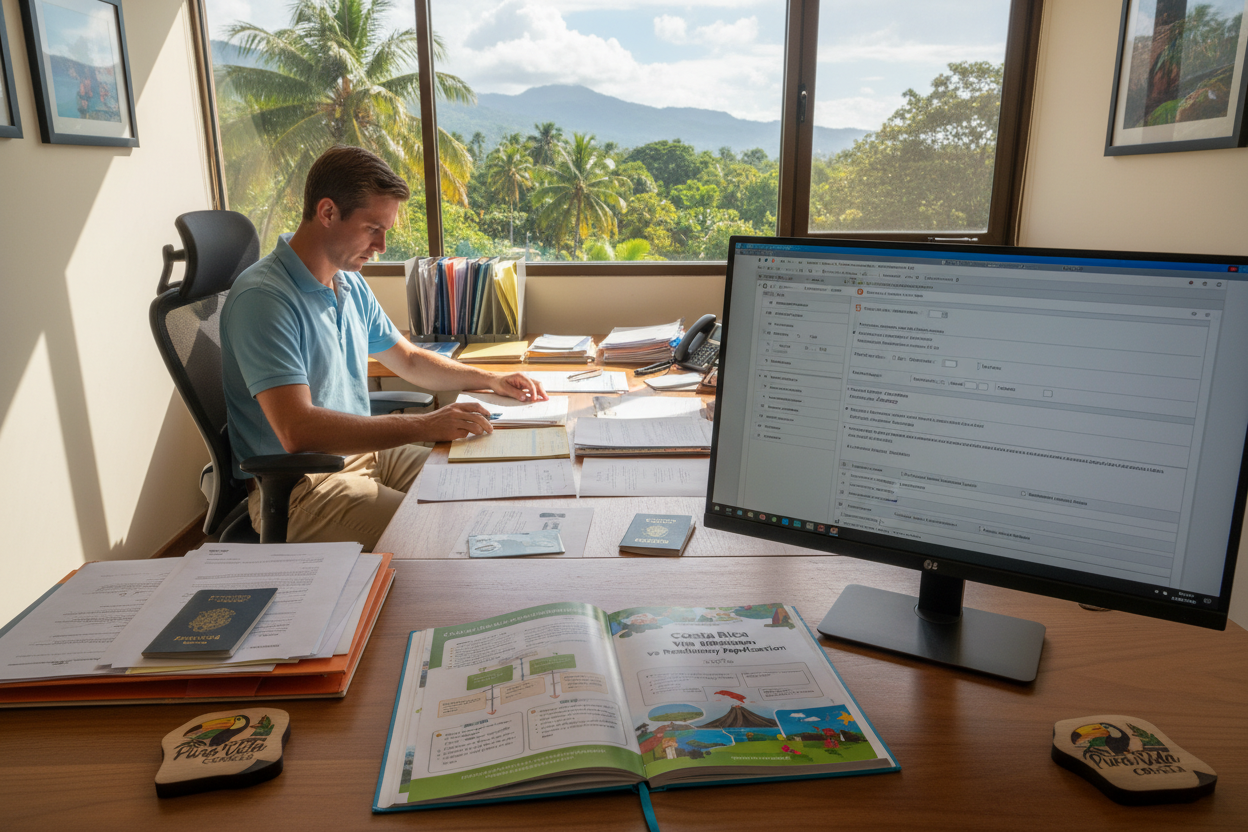
Dreaming of life in a beautiful, tropical nation? Many people are drawn to its stunning landscapes and welcoming culture. Understanding your options for staying here is the crucial first step.
There’s a fundamental choice to make. You can pursue a temporary visa extension for a short-term stay. Or, you can begin a formal residency application for long-term legal status. This guide will help you understand which path fits your goals.
The country offers several permanent residency categories. These include options for retirees, investors, and other specific situations. Each category has its own financial requirements and documentation needs.
We provide clear, step-by-step guidance. Our approach is realistic—we focus on proper preparation and setting accurate expectations. We won’t make promises or guarantees about outcomes.
Success starts long before you arrive. Key steps involve gathering documents, obtaining apostilles, and securing certified translations. A great way to begin is with a professional residency assessment to clarify your specific pathway.
Understanding Costa Rica Residency Options
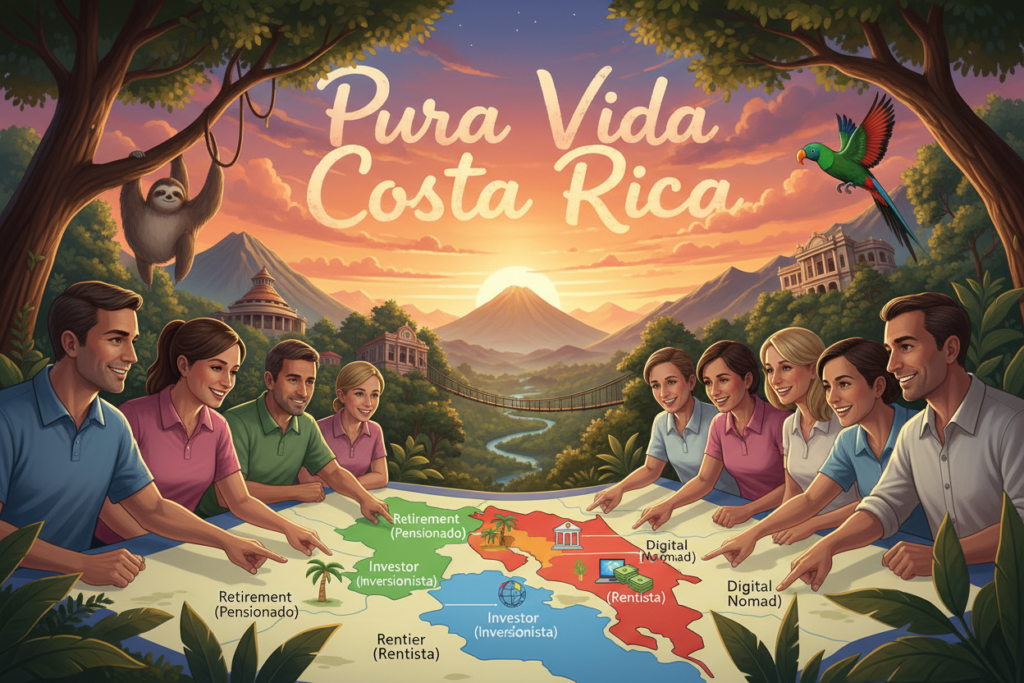
The difference between visiting and putting down roots lies in securing the appropriate immigration status. We guide you through the formal pathways available for long-term establishment.
An Overview of Visa and Residency Pathways
Short-term tourist stays are distinct from formal residency categories. For long-term legal status, the main routes are Pensionado (retirement), Rentista (income-based), and Inversionista (investor).
It’s crucial to understand a key point. The Digital Nomad visa is a temporary permit. It is not a residency category and does not count toward permanent residency or citizenship.
Benefits of Establishing Residency in Costa Rica
Holding residency provides a legal right to remain. It grants access to the Costa Rican healthcare system (CCSS) and allows you to open local bank accounts.
There are also potential tax advantages. Temporary residency typically leads to permanent residency after three years. Permanent status can eventually lead to citizenship.
This formal legal status requires ongoing compliance with local regulations. It offers stability that temporary permits cannot match.
Costa Rica Visa Extension vs Residency Application: Key Differences
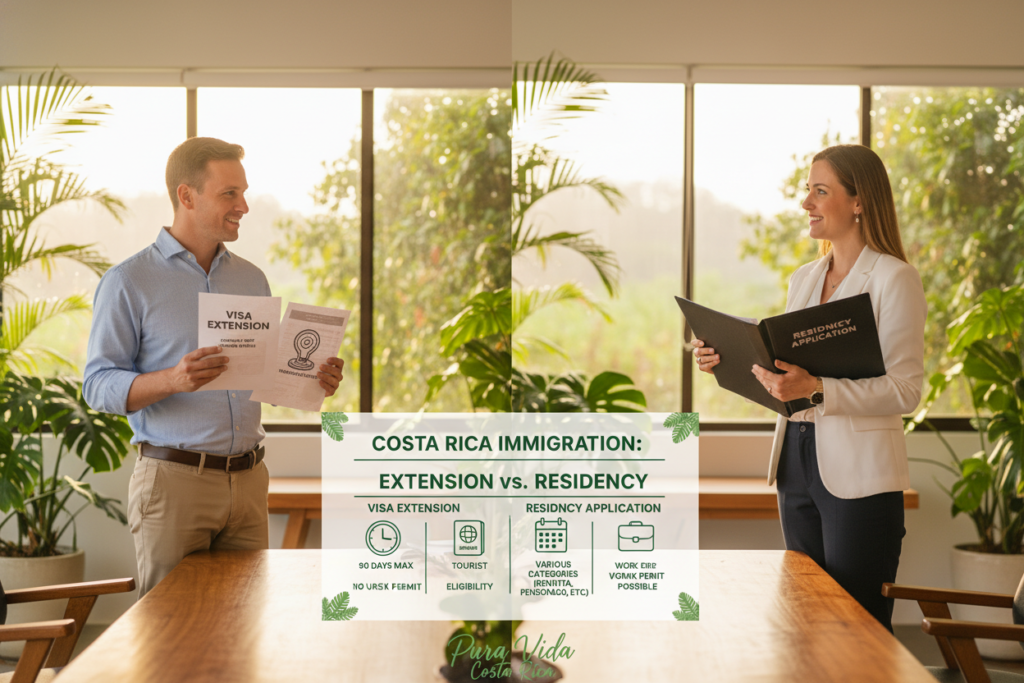
When planning an extended stay, it’s vital to grasp the fundamental contrast between temporary permits and permanent legal status. A tourist visa allows a 90-day visit and can often be extended. This extension is merely an administrative measure to prolong your tourist status.
It requires proof of onward travel and sufficient funds. However, it never establishes formal residency. It also does not count toward eligibility for citizenship.
In contrast, a residency application is a comprehensive legal process. It establishes your formal legal status in the country. This process requires extensive documentation, including apostilled papers and background checks.
Approval from immigration authorities grants specific rights and responsibilities. The average processing time is six to twelve months. This pathway is for those seeking long-term establishment.
Relying on repeated extensions is risky. Authorities may deny them eventually. For permanent plans, the formal residency route is essential.
Who Qualifies for Costa Rica Residency
Determining your eligibility for long-term legal status begins with understanding the specific financial pathways. Qualification depends entirely on which category you apply under.
Eligibility Criteria and Income Thresholds
For Pensionado status, you need a guaranteed monthly pension of at least US$1,000. This must come from a verifiable source like Social Security or a private company plan.
The Rentista category requires stable, verifiable income of US$2,500 per month. You must prove this income will continue for a minimum of two years.
Inversionista applicants must invest a minimum of US$150,000. A critical rule is that any real estate must be titled in your personal name, not a corporation.
Special Considerations for Different Applicant Profiles
Retirees, investors, and those with annuities each have unique documentation needs. Family members can be included on an application with additional proof like apostilled marriage certificates.
Meeting the financial threshold is just the first step. You must also demonstrate this income is permanent and stable through official paperwork.
For more details on these requirements, explore our page on common questions. The Costa Rican immigration authorities scrutinize all documentation carefully.
Step-by-Step Guidance for Your Residency Application
A successful residency journey hinges on meticulous preparation before you even pack your bags. We provide a clear roadmap to navigate the formal process. The most critical phase happens in your home country.
Initial Steps: Preparing Your Documents from Home
First, identify your correct category—Pensionado, Rentista, or Inversionista. This determines your specific financial proof needs.
Next, gather all official papers. You need birth certificates, police records, and income verification. These must be recent and issued by proper authorities.
Then, get each document apostilled for international use. Afterward, have them translated by a certified Costa Rican translator. Complete this before your trip to avoid delays.
Setting a Realistic Timeline for Application Processing
Submission is step four. You can file at a DGME office in Costa Rica or through a consulate abroad. The immigration authorities then begin their review.
The entire application process typically takes six to twelve months. We set this expectation based on official data from migracion.go.cr. There are no guarantees for faster approval.
During this waiting period, you may enter and exit as a tourist. Remember, you do not have formal residency rights until you receive final approval.
Exploring Residency Categories: Pensionado (Pensionado), Rentista (Rentista), and Inversionista
To secure long-term legal status, you must choose from three distinct pathways. Each has its own financial criteria.
Pensionado (Pensionado): Requirements for Retirees
This category is designed for retirees. It requires a guaranteed pension of at least US$1,000 per month.
Qualifying sources include U.S. Social Security and government programs. Military retirement, union plans, and private company pensions also count. Even disability retirement qualifies if it meets the monthly threshold.
The key is that this income must be permanent. It needs to be guaranteed for life. Official letters from the pension provider confirm this.
Rentista (Rentista) and Inversionista: What You Need to Know
The Rentista category requires a higher, verifiable income. You must show US$2,500 per month, guaranteed for at least two years.
Proof comes from official bank statements or certificates from a certified accountant. This offers more flexibility than a pension-based route.
The Inversionista pathway is investment-based. It demands a minimum of US$150,000 in qualifying Costa Rican projects. These can be existing businesses, new ventures, tourism, or real estate.
A crucial rule applies here. If your investment involves property or a business, it must be titled in your personal name. Corporate ownership does not qualify for this residency.
Successful applicants under any category initially receive temporary residency. This status is granted for two-year periods and is renewable.
Meeting Income and Investment Requirements
The financial benchmarks for residency are clear, but demonstrating you meet them requires meticulous documentation. Simply having the required income or investment funds is not enough.
You must provide comprehensive proof that your finances are stable and will continue. Authorities need to verify this through official papers.
For Pensionado status, you need a lifelong pension of at least US$1,000 per month. Acceptable proof is an official letter from your provider confirming the permanent amount.
The Rentista category requires a higher income of at least US$2,500 per month for two years. Proof comes from bank statements or a certified accountant’s verification.
If your income originates within Costa Rica, documentation must come from the National Banking System. For foreign income, you need verification from a banking institution in your country of origin.
Inversionista applicants must prove a US$150,000 investment in a qualifying project. This requires property records or business documents showing the funds are invested.
Bank statements should show several months of consistent activity. This demonstrates a stable pattern, not a one-time transfer.
Meeting these requirements positions your application favorably. Final approval decisions, however, rest solely with immigration authorities.
Preparing Essential Documents: Apostilles, Translations, and More
Proper document preparation is the single most critical phase of the entire immigration process. A complete and correctly certified portfolio prevents delays and rejections.
Checklist of Required Documents
Start with the core application papers. You need a completed form, a formal request letter, two passport photos, and proof of the $250 deposit payment.
Include certified copies of your passport’s ID page and latest entry stamp. Civil documents are next. These are apostilled birth certificates for all applicants.
If applicable, add an apostilled marriage certificate. A police record certificate from your home country is also mandatory. Remember, this background check is only valid for six months.
Finally, gather your financial proof. This is an official letter from a pension provider, bank statements, or investment documents. Each must meet the specific category thresholds.
Ensuring Proper Apostilles and Certified Translations
An apostille is a special certificate that validates a document for international use. It is required for birth certificates, marriage certificates, and police checks.
All foreign-language documents need an official translation by a certified Costa Rican translator. You must submit both the apostilled original and the certified translation.
Coordinate timing carefully. Begin this process while still in your home country. Obtaining apostilles and originals is far simpler before you relocate.
Navigating the Application Process Timelines
The journey from submission to final approval follows a structured, multi-stage timeline. We set realistic expectations from the outset.
Formal applications typically take six to twelve months for a complete review. There are no guaranteed timeframes.
What to Expect in Processing Timeframes
The process has distinct phases. Initial document preparation can take several months.
After submission, your file undergoes verification and substantive evaluation. This detailed review by immigration authorities cannot be expedited.
You may enter and exit as a tourist during this waiting period. Remember, police background checks are only valid for six months from issuance.
Always check migracion.go.cr for the most current processing information and official updates.
Avoiding Common Mistakes in Your Application
Many residency hopefuls face setbacks not from ineligibility, but from preventable errors. We see the same oversights delay applications every year. Careful planning can help you steer clear of these pitfalls.
Tips to Prevent Document Errors and Oversights
Always check the validity of your police background check. It must be less than six months old when submitted. An expired record will cause a significant delay.
Get your documents apostilled in your home country before you leave. Trying to do this remotely from Costa Rica is difficult and costly. This is a surprisingly common mistake.
Use only certified Costa Rican translators for your paperwork. Translations from non-certified sources or done yourself are not accepted by immigration authorities. This is a strict requirement.
For investors, a critical error is holding property in a corporate name. The investment must be titled in your personal name to qualify. Corporate ownership does not meet the requirements.
Provide strong proof of income with several months of bank statements. Short statements or insufficient verification can lead to questions. The authorities need to see stable, ongoing funds.
Complete every part of the application form. Missing photos, passport copies, or the deposit payment proof can result in rejection. Double-check your submission packet.
Plan for the next step after approval. You must register with the CCSS healthcare system to get your final residency card. Some applicants overlook this requirement.
Avoiding these mistakes improves your application’s chances and prevents delays. However, it does not guarantee approval. The immigration authorities evaluate each case on its own merits.
Start from Home: Preparing Your Paperwork Early
Organizing your paperwork from your home country is the most strategic move you can make. We cannot stress this enough. A successful immigration process begins long before you relocate.
Guidance on Organizing and Verifying Your Documentation
Start gathering your documents four to six months before your move. This timeline accounts for requesting originals and obtaining apostilles. Police checks, birth certificates, and marriage certificates all need this certification.
Create a detailed checklist for your specific residency category. Track each paper from request to apostille stage. Verify every detail upon receipt.
Check that names and dates are consistent across all documents. Correcting errors before apostille is far simpler. Make multiple certified copies of everything before you leave.
Having a complete, organized portfolio lets you focus on settling in. You avoid frantic searches for missing papers in a new country. This upfront effort dramatically smooths your entire application journey.
Leveraging Official Resources: Migracion.go.cr and CRIE (crie.cr)
Two key resources can significantly streamline your path to legal status. Knowing how to use them effectively is a major advantage.
How to Use Government Resources Effectively
The official government website, migracion.go.cr, is your source of truth. Managed by the Dirección General de Migración y Extranjería (DGME), it provides current forms, requirements, and updates.
Look for sections labeled “trámites” (procedures) and “residencia.” This is where you download official paperwork and check processing timelines. Always verify details here first.
However, the site is primarily in Spanish. It offers no personalized guidance for your unique situation. It’s a reference tool, not a consultation service.
This is where a specialized resource like CRIE (crie.cr) becomes invaluable. They focus exclusively on Costa Rican immigration matters.
While the government site tells you *what* is required, CRIE helps you understand *how* to meet those requirements. They offer step-by-step guidance and help organize your documents.
For expert assistance tailored to your case, contact CRIE via WhatsApp at +506 8706 3888 or email info@crie.cr. Using both resources together provides the most comprehensive strategy.
Ensuring Legal and Proper Document Certification
A standardized certificate called an apostille bridges the legal gap between your home country and your new one. This nation is a signatory to the Hague Apostille Convention. That means it recognizes apostilled papers from other member countries as legally valid.
An apostille is a special certificate issued by a designated government authority. It verifies the authenticity of a document’s signature, seal, and issuing office. You need this for birth certificates, marriage licenses, and police background checks.
The process has a clear order. First, obtain the original document from the vital records office or police department. Then, submit it to your country’s competent authority, like a Secretary of State, for the apostille.
Even with an apostille, documents not in Spanish require an official translation. Costa Rican immigration authorities mandate this be done by a certified translator authorized in the country. Translations done elsewhere or by yourself are not accepted.
This careful certification protects the system’s integrity. It ensures document authenticity and prevents fraud. We guide you through each step to build a trustworthy application portfolio.
Tips for a Smooth Transition from Residency to Citizenship
The path from legal resident to full citizen is a structured progression with defined timeframes and requirements. Citizenship is the final milestone, not the first step. You must build a foundation of established legal status over several years.
Understanding the Residency-to-Citizenship Process
Your journey begins with temporary residency. This status is typically granted in two-year increments and requires renewal.
After maintaining this status for three years, you become eligible to apply for permanent residency. This offers greater stability and fewer renewal obligations.
Permanent residency grants the right to remain indefinitely. It provides full access to public services and a clear pathway toward citizenship.
For citizenship, the general requirement is seven years of continuous residency in Costa Rica. Special circumstances, like marriage to a Costa Rican national, can reduce this time.
“Continuous residency” means maintaining your legal status without extended absences. Each stage demands a separate application and meeting specific criteria.
We set realistic expectations. This timeline spans many years and requires ongoing compliance. It is a significant long-term commitment.
Keeping Up with Updates and Regulatory Changes in Costa Rica
A crucial but often overlooked aspect of immigration planning is the dynamic nature of government regulations. Policies, documentation needs, and administrative procedures can change over time.
You must verify current requirements when you are ready to apply. Do not rely solely on information gathered months earlier.
The official website, migracion.go.cr, is your definitive source. It provides the most current forms, income thresholds, and processing timelines.
Changes often occur in financial requirements and document validity periods. Fee amounts and acceptable verification forms may also be updated.
We advise checking this government portal periodically if you plan to apply in the future. Specialized services monitor these developments continuously.
They can guide you on how updates affect your specific situation. Always use current, official information for your application strategy.
Final Steps for a Successful Residency Journey
Achieving long-term stability here means completing the process and maintaining your status correctly. We’ve outlined a systematic journey requiring careful preparation, proper documents, and realistic timelines.
Remember the core distinction. Temporary extensions are for visitors. Formal applications establish permanent legal status for your future home.
After approval, you must register with the CCSS healthcare system before receiving your final card. Temporary status has work restrictions, but you can own a business. Full employment rights come with permanent status after three years.
You must visit at least once per year to maintain your residency. Success hinges on proper planning and complete documentation.
For personalized guidance through every stage, contact our experts. Reach us via WhatsApp at +506 8706 3888 or email info@crie.cr. We offer no guarantees, but we provide the expert support to help you navigate this important path.
FAQ
What is the main difference between extending a tourist stay and applying for legal residency?
The key difference is permanence and rights. Extending a tourist visa is a short-term solution that simply grants more time as a visitor, typically up to 180 days total. A residency application is a formal process to obtain legal status, which comes with long-term benefits like opening a local bank account, importing a vehicle duty-free, and accessing the national healthcare system.
Can I apply for residency while I am in the country on a tourist visa?
Yes, you can initiate the process while present as a tourist. In fact, we recommend starting the paperwork from your home country and then entering to submit your application. Your passport must be valid, and you’ll need to maintain your legal tourist status throughout the initial filing period with Immigration.
How do I prove the required income for a Pensionado or Rentista application?
A> For Pensionado, you need official documentation proving a lifetime pension of at least
FAQ
What is the main difference between extending a tourist stay and applying for legal residency?
The key difference is permanence and rights. Extending a tourist visa is a short-term solution that simply grants more time as a visitor, typically up to 180 days total. A residency application is a formal process to obtain legal status, which comes with long-term benefits like opening a local bank account, importing a vehicle duty-free, and accessing the national healthcare system.
Can I apply for residency while I am in the country on a tourist visa?
Yes, you can initiate the process while present as a tourist. In fact, we recommend starting the paperwork from your home country and then entering to submit your application. Your passport must be valid, and you’ll need to maintain your legal tourist status throughout the initial filing period with Immigration.
How do I prove the required income for a Pensionado or Rentista application?
A> For Pensionado, you need official documentation proving a lifetime pension of at least $1,000 per month. For Rentista, you must show guaranteed income of $2,500 per month for two years, often proven through a bank letter and deposit agreement. These documents require an apostille and certified Spanish translation to be accepted by authorities.
What is the most common mistake people make in their application file?
The most frequent and costly error is submitting documents without the proper apostille or a certified translation. Every foreign-issued document, like a birth certificate or proof of funds, must have an apostille from the issuing country and be translated by an official translator recognized here. Missing this step causes immediate rejection and delays.
How long does it typically take to get temporary residency approved?
You should plan for a lengthy process. After submitting a complete application to the Department of Immigration, the current wait time for approval can range from 6 to 12 months. It’s crucial to set realistic expectations and ensure your personal documents remain valid throughout this entire period.
Once I have temporary residency, what are the steps toward permanent status and citizenship?
After maintaining temporary residency for three years, you can apply for permanent status. Once you are a permanent resident, you can apply for citizenship after another five years of physical presence in the country. This path requires clean criminal records and demonstrating integration, including a Spanish language and civics test.
,000 per month. For Rentista, you must show guaranteed income of ,500 per month for two years, often proven through a bank letter and deposit agreement. These documents require an apostille and certified Spanish translation to be accepted by authorities.
What is the most common mistake people make in their application file?
The most frequent and costly error is submitting documents without the proper apostille or a certified translation. Every foreign-issued document, like a birth certificate or proof of funds, must have an apostille from the issuing country and be translated by an official translator recognized here. Missing this step causes immediate rejection and delays.
How long does it typically take to get temporary residency approved?
You should plan for a lengthy process. After submitting a complete application to the Department of Immigration, the current wait time for approval can range from 6 to 12 months. It’s crucial to set realistic expectations and ensure your personal documents remain valid throughout this entire period.
Once I have temporary residency, what are the steps toward permanent status and citizenship?
After maintaining temporary residency for three years, you can apply for permanent status. Once you are a permanent resident, you can apply for citizenship after another five years of physical presence in the country. This path requires clean criminal records and demonstrating integration, including a Spanish language and civics test.
Article by Glenn Tellier (Founder of CRIE and Grupo Gap)
Don't wait, contact us right now!
Call or WhatsApp Costa Rica +506 8373 2085 or +506 8706 3888
Call USA/Canada +1 305-906-6784