
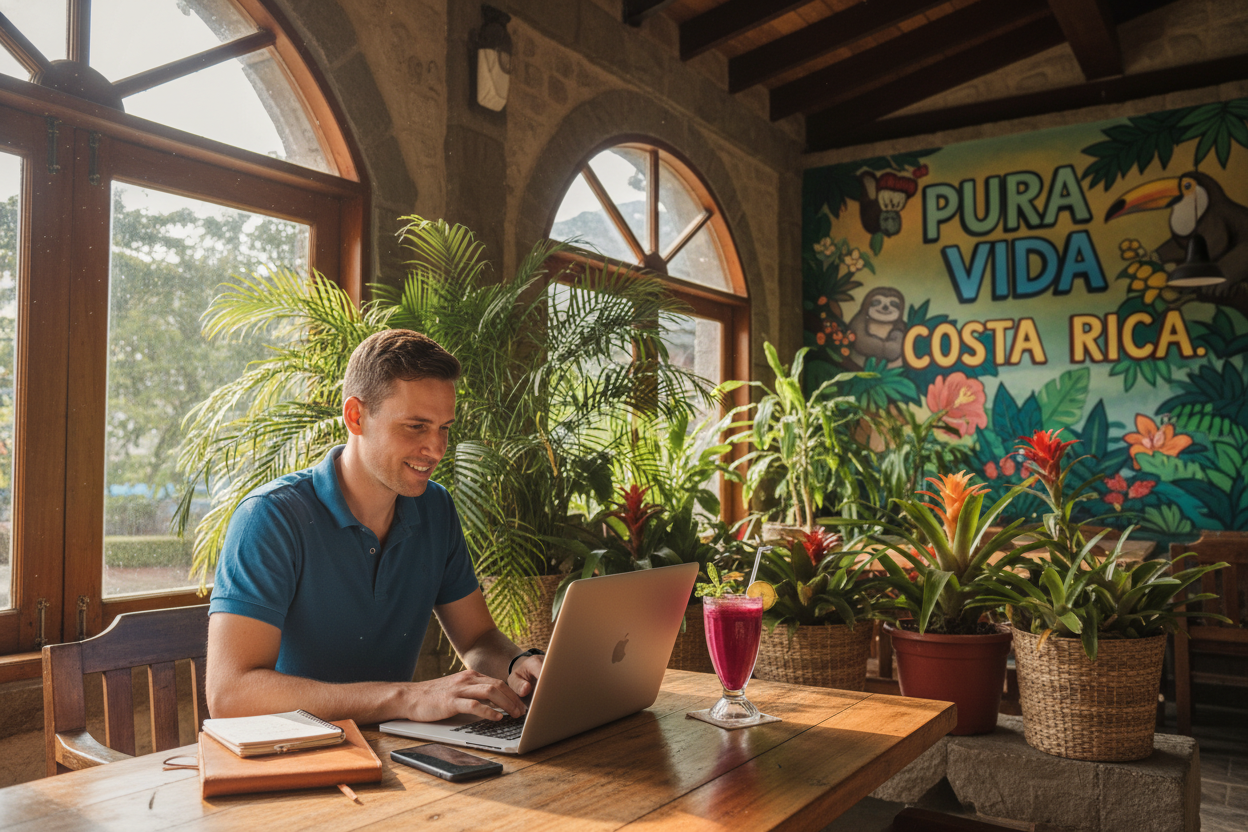
Many remote professionals dream of putting down roots in this beautiful country. It’s a common question we hear. The official Digital Nomad Visa, launched in 2022, allows a stay of up to two years.
This visa is a temporary stay permit. It does not count toward permanent residency or citizenship. Time spent under this status does not provide a direct path to becoming a legal resident.
We want to be clear from the start. This guide will explain the actual pathways available. Options like Pensionado, Rentista, and Inversionista have specific financial requirements.
Our role is to provide transparent, step-by-step information. We focus on who qualifies and which documents to prepare before you arrive. We specialize exclusively in Costa Rica residency and immigration.
We’ll reference official resources and outline common mistakes. This ensures you have a realistic view of the process from the beginning.
Understanding Costa Rica Residency Options

Navigating Costa Rica’s immigration system requires a clear understanding of its structured residency pathways. The process is governed by specific legal frameworks, not temporary visas.
The Role of CRIE in Costa Rica Immigration
We focus exclusively on residency and immigration matters. Our services provide expert guidance through the country’s formal framework. We help you avoid confusing travel permits with actual long-term status.
Our team works within Costa Rican law to identify the right category for your situation. We prepare documentation that meets all official standards from the start.
Temporary vs. Permanent Residency Explained
Temporary residency is the first formal stage. It is typically granted for two years with renewal options. Categories like Pensionado, Rentista, and Inversionista have distinct financial requirements.
Permanent residency becomes available after maintaining temporary status for three consecutive years. It offers greater stability and fewer renewal obligations. This is the foundation for potential citizenship.
For personalized guidance on your pathway, contact us via WhatsApp +506 8706 3888 or at info@crie.cr.
Digital Nomad Versus Residency: Key Distinctions
A clear line exists between living in Costa Rica as a digital nomad and establishing formal residency. The rules governing each are distinct. This distinction has major implications for your long-term plans.
Why Digital Nomad Status Doesn’t Lead to Residency
The digital nomad visa is a temporary stay permit. It is not a residency category. Time spent under this visa does not count toward permanent residency requirements.
You could live here for two years on a nomad visa. If you then apply for residency, your clock starts at zero. The visa offers no direct pathway to citizenship either.
For remote workers wanting to stay, the Rentista category is often the closest fit. It requires proving stable foreign income. This aligns well with the digital nomad lifestyle.
We highlight this not to discourage but to inform. Knowing the limits allows for better strategic planning from the start.
Step-by-Step Guidance for Transitioning to Residency
A successful residency application is built on meticulous preparation, starting long before you arrive in the country. The process follows a clear, official framework.
Who Qualifies for Residency in Costa Rica
Qualification hinges on meeting the criteria for one of three main categories. These are Pensionado (Pensionado) for retirees, Rentista (Rentista) for stable income, or Inversionista (Inversionista) for investors.
Each has distinct financial requirements. Determining your fit is the essential first step in the immigration process.
Starting from Home: How to Prepare Your Documents
Core documents include a valid passport, birth certificates, and police clearance. All foreign-issued papers need an apostille for international use.
Any document not in Spanish requires official translation. We strongly advise completing this authentication from your home country.
This foundational work dramatically speeds up your residency timeline after arrival. It prevents stressful delays during settlement.
Essential Requirements for Costa Rica Residency
Establishing legal residency in Costa Rica hinges on meeting specific financial and documentary requirements. The authorities verify your stability and intent to contribute. We break down the core criteria you must satisfy.
Income and Financial Thresholds
The Pensionado category requires proof of a guaranteed lifetime pension of at least $1,000 per month. For the Rentista pathway, you must show stable foreign income of $2,500 monthly for two years. Alternatively, a $60,000 deposit in a local bank qualifies.
The Inversionista option demands a minimum investment of $150,000. This capital can go into real estate, a business, or approved ventures. A critical rule: any property must be held in your personal name, not a corporate entity.
Additional Supporting Documents Needed
Beyond financial proof, you need several key documents. These include marriage and birth certificates for family members. Official translations and apostilles are mandatory for all foreign-issued papers.
Enrollment in the national healthcare system (Caja/CCSS) is required for all residents. Monthly contributions are based on your declared income level. Providing clear, authenticated documentation prevents delays in the approval process.
Navigating the Application Process
A key decision in the immigration process is selecting your method of application submission. Costa Rica’s system offers flexibility through both digital and physical channels.
Online Versus In-Person Submission Options
The primary online platform is TramiteYa. This official portal lets you create an account, upload documents, and track your status. Starting this procedure from abroad is often recommended.
In-person submissions require a visit to the Dirección General de Migración y Extranjería. Direct interaction with officials can be beneficial for complex situations.
Regardless of your chosen method, physical presence in the country is mandatory for final steps. This includes biometric processing and receiving your residency card.
Fees vary by category. The digital nomad visa has a $100 application fee plus a $90 registration charge. Formal residency applications range from $100 to $250 per person in government fees.
We always advise checking migracion.go.cr for the most current procedural details. Incomplete applications are the most common cause of delays, so meticulous document preparation is essential.
Key Timelines in the Residency Process
Official deadlines and processing periods form the backbone of any successful immigration plan. We must be realistic—government procedures take time and rarely move as fast as applicants hope.
Understanding Processing Times and Deadlines
For the digital nomad visa, authorities have 15 calendar days for a preliminary review. If your application is incomplete, you receive notice within 5 days. You then have 8 working days to submit missing information.
Once approved, you have up to 90 days to enter Costa Rica. Formal residency applications for categories like Pensionado take longer. Processing can span several weeks to months.
Temporary residency is granted for two years initially. Renewal is required to maintain status. The pathway to permanent residency requires three consecutive years of temporary status.
We cannot guarantee specific processing times. They vary based on workload and individual cases. Proper document preparation is the best way to avoid unnecessary delays in your Costa Rica residency process.
Common Pitfalls and Mistakes to Avoid
A significant number of residency applications face setbacks not from ineligibility, but from procedural oversights. We see these errors repeatedly, and they add months of unnecessary delay. Awareness is your first defense against a frustrating process.
Incomplete documentation is the most frequent hurdle. Missing a single apostille or certified translation can halt your entire Costa Rica residency case. Authorities require these authentications, and obtaining them from abroad is far simpler.
Choosing the wrong category is another critical error. Applicants sometimes select a pathway that seems easier but doesn’t match their true financial profile. For Inversionista applicants, a specific rule exists: the investment must be held in your personal name, not a corporate entity.
A widespread misconception is assuming time on a digital nomad visa counts toward residency. It does not. Furthermore, failing to maintain the financial requirements during your temporary status can jeopardize renewal and your path to permanent residency.
The Role of Apostilles and Translations in Your Application
International document validation through apostilles and certified translations is a non-negotiable requirement. Costa Rican immigration authorities will reject any paperwork that lacks proper authentication. This step is foundational for a successful residency application.
Ensuring Document Authenticity
An apostille is a certificate issued by a designated authority in your home country. For U.S. documents, this is typically the Secretary of State. Every official paper from abroad needs this stamp.
This includes birth certificates, marriage licenses, and police records. The apostille must be obtained before you leave your home country. You cannot complete this authentication after arriving in Costa Rica.
Translation requirements are equally strict. Any document not in Spanish requires an official translation. Only translators certified by Costa Rican courts are acceptable.
Professional translation costs average $25 to $50 per page. In some cases, the translated version itself needs notarization. This is common for critical financial proof and personal records.
Properly prepared documents show officials you understand the process. This attention to detail significantly smooths your immigration pathway in Costa Rica.
Residency Categories: Pensionado (Pensionado), Rentista (Rentista), and Inversionista (Inversionista)
Costa Rica’s formal residency system is built around three primary categories, each with distinct financial thresholds. The Pensionado, Rentista, and Inversionista pathways serve retirees, those with stable income, and investors respectively.
Meeting the Specific Income Requirements
The Pensionado category requires proof of a lifelong pension of at least US$1,000 per month. This income must be permanent and verifiable through official letters.
The Rentista pathway demands evidence of stable foreign income. Applicants must show US$2,500 monthly for two consecutive years. Alternatively, a US$60,000 deposit in a Costa Rican bank satisfies this requirement.
Property and Investment Conditions Explained
For the Inversionista category, a minimum investment of US$150,000 is mandatory. This capital can go into real estate, a business, or other approved ventures.
A critical rule: any property investment must be held in the applicant’s personal name. Corporate ownership structures are not permitted for this residency category. All financial conditions must be maintained throughout your temporary status.
Exploring Alternative Residency Options for Digital Nomads
Moving beyond the digital nomad lifestyle requires a strategic shift toward formal immigration pathways. For remote professionals who decide to stay, several established routes lead to actual residency status.
Transitioning to More Permanent Residency Pathways
The Rentista category is typically the closest match for digital nomads. It’s designed around stable foreign-sourced income, which aligns with the remote work profile of many nomads.
Many established remote workers already meet the $2,500 monthly income requirement through freelancing or online business. Transitioning requires starting a formal application with apostilled documents and income verification.
A critical point: time spent on a digital nomad visa does not count toward permanent residency. Your three-year clock starts fresh when you obtain temporary residency status.
Some digital nomads with accumulated capital may consider the Inversionista option. The key advantage of formal residency is it creates a pathway to permanent status and eventual citizenship.
We recommend making this decision early if long-term plans are certain. Starting the process sooner allows you to accumulate qualifying time faster in Costa Rica.
Preparing Your Documentation From Home
Proactive document assembly from abroad is the cornerstone of avoiding delays in your Costa Rican residency journey. We always advise clients to begin this critical work before they travel. Proper preparation prevents frustrating setbacks later in the process.
Essential Document Checklist
The core paperwork for your Costa Rica residency application is standard. You will need a valid passport with over six months of validity. Official birth certificates for yourself and any dependents are mandatory.
Police clearance certificates from your home country are also required. If applying with a spouse, include your marriage certificate. Financial proof varies by your chosen residency category.
Tips for Efficient Document Preparation
Start by obtaining apostilles for all foreign-issued documents. This must be done in your home country before departure. Arrange for certified Spanish translations of every paper.
Create a detailed file system with originals, apostilled copies, and translated versions. Work backwards from your planned submission date. Begin with items that take the longest, like background checks.
This organized approach shows Costa Rican immigration officials you understand their requirements. It significantly speeds up your application review.
Overcoming Challenges in Costa Rica’s Immigration Process
Applicants often encounter unexpected obstacles during the Costa Rica residency process, from language barriers to bureaucratic delays. We provide honest guidance to help expats navigate these realities. A realistic outlook is essential for a smooth immigration experience.
Language barriers represent a significant challenge. Official proceedings and documents require Spanish. We recommend basic proficiency or working with bilingual specialists to ensure clear communication.
Bureaucratic delays are common. Requirements can change, and processes may seem inefficient. Adapting to “Tico time”—a more flexible view of deadlines—requires patience from North American expats.
Banking hurdles and document complications add complexity. Opening local accounts can be difficult. International transfers face scrutiny. Keep backup documentation ready for any request.
Tax obligations in your home country add another layer. Costa Rica may not tax foreign income, but you likely still have filings abroad. Overcoming these challenges hinges on thorough preparation, realistic timelines, and experienced guidance.
Legal Framework and Immigration Policies in Costa Rica
Costa Rica’s immigration policies are built upon a stable legal foundation designed to welcome foreigners while ensuring economic contribution. The primary legislation is Law N.° 9996. This comprehensive law governs all residency categories, eligibility, and the rights of foreign nationals.
Key Laws and Regulations to Know
Law N.° 9996 establishes the formal pathways like Pensionado and Rentista. The digital nomad program operates under a separate law, General Law No. 8764, enacted in July 2022. This created a temporary stay permit, not a residency status.
The country’s political stability supports this framework. Since abolishing its military in 1948, Costa Rica has invested in strong civil institutions. This creates a predictable environment for immigration.
Tax policy is another key part of the legal landscape. Costa Rica uses a territorial income system. This means taxes are primarily levied on income earned within its borders, which can benefit individuals with foreign-sourced earnings.
Laws and fees can change. We always recommend checking the official Dirección General de Migración y Extranjería website at migracion.go.cr for the most current legal information and requirements.
Can You Change from Digital Nomad to Residency in Costa Rica
For remote workers who fall in love with the country, the transition to legal residency is a separate, multi-step process. The temporary stay permit does not count toward permanent residency or citizenship. Achieving long-term status requires a formal application under one of the established categories.
Summarizing the Critical Steps for a Smooth Transition
Your time on a digital nomad visa starts the clock at zero for residency. The path forward involves applying for Pensionado, Rentista, or Inversionista status. Each has specific financial requirements for income or investment.
The Rentista category is often the best fit. It requires proving stable foreign income of $2,500 monthly for two years. This aligns well with the profile of successful remote professionals.
Critical steps include gathering all documents from your home country. You must obtain apostilles and certified Spanish translations before arrival. Proper preparation dramatically reduces processing time in Costa Rica.
Once you secure temporary residency, you must maintain it for three consecutive years. This makes you eligible to apply for permanent residency. That status is the foundation for eventual citizenship.
Embarking on Your Costa Rica Residency Journey
Your journey toward establishing a life in Costa Rica begins with a clear plan and realistic expectations. This nation offers expats political stability, quality healthcare access, and a welcoming culture. The geographic advantage and beneficial tax treatment for foreign income are compelling reasons for many families.
The cost of living varies, offering options from urban San José to tranquil beach communities. Embracing the “Pura Vida” lifestyle means access to natural beauty and a balanced pace. This quality of life extends beyond simple economics.
The residency process requires an investment of time and resources, including legal and government fees. Completing it properly opens the door to long-term stability. We provide expert guidance through every step of the immigration process.
Your next step is to gather documentation and seek professional advice. For detailed planning on relocating to Costa Rica from the, contact our specialists. Reach us at WhatsApp +506 8706 3888 or info@crie.cr.
FAQ
What happens to my digital nomad visa status if I apply for permanent residency?
The digital nomad visa and permanent residency are separate tracks. Applying for a residency category like Pensionado or Rentista does not automatically cancel your existing nomad visa. However, you cannot hold both statuses simultaneously long-term. Once your residency application is approved, your legal status officially changes, and the conditions of the nomad visa no longer apply.
Can I use my foreign-sourced freelance income to qualify for Rentista residency?
Yes, you can. The Rentista category requires proof of stable, guaranteed income. For freelancers or business owners, this typically means providing bank statements showing consistent monthly deposits that meet the threshold, along with a notarized letter from a CPA or attorney verifying the income’s stability and source. It’s about demonstrating reliable cash flow, not just a single large bank balance.
How long can I stay in the country while my residency application is processing?
You must maintain legal tourist status while your file is under review. This usually means leaving Costa Rica every 90 days (or 180 if you’re from a visa-exempt country) to renew your tourist permit. You cannot overstay. We help clients plan these “border runs” to ensure continuous legal presence without jeopardizing the pending application with immigration authorities.
Is private health insurance from my home country sufficient for the residency application?
No, it is not. Costa Rican immigration requires specific, locally approved health insurance coverage for most residency categories. Your international policy must be validated by the national insurance provider, the Caja, or you must purchase a qualifying plan from INS or another approved private insurer within Costa Rica. Proof of this local coverage is a mandatory part of your application dossier.
Do I need to translate every single document, even my birth certificate?
Absolutely. Every document not originally issued in Spanish must have a certified translation performed by an official translator recognized by the Costa Rican Ministry of Foreign Affairs. This includes your birth certificate, marriage license, bank statements, and income verification letters. An apostille or authentication alone is not enough—the official Spanish translation is non-negotiable for your file to be accepted.
What is the most common reason for a residency application to be rejected or delayed?
Incomplete or improperly prepared documentation is the leading cause. This includes missing apostilles, lacking official translations, insufficient proof of income meeting the exact monthly requirements, or expired police certificates. The process is highly administrative. Even a small error, like a document missing a notary stamp, can result in a months-long delay or a request for denial from immigration officials.
Article by Glenn Tellier (Founder of CRIE and Grupo Gap)
Don't wait, contact us right now!
Call or WhatsApp Costa Rica +506 8373 2085 or +506 8706 3888
Call USA/Canada +1 305-906-6784