
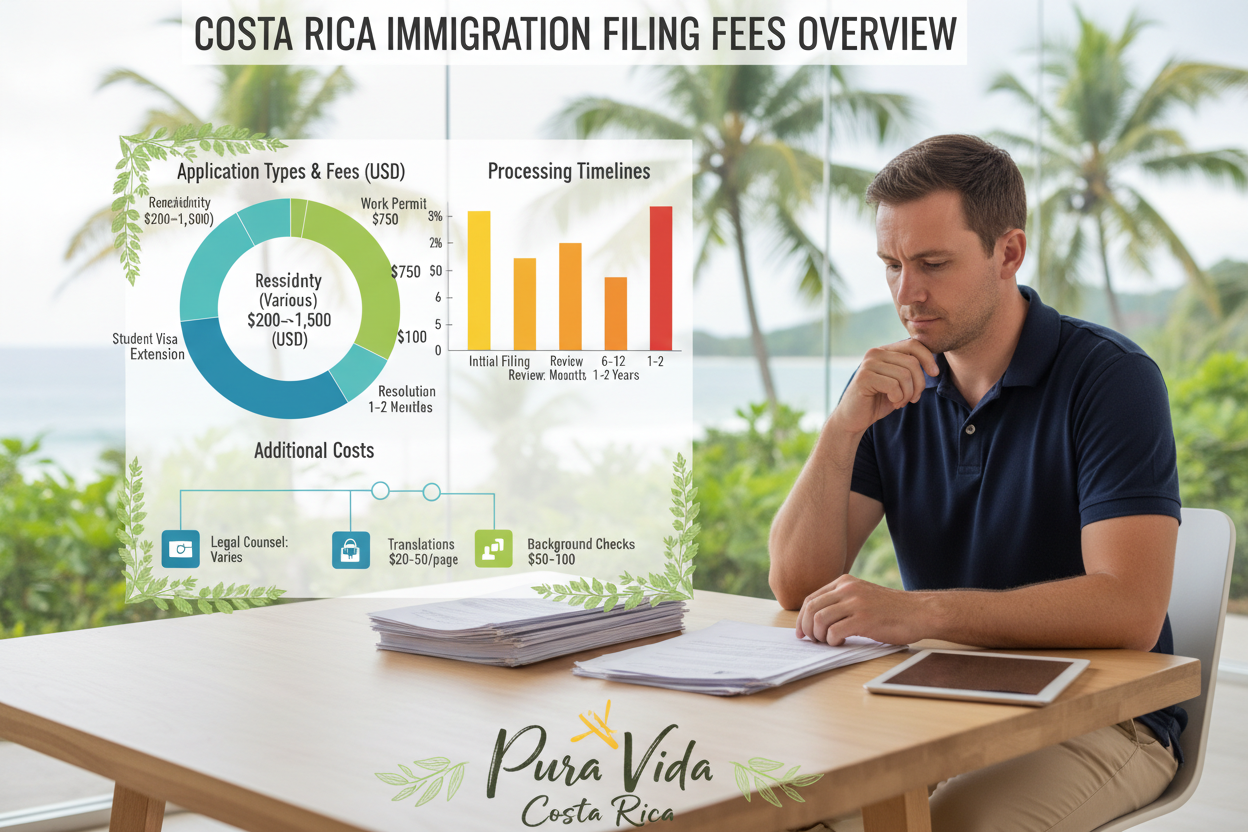
Understanding the government costs for obtaining legal status is a critical first step. Many applicants underestimate this part of the process. The amounts aren’t always high, but the payments happen in distinct stages.
Each phase, from initial application to final documentation, has its own strict rules. A single mistake on a payment slip can cause delays of several months.
Over 70,000 Americans have successfully made this move. That community grows by about 14% each year. Their success often comes from seeing these costs as part of a detailed process, not just simple transactions.
At CRIE, we help you navigate this structure correctly. We start by confirming your specific residency category. Then, we provide a tailored checklist for your required payments.
Our team reviews your official receipts before submission. This prevents the most common errors that hold up applications. This page does not offer service pricing or guarantees of approval.
Instead, it provides a transparent, stage-by-stage roadmap of official government charges. Our goal is to help you budget properly and pay correctly from the start.
Understanding Costa Rica Residency Options (Opciones de Residencia)
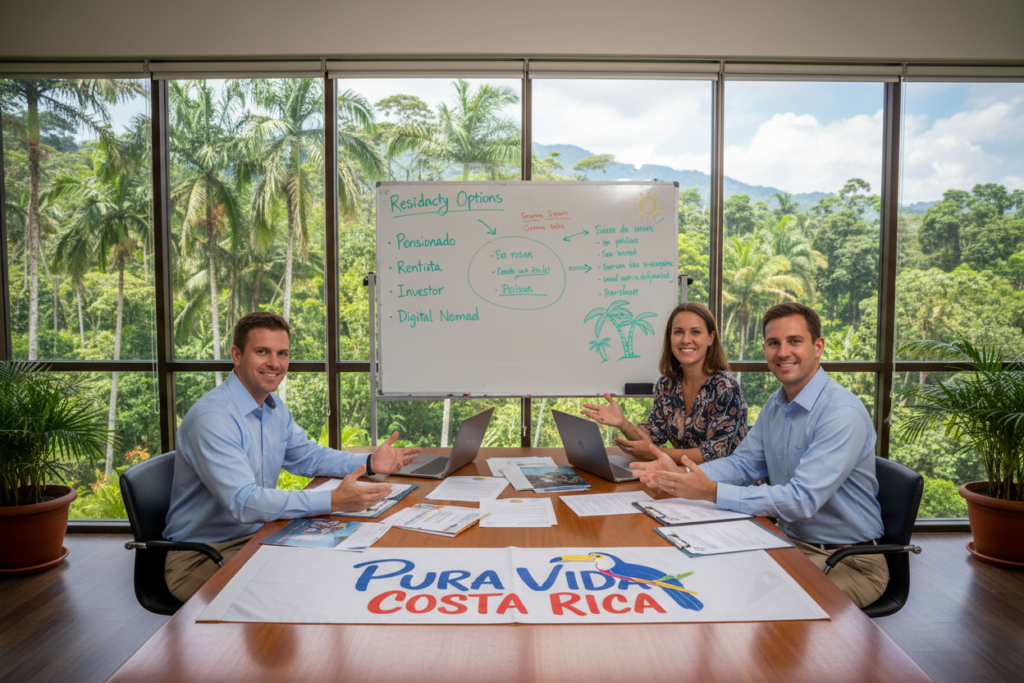
Three primary pathways form the foundation for most applicants seeking long-term status. These are the Pensionado (Pensionado), Rentista (Rentista), and Inversionista (Inversionista) categories. Each has strict financial thresholds and leads toward permanent residency.
Pensionado, Rentista, and Inversionista Explained
The Pensionado category is for retirees. It requires documented proof of a guaranteed lifetime pension of at least US$1,000 per month.
Rentista suits those with stable passive income. You must show US$2,500 monthly for two years. Alternatively, a US$60,000 deposit in a local bank works.
Inversionista demands a minimum US$150,000 investment. This can be in property, a business, or a project. The asset must be in your personal name, not a corporate entity.
Eligibility and Financial Thresholds
It’s crucial to know the Digital Nomad permit is not a residency category. Those years do not count toward citizenship. For a permanent path, consider Rentista or Inversionista instead.
After maintaining temporary status for three years, you can apply for permanent residency. Full citizenship is possible after seven total years of legal residency.
Step-by-Step Guidance Before Arrival (Guía Paso a Paso)
The most strategic move you can make is to begin gathering your official paperwork while still living in your home country. Authentication must happen where the document was issued.
Who Qualifies and What You Need to Prepare
Start with a self-assessment. Review your income against the category thresholds we outlined earlier. Confirm your documents can be authenticated in your nation of origin.
Financial proof is category-specific. You’ll need pension letters, bank statements, or investment proofs. Get these originals ready before you leave home.
Essential Documents and Apostille/Translation Requirements
Your core checklist includes a valid passport, birth certificate, and marriage documents if applicable. You also need criminal background checks from every country you’ve lived in for the past three years.
Each document requires a two-step process. First, obtain an apostille or consular authentication in your home country. Second, arrange for a certified Spanish translation once you arrive.
The criminal background check is highly time-sensitive. It’s valid for only six months. Time your application submission carefully to avoid redoing this entire process.
Always verify the final, current requirements at the official migracion.go.cr website before you submit. This prevents common errors with expired checks or unofficial translations.
Costa Rica Immigration Filing Fees Breakdown
Budgeting for your residency application requires mapping out a sequence of distinct government charges. Each has its own timing and rules.
Filing-Stage, Post-Approval, and DIMEX Costs
The initial filing fee is typically $50. Some categories require up to $200 USD. You pay this at the Banco de Costa Rica (BCR).
After approval, a Guarantee Deposit is required. This is a refundable security deposit. The amount varies based on your nationality.
You will also pay for your DIMEX card. This costs between $98 and $123 USD. A change-of-status fee of $200 may apply in some cases.
Understanding the Guarantee Deposit and Payment Receipts
The deposit is set by official DGME resolution tables. You get it back when your residency ends or you obtain citizenship.
A common pitfall is incorrect receipt formatting. Your BCR receipt must show your full passport name exactly. It also needs the correct payment reference code.
Total official expenses often range from $400 to $600. This does not include the refundable deposit or health insurance. Always verify final amounts at migracion.go.cr.
Navigating Government Payment Stages
Successfully navigating the government’s financial requirements hinges on understanding the precise sequence of payments. These official charges occur in three distinct phases: the initial filing, the post-approval stage, and final documentation.
Filing Stage Fees and Receipt Requirements
The first payments are made when you submit your application. You will deposit the filing fee at a Banco de Costa Rica branch.
Your official bank receipt is a critical document. The name must match your passport exactly, with no abbreviations. The payment reference code must also be correct for your specific residency category.
Approval Stage Deposits and DIMEX Issuance
After approval, you face two key financial steps. The first is a refundable Guarantee Deposit, which varies by nationality.
The second is the fee for your DIMEX card. Paying these costs too early is a common pitfall. An early payment will not be accepted and forces you to start over, causing significant delays.
Following this staged process correctly is essential for maintaining your legal status. Proper planning also sets the stage for smoothly renewing your legal status when the time comes.
Avoiding Common Documentation and Fee Payment Mistakes
Simple mistakes in documentation and fee deposits are the primary culprits behind extended processing times. We see these errors add months to a residency application and hundreds in duplicate government fees.
Documentation Pitfalls and Verification Tips
A criminal background check expires after six months. Its validity starts from the issue date, not your request. You must also obtain apostilles on all documents before leaving home.
Name inconsistencies across your passport, birth certificate, and marriage documents can derail your application. All paperwork requires translation by an official Costa Rican translator. Unofficial versions are rejected outright.
How to Prevent Fee Deposit Errors
The name on your bank receipt must match your passport exactly. Using “J. Smith” instead of “John David Smith” invalidates the payment. The payment reference code must also be correct for your specific category.
Never pay fees before confirming your exact residency category and the current amount. Verify everything at the official website first. Review the receipt at the bank to catch errors immediately. This careful process saves significant time and stress.
Timelines and Process Expectations
Setting realistic expectations for your residency journey begins with understanding the official processing timelines. The system is thorough, not fast.
Processing Times by Residency Category
Current data shows significant variation. Pensionado cases typically take 8-12 months from submission to final approval.
Rentista applications average 6-10 months. Inversionista filings often process in 4-8 months due to economic benefit verification.
Family-based residency usually completes in 3-6 months. Remember, the Digital Nomad permit is a separate process with a 2-3 month timeline.
Steps from Application Submission to Approval
First, schedule an appointment via the DGME website. Then, pay the required fee at Banco de Costa Rica.
Bring all original documents and copies to your appointment. You will submit biometric data and receive a file number for tracking.
Your case then enters a review phase. This can last several months. During this waiting period, you can stay legally in the country.
If you must travel, you need an official exit permit. Leaving without it can cancel your application.
These timelines are estimates. They can change based on workload and policy updates. Always verify current information at the official migracion.go.cr website.
Starting from Home: Preparing Your Documents Early
Beginning your residency journey with verified documents from home saves significant time and stress. The strategic advantage is clear. You handle apostilles, background checks, and income proof where they were issued.
This process is faster and often less expensive. It avoids the complications of requesting documents internationally after you arrive.
Verifying Your Paperwork Before Arrival
Create a home-country checklist. Secure your valid passport with at least six months’ validity. Obtain original birth and marriage certificates.
Request criminal background checks from every nation you’ve lived in for three years. Time this carefully, as they expire in six months. Gather your financial proof—pension letters or bank statements—specific to your chosen category.
Each document requires an apostille or consular authentication in its issuing country. Plan for 2-4 weeks for this step. For non-Hague Convention countries like Canada, consular authentication is needed instead.
Confirming Eligibility via CRIE (crie.cr)
We help you confirm everything before you travel. Share your document package with us remotely via WhatsApp (+506 8706 3888) or email (info@crie.cr).
We review your paperwork for completeness and formatting. We verify that your chosen residency category aligns with your financial proof. Our team identifies any gaps against current DGME requirements.
Always cross-check the final, official rules at migracion.go.cr. For personalized guidance, visit crie.cr. Arriving with a complete, authenticated package is the key to a smooth start.
Understanding Ongoing Compliance: CAJA and Renewals
Securing your legal status is just the beginning of a long-term relationship with local institutions. Your approved application unlocks a new phase of ongoing responsibilities and regular payments.
Enrollment in Health Insurance (CCSS) and Monthly Contributions
Nearly all residency categories require enrollment in the national CAJA system. This mandate cannot be replaced by private insurance.
Your monthly contributions are income-based, typically 7-11% of your declared income. For most applicants, this translates to payments between $60 and $300.
After provisional approval, visit your local EBAIS clinic with your documents. A CCSS representative will help you complete registration and set up your payment schedule.
Renewal Process and Maintaining Legal Status
Your DIMEX card requires periodic renewal. Timing varies by category, often every one to three years.
Each renewal involves a fee—currently around $123—and proof you still meet your category’s requirements. You must also show current CAJA enrollment and payment history.
To maintain your status, you must visit the country at least once per calendar year. Falling behind on CAJA payments or missing renewals creates serious problems.
After three years of consistent compliance, you become eligible for permanent residency. This reduces renewal frequency and sets a path toward citizenship after seven total years.
Final Reflections on Your Costa Rican Residency Journey
Achieving legal status here is a detailed process that thousands complete successfully each year. The nearly 70,000 Americans now calling this nation home prove it’s navigable with proper preparation.
Expect direct government charges of $400 to $600, plus a refundable deposit and ongoing health insurance. Realistic total costs often range from $3,000 to $5,000 initially. Annual maintenance can be $3,000 to $4,500.
Most applications take 4 to 12 months for approval. The path to permanent status requires three years of temporary standing. Citizenship is possible after seven total years.
We at CRIE help confirm your eligibility and review your documents. We provide clear checklists for correct payments. We do not guarantee approval, as final decisions rest with authorities.
Rules and amounts can change. Always verify current requirements at the official website before committing.
Ready to explore your options? Contact us via WhatsApp at +506 8706 3888 or email info@crie.cr. Start your conversation today for a clear roadmap tailored to your situation.
FAQ
What is the total estimated cost to obtain residency?
The total cost includes both government filing fees and professional legal fees. Government charges for the application, security deposit, and DIMEX card typically range from
FAQ
What is the total estimated cost to obtain residency?
The total cost includes both government filing fees and professional legal fees. Government charges for the application, security deposit, and DIMEX card typically range from $1,400 to $2,200 USD, depending on your category. Our professional fees for document preparation, submission, and process management are separate. We provide a transparent, all-inclusive quote upfront so you can budget accurately without hidden surprises.
What exactly are the government fees I need to pay?
Government payments occur in two main stages. First, you pay the application filing fee directly to the immigration department, which is around $50 USD. Upon approval, you pay for the issuance of your DIMEX card and must place a refundable guarantee deposit with Banco de Costa Rica—this deposit is usually $1,200 USD for pensionado and rentista applicants. We guide you through each official payment step to ensure proper receipts are issued.
What is the guarantee deposit, and do I get it back?
The guarantee deposit is a security payment required by the government, held in a national bank account in your name. It’s fully refundable when you either obtain permanent status or formally cancel your residency. Think of it as a security held by the state, not an expense. We help you set up this account correctly to ensure a smooth refund process later.
How do I make the official government payments?
Official payments must be made through the correct government channels. The initial filing fee is paid online via the Dirección General de Migración y Extranjería portal. The subsequent DIMEX and deposit payments are made at a Banco de Costa Rica branch. You will receive official payment receipts (*comprobantes*) for each transaction—keeping these is crucial for your file. We provide detailed instructions and verify all receipts.
Are there any recurring fees after I get my residency?
Yes, maintaining your legal status involves ongoing responsibilities. You must enroll in the national health insurance system (CCSS/CAJA) and pay monthly contributions based on your declared income. Additionally, your DIMEX card must be renewed every one to three years, which involves a renewal fee. We assist clients with both the initial CAJA enrollment and the renewal process to ensure continuous compliance.
How long does the entire process take, and when are fees due?
Processing times vary by category, typically taking 3 to 9 months from submission to approval. The initial filing fee is due when your application is submitted. The larger payments for the DIMEX card and the bank deposit are only required after your file receives formal approval from the authorities. You pay as you progress through the stages, not all at once at the beginning.
,400 to ,200 USD, depending on your category. Our professional fees for document preparation, submission, and process management are separate. We provide a transparent, all-inclusive quote upfront so you can budget accurately without hidden surprises.
What exactly are the government fees I need to pay?
Government payments occur in two main stages. First, you pay the application filing fee directly to the immigration department, which is around USD. Upon approval, you pay for the issuance of your DIMEX card and must place a refundable guarantee deposit with Banco de Costa Rica—this deposit is usually
FAQ
What is the total estimated cost to obtain residency?
The total cost includes both government filing fees and professional legal fees. Government charges for the application, security deposit, and DIMEX card typically range from $1,400 to $2,200 USD, depending on your category. Our professional fees for document preparation, submission, and process management are separate. We provide a transparent, all-inclusive quote upfront so you can budget accurately without hidden surprises.
What exactly are the government fees I need to pay?
Government payments occur in two main stages. First, you pay the application filing fee directly to the immigration department, which is around $50 USD. Upon approval, you pay for the issuance of your DIMEX card and must place a refundable guarantee deposit with Banco de Costa Rica—this deposit is usually $1,200 USD for pensionado and rentista applicants. We guide you through each official payment step to ensure proper receipts are issued.
What is the guarantee deposit, and do I get it back?
The guarantee deposit is a security payment required by the government, held in a national bank account in your name. It’s fully refundable when you either obtain permanent status or formally cancel your residency. Think of it as a security held by the state, not an expense. We help you set up this account correctly to ensure a smooth refund process later.
How do I make the official government payments?
Official payments must be made through the correct government channels. The initial filing fee is paid online via the Dirección General de Migración y Extranjería portal. The subsequent DIMEX and deposit payments are made at a Banco de Costa Rica branch. You will receive official payment receipts (*comprobantes*) for each transaction—keeping these is crucial for your file. We provide detailed instructions and verify all receipts.
Are there any recurring fees after I get my residency?
Yes, maintaining your legal status involves ongoing responsibilities. You must enroll in the national health insurance system (CCSS/CAJA) and pay monthly contributions based on your declared income. Additionally, your DIMEX card must be renewed every one to three years, which involves a renewal fee. We assist clients with both the initial CAJA enrollment and the renewal process to ensure continuous compliance.
How long does the entire process take, and when are fees due?
Processing times vary by category, typically taking 3 to 9 months from submission to approval. The initial filing fee is due when your application is submitted. The larger payments for the DIMEX card and the bank deposit are only required after your file receives formal approval from the authorities. You pay as you progress through the stages, not all at once at the beginning.
,200 USD for pensionado and rentista applicants. We guide you through each official payment step to ensure proper receipts are issued.
What is the guarantee deposit, and do I get it back?
The guarantee deposit is a security payment required by the government, held in a national bank account in your name. It’s fully refundable when you either obtain permanent status or formally cancel your residency. Think of it as a security held by the state, not an expense. We help you set up this account correctly to ensure a smooth refund process later.
How do I make the official government payments?
Official payments must be made through the correct government channels. The initial filing fee is paid online via the Dirección General de Migración y Extranjería portal. The subsequent DIMEX and deposit payments are made at a Banco de Costa Rica branch. You will receive official payment receipts (*comprobantes*) for each transaction—keeping these is crucial for your file. We provide detailed instructions and verify all receipts.
Are there any recurring fees after I get my residency?
Yes, maintaining your legal status involves ongoing responsibilities. You must enroll in the national health insurance system (CCSS/CAJA) and pay monthly contributions based on your declared income. Additionally, your DIMEX card must be renewed every one to three years, which involves a renewal fee. We assist clients with both the initial CAJA enrollment and the renewal process to ensure continuous compliance.
How long does the entire process take, and when are fees due?
Processing times vary by category, typically taking 3 to 9 months from submission to approval. The initial filing fee is due when your application is submitted. The larger payments for the DIMEX card and the bank deposit are only required after your file receives formal approval from the authorities. You pay as you progress through the stages, not all at once at the beginning.
Article by Glenn Tellier (Founder of CRIE and Grupo Gap)
Don't wait, contact us right now!
Call or WhatsApp Costa Rica +506 8373 2085 or +506 8706 3888
Call USA/Canada +1 305-906-6784