
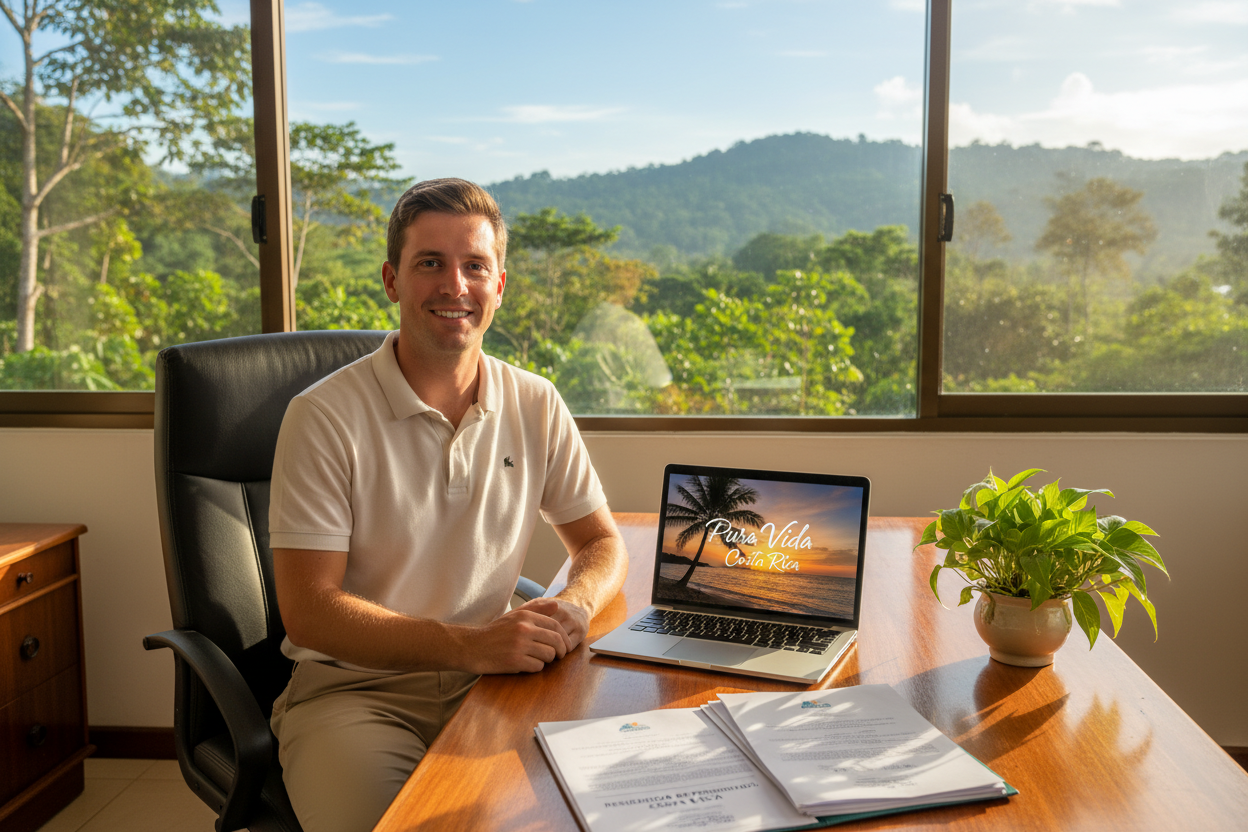
Dreaming of a peaceful retirement under the sun? The Pensionado program offers a clear path to legal residency for retirees with a stable pension. This visa category is designed for those who wish to make this beautiful Central American nation their home.
We’ll walk you through the entire process—from confirming your eligibility to finalizing your status. A crucial step involves preparing documents like apostilled birth certificates and translated financial statements before you arrive. This upfront work saves significant time and stress during the official immigration process.
A key part of becoming a temporary resident is joining the national healthcare system. Every applicant must eventually navigate this requirement, often referred to as “Caja.” It’s a fundamental pillar of life for all legal residents in the country.
It’s important to understand that options like a Digital Nomad visa do not lead to permanent residency. We provide realistic guidance based on official procedures. For definitive verification, always consult the immigration authority’s website, migracion.go.cr, alongside expert advice.
Understanding Costa Rican Residency Options (Residencia)

Understanding the different residency categories is crucial before starting your immigration process. We break down the three primary pathways available to foreign nationals.
Eligibility Criteria and Category Thresholds (Pensionado, Rentista, Inversionista)
The Pensionado category requires proof of a lifetime pension of at least US$1,000 per month. This steady income must come from a government or qualifying retirement account.
For the Rentista status, you need guaranteed monthly income of US$2,500 for two years. This can stem from investments or rental properties.
The Inversionista category demands a minimum US$150,000 investment in local real estate or a business. A critical rule: the property must be in your personal name.
Clarifying What Counts: Why Digital Nomad Doesn’t Qualify
Digital Nomad status is a temporary visa. It does not constitute legal residency in Costa Rica.
This status does not count toward permanent residency or citizenship requirements. If you seek a legitimate path while working remotely, explore the Rentista category instead.
Choosing the correct immigration category from the start saves significant time and resources. Each option has distinct renewal rules and timelines.
Preparing Your Application from Home: Document Checklist and Requirements

The most efficient way to secure your legal status begins long before you board the plane. We emphasize starting your document preparation from home. Having everything ready streamlines the entire immigration process upon arrival.
Essential Documents: Apostilles, Translations, and More
Your core paperwork includes a birth certificate, marriage certificate, and police background checks. These documents must be apostilled in your home country. An apostille is an international certification validating a document for use abroad.
Every document not in Spanish needs official translation by a certified translator in Costa Rica. Your pension verification letter is also critical. It must clearly state the lifetime monthly amount and source.
Tips to Avoid Common Document Preparation Mistakes
A frequent error is getting documents translated before the apostille. Always apostille first, then translate. Also, note that background checks often expire within six months.
We recommend making multiple certified copies of everything. Creating a specific checklist for your residency category is the best approach. This method prevents costly delays and gets your application moving faster.
Navigating the Pensionado Residency Process in Costa Rica
Applying for the Pensionado visa involves a clear, multi-stage procedure. It starts with proving a guaranteed lifetime pension of at least US$1,000 per month. We guide you through each phase to build a strong case.
Step-by-Step Guidance for Pensionado Applicants (Pensionado)
Your first step is securing official pension documentation. Contact your provider for a letter confirming your monthly income and its lifetime nature. This proof is the foundation of your case.
Next, gather supporting documents like birth and marriage certificates. Obtain police background checks too. All papers must get an apostille in your home country before you travel.
Once in Costa Rica, work with a local attorney. They will handle certified translations and prepare your formal residency application. Then, submit everything to the Dirección General de Migración y Extranjería.
The immigration review period follows. Officials may request more details about your income. Processing times vary, so patience is key.
After receiving your approval resolution, you have 90 days to complete mandatory social security registration. This requirement is non-negotiable for all successful applicants.
We provide this roadmap for clarity, but we cannot guarantee outcomes. Always verify the latest process at the official website, migracion.go.cr.
Understanding Caja for Pensionado Residents in Costa Rica
Your monthly contributions to the social security fund are calculated based on your verified pension income. This mandatory program provides comprehensive health insurance and social security benefits to all legal residents.
How to Calculate Your Caja Contributions and Report Income
The monthly fee has two parts. The SEM covers general health insurance at a rate between 2.89% and 10.69% of your income. The IVM pension component uses a percentage from 3.83% to 8.09%.
Your reported income is the pension amount listed in your residency approval. For example, a $1,500 monthly pension results in a contribution of roughly $80 to $100 per month. These rates are valid until December 2025.
Services, Benefits, and What to Expect from the System
The public healthcare system covers doctor visits, hospital stays, prescriptions, and emergency care. A significant benefit is family coverage under one contribution.
You must complete registration within 90 days of approval. While the system is comprehensive, wait times for specialists can be longer. Many people use it for primary care and add private insurance for faster access.
Practical Timelines and What to Expect Upon Arrival
Setting practical expectations for processing times helps avoid frustration during the immigration process. We provide realistic guidance, but cannot guarantee specific durations. The entire journey from submission to full status typically spans several months.
Application Timelines and Post-Approval Steps
Once you submit your complete file, the official review begins. This period varies based on application volume and document quality. You may receive requests for additional information during this step.
Receiving your official approval resolution triggers a critical 90-day deadline. You must complete mandatory social security registration within this window. Failing to do so can jeopardize your legal standing in the country.
The registration process itself is often completed in a single day. In urban centers like San José, you’ll need an appointment. Rural areas may allow walk-in registrations.
Many applicants plan short trips to Costa Rica just for this final step. After registration, obtain your DIMEX card and open a local bank account. These actions solidify your status as a legal resident for the year ahead.
Addressing Common Pitfalls and Ensuring a Smooth Process
The path to Costa Rican residency is smoother when you know what traps to avoid. We’ve seen many applications delayed by simple, preventable errors. This section highlights key mistakes and the best way to navigate the process successfully.
Mistakes to Avoid During Your Residency Application
A common error is arriving without properly apostilled documents. This forces a return to your home country, causing major delays. Another issue is an unclear pension verification letter.
Immigration officials reject vague income proof. Some applicants mistakenly think corporate property ownership meets investment requirements. The property must be in your personal name.
Missing the 90-day registration deadline after approval creates serious complications. Also, confusing temporary visas with actual residency pathways is a costly misunderstanding. These programs don’t count toward permanent status.
Leveraging Expert Guidance with CRIE and migracion.go.cr
The best approach is to start with professional guidance. Working with experts familiar with Costa Rican immigration avoids pitfalls. They understand current requirements and local procedures.
Always verify official rules at migracion.go.cr. This government site provides the most current information. Relying on outdated articles leads to mistakes.
We are here to answer your questions about the residency process. Contact CRIE to discuss your specific situation. Reach us via WhatsApp at +506 8706 3888 or email info@crie.cr.
Final Thoughts on Securing Your Costa Rican Residency Journey
We conclude this guide by reinforcing the core principles that underpin a successful immigration process. Your preparation—gathering documents, understanding requirements, and planning each step—directly impacts your approval status.
The benefits of becoming a legal resident extend well beyond paperwork. You gain access to comprehensive healthcare services and a pathway to permanent status over the years.
Remember that choosing the right category for your income is crucial for long-term planning. For more on the lifestyle advantages, explore the travel perks of residency.
Always verify official requirements at migracion.go.cr. For personalized guidance, contact us via WhatsApp +506 8706 3888 or email info@crie.cr.
FAQ
What is the primary benefit of the Pensionado residency category?
The main benefit is its accessible financial requirement. You must prove a guaranteed lifetime pension of at least
FAQ
What is the primary benefit of the Pensionado residency category?
The main benefit is its accessible financial requirement. You must prove a guaranteed lifetime pension of at least $1,000 per month. This stable income stream demonstrates your ability to support yourself without working locally, which is a core requirement for immigration approval.
Why doesn’t a Digital Nomad income typically qualify for Pensionado status?
Immigration authorities look for stability. A digital nomad’s contract or freelance income, while valid, is often seen as variable or temporary. The Pensionado category requires proof of a permanent, guaranteed pension from a government or qualified private entity, which provides long-term security for your residency status.
Are apostilled documents always required for my application?
A> Yes, nearly all foreign-issued documents like birth certificates and marriage licenses require an apostille from the issuing country. This international certification verifies the document’s authenticity for Costa Rican officials. The main exception is documents from countries not party to the Hague Apostille Convention, which require a different authentication process.
What is a common document mistake applicants make?
A frequent error is submitting documents with incorrect or outdated translations. Every document must be translated into Spanish by an official translator registered with the Costa Rican Colegio de Traductores. Using an unofficial translator or an old translation can cause significant delays or lead to a rejected application.
What are the key steps in the Pensionado application process?
A> The process involves several clear steps: 1) Gather and authenticate all required documents (apostilles, translations). 2) Submit your formal application to Immigration (Migración). 3) Await initial approval and receive a DIMEX number. 4) Complete your registration with the public healthcare system, the Caja Costarricense de Seguro Social. 5) Finally, obtain your physical residency ID card.
How are my monthly contributions to the public healthcare system calculated?
A> Your contribution to the Caja Costarricense de Seguro Social is calculated as a percentage of your declared income. For Pensionado residents, the rate is typically between 10% to 12.5% of your verified monthly pension amount. You’ll report this income during your mandatory registration, and the system will determine your exact monthly fee.
What services can I expect from the Costa Rican public healthcare system?
A> Upon registration and paying your monthly fee, you gain access to the national network of clinics (EBAIS) and hospitals. Benefits include doctor consultations, surgeries, prescriptions, maternity care, and dental services. Coverage is comprehensive, though some may choose supplemental private insurance for shorter wait times on non-emergency procedures.
How long does the residency application process usually take?
A> Processing times can vary, but you should generally expect the entire process—from submission to receiving your physical ID card—to take several months. The timeline depends on Immigration’s caseload and how completely your initial application is filed. Using a qualified legal expert can help ensure your submission is perfect, avoiding unnecessary delays.
What should I do immediately after my residency is approved?
A> After receiving your approval notification and DIMEX number, your next critical step is to register with the Caja Costarricense de Seguro Social within one month. This registration is mandatory to maintain your legal resident status. You’ll need to visit your local Caja office with your approval letter, passport, and proof of income to set up your payments.
What is the biggest mistake to avoid during the application?
A> The most significant pitfall is underestimating the importance of document preparation. Incomplete authentication (missing apostilles), incorrect translations, or failing to provide a clear, verifiable trail for your pension income are the top reasons for denial or long delays. Precision and attention to detail here are non-negotiable.
How can the experts at CRIE assist with my residency process?
A> We act as your experienced guide, managing the complex documentation and legal procedures. Our team ensures your application meets all official requirements from migracion.go.cr, helps you avoid common errors, and navigates the registration with the social security system. We handle the bureaucratic intricacies so you can focus on planning your move.
,000 per month. This stable income stream demonstrates your ability to support yourself without working locally, which is a core requirement for immigration approval.
Why doesn’t a Digital Nomad income typically qualify for Pensionado status?
Immigration authorities look for stability. A digital nomad’s contract or freelance income, while valid, is often seen as variable or temporary. The Pensionado category requires proof of a permanent, guaranteed pension from a government or qualified private entity, which provides long-term security for your residency status.
Are apostilled documents always required for my application?
A> Yes, nearly all foreign-issued documents like birth certificates and marriage licenses require an apostille from the issuing country. This international certification verifies the document’s authenticity for Costa Rican officials. The main exception is documents from countries not party to the Hague Apostille Convention, which require a different authentication process.
What is a common document mistake applicants make?
A frequent error is submitting documents with incorrect or outdated translations. Every document must be translated into Spanish by an official translator registered with the Costa Rican Colegio de Traductores. Using an unofficial translator or an old translation can cause significant delays or lead to a rejected application.
What are the key steps in the Pensionado application process?
A> The process involves several clear steps: 1) Gather and authenticate all required documents (apostilles, translations). 2) Submit your formal application to Immigration (Migración). 3) Await initial approval and receive a DIMEX number. 4) Complete your registration with the public healthcare system, the Caja Costarricense de Seguro Social. 5) Finally, obtain your physical residency ID card.
How are my monthly contributions to the public healthcare system calculated?
A> Your contribution to the Caja Costarricense de Seguro Social is calculated as a percentage of your declared income. For Pensionado residents, the rate is typically between 10% to 12.5% of your verified monthly pension amount. You’ll report this income during your mandatory registration, and the system will determine your exact monthly fee.
What services can I expect from the Costa Rican public healthcare system?
A> Upon registration and paying your monthly fee, you gain access to the national network of clinics (EBAIS) and hospitals. Benefits include doctor consultations, surgeries, prescriptions, maternity care, and dental services. Coverage is comprehensive, though some may choose supplemental private insurance for shorter wait times on non-emergency procedures.
How long does the residency application process usually take?
A> Processing times can vary, but you should generally expect the entire process—from submission to receiving your physical ID card—to take several months. The timeline depends on Immigration’s caseload and how completely your initial application is filed. Using a qualified legal expert can help ensure your submission is perfect, avoiding unnecessary delays.
What should I do immediately after my residency is approved?
A> After receiving your approval notification and DIMEX number, your next critical step is to register with the Caja Costarricense de Seguro Social within one month. This registration is mandatory to maintain your legal resident status. You’ll need to visit your local Caja office with your approval letter, passport, and proof of income to set up your payments.
What is the biggest mistake to avoid during the application?
A> The most significant pitfall is underestimating the importance of document preparation. Incomplete authentication (missing apostilles), incorrect translations, or failing to provide a clear, verifiable trail for your pension income are the top reasons for denial or long delays. Precision and attention to detail here are non-negotiable.
How can the experts at CRIE assist with my residency process?
A> We act as your experienced guide, managing the complex documentation and legal procedures. Our team ensures your application meets all official requirements from migracion.go.cr, helps you avoid common errors, and navigates the registration with the social security system. We handle the bureaucratic intricacies so you can focus on planning your move.
Article by Glenn Tellier (Founder of CRIE and Grupo Gap)
Don't wait, contact us right now!
Call or WhatsApp Costa Rica +506 8373 2085 or +506 8706 3888
Call USA/Canada +1 305-906-6784