

Navigating the path to legal status in a new country can feel overwhelming. We understand that. With over 70,000 U.S. citizens now calling it home, Costa Rica continues to attract Americans seeking a better quality of life.
This comprehensive resource walks you through every stage. Our focus is exclusively on the official CRIE platform and processes—we provide clear, step-by-step guidance without pricing quotes or guarantees.
Starting your document preparation from home is the most critical action you can take. It dramatically improves your chances for a smooth application process once you arrive in the country.
We’ll detail the primary residency categories—Pensionado, Rentista, and Inversionista. You’ll get concrete numbers, government thresholds, and reality-checking advice grounded in actual process timelines.
Understanding CRIE and Costa Rica Residency Requirements
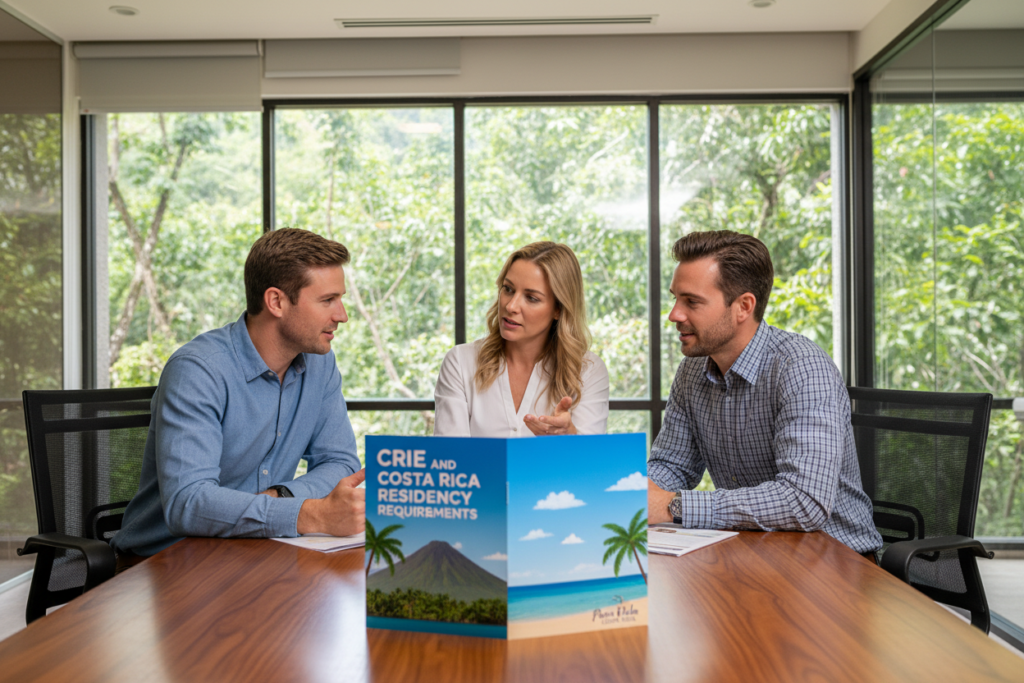
The CRIE platform exists to demystify the residency requirements set by Costa Rican immigration authorities. We focus exclusively on this specialized domain. Our role is to guide you through the official system managed by the Dirección General de Migración y Extranjería (DGME).
Overview of the CRIE Platform (crie.cr)
CRIE serves as your practical resource. We help you understand specific requirements, prepare documents correctly, and navigate official timelines. All applications are submitted through the government’s migracion.go.cr portal.
Final approval rests solely with Costa Rican immigration officials. We provide clarity within the established process.
Key Immigration Benefits in Costa Rica
Legal residency brings tangible advantages. A primary benefit is mandatory enrollment in the Caja Costarricense de Seguro Social (CCSS). This public healthcare system provides affordable medical coverage.
Residency grants the legal right to live in Costa Rica long-term. You can open local bank accounts and access public services. The country itself offers notable political stability and modern infrastructure for residents.
Who Qualifies for Costa Rica Residency: Pensionado, Rentista, and Inversionista
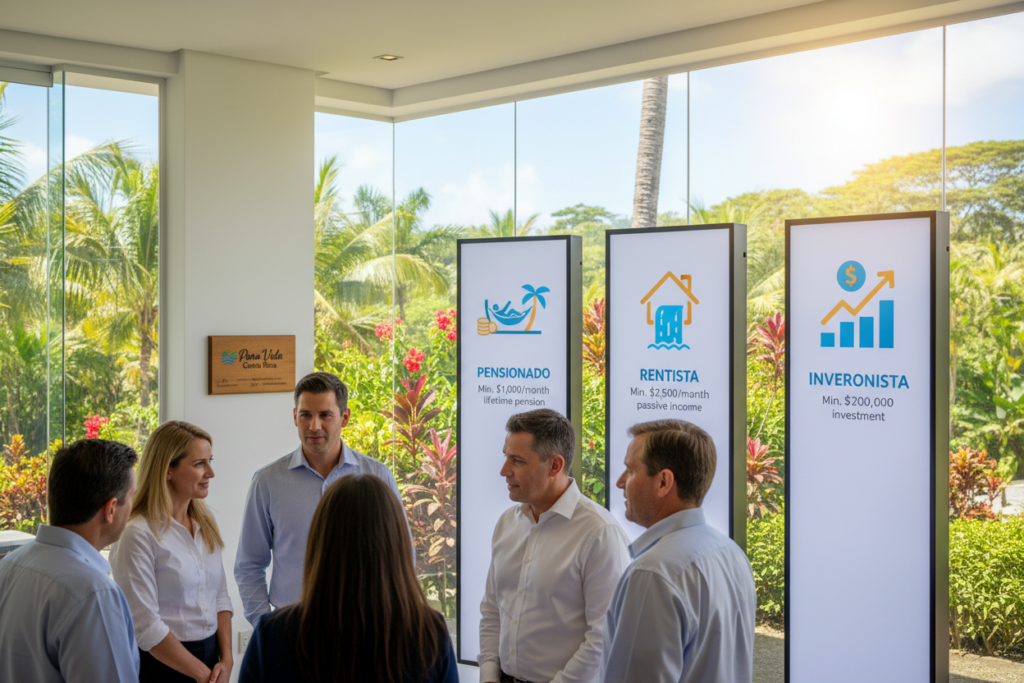
Determining your eligibility for legal status in Costa Rica hinges on three primary residency categories, each with distinct financial thresholds. We focus on the Pensionado, Rentista, and Inversionista options. Your choice depends on your source of income or capital.
Eligibility Criteria for Pensionado
The Pensionado category is designed for retirees. You must prove a guaranteed lifetime pension of at least US$1,000 per month. Sources include government programs like Social Security or private retirement plans.
This residency type prohibits traditional employment within the country. However, you can own a business or invest in local real estate. It’s ideal for those seeking retirement in Costa Rica on a fixed income.
Income Thresholds for Rentista and Inversionista
The Rentista category requires proof of stable income. You must demonstrate US$2,500 per month for two years. Alternatively, a US$60,000 deposit in a Costa Rican bank is accepted.
For the Inversionista (Investor) path, a minimum investment of US$150,000 is required. This can be in real estate, a business, or approved projects. A critical rule: the asset must be held in your personal name, not a corporate entity.
Note: Costa Rica’s Digital Nomad visa is not a residency pathway. If you seek actual residency with remote income, the Rentista category is your closest match.
Step-by-Step Application Process Explained
Submitting your residency request involves a clear sequence of actions, from digital account setup to an in-person biometric appointment. We’ll walk you through each stage to demystify the official procedure.
The entire process is managed by the Dirección General de Migración y Extranjería. You can expect it to take several months from start to final approval.
How to Initiate Your Application Online
Your first step is creating an account on the immigration authority’s online platform. This account is your gateway to submit forms, upload documents, and pay government fees.
Once logged in, you’ll complete the specific form for your chosen residency category. Each form requests different supporting documentation. You then upload digital copies of all required files.
The system allows for online submission or in-person filing at the main immigration office in San José. We find the online method offers greater convenience for most applicants.
Scheduling Biometric and Fingerprinting Appointments
After your initial application is accepted for review, you’ll receive a notification. This notification instructs you to schedule your biometric and fingerprinting appointment.
This critical step requires your physical presence in Costa Rica. The appointment typically must occur within 30 to 60 days at the La Uruca office in San José.
Plan your travel accordingly. Missing this window can reset parts of your application and cause significant delays.
Document Preparation and Verification
Your application’s success largely depends on the completeness and authenticity of your supporting documents. We see this phase as the most critical, where meticulous attention prevents major delays.
Start this work from home, well before your planned move. This proactive approach is non-negotiable for a smooth process.
Required Documents, Apostilles, and Translations
Every applicant needs a valid passport with at least six months of validity. You must also obtain an official birth certificate from your state’s vital records office.
A federal FBI background check is mandatory. State-level checks are not accepted. If applicable, include a certified marriage certificate.
All U.S. documents require an apostille. This special certification comes from the Secretary of State in the document’s origin state. It verifies the document’s legitimacy for international use.
The apostille process often takes 2 to 4 weeks per document. Afterward, every paper needs a certified Spanish translation. The translator must be officially certified in Costa Rica.
Organizing Your Application File Before Arrival
We strongly recommend compiling your entire file before traveling. This includes apostilled documents, certified translations, and financial proof.
Realistically, allow 2 to 3 months for this preparation. Documents like police records must be less than six months old at submission. A well-organized file is your best tool for avoiding setbacks.
Timelines and What to Expect During Processing
Understanding the realistic timeline for government approval is a crucial part of your planning. We set transparent expectations because immigration systems operate on their own schedule.
Most files take between 4 and 15 months from submission to final approval. This range accounts for government backlogs and individual case complexity.
Estimated Processing Times for Each Residency Type
Processing speed depends on your documentation’s completeness and your chosen category. Straightforward Pensionado cases often clear in 4 to 8 months.
More complex Inversionista files can take 12 to 15 months. Delays typically stem from requests for additional verification.
Monitoring Your Application Progress
You can track your status through your official online account. Updates may be infrequent, but the portal shows key review stages.
Respond promptly if officials request more documents. This keeps your application moving forward without unnecessary delays.
When granted, temporary residency is valid for two years. After maintaining this status for three consecutive years, you become eligible for permanent residency.
Common Mistakes to Avoid During the Application
We consistently observe a handful of common pitfalls that can derail an otherwise solid case for residency. Most are entirely preventable with careful planning. Focusing on these areas can save you significant time and frustration.
Ensuring Completeness of Your Documentation
The top error is submitting an incomplete file. Missing one required document halts your entire application. This adds unnecessary months of delays while you obtain the missing piece.
This rule applies universally, whether you are applying alone or preparing documentation for a spouse. A critical trap involves time-sensitive papers. Your FBI background check must be less than six months old at submission.
Avoiding Delays with Apostilles and Translations
Many applicants underestimate how long apostilles take. Waiting until the last minute creates a bottleneck. Each certificate can require 2-4 weeks for this official stamp.
Translation errors are equally problematic. You must use a translator certified in Costa Rica. Submitting an uncertified translation triggers an automatic rejection, restarting the process.
Benefits of Starting the Process from Home
The most powerful step you can take toward a smooth residency application is to begin your document work from your current location. This approach provides a strategic advantage that cannot be overstated.
We advise treating the initial paperwork phase as a dedicated project. Completing it before you travel fundamentally changes your entire Costa Rica residency experience.
Pre-Application Preparation Tips
Realistically, gathering, apostilling, and translating documents takes 2 to 3 months. State offices and background checks have their own schedules.
Start by requesting permanent records like your birth certificate. Then, obtain time-sensitive items like your FBI check closer to your submission date. This staggers the workload and prevents expiration issues.
How Early Document Readiness Boosts Success
Arriving in Costa Rica with a complete file lets you submit your application immediately. You avoid spending your first months stressed over missing paperwork.
This foresight also allows for accurate budgeting. You know all costs upfront. The psychological benefit is enormous peace of mind.
Ultimately, early preparation transforms the residency process from reactive to proactive. It lets you focus on enjoying your new life in Costa Rica.
Detailed costa-rica-residency-application-a-step-guide for Success
Think of this section as your master checklist, combining every critical action into one clear sequence. We consolidate all prior guidance into a single, practical walkthrough you can follow from start to finish.
Begin with honest self-assessment. Match your finances to the correct category: Pensionado, Rentista, or Inversionista. Then, gather your core documents—passport, birth certificate, and FBI check—while still in the United States.
The next step involves official certification. Obtain apostilles from the relevant Secretary of State offices. Budget 2-4 weeks for this. Immediately arrange certified Spanish translations through a Costa Rican-approved translator.
Proceed to the digital phase. Create your online account with immigration authorities. Complete the category-specific form with meticulous care, uploading all apostilled and translated documents. Review everything, then submit and pay the government fees, which typically range from $50 to $250.
Your final physical steps happen in Costa Rica. Schedule and attend your biometric appointment in San José within the mandated window. Register with the Caja for healthcare. Then, monitor your application online during the 4 to 15 month processing period until you receive your DIMEX card.
Following this ordered guide removes guesswork. It turns a complex procedure into a manageable, linear path toward securing your legal status.
Navigating Residency vs. Citizenship: Prioritizing the Right Steps
Understanding the distinction between residency and citizenship is fundamental to setting realistic expectations for your life in Costa Rica. We often hear enthusiasm for the Costa Rican passport, but citizenship is a distant goal.
Why Residency Comes Before Citizenship
You must secure temporary residency first. This status, like Pensionado or Rentista, is renewable every two years. You need to maintain it actively for three consecutive years.
After three years of temporary residency, you become eligible for permanent residency. This upgrade grants unrestricted work rights and ends regular renewals.
Citizenship through naturalization becomes possible only after approximately seven years of total legal residence. Your immediate focus must be on establishing your initial residency status in Costa Rica.
Essential Tips and Thresholds for Each Residency Category
Meeting the specific income or investment thresholds is the cornerstone of a successful residency application. We break down the exact figures and documentation needed for each path.
Understanding Specific Income and Investment Requirements
For Pensionado, you must prove a guaranteed $1,000 monthly pension. Official letters from sources like Social Security are required proof.
Rentista applicants show $2,500 per month for two years. Alternatively, a $60,000 deposit into a Costa Rican bank account works.
The Inversionista category demands a minimum investment of $150,000. This often involves real estate or business ventures.
Must-Know Ownership Criteria for Inversionista
Your investment property must be titled in your personal name. Corporate ownership does not satisfy this requirement.
You need official appraisals and deeds as proof of value and ownership. Opening a Costa Rican bank account is also a key step for many applicants.
We stress using certified documents from third parties. Bank statements, pension letters, and notarized deeds are essential.
Final Steps: How to Contact and Begin Your Journey
Taking the first concrete step today transforms distant plans into a tangible reality. Begin gathering your passport, birth certificate, and FBI background check now. This foundational work takes weeks, regardless of your final submission date.
We are here to provide guidance for your unique situation. Contact our team via WhatsApp at +506 8706 3888 or email info@crie.cr. We can discuss how your circumstances align with the Pensionado, Rentista, or Inversionista requirements.
Remember, we offer comprehensive guidance but cannot quote service pricing or guarantee outcomes. Always verify the latest requirements and government fees at migracion.go.cr. The process requires patience, as approval takes months.
Once approved, your DIMEX card grants access to banking and the mandatory social security system. Your journey to legal residency in Costa Rica starts with a single, decisive action.
FAQ
What is the first step I should take for my residency application?
We recommend starting online through the official CRIE platform (crie.cr). This system lets you create an account, pay the initial government fees, and upload many required documents from home. Getting this pre-application work done before you travel can save you months.
How long does the entire residency process typically take?
Processing times vary significantly by category. A straightforward Pensionado application might take 3 to 6 months, while Rentista or Inversionista files often require 6 to 9 months or more. Delays commonly occur with document authentication—getting your birth certificate apostilled and translated correctly from the start is crucial.
Can I open a Costa Rican bank account before my residency is approved?
Yes, and for Rentista applicants, it’s a required step. You’ll need to deposit the ,000 proof of income into a local bank. Many banks allow you to open an account with your passport and proof of legal entry, though policies vary. We guide clients through this specific requirement to prevent a common hurdle.
What’s the most common mistake that causes application delays?
Incomplete or improperly authenticated documents top the list. Every foreign-issued document—like your birth certificate or marriage certificate—must have an apostille and a certified Spanish translation. Submitting originals without these will result in a rejection from the Dirección General de Migración, adding months to your timeline.
Do I need to hire a local lawyer for the application?
While not legally mandatory, it is highly advisable. The process involves navigating complex government systems, strict deadlines, and specific legal language. A qualified immigration attorney ensures your file is complete, represents you in appointments, and can resolve issues you might not even be aware of, protecting your investment of time and money.
What happens after I submit all my documents to immigration?
Your file enters the review queue at the Dirección General de Migración. During this waiting period—which can last several months—you can monitor your status online via the CRIE platform. Once approved, you’ll be notified to provide fingerprints and a final signature to receive your physical DIMEX card, your official residency ID.
Is there a background check as part of the process?
Absolutely. A clean criminal background check from your home country and any other country you’ve lived in for the past three years is mandatory. This document also requires an apostille and official translation. The Costa Rican authorities will verify this information as part of their security review.
Can I travel in and out of Costa Rica while my application is processing?
You must maintain legal tourist status while your residency is pending. This means leaving the country every 90 days (or 180 days if you obtained an extension) to renew your tourist visa. It’s critical to keep all exit and entry stamps, as you’ll need to prove you were legally in the country throughout the entire process.
Article by Glenn Tellier (Founder of CRIE and Grupo Gap)
Don't wait, contact us right now!
Call or WhatsApp Costa Rica +506 8373 2085 or +506 8706 3888
Call USA/Canada +1 305-906-6784