

Many people considering a move to Costa Rica worry about their medical history. A common question we hear is whether pre-existing conditions will block their residency application. We want to address this concern directly at the start.
The good news is straightforward. Costa Rica’s residency system does not evaluate your health. Instead, it focuses on your financial qualifications and legal documentation. This makes the process accessible to individuals from all health backgrounds.
A key reason for this is the country’s universal healthcare system. Known as the Caja, it provides coverage to all legal residents. Importantly, it operates without exclusions for pre-existing medical conditions.
Several pathways to residency exist, including the Pensionado, Rentista, and Inversionista categories. Each has specific income or investment requirements. Your choice depends on your personal financial situation.
The entire application process typically takes between three and twelve months. We provide clear information and realistic timelines to help you plan. For personalized guidance, contact us via WhatsApp at +506 8706 3888 or email info@crie.cr.
Understanding Costa Rica Residency Options for Pre-Existing Health Conditions

For U.S. citizens and others, qualifying for Costa Rican residency is primarily a financial, not a medical, evaluation. The country offers multiple legal pathways, each designed for different life circumstances.
Diverse Residency Pathways Overview
The three primary categories are Pensionado (Pensionado) for retirees, Rentista (Rentista) for those with guaranteed income, and Inversionista (Inversionista) for investors. Specific thresholds apply: a $1,000 monthly pension, $2,500 monthly income (or a $60,000 deposit), or a $150,000 investment, respectively.
A Digital Nomad visa, requiring $3,000 monthly, is also available but is a separate permit, not a residency path. Choosing the right category is your critical first step. Successful applications start at home with document gathering.
Why Costa Rica is an Attractive Choice
The benefits extend beyond accessible residency. The country is a stable democracy with universal healthcare that covers all legal residents. Its cost of living is notably lower—often 30-50% less than major U.S. cities.
Most couples find they can live comfortably here on $2,000 to $3,000 per month. This “pura vida” lifestyle blends natural beauty with modern infrastructure. Gaining residency also sets the foundation for permanent status after three years.
You Can Apply for a Residency in CR Even with Pre-Existing Health Conditions
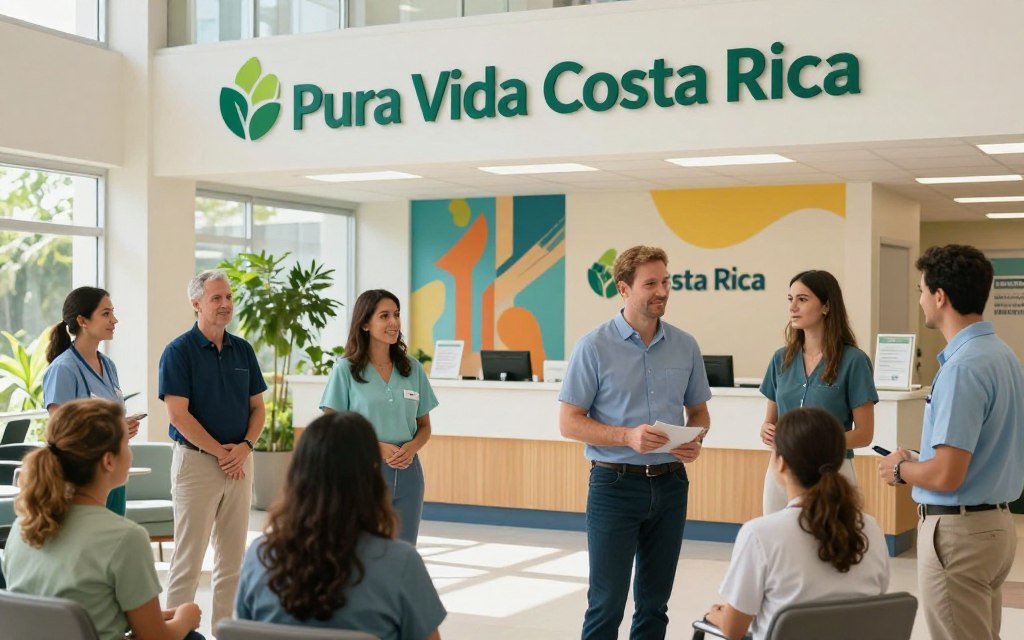
The intersection of healthcare access and immigration policy is a key consideration for future residents. We want to be clear: managing a chronic condition does not disqualify you from obtaining legal status in Costa Rica.
The residency evaluation process focuses squarely on your financial qualifications. It reviews your pension, income, or investment documents. It does not include medical exams or screenings of your health history.
After approval, you must enroll in the Caja Costarricense de Seguro Social (CCSS). This universal system, known as “Caja,” operates on a fundamental principle. It provides comprehensive coverage with no exclusions for pre-existing conditions.
This means your access to preventive care, medications, and surgeries begins equally. The practical reality is that people with various health backgrounds successfully become residents. We advise planning for your transition by bringing adequate medications and obtaining your medical records.
Many choose Costa Rican residency specifically for this healthcare access. Costs are dramatically lower than U.S. private insurance, making long-term health management financially viable.
Who Qualifies for Residency in Costa Rica? (Considering Health Conditions)
Qualifying for legal status in Costa Rica hinges on meeting specific financial thresholds, not medical evaluations. The requirements focus on your economic profile and clean legal record.
Eligibility Criteria and Key Requirements
The Pensionado category requires proof of a lifetime pension of at least $1,000 monthly. This can come from Social Security, a private pension, or military retirement.
For the Rentista pathway, you must show $2,500 in guaranteed monthly income for two years. Alternatively, a $60,000 deposit in a local bank satisfies this requirement.
The Inversionista option demands a minimum $150,000 investment. This must be in real estate titled in your name or an approved business venture.
All categories mandate a clean criminal background check from your home country. Your health history is not part of the Costa Rican residency review.
Your eligibility depends entirely on these financial and legal benchmarks. This makes the process accessible for many seeking a new life in Costa Rica.
Step-by-Step Guide for Your Residency Application Process
Starting your Costa Rica residency application from home is the most effective strategy to avoid delays. We guide you through each official step to ensure a smooth process.
Preparing Your Documents from Home
The cleanest applications begin with document preparation in your home country. First, select your residency category: Pensionado, Rentista, or Inversionista.
Next, gather core documents like birth certificates and FBI checks. These must be issued within six months of submission.
Obtain apostilles from relevant U.S. authorities for authentication. Then, get official Spanish translations by a government-authorized translator.
Submit your complete file to the Dirección General de Migración y Extranjería (DGME). You can apply in person or through a legal representative.
Processing takes three to twelve months. After approval, you receive your DIMEX card and enroll in the Caja healthcare system.
Investing time in correct preparation eliminates common delays. For official forms, visit migracion.go.cr.
Pensionado (Pensionado) Residency: Requirements and Benefits
The Pensionado (Pensionado) residency pathway is a cornerstone of Costa Rica’s immigration system for retirees. It’s the most popular category for Americans, especially those receiving Social Security. This program focuses on stable, permanent retirement income.
The core requirement is proof of a lifetime pension totaling at least $1,000 per month. You can combine multiple sources to meet this threshold. For example, $600 from Social Security and $400 from a private pension qualifies.
Qualifying pension sources include US Social Security, private company plans, union retirement programs, and military or disability retirement. Your key document is an official letter from each provider confirming the guaranteed, lifetime payment.
We must be transparent about a key limitation. As a temporary Pensionado resident, you generally cannot work as a formal employee in Costa Rica. However, authorities are flexible with remote work for foreign clients or receiving business dividends.
After three years of maintaining your Costa Rica residency under this category, you become eligible for permanent status. This progression removes ongoing income checks and grants full local work rights.
Rentista (Rentista) Residency: Income Thresholds and Documentation
The Rentista (Rentista) residency category offers a flexible path for those with reliable passive income streams. It serves individuals who aren’t retired but have stable financial resources.
You must prove a guaranteed income of $2,500 per month for 24 consecutive months. Alternatively, a $60,000 deposit in a Costa Rican bank for two years meets the requirement.
Qualifying sources include investment dividends, rental property income, or annuity payments. The key is demonstrating consistent, passive deposits.
Document Preparation: Apostilles and Translations
All foreign documents for your Costa Rica residency must be apostilled. This is an authentication from a U.S. authority for international use.
After apostille, an authorized Costa Rican translator must provide official Spanish versions. Using the correct translator is a strict requirement.
We advise completing these steps while still in the United States. Obtaining fresh documents and their certified translations from abroad adds significant delay and cost to the process.
Proper preparation of these documents is the most effective way to ensure a smooth application. It directly impacts your timeline for approval.
Investor (Inversionista) Residency: Investment Criteria and Property Requirements
The Inversionista (Inversionista) residency category is a strategic pathway for investors seeking to establish roots in Costa Rica. It requires a minimum qualifying investment of US$150,000 into the national economy.
Your investment options are diverse. You can purchase real estate, invest in an existing Costa Rican business, or start a new venture. Buying shares in local companies or funding approved development projects also qualifies.
We must clarify a critical rule for real estate. If you use property to meet the $150,000 threshold, the title must be in your personal name. Holding it through a corporation does not satisfy the residency requirements.
The investment must demonstrably benefit Costa Rica economically. This means creating value through operations, employment, or development. Note that regulatory discussions have suggested a future increase to $200,000.
Maintaining your Inversionista residency status involves two key obligations. You must keep the investment active and spend at least six months per year in the country. This category is designed for serious, long-term commitment.
Essential Documents to Prepare Before Arrival in Costa Rica
Gathering the correct paperwork before you travel is the single most important step for a smooth transition. Attempting to obtain apostilles or certified documents from your home country while already in Costa Rica is exponentially more complicated.
Your core checklist for Costa Rica residency includes a valid passport with six months’ validity. You also need a newly issued birth certificate and an FBI criminal background check. Include a marriage certificate if applying with a spouse.
Every foreign document requires two official steps. First, obtain an apostille from the correct U.S. authority. Second, get an official Spanish translation by a translator authorized in Costa Rica.
Documents like birth certificates and background checks must be reissued within six months of submission. We advise bringing detailed medical records and a 3-6 month supply of prescription medications for your transition period.
Mapping Out Timelines: From Application to Approval
We provide transparent estimates of the Costa Rica residency timeline to manage expectations. Understanding this process helps you plan your transition effectively.
Expected Processing Times
The complete Costa Rica residency process typically takes 3-12 months. This range depends on your application type and current DGME volume.
Pensionado cases often process in 3-6 months. More complex Inversionista applications can take 9-12 months. These are estimates, not guarantees.
Always verify current processing times at migracion.go.cr. Government processing speeds fluctuate regularly.
Key Timeline Milestones
Document preparation usually requires 2-3 months before arrival. This includes obtaining fresh certificates and arranging translations.
After submission, track these milestones: initial DGME review, any document requests, preliminary approval, and final DIMEX card issuance.
You can enter Costa Rica as a tourist for up to 180 days. Your residency application processes during this time. Never overstay your tourist status.
If processing extends beyond your authorized days, plan a border run. Maintaining legal status throughout is essential for approval.
Mistakes to Avoid During Your Residency Application Process
We consistently see the same avoidable mistakes derail residency applications, adding months of delay and unnecessary expense. The most costly errors in Costa Rica are often procedural and entirely preventable with proper guidance.
Using outdated documents is a primary culprit. Your birth certificate or FBI check must be reissued within six months of submission. Older versions are automatically rejected.
Apostille errors waste significant time. Getting a federal document authenticated by a state authority invalidates it. The sequence also matters—documents must be apostilled first, then translated by an authorized Costa Rican translator.
For Inversionista applicants, a critical mistake is titling property in a corporate name. The $150,000 investment must be in your personal name to qualify. Financial documentation must be complete, showing clear, consecutive proof of income.
Always maintain legal status during processing. Overstaying your tourist visa jeopardizes the entire application. Make sure you track your entry stamp and plan border runs if needed.
Finally, missing communications from the DGME can pause your application. Provide reliable contact details and respond promptly to requests. A smooth life transition abroad starts with meticulous attention to these details. Make sure your preparation is flawless.
Managing Apostilles, Legal Translations, and Certification Needs
Proper document authentication can make or break your residency timeline in Costa Rica. Every foreign document for your application requires two official steps. These are the apostille and the certified translation.
An apostille is an international certificate. It verifies a public document’s authenticity for use in countries under the Hague Convention. Think of it as an official seal confirming legitimacy.
For your Costa Rica residency, specific authorities handle this. Your FBI background check gets apostilled by the U.S. Department of State. Birth and marriage certificates are apostilled by the Secretary of State in their issuing state.
After apostille comes translation. Each document must be translated into Spanish by a translator authorized by Costa Rican immigration authorities. Not just any certified translator qualifies.
The sequence is critical. You must apostille first, then translate. Doing it in reverse invalidates the process. The DGME will reject incorrectly ordered documents.
We emphasize completing this entire process from home before you arrive. Attempting it from Costa Rica means shipping originals internationally. It adds significant delay, cost, and frustration to your journey.
Addressing Health Conditions in Your Residency Application
It’s essential to clarify the distinct separation between immigration procedures and healthcare access in Costa Rica. Your personal health history plays no role in the residency evaluation. The Dirección General de Migración y Extranjería (DGME) does not require medical exams, questionnaires, or any disclosure of medical conditions.
The application focuses solely on your financial qualifications and legal background. This means applicants managing chronic health issues undergo the exact same process as anyone else. Your medical records are never part of the immigration review.
Health becomes relevant only after you receive residency approval. All legal residents must enroll in the Caja Costarricense de Seguro Social (Caja). This is Costa Rica’s universal public healthcare system.
The Caja operates on a fundamental principle of inclusivity. It offers comprehensive coverage with no exclusions for pre-existing conditions. Every enrolled resident receives the same access regardless of their health history.
Enrollment happens at your local EBAIS clinic after you get your DIMEX card. You will declare your income and begin monthly contributions, typically 7-11% of that declared amount. This funds your access to the system.
For a smooth transition, bring detailed medical records and a 3-6 month supply of medications. This gives you time to establish care with Costa Rican providers. Many residents also combine Caja coverage with affordable private insurance for added flexibility.
The key takeaway is straightforward. Managing a health condition does not create a barrier to obtaining Costa Rican residency or to accessing comprehensive, affordable care once you are approved.
Clarifying Digital Nomad Versus Residency Options
We must address a widespread point of confusion. Costa Rica’s popular Digital Nomad visa is not a pathway to permanent residency or citizenship. It is a temporary permit entirely separate from the formal residency system.
This visa allows remote workers to live here for up to 12 months, extendable to 24. It requires proof of at least $3,000 in monthly remote income, or $4,000 for a family group, plus valid health insurance.
The critical distinction is that this time does not count toward residency requirements. If you later apply for actual residency, your three-year clock starts from zero upon approval.
For remote workers seeking a true residency pathway, the closest option is Rentista status. It requires demonstrating $2,500 in guaranteed monthly income for two years.
Understanding this legal separation is crucial for long-term planning. The Digital Nomad visa offers flexibility, but it does not advance your goal of becoming a legal resident of Costa Rica.
Understanding the Role of DGME and Immigration Authorities
The ultimate authority for all residency matters in Costa Rica is a single government agency. This is the Dirección General de Migración y Extranjería, known as the DGME. It is the official immigration authority for the country.
The DGME receives and reviews every residency application. Its role includes verifying your background and documentation. The agency makes the final decision to approve or deny your request for legal status.
Upon approval, the DGME produces your official DIMEX residency card. Every applicant, regardless of their chosen category, must go through this process. For the most current forms and official requirements, always refer to the DGME website at migracion.go.cr.
We must be transparent about a key point. DGME policies and processing times can change. Working with qualified legal help is wise, but final approval rests entirely with this Costa Rican authority.
Maintaining Temporary Residency and Transitioning to Permanent Status
Your journey to becoming a legal resident of Costa Rica involves a clear, two-stage process. Your initial approval grants you temporary residency status. This status must be renewed every two years to remain valid.
The renewal process requires updating your documentation with immigration authorities. You must confirm you still meet your category’s financial requirements. It is less intensive than the first application but demands attention.
After maintaining temporary residency continuously for three years, you become eligible to apply for permanent residency. This is a significant upgrade in your immigration status. The transition requires a new application but no financial re-qualification.
Permanent residency offers major benefits. It eliminates ongoing income verification and the two-year renewal cycle. You gain full work rights in Costa Rica without restrictions.
Most expats follow this natural progression. They secure temporary residency, then apply for permanent status after three years for increased stability. Planning for these milestones is crucial for a seamless experience.
Final Steps and Considerations for a Smooth Residency Journey in Costa Rica
Your transition to life in Costa Rica involves several key practical steps after your residency is approved. Plan to convert your driver’s license and open a local bank account. These actions require your DIMEX card and proof of address.
Budget an additional amount for initial settling costs beyond the application fees. Your first months will include enrolling in the Caja healthcare system and registering with your local municipality.
Remember, this residency process is measured in months, not days. Thousands complete this journey each year and build rewarding lives. Always verify current information at the official DGME website.
For personalized guidance on your Costa Rican residency, contact us via WhatsApp at +506 8706 3888 or email info@crie.cr. You can also visit crie.cr for more resources.
FAQ
Can I apply for Costa Rica residency if I have a pre-existing health condition?
Yes, you can. Costa Rican immigration law does not deny residency based on pre-existing medical conditions. The primary focus is on meeting the financial requirements for your chosen visa category—like Pensionado, Rentista, or Inversionista. While you must enroll in the Caja Costarricense de Seguro Social (the public health system), your personal health history is not part of the immigration eligibility assessment.
What are the main residency options for expatriates in Costa Rica?
The three primary pathways are Pensionado (for retirees with a guaranteed lifetime pension), Rentista (for those with stable foreign income), and Inversionista (for investors). Each has specific financial thresholds. The Digital Nomad Visa is a separate, temporary option that does not lead directly to permanent residency but is popular for remote workers.
Do I need to provide a medical certificate or pass a health exam for my application?
No, a general medical exam is not a standard requirement for the residency application process with Dirección General de Migración y Extranjería (DGME). However, once you are a resident, you will register with the Caja Costarricense de Seguro Social for healthcare coverage.
How long does the residency application process typically take?
A> Processing times vary but generally take between 3 to 9 months from submission to initial approval for temporary residency. This timeline depends on DGME caseloads and the completeness of your file. Permanent residency status can be applied for after maintaining temporary status for three years.
What are the most common mistakes people make during the application?
Frequent errors include submitting documents without proper apostilles or certified Spanish translations, not obtaining recent police background checks from every country lived in, and providing insufficient proof of sustained income or investment funds. Missing a document can delay your process by months.
Is it better to apply for residency from my home country or after arriving in Costa Rica?
A> We strongly recommend beginning the document preparation—like apostilles and translations—from your home country where it’s often easier. You can enter Costa Rica on a tourist visa to submit the application in person, but having all your paperwork meticulously ready beforehand is crucial for a smooth process.
What is the difference between temporary and permanent residency?
A> Temporary residency is your initial status, granted for specific categories like pensionado or rentista. It’s valid for one or two years and must be renewed. After maintaining temporary residency for three years, you become eligible to apply for permanent residency, which offers greater stability and a cedula (national ID card).
Can I work or run a business in Costa Rica with a Pensionado or Rentista visa?
A> No, the Pensionado and Rentista visas do not permit you to work for a Costa Rican employer or earn income locally. They are designed for individuals with passive foreign income. If you wish to work or operate a business, you would need to explore a different residency category or obtain a work permit.
Article by Glenn Tellier (Founder of CRIE and Grupo Gap)
Don't wait, contact us right now!
Call or WhatsApp Costa Rica +506 8373 2085 or +506 8706 3888
Call USA/Canada +1 305-906-6784