
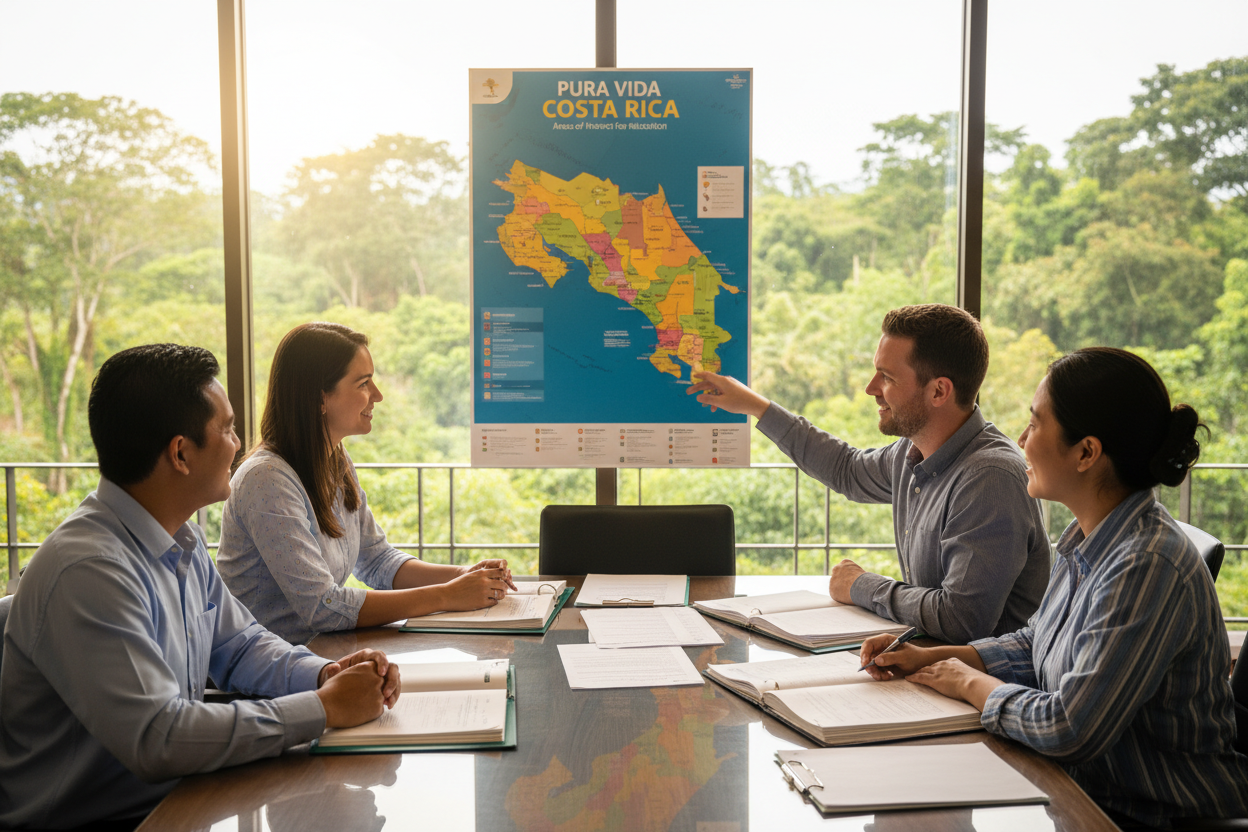
Many people search for information about becoming a Costa Rican citizen. It’s important to start with clarity. At CRIE, we specialize exclusively in Costa Rica residency and immigration law. We do not handle direct citizenship applications.
The practical reality is different from the dream. For nearly all foreign nationals, securing legal residency (Residencia) is the mandatory first step. This residency journey is where we focus our expertise. It forms the foundation for any future citizenship eligibility.
We must set realistic expectations upfront. Popular options like the Digital Nomad visa are temporary visitor permits. They do not count toward your residency time or citizenship path. They are useful for short-term stays but don’t advance your permanent legal status.
Costa Rican nationality law does offer pathways like citizenship by descent. For most, however, the process begins with establishing residency. Categories include Pensionado, Rentista, and Inversionista. Each has specific financial and document requirements.
Our approach is grounded and transparent. We emphasize starting your preparation from home. This involves gathering apostilled documents and certified translations. Proper preparation dramatically reduces delays and rejections at Costa Rican immigration (Inmigración). We build your long-term legal status one step at a time.
Getting Started with Costa Rica Residency via CRIE (Residencia)

For foreign nationals dreaming of a life in Costa Rica, the first concrete step is securing legal residency. This process involves navigating specific requirements set by Costa Rican immigration authorities. Proper preparation is key to a smooth application.
Overview of CRIE and its Role
At CRIE, we specialize exclusively in Costa Rica residency and immigration matters. Our role is to guide you through the complex documentation requirements and application procedures. We focus on the pathways that matter most for establishing your legal status here.
Why Begin Your Residency Journey with Prepared Documents
We emphasize one critical principle: begin your document preparation while still in your home country. This means securing apostilles and arranging certified translations before you arrive in Costa Rica.
Apostilles authenticate your documents for international use. They must be obtained from the specific state or federal authority where each document was issued. This can take weeks or months depending on your location.
Starting with prepared documents allows your application to move forward immediately. It avoids frustrating delays that extend the process. Many applicants discover too late they need to coordinate international authentication.
Our guidance reflects real procedures at Costa Rican immigration offices. You can verify current requirements at the official government website (migracion.go.cr). For specific questions, contact us via WhatsApp at +506 8706 3888 or email at info@crie.cr.
Step-by-Step Guide to the CRIE Residency Application Process (Inmigración)
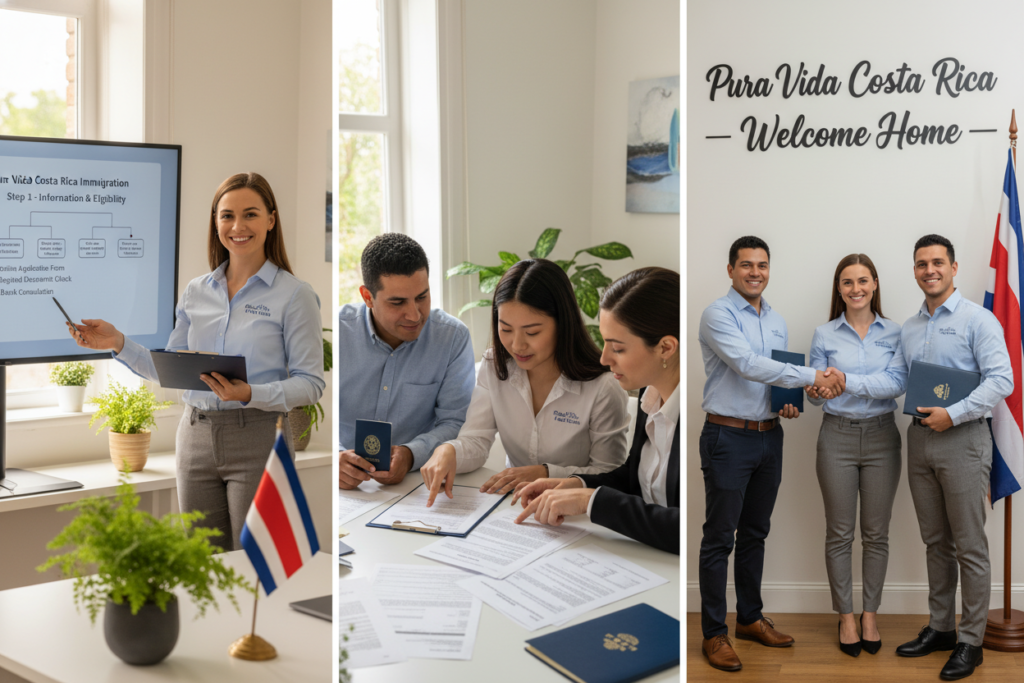
The path to securing your Residencia involves several defined stages with immigration authorities. We guide you through each phase to build your legal status correctly.
Initial Eligibility and Application Steps
Your first step is an honest assessment. You must determine which residency category—Pensionado, Rentista, or Inversionista—fits your financial situation. Each has distinct requirements.
For U.S. citizens, a mandatory consular registration is part of the process. This involves enrolling in the STEP program and obtaining a notarized affidavit from the Embassy for a $50 fee.
How to Submit Your Application Correctly
Once your documents are apostilled and translated, the formal application is submitted to Costa Rican immigration. Submitting a complete file is critical to avoid immediate rejection.
Processing times vary based on application volume and staffing. We never guarantee approval speed. For the latest information, please visit the official migracion.go.cr website.
Understanding these steps is vital, especially for families. For a complete guide for parents, explore our detailed resources.
Qualification Criteria and Financial Thresholds for Residency (Requisitos)
Qualifying for residency in Costa Rica depends on your financial proof. The country’s immigration rules set clear benchmarks. You must demonstrate stable resources to support yourself independently.
Understanding Pensionado Requirements (US$1,000+/month pension)
The Pensionado category requires a permanent pension of at least US$1,000 monthly. This income must come from outside Costa Rica. It needs to be guaranteed for your lifetime.
Rentista and Inversionista Guidelines (US$2,500/month and US$150,000 minimum)
Rentista applicants prove US$2,500 in monthly income for two years. Funds can come from investments for these purposes. The Inversionista pathway demands a US$150,000 minimum investment in Costa Rican assets.
A key condition for Inversionista: property must be in your personal name. You must have clear access to these resources. These requirements ensure economic contribution to the country.
You can verify all current thresholds at the official Costa Rican immigration website. We help assess your eligibility before you start the process.
Preparing Essential Documentation: Apostilles and Translations (Documentos)
Before any application can be submitted, your personal documents must undergo two critical processes: apostille and certified translation. This preparation is the most detail-sensitive phase. We strongly advise you begin gathering these records from your home country to avoid costly delays.
Obtaining Apostilles for Foreign Documents
An apostille is an official stamp for international use under the Hague Convention. Costa Rica participates in this treaty. The key rule: the apostille must come from the authority that issued your original document.
For U.S. citizens, this means your state vital records office for a birth certificate or the FBI for a federal background check. The U.S. Embassy in Costa Rica does not provide this service. Please visit the Department of State’s Authentications Office website or www.nass.org for instructions.
Documents from countries outside the Hague Convention need a more complex legalization process.
Arranging Certified Translations for Required Papers
All foreign documents not in Spanish require a certified translation. Costa Rican authorities will only accept work from an officially approved Traductor Oficial. Simple notarized translations are not sufficient.
Common records needing translation include birth certificates, marriage certificates, and police checks. Each apostilled document must have its certified Spanish counterpart.
We cannot overemphasize starting this process early. Verify the specific document list for your category at the official migracion.go.cr website. For comprehensive support with this and other steps, explore our additional services.
Navigating Common Mistakes and Timelines in the Residency Process (Errores y Plazos)
Understanding the typical pitfalls and realistic timelines is crucial for a successful residency application in Costa Rica. This knowledge helps you navigate the process smoothly.
Identifying and Avoiding Frequent Pitfalls
Common errors, or errores, often involve document authentication. Many applicants submit papers with incorrect apostilles or uncertified translations. Costa Rican law requires specific steps for these purposes.
Another frequent mistake is incomplete financial proof. This includes pension letters missing monthly amounts. Such oversights lead to immediate rejection by Costa Rican authorities.
Realistic Timelines for Each Step
Realistic timelines, or plazos, start with document gathering. This initial phase can take several months. Processing by Costa Rican immigration then adds significant time.
Straightforward cases may take 4-8 months. Complex situations can extend to over a year. The time varies based on application volume and staffing.
We set clear expectations. Any error restarts your timeline from zero. There are no guarantees about processing speed.
Each stage builds on the last. Proper preparation for temporary residency leads to permanent status after the required years. Having accurate information and organized access to your documents is key.
Understanding Costa Rica Citizenship: Rights and Duties with CRIE
Citizenship in Costa Rica represents the final step in a multi-year process, not the starting point. A fundamental legal distinction exists between residency and full citizenship. Residency grants permission to live here, while citizenship conveys complete political rights and a passport.
Residency as the First Step Before Citizenship Considerations
For most foreign nationals, securing legal residency is the mandatory first phase. You must qualify under categories like Pensionado, Rentista, or Inversionista. Continuous legal residency for several years is required before naturalization eligibility.
Costa Rican citizenship by descent is a separate pathway. It applies to individuals with Costa Rican parents or grandparents. This process requires registration with the Civil Registry and extensive family documentation.
Clarifying Why Digital Nomad Status Does Not Qualify
The Digital Nomad visa is explicitly a temporary visitor permit. It allows remote work but does not count toward your residency time. This status offers no pathway to permanent status or future citizenship.
If your goal includes eventual Costa Rican citizenship, you must begin with a qualifying residency category. We focus on building this essential legal foundation first.
Your Next Steps to Secure Your Costa Rican Residency with CRIE
Your journey to establishing legal status in Costa Rica begins with decisive action today. Start by assessing which residency category fits your financial situation. Gather required documents like birth certificates from your home country.
Begin the apostille and certified translation processes immediately. These steps take significant time. Always verify current conditions at the official Costa Rican immigration website, migracion.go.cr, for accurate information.
We specialize exclusively in Costa Rica residency and immigration. Our expertise helps citizens from various countries navigate the process. Contact us via WhatsApp at +506 8706 3888 or email info@crie.cr to discuss your specific purposes.
Let us guide you through the proper steps for your Costa Rican residency journey. Access our focused support to build your legal foundation in this beautiful country.
FAQ
What exactly is CRIE and how can it help with my residency process?
Why is having my documents prepared before starting so important?
What are the main financial requirements for Pensionado and Rentista residency?
FAQ
What exactly is CRIE and how can it help with my residency process?
CRIE, the Costa Rican Immigration Experts, is our team of specialized professionals. We guide you through the entire residency application process. Our role is to prepare your documents correctly, submit your file to immigration authorities, and manage communications. This helps avoid costly delays and rejections that often happen when applicants navigate the system alone.
Why is having my documents prepared before starting so important?
Costa Rican immigration law is strict about documentation. Missing an apostille or a certified translation can stop your application for months. We ensure every foreign document, from birth certificates to proof of income, meets the exact legal standards before submission. This preparation is the most critical step for a smooth process.
What are the main financial requirements for Pensionado and Rentista residency?
For the Pensionado category, you must prove a lifetime pension of at least US
FAQ
What exactly is CRIE and how can it help with my residency process?
CRIE, the Costa Rican Immigration Experts, is our team of specialized professionals. We guide you through the entire residency application process. Our role is to prepare your documents correctly, submit your file to immigration authorities, and manage communications. This helps avoid costly delays and rejections that often happen when applicants navigate the system alone.
Why is having my documents prepared before starting so important?
Costa Rican immigration law is strict about documentation. Missing an apostille or a certified translation can stop your application for months. We ensure every foreign document, from birth certificates to proof of income, meets the exact legal standards before submission. This preparation is the most critical step for a smooth process.
What are the main financial requirements for Pensionado and Rentista residency?
For the Pensionado category, you must prove a lifetime pension of at least US$1,000 per month. For the Rentista category, you need to demonstrate a guaranteed income of US$2,500 per month for two years, backed by a deposit or investment. The Inversionista category requires a minimum investment of US$150,000 in Costa Rica, approved by the government.
How do I get an apostille and certified translation for my documents?
You must obtain apostilles in the country where each document was issued, such as your home state’s Secretary of State for a U.S. birth certificate. After apostilling, all non-Spanish documents require a certified translation by a translator accredited with the Costa Rican Ministry of Foreign Affairs. We assist our clients in coordinating both steps efficiently.
What is the most common mistake people make in their residency application?
The most frequent and costly error is submitting incomplete or incorrectly legalized paperwork. This includes documents without an apostille, translations from non-accredited professionals, or expired financial statements. These errors lead to immediate rejection by the Dirección General de Migración y Extranjería, setting your timeline back by several months.
How long does the entire residency process typically take?
From initial document preparation to final approval, you should plan for a timeline of 6 to 9 months. This period includes gathering and legalizing your documents, submitting the formal application, and waiting for the immigration department’s review. Processing times can vary based on their current caseload.
Does obtaining residency automatically lead to Costa Rican citizenship?
No, residency and citizenship are separate legal processes. Holding residency for several years is the first step toward potentially qualifying for nationality. Citizenship itself requires a longer period of continuous legal residency, integration, and a separate application process governed by different laws.
Can I apply for residency under the Digital Nomad visa program?
No, the Digital Nomad visa is a separate, non-resident status. It grants the right to live and work remotely in Costa Rica for a limited time but does not count toward permanent residency or citizenship. If your goal is permanent residency, you must apply under a traditional category like Pensionado, Rentista, or Inversionista.
,000 per month. For the Rentista category, you need to demonstrate a guaranteed income of US,500 per month for two years, backed by a deposit or investment. The Inversionista category requires a minimum investment of US0,000 in Costa Rica, approved by the government.
How do I get an apostille and certified translation for my documents?
You must obtain apostilles in the country where each document was issued, such as your home state’s Secretary of State for a U.S. birth certificate. After apostilling, all non-Spanish documents require a certified translation by a translator accredited with the Costa Rican Ministry of Foreign Affairs. We assist our clients in coordinating both steps efficiently.
What is the most common mistake people make in their residency application?
The most frequent and costly error is submitting incomplete or incorrectly legalized paperwork. This includes documents without an apostille, translations from non-accredited professionals, or expired financial statements. These errors lead to immediate rejection by the Dirección General de Migración y Extranjería, setting your timeline back by several months.
How long does the entire residency process typically take?
From initial document preparation to final approval, you should plan for a timeline of 6 to 9 months. This period includes gathering and legalizing your documents, submitting the formal application, and waiting for the immigration department’s review. Processing times can vary based on their current caseload.
Does obtaining residency automatically lead to Costa Rican citizenship?
No, residency and citizenship are separate legal processes. Holding residency for several years is the first step toward potentially qualifying for nationality. Citizenship itself requires a longer period of continuous legal residency, integration, and a separate application process governed by different laws.
Can I apply for residency under the Digital Nomad visa program?
No, the Digital Nomad visa is a separate, non-resident status. It grants the right to live and work remotely in Costa Rica for a limited time but does not count toward permanent residency or citizenship. If your goal is permanent residency, you must apply under a traditional category like Pensionado, Rentista, or Inversionista.
How do I get an apostille and certified translation for my documents?
What is the most common mistake people make in their residency application?
How long does the entire residency process typically take?
Does obtaining residency automatically lead to Costa Rican citizenship?
Can I apply for residency under the Digital Nomad visa program?
Article by Glenn Tellier (Founder of CRIE and Grupo Gap)
Don't wait, contact us right now!
Call or WhatsApp Costa Rica +506 8373 2085 or +506 8706 3888
Call USA/Canada +1 305-906-6784