

Navigating residency in a new country can feel overwhelming. At CRIE, we serve as your dedicated guide, focusing exclusively on Costa Rica immigration law. Our boutique legal team combines deep expertise with a straightforward, approachable style.
We translate complex regulations into plain-language plans. Whether you’re exploring Pensionado, Rentista, or Inversionista categories, we provide step-by-step guidance on qualifications, required documents, and timelines.
Starting the process from your home country is crucial. We help you prepare apostilles, translations, and paperwork correctly beforehand. This proactive step prevents frustrating setbacks with your residency application.
We work directly with Costa Rica’s immigration authority (DGME). This direct access, combined with our current knowledge of thresholds and rules, allows us to offer realistic advice—not inflated promises.
Our commitment is to clarity and partnership. We walk alongside you from the first consultation until you hold your DIMEX residency card, protecting your interests every step of the way.
Costa Rica Residency Pathways: Pensionado (Pensionado), Rentista (Rentista), and Inversionista (Inversionista) Explained
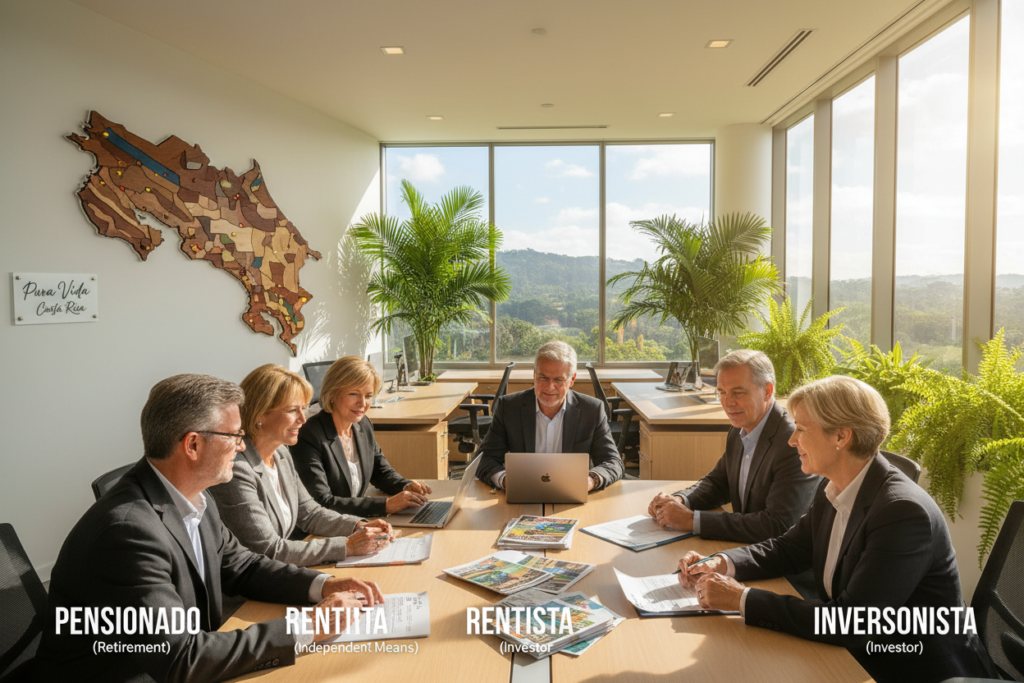
Understanding your options for permanent residency in Costa Rica begins with its three primary categories. Costa Rican immigration law establishes clear financial pathways for foreign individuals.
Each category serves different long-term goals. We provide the knowledge to match your situation to the right type.
Pensionado (Pensionado) Requirements and Benefits
The Pensionado category is for retirees. It requires a guaranteed lifetime pension of at least US$1,000 per month.
This offers one of the most straightforward routes to residency. Income must come from sources like Social Security or a private pension.
Rentista (Rentista) Income Criteria
Rentista residency suits those with stable investment income. You must prove US$2,500 per month for a minimum of two years.
Acceptable sources include rental properties or annuities. This is a common choice for non-retirees seeking residency.
Inversionista (Inversionista) Investment Thresholds
The Inversionista pathway requires a minimum US$150,000 investment. Real estate is a popular choice.
A critical rule: the property title must be in your personal name, not a corporation. Otherwise, the investment won’t qualify under current laws.
Note: The Digital Nomad visa is not a residency category. It doesn’t lead to permanent status or citizenship.
For a true path to residency, we guide you toward Rentista or Inversionista options. Processing for these categories typically takes six months to over a year.
Step-by-Step Documentation and Preparation for Your Residency Journey

Organizing your paperwork systematically from your home country prevents months of delays in Costa Rica’s immigration system. The most critical phase happens before you arrive.
Essential Documents: Apostilles and Translations
Key documents like birth certificates and background checks need an apostille. This official authentication validates them for use here. Afterward, certified Spanish translations are mandatory.
We guide you on where to get this done efficiently. Proper authentication matters for a smooth submission.
Pre-Arrival Checklist: Organizing Your Paperwork
Timing is crucial, especially for police checks valid only six months. Our team provides a customized checklist for your residency category.
We review your complete document set to catch common errors. This careful process protects your application status. You gain clarity through every step.
Who Qualifies for Costa Rica Residency? Essential Requirements and Income Thresholds
Qualifying for legal status in Costa Rica requires you to satisfy clear income or investment thresholds. The law establishes three primary financial pathways for individuals seeking permanent residency.
Understanding Financial Criteria: US$1,000+ Pension, US$2,500+ Income, and US$150,000 Investment
The Pensionado category is for retirees. You must prove a guaranteed lifetime pension of at least US$1,000 per month.
Rentista residency suits those with stable income. It requires proof of US$2,500 monthly for a minimum two-year period.
The Inversionista pathway demands a US$150,000 minimum investment. A critical rule: if using real estate, the property title must be in your personal name.
Spouses and dependent children can be included in your application. Each family member needs their own set of authenticated documents.
Note: The Digital Nomad visa is a temporary authorization. It does not lead to permanent residency or citizenship in this country.
For a true path to residency, we guide clients toward Rentista or Inversionista options based on their financial situation and business needs. A knowledgeable lawyer helps navigate these specific requirements.
Avoiding Common Pitfalls in the Costa Rican Immigration Process
The path to residency is often lengthened by a handful of common, yet entirely preventable, application errors. Understanding these typical mistakes before you start helps you avoid months of frustrating delays.
Timing and Timeline Misconceptions
The most frequent unrealistic expectation involves processing speed. Many assume approval takes just weeks.
In reality, Costa Rican residency applications typically require six months to over a year. Complex situations or high application volume can extend this further.
Common Documentation and Procedural Errors
Document expiration is a major setback. Police background checks are only valid for about six months.
Obtaining them too early means they expire mid-process. You must then restart with a new check.
Property ownership structure matters greatly for investors. To qualify for the Inversionista category, your real estate must be titled in your personal name.
Purchasing through a corporation—a common recommendation for other reasons—disqualifies the investment. Our team’s experience over many years helps clients navigate these specific rules.
Other frequent errors include missing apostilles, using non-certified translators, and insufficient financial proof. Each mistake can add months to your timeline.
We review all document types before submission. This proactive step prevents costly procedural errors from derailing your application.
Expert Legal Support for Your Costa Rica Immigration Journey
Securing expert legal support transforms the complex immigration journey into a manageable, step-by-step process. Our boutique firm, CRIE, provides dedicated legal services focused exclusively on this country’s immigration law.
Personalized Consultation and Strategic Guidance
We begin with a personalized consultation to assess your situation. Our team crafts a strategic plan for your chosen residency pathway.
You gain direct representation before the DGME in San José. We manage your entire application, protecting your rights at each stage.
Starting from Home: Getting Your Documents Ready
The process starts in your home country. We provide detailed checklists for apostilles, translations, and document validity.
This proactive approach prevents delays. For investors, our integrated expertise includes real estate due diligence and contract review.
Ready to begin? Contact our team via WhatsApp at +506 8706 3888 or email info@crie.cr for a clear assessment of your options.
Key Considerations for a Smooth Transition to Life in Costa Rica
Your successful transition to Costa Rica extends far beyond the initial residency approval. Building a stable life here involves integrating into the country’s legal and social systems.
Immediate priorities include mandatory health insurance enrollment and understanding tax residency implications. Spending over 183 days per year typically establishes tax residency, triggering specific reporting obligations.
Long-term planning covers property ownership, business establishment, and family needs like education. Each area operates under distinct Costa Rican laws that require proper navigation.
Maintaining your residency status through renewals is crucial for the potential pathway to permanent residency and citizenship. We provide integrated legal services to support you through all these phases. For detailed guidance on these matters, our team offers consistent expertise.
For official requirements, always consult migracion.go.cr. For personalized support with your specific situation, contact our team at CRIE. We help you build a secure future in Costa Rica.
FAQ
What are the main residency categories for moving to Costa Rica?
The primary pathways are Pensionado, Rentista, and Inversionista. The Pensionado category is for retirees with a guaranteed lifetime pension. Rentista is for individuals with stable, passive income. The Inversionista category requires a significant capital investment in the country, such as in real estate or a business.
How much investment is required for the Inversionista residency visa?
The current investment threshold for the Inversionista visa is US 0,000. This capital must be invested in approved assets within Costa Rica, like property, shares in a Costa Rican corporation, or certain agricultural projects. We guide clients through the proper legal channels to ensure their investment meets all official requirements.
What are the most common mistakes people make during the immigration process?
The two most frequent pitfalls involve timing and paperwork. Many underestimate the processing timeline, which can take several months, and make life decisions based on incorrect assumptions. Procedurally, errors with document apostilles, certified translations, or incomplete filings are common and can cause significant delays or denials.
Can I start the residency application process from my home country?
A> Absolutely. In fact, we recommend beginning the documentation process before you arrive. This includes gathering financial proof, obtaining police clearance certificates, and having vital records apostilled and translated. We provide a detailed pre-arrival checklist and can consult with you remotely to get everything in order, making your transition smoother.
Why is legal representation important for my residency application?
Costa Rican immigration law is detailed and the system has specific procedural nuances. Our lawyers, who are members of the Costa Rican Bar Association, provide more than just form filing. We offer strategic guidance, ensure due diligence on your documents, and provide direct representation with immigration authorities. This expertise helps avoid costly errors and protects your rights throughout the process.
What should I consider beyond the visa when planning my move?
A smooth transition involves planning beyond legal status. Key considerations include understanding local tax implications, setting up reliable local banking, securing valid health insurance, and comprehending real estate laws if you’re purchasing property. We help clients navigate these interconnected areas to build a stable foundation for their new life.
Article by Glenn Tellier (Founder of CRIE and Grupo Gap)
Don't wait, contact us right now!
Call or WhatsApp Costa Rica +506 8373 2085 or +506 8706 3888
Call USA/Canada +1 305-906-6784