
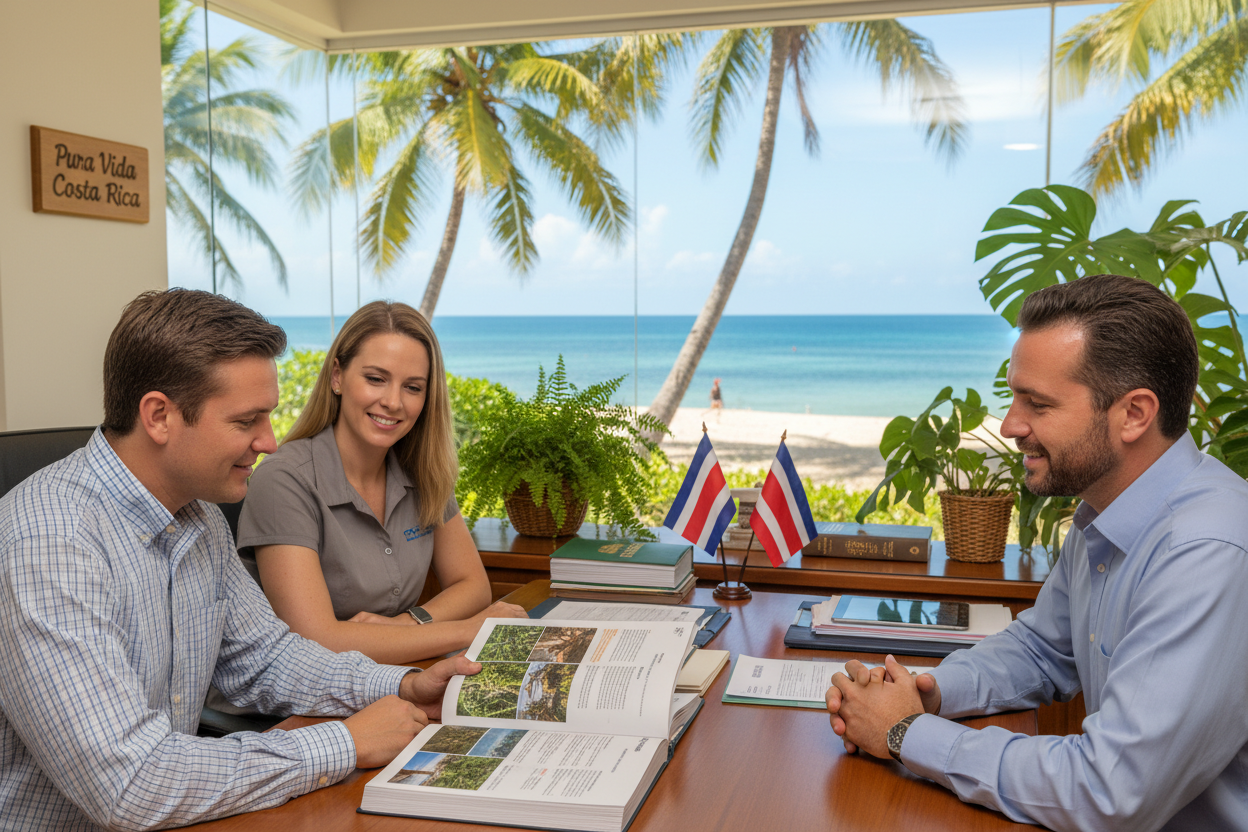
Dreaming of a life in Costa Rica is easy. Navigating the official process for long-term stay is more complex. We provide clear, step-by-step information on the Costa Rica immigration visa landscape.
This stable, democratic country is famously welcoming. Its excellent climate, quality healthcare, and 0% tax on foreign-source income make it a top choice for retirees and expats.
Our guide focuses exclusively on legal residency pathways. Whether you’re a retiree, investor, or have guaranteed income, we’ll outline the specific requirements. The key is starting your document preparation—gathering birth certificates, background checks, and income proof—from home.
Realistic timelines are 9 to 24 months for processing. We offer no promises or price quotes, just a transparent roadmap based on current regulations. You can begin by taking our free residency assessment to understand your specific options.
Understanding Costa Rica Immigration & Residency Options
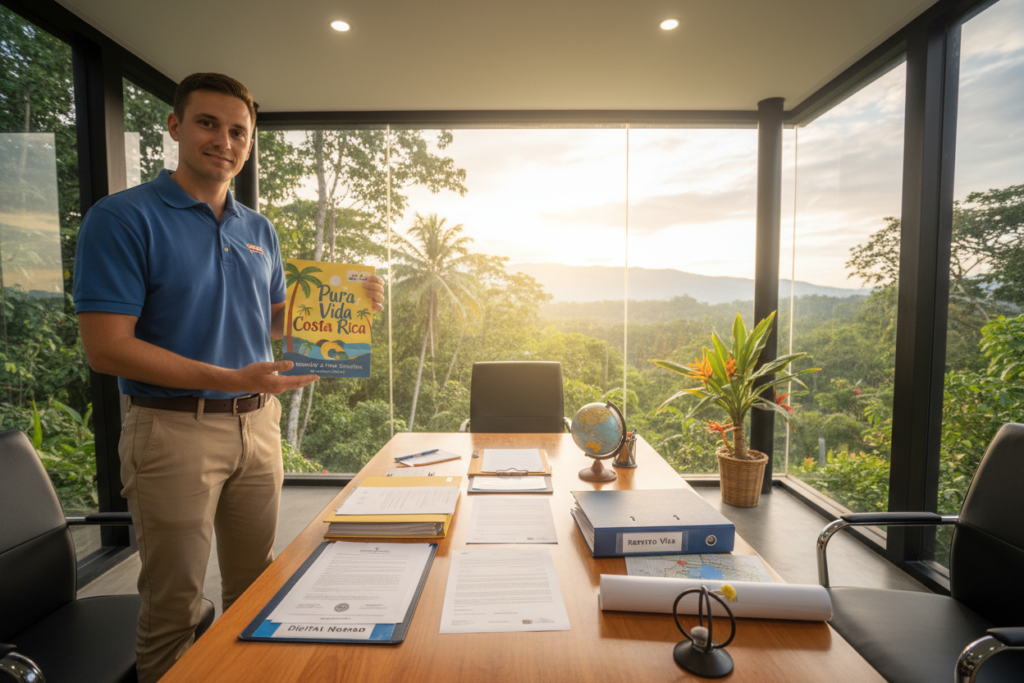
For expats considering a long-term move, the distinction between residency status and full citizenship is the critical first lesson.
Introducing CRIE (crie.cr) and Its Role
We are your dedicated guide for navigating this system. CRIE focuses exclusively on helping you obtain legal residency status in Costa Rica.
We do not handle tourist visas or short-term stays. Our expertise is in the pathways for long-term living.
Residency Versus Citizenship: Key Distinctions
Residency is your permission to live here. Citizenship is becoming a national of the country. The path is sequential and takes years.
Most people start with a temporary residency permit, like Pensionado or Rentista. These are valid for two years and can be renewed.
After three consecutive years as a temporary resident, you can apply for permanent residency. This status must be renewed every five years and allows you to work legally.
Citizenship through naturalization requires at least seven years of legal residence. Costa Rica officially asks new citizens to renounce their original citizenship.
In practice, a common “don’t ask, don’t tell” approach exists. The government does not forward renunciation papers to other countries.
Your foundation is always residency. We help you build it correctly from the start.
Qualifying for Costa Rica Immigration Visas
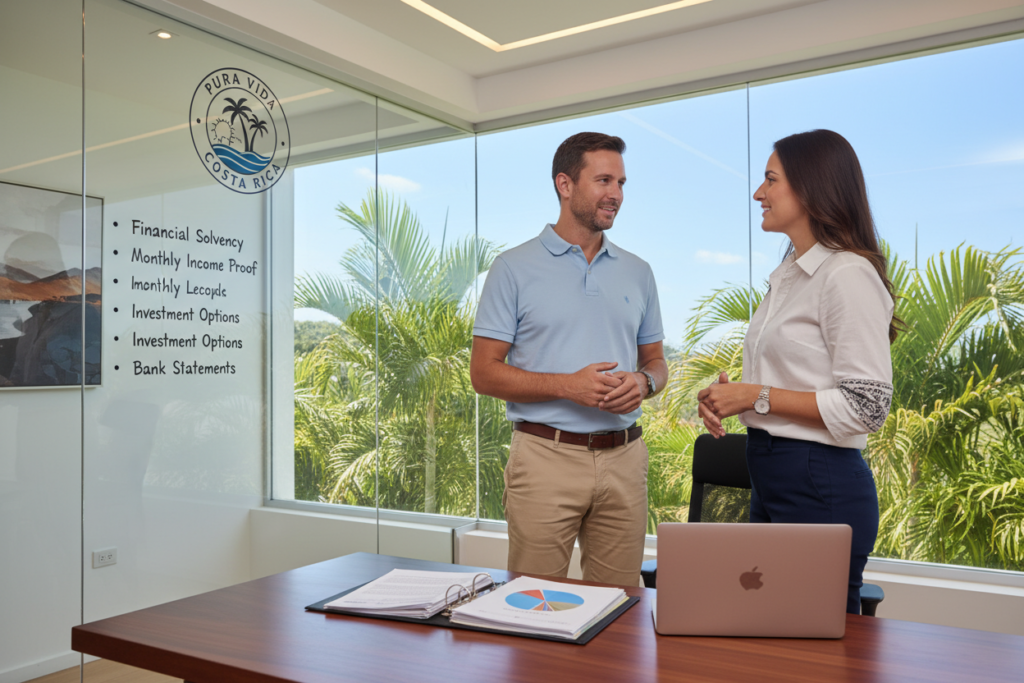
Your financial profile determines which residency pathway is open to you in Costa Rica. We outline the three main categories below, each with specific financial requirements.
Eligibility Criteria for Pensionado (Pensionado)
The Pensionado visa is for retirees. You must prove a permanent pension income of at least US$1,000 per month. This can come from U.S. Social Security, a government plan, military retirement, or a private company.
Disability retirement also qualifies if it meets the income requirement. You can combine multiple pension sources to reach the $1,000 monthly threshold.
Requirements for Rentista (Rentista) and Investor (Inversionista)
The Rentista pathway requires proof of US$2,500 in monthly income for two years. Most applicants satisfy this by depositing $60,000 in a Costa Rican bank. This option suits those with savings but no pension yet.
The Inversionista category demands a one-time investment of US$150,000 in Costa Rica. This can be in real estate, stocks, or a business. A critical detail: if using real estate, the property must be in your personal name, not a corporation.
Each category leads to temporary residency. Understanding which fits your situation is the first step we help you take.
Step-by-Step Guidance for Your Application Process
Successfully navigating the application process hinges on meticulous preparation from your home country. We break this into two clear phases: gathering the correct paperwork and organizing it effectively.
Pre-Arrival Document Preparation
Begin by requesting your official birth certificate and a federal criminal background check. These documents cannot be older than six months when you submit your application.
For U.S. applicants, this means ordering an FBI background check online. Processing takes several weeks. Also, obtain a letter from your pension provider confirming your monthly income.
You will need a valid passport and copies of every page. Prepare a formal application letter addressed to the Consul of Costa Rica. This letter should include your full personal and contact information.
Organizing Your Application Materials from Home
Create a physical folder and a digital scan for each document. Use a checklist to track your birth certificate, background check, passport copies, income proof, and application letter.
All documents from the United States must be apostilled and translated into Spanish. Give yourself at least three to six months to complete these steps without rushing.
Having everything ready before you travel avoids costly delays. We provide specific guidance on each requirement, but your early start is the key to a smooth process.
Exploring Different costa-rica-immigration-visa Options
We often see clients conflate the popular Digital Nomad program with actual residency pathways. It’s essential to understand the three core categories that lead to legal status.
Comparing Pensionado, Rentista, and Inversionista Pathways
The Pensionado visa requires proof of a $1,000 monthly pension. The Rentista category needs a $2,500 monthly income for two years, often secured with a $60,000 deposit.
The Inversionista pathway demands a $150,000 investment in local assets. All three grant temporary residency for two-year periods.
These are the only options that start your clock toward permanent residency and potential citizenship.
Clarifying the Digital Nomad Visa Misconception
Costa Rica’s Digital Nomad visa is a separate permit. It allows remote work for one year, renewable for a second.
You must show $3,000 monthly foreign income. This nomad visa is useful for a trial period.
Critically, it does NOT grant residency status. Time on this visa does not count toward permanent residency or citizenship.
If you’re a remote worker seeking real roots, the Rentista visa is a smarter long-term choice. Its income requirement is actually lower than the Digital Nomad threshold.
Understanding Residency Requirements & Income Thresholds
Each residency category in Costa Rica comes with clear, non-negotiable financial thresholds. Your eligibility depends entirely on meeting these specific monetary requirements.
Pensionado: US$1,000+ Monthly Income Requirement
The Pensionado visa requires a permanent monthly income of at least US$1,000. This must come from a verifiable lifelong pension source, like Social Security or a company retirement plan.
The key is proving this income is guaranteed and will not run out.
Rentista & Investor: Financial and Investment Prerequisites
For the Rentista category, you must show US$2,500 per month for two years. This is typically done by depositing $60,000 in a Costa Rican bank.
The bank then makes monthly transfers to your local account. The Inversionista pathway requires a one-time investment of $150,000.
If using real estate, the property must be in your personal name, not a corporation.
As a temporary resident, you cannot work for a local company. You can own a business but must hire Costa Rican employees for the labor.
You will pay 9-10% of your stated income into the national social security system. This provides access to healthcare.
In practice, authorities are lenient with online work for clients outside the country. Business owners can also legally receive dividends.
Understanding these costs helps you choose the right path and budget accurately.
Essential Documents and Their Proper Preparation
Properly preparing your official paperwork is the most critical step in securing legal status. Every document you submit must meet two non-negotiable requirements: apostille certification and Spanish translation.
Required Documents: Birth Certificate, Passport, and More
Begin with your birth certificate. Obtain an official copy from your vital records office. This certificate cannot be older than six months at submission.
Your federal criminal background check must also be under six months old. For U.S. applicants, this means an FBI check. Allow 4-6 weeks for processing.
You need your valid passport plus photocopies of every page, including blanks. Prepare three recent passport-size photos with a white background.
Include a formal application letter addressed to the Consul. State your full name, passport details, intended address, and residency category. For financial proof, provide a pension verification letter or bank statements.
Apostilles and Spanish Translations: What You Need to Know
An apostille is a special certificate that verifies a document’s authenticity for international use. In the U.S., your state’s Secretary of State office issues it.
After apostilling, get certified Spanish translations from an approved translator. Budget 2-4 weeks and typical costs of $20-50 per page. Costa Rican authorities require both steps for every document.
Timelines and Expectations During the Application Process
Understanding the waiting periods involved can prevent frustration during your application. We set realistic expectations from the start.
Processing Durations and Critical Milestones
Processing times for most residency applications range from 9 to 24 months. The good news is you can stay in the country during this period.
After submission, an initial review takes 2-4 months. A critical milestone is fingerprinting at the Ministry of Public Safety, usually within 3-6 months.
Final approval and issuance of your cédula card can take another 6-12 months. This card grants two years of temporary residency.
You must renew this status every two years. After three consecutive years, you become eligible for permanent residency.
Timelines can vary. Planning for this extended processing time is essential for a smooth transition to life in Costa Rica.
Common Mistakes to Avoid in Your Application
Many applicants stumble on avoidable errors that delay their residency approval. We see these mistakes frequently, and they are entirely preventable with careful attention.
Overlooking Essential Documentation Details
Your birth certificate and background check must be less than six months old at submission. Outdated documents cause immediate rejection.
Also, provide copies of every passport page, even blank ones. Missing pages will render your application incomplete.
All papers require an apostille and certified Spanish translation. Skipping these steps is a common oversight.
Misunderstanding Income and Investment Guidelines
For the Investor category, the property must be in your personal name. Ownership through a corporation does not satisfy requirements.
The Pensionado visa needs permanent pension income. Simple retirement account withdrawals often do not qualify.
Rentista applicants must deposit another $60,000 after 24 months to renew. This is an ongoing capital commitment.
You must also spend at least four months per year in Costa Rica. Failing to maintain this physical presence risks your status.
For a deeper dive into these pitfalls, review our guide on common mistakes to avoid. Careful preparation from the start is your best strategy.
Starting from Home: Pre-Application Strategies
The single most effective strategy for a smooth residency application begins long before you book your flight to Costa Rica. Starting your document preparation from home gives you full access to U.S. government offices and services. This early work saves significant time and money compared to trying to obtain everything after you’ve moved.
How to Organize Your Documents Effectively
Create a master checklist of every required item. This includes your birth certificate, FBI background check, passport copies, and financial proof. An organized system prevents costly oversights.
Work through your checklist in logical order. Request time-sensitive documents like the FBI check first, as processing takes weeks. Track issue dates carefully since some papers cannot be older than six months.
Once you have each document, get it apostilled immediately. Then make multiple photocopies before translation. Keep one set with you, one for records, and a backup with someone trusted in the U.S.
Scan everything as high-resolution PDFs for digital backup. This simple step has saved applicants when physical documents were misplaced. Consider using a certified Costa Rica immigration consultant to review your complete package before submission.
Set up a dedicated binder with dividers for each category. Include a summary sheet listing each document’s status. This meticulous approach transforms a complex process into clear, manageable steps for your move to Costa Rica.
Residency Versus Citizenship: A Practical Approach
Achieving citizenship status is a long-term goal that begins with a solid residency foundation. The path to becoming a Costa Rican citizen requires at least seven years of legal residence. Your immediate and essential focus must be on obtaining residency first.
Why Focusing on Residency is Essential
You cannot apply for citizenship without first establishing legal residency. This means your practical first step is qualifying for a temporary residency category. Options include Pensionado, Rentista, or Inversionista.
These programs grant you permission to live in the country legally. They start the clock on your required years of residence.
Steps to Transition Toward Citizenship if Desired
The pathway is sequential. You obtain temporary residency, which is valid for two years and renewable. After maintaining this status for three consecutive years, you can apply for permanent residency.
Permanent residency must be renewed every five years. It grants the right to work legally in Costa Rica.
Only after you have held legal residency for a total of seven years can you apply for naturalization. Costa Rica officially requires new citizens to renounce their original citizenship.
In practice, a common “don’t ask, don’t tell” approach exists regarding dual citizenship. We must be transparent—we cannot guarantee future citizenship outcomes. Consulting with licensed immigration attorneys for specific legal advice is always recommended.
Final Thoughts and Action Steps to Begin Your Journey
Your journey toward legal residency in Costa Rica begins with a clear plan and decisive action. You now understand the main pathways—Pensionado, Rentista, and Inversionista. Your next step is to evaluate which category fits your finances.
Start your document preparation from home. Gather your birth certificate and background check. Always verify the latest official information at migracion.go.cr.
We at CRIE focus exclusively on residency. We offer honest guidance, not promises. For specific questions, contact us via WhatsApp at +506 8706 3888 or email info@crie.cr.
Remember, this process is a marathon. Expect a 9 to 24-month timeline. With thorough preparation and realistic expectations, your goal of living in Costa Rica is within reach.
FAQ
What is the main difference between residency and citizenship in Costa Rica?
Residency is a legal status granting you permission to live in the country, while citizenship makes you a full legal national with a Costa Rican passport. You must first be a legal resident for several years before you can even apply for citizenship. We focus on helping you secure residency first, as it’s the essential and most practical step.
What are the minimum income requirements for the Pensionado visa?
To qualify for the Pensionado, or pensioner, residency, you must prove a stable lifetime pension of at least US
FAQ
What is the main difference between residency and citizenship in Costa Rica?
Residency is a legal status granting you permission to live in the country, while citizenship makes you a full legal national with a Costa Rican passport. You must first be a legal resident for several years before you can even apply for citizenship. We focus on helping you secure residency first, as it’s the essential and most practical step.
What are the minimum income requirements for the Pensionado visa?
To qualify for the Pensionado, or pensioner, residency, you must prove a stable lifetime pension of at least US$1,000 per month. This income can come from Social Security, a private pension, or similar retirement funds. You’ll need to demonstrate this with official documentation, which we help you gather and authenticate.
Can I apply for residency from my home country, or do I need to be in Costa Rica?
You can—and should—begin the process from your home country. We guide you through organizing critical documents like your birth certificate and police clearance, getting them apostilled and officially translated into Spanish. Having these prepared before you arrive significantly smooths your application and avoids costly delays within the country.
Is the Digital Nomad Visa a path to permanent residency?
No, it is not. The Digital Nomad Visa is a temporary permit for remote workers to live and work in Costa Rica for one or two years. It does not count toward the time required for permanent residency or citizenship. It’s a great option for a trial period, but for long-term plans, the Pensionado, Rentista, or Investor pathways are the correct choices.
How long does the residency application process typically take?
The entire process, from document preparation to approval, generally takes between 6 to 12 months. This period includes submitting your application to immigration, waiting for review, and receiving your official *cédula* (ID card). We manage this timeline with you, setting clear expectations at each milestone to prevent surprises.
What is the most common mistake people make in their application?
Overlooking the strict requirements for document authentication is a frequent error. Every foreign-issued document, like your birth certificate or marriage license, must have an apostille and a certified Spanish translation. Submitting documents without these renders them invalid and can set your application back by months. We ensure every piece of your paperwork is perfectly prepared.
,000 per month. This income can come from Social Security, a private pension, or similar retirement funds. You’ll need to demonstrate this with official documentation, which we help you gather and authenticate.
Can I apply for residency from my home country, or do I need to be in Costa Rica?
You can—and should—begin the process from your home country. We guide you through organizing critical documents like your birth certificate and police clearance, getting them apostilled and officially translated into Spanish. Having these prepared before you arrive significantly smooths your application and avoids costly delays within the country.
Is the Digital Nomad Visa a path to permanent residency?
No, it is not. The Digital Nomad Visa is a temporary permit for remote workers to live and work in Costa Rica for one or two years. It does not count toward the time required for permanent residency or citizenship. It’s a great option for a trial period, but for long-term plans, the Pensionado, Rentista, or Investor pathways are the correct choices.
How long does the residency application process typically take?
The entire process, from document preparation to approval, generally takes between 6 to 12 months. This period includes submitting your application to immigration, waiting for review, and receiving your official *cédula* (ID card). We manage this timeline with you, setting clear expectations at each milestone to prevent surprises.
What is the most common mistake people make in their application?
Overlooking the strict requirements for document authentication is a frequent error. Every foreign-issued document, like your birth certificate or marriage license, must have an apostille and a certified Spanish translation. Submitting documents without these renders them invalid and can set your application back by months. We ensure every piece of your paperwork is perfectly prepared.
Article by Glenn Tellier (Founder of CRIE and Grupo Gap)
Don't wait, contact us right now!
Call or WhatsApp Costa Rica +506 8373 2085 or +506 8706 3888
Call USA/Canada +1 305-906-6784