
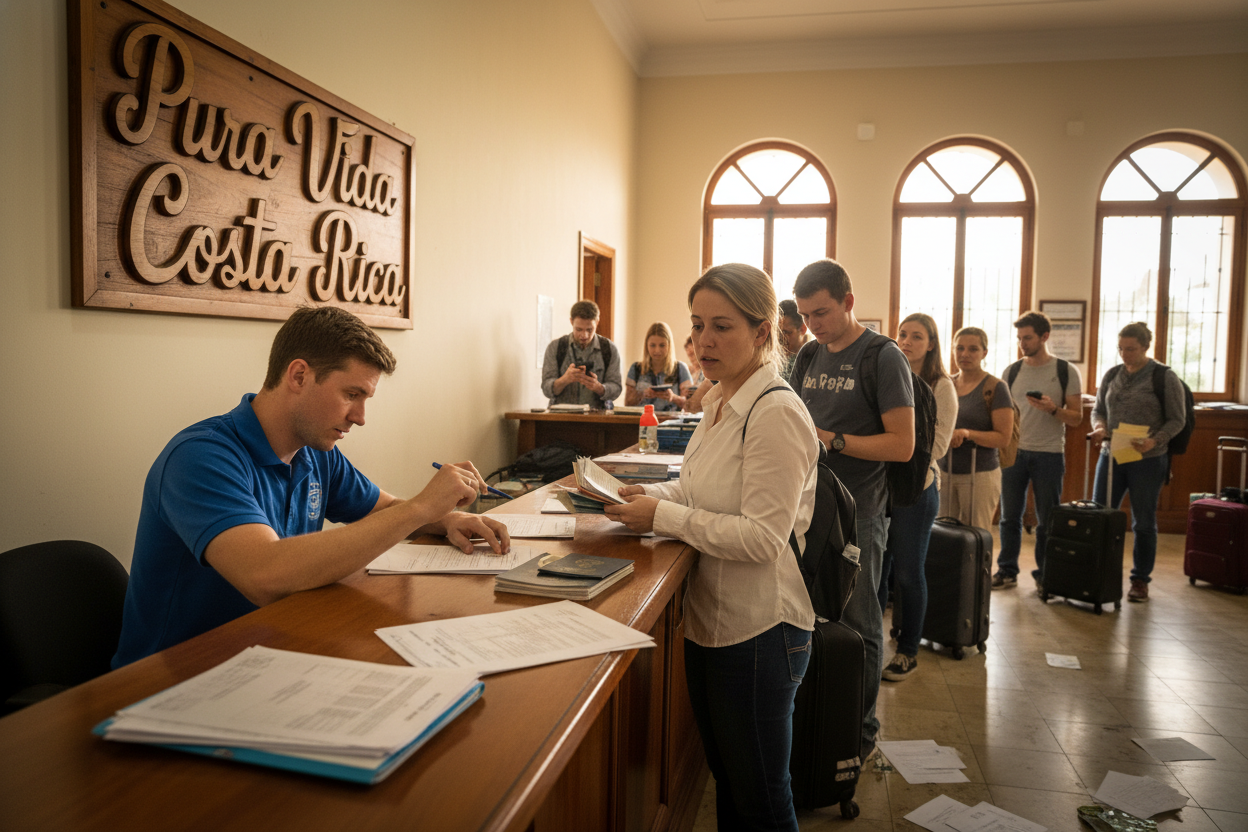
Many people from the United States and other countries are discovering a new reality. The process for establishing residency in Costa Rica has become notably slower and less predictable than it was just a few years ago.
We won’t sugarcoat the situation. Processing times have extended, and requirements have tightened. This shift is due to a mix of local government capacity issues and global migration pressures.
Global events, like the pandemic and severe weather, have intensified these challenges. They have created significant backlogs in immigration systems worldwide, including here.
Today, more than ever, you need accurate information and realistic timelines. Success requires thorough preparation, starting the document-gathering process from your home country.
At CRIE, we provide Costa Rica residency and immigration services—and only these services. We are experienced guides who help people navigate these exact challenges. Understanding the reasons behind the current conditions is your first step toward navigating them successfully.
Current Landscape of Costa Rican Immigration Processes

Applicants from the United States and elsewhere now encounter a system under significant strain. Wait times are longer than historical averages. Documentation faces increased scrutiny, and requests for additional information are common.
Processing timelines vary widely. They depend on application volume, staff availability, and ongoing system updates within the government’s immigration department.
This situation is not unique to Costa Rica. Immigration systems around the world face similar pressure and backlog issues. Understanding the specific factors here helps people from many countries plan effectively.
Increased interest in residency—driven by quality of life—meets limited processing capacity. This creates a backlog where applications once processed in months now take much more time.
We guide the process and ensure documents meet standards. However, we cannot control or guarantee processing times. Those decisions rest with Costa Rica’s Dirección General de Migración y Extranjería.
Always verify current requirements directly at the official source, migracion.go.cr. Success today requires thorough preparation, patience, and realistic expectations about time.
Historical Context: Changing Immigration Dynamics
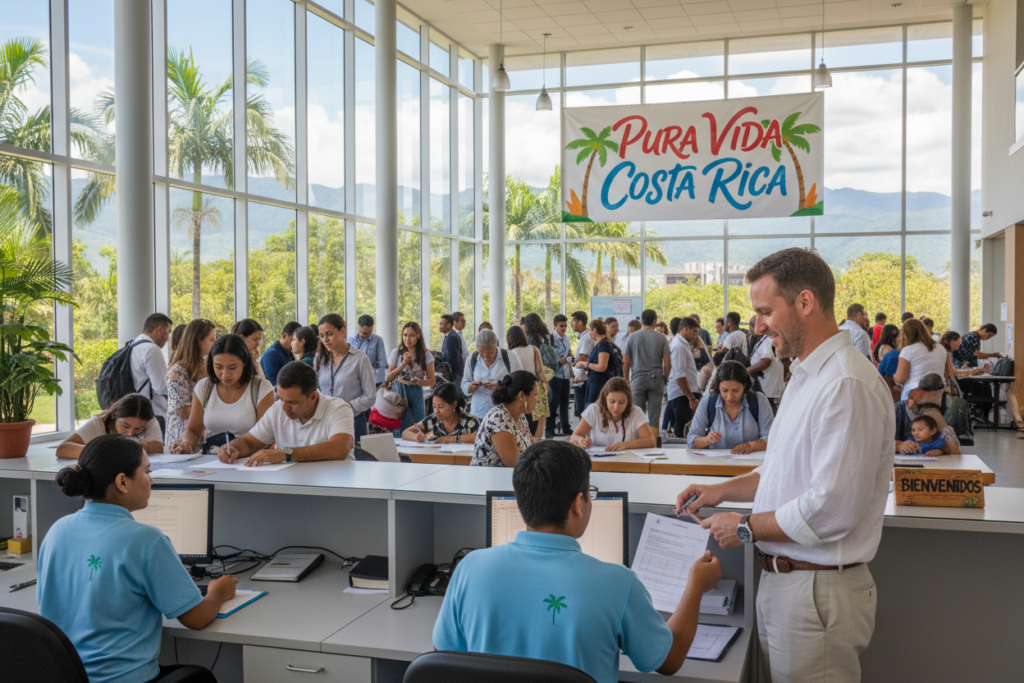
Costa Rica’s role in Central American migration has shifted from a transit point to a primary destination. For many years, movement was often due to regional instability. Now, people from the United States, Canada, and other parts of the world seek long-term residency here.
Impact of Past Policies
Immigration policies were once more straightforward. Processing times were faster a decade ago. As application numbers grew, the government’s Dirección General de Migración y Extranjería implemented stricter checks.
This created additional layers of review. The change directly contributes to today’s longer, less predictable timelines.
Lessons from North American Migration Trends
Economic pressures and political polarization in North America drive interest in Costa Rica. Environmental concerns also push people from these countries to seek a better life.
This surge in demand strains a system built for different volumes. The government now balances welcoming qualified residents with managing this new reality.
Understanding this history is key. Current delays are not arbitrary. They result from decades of evolving global demand meeting limited local capacity.
Step-by-Step Residency Guide (Guía de Residencia)
Navigating residency in Costa Rica begins with a clear understanding of your eligibility. This practical guide provides a step-by-step way forward. The first step is identifying which residency category fits your situation.
Who Qualifies for Residency?
Individuals from the United States and other countries typically apply under one of three main categories. The Pensionado category is for retirees with a stable pension. The Rentista category suits those with a provable fixed income.
The Inversionista category is for people making a qualified investment. Determining your correct category is the foundation of a successful application strategy.
Preparing Your Documents Before Arrival
The most critical action you can take is to gather documents before you leave home. Certain papers must be obtained from your country of origin. This includes birth certificates, marriage certificates, and police background checks.
These documents need proper authentication and official translation. Starting this process early gives you more control over your timeline. It helps avoid delays once the formal application begins.
Always verify the latest, specific requirements for your category at the official source, migracion.go.cr. Thorough preparation in these key areas is the best way to manage your time effectively.
Pensionado (Pensionado) Eligibility and Requirements
For retirees from the United States seeking a stable life abroad, the Pensionado residency category offers a clear path. It is designed for individuals who receive a permanent pension from a government, company, or recognized institution.
The key requirement is proving a guaranteed lifetime income of at least $1,000 US dollars per month. This financial threshold is non-negotiable and forms the basis of your application.
Required Pension Proof and Documentation
You must provide official letters from your pension provider. These documents should state the monthly amount and confirm the pension’s permanence.
All paperwork must be recent, typically issued within the last three to six months. Documents from your home country require an apostille and official translation in Costa Rica.
Key Income Threshold: $1,000+ US dollars/month
The $1,000 monthly minimum must be proven as a reliable, continuing income. U.S. Social Security retirement benefits typically qualify.
Other government or private pensions may also meet the standard. However, temporary or disability payments often do not. Verifying your specific pension type ahead of time is essential.
This category provides a practical way to establish legal residency. It offers the opportunity to enjoy the country’s quality of life for the long term.
Rentista (Rentista) Requirements and Income Proof
Individuals from the United States with reliable passive income streams often explore the Rentista (Rentista) residency category. This pathway is designed for those who have guaranteed income from sources like investments, rental properties, or annuities.
Understanding the $2,500 Monthly Income Standard
The core requirement is proving a guaranteed monthly income of at least $2,500 US dollars. This equals $30,000 annually. The income must be consistent and continue for a minimum of two years.
It cannot be a one-time event. Authorities need to see a reliable, ongoing stream that will support you. This financial threshold is a strict benchmark for approval.
Documenting a Consistent Two-Year Income
Proof requires official documentation from your home country. You need bank statements, investment account summaries, or rental agreements covering the full period.
Financial institutions must provide letters confirming the source, amount, and duration. These documents then need an apostille and official translation. Starting this process before you leave is the most efficient way to manage your time.
We help clients navigate this significant documentation burden. The Rentista category is a solid opportunity for qualified individuals, but thorough preparation is your best defense against delays.
Inversionista (Inversionista) Investment Criteria and Process
The Inversionista (Inversionista) category is designed for foreign nationals making a substantial, verifiable investment in Costa Rican assets. This pathway has grown popular for people from the United States. It combines legal residency with property ownership or business development.
Minimum Investment and Property Requirements
A minimum investment of $150,000 US dollars is required. This must be in qualifying real estate or other approved ventures. Documentation like property appraisals and purchase agreements is mandatory.
All investments must be registered with Costa Rican authorities. This process takes time and careful planning. It verifies the funds are genuine and meet legal standards.
Importance of Personal Ownership
A critical rule is that the qualifying asset must be in your personal name. Holding property through a corporation does not satisfy this requirement. This creates a key decision point for investors.
You must choose between corporate liability protections and residency benefits. We advise consulting a professional before you buy. Proper timing between your purchase and application is the best way to avoid delays.
This category offers a direct opportunity in the local market. Success depends on thorough preparation and understanding these specific rules.
Alternative Options: Digital Nomad vs. Residency Paths
Understanding the limitations of a digital nomad visa is crucial for anyone planning a long-term future in Costa Rica. Many people from the United States and around the world confuse this temporary permit with a residency pathway.
We need to clarify a critical point. The Digital Nomad visa is an authorization to stay and work remotely. It is not a form of legal residency.
Why Digital Nomad Status Does Not Lead to Citizenship
This status grants permission to live here for up to two years. It does not provide a pathway to permanent residency or citizenship.
Time spent under this visa does not count toward the years required for naturalization. Relying on renewals is a temporary way to manage your stay, not a strategy for the long run.
Exploring the Nearest Viable Residency Option
Your actual circumstances determine the best path. Remote workers should evaluate future pension income, passive investment streams, or capital for a qualified investment.
These areas align with the Pensionado, Rentista, or Inversionista categories. Starting that process early is the most reliable way to build a permanent life in this country.
Common Mistakes to Avoid in the Immigration Process
We consistently see applicants from the United States face unnecessary hurdles due to a handful of recurring issues. Understanding these pitfalls is the best way to save significant time and avoid frustration.
Incomplete Documentation and Timing Errors
The number one problem is submitting incomplete paperwork. Missing apostilles, expired documents, or inconsistencies between files trigger official requests for more information. This adds weeks or months to your case.
Timing errors are equally dangerous. Starting the process after you move makes it hard to obtain documents from your home country. Assuming fast processing leads to rushed, irreversible decisions.
Relying on outdated advice is a common trap. Requirements change, and old forum posts may give bad guidance. Verifying current rules with official sources each day is essential.
The best strategy is careful preparation. Maintain control by gathering documents early and planning for realistic timelines. This approach helps people navigate the system successfully.
Timelines and Pre-arrival Preparation Strategies
The most successful applicants from the United States adopt a strategy centered on patience and proactive document collection. Your approach to time management is as important as your paperwork.
Realistic Processing Time Estimates
We must be transparent. Online claims of “3-6 month” processing are often outdated. In today’s conditions, plan for 6 to 12 months or longer from start to finish.
The process unfolds in phases. Document gathering from your home country can take 2-4 months. Initial review after submission often requires 1-2 months.
Requests for additional information can add 2-4 months. Final approval and receiving your card may take another 3-6 months. These are educated estimates, not guarantees.
Essential Pre-departure Checklist
The best way to control your timeline is to start before you move. Begin this checklist many months in advance.
Obtain original birth and marriage certificates. Secure an FBI background check or equivalent from your home country. Gather all required financial proof covering the mandated period.
Have every document apostilled by the proper authorities in the United States. Organize everything in a clear, verifiable way. This preparation is your most powerful strategy against delays.
Critical Documents: Apostilles, Translations, and Legal Certifications
The legal validity of your personal documents in Costa Rica hinges on two critical processes: apostilles and official translations. Without them, your application lacks power.
An apostille is a certificate from your home country. For the United States, your state’s Secretary of State or the U.S. Department of State issues it. This stamp verifies a document’s authenticity for use here.
Steps for Obtaining Apostilles
First, get certified copies of vital records from the issuing authority. Then, submit them to the correct office.
State documents go to your Secretary of State. Federal papers, like FBI checks, go to the U.S. Department of State. Processing time varies by office and season.
Best Practices for Document Translation
All non-Spanish documents need translation in this country. You must use a translator authorized by Costa Rica’s Ministry of Foreign Affairs.
Do this after you arrive. Bring your apostilled originals in person. Plan for a week or two and a cost per page.
This is the only way your paperwork becomes legally valid for immigration purposes.
Navigating Migracion.go.cr for Up-to-Date Guidance
The most reliable source for current immigration rules is the official government website, migracion.go.cr. This is the online home of Costa Rica’s Dirección General de Migración y Extranjería. All authority for requirements and policy updates resides here.
We must be honest. The site can be challenging for people from the united states. It is primarily in Spanish, and information is organized in a specific way.
How to Verify Current Requirements
To access the correct data, focus on key areas. The “Trámites” (Procedures) section lists residency categories. Look for “Requisitos” (Requirements) pages for current document lists.
Check the “Noticias” (News) section for recent changes. Rules can shift with little notice. Verifying information more than one time during your process is essential.
We help you understand what you find and prepare documents. However, the final authority is always the government source. Always confirm requirements directly to know the rules as they stand today.
Policy Influences and Political Factors Affecting Immigration
Behind every delayed residency application lies a complex web of government priorities, resource allocation, and political negotiation. The speed of immigration processing is not just an administrative function. It is a policy outcome shaped over time.
Applicants from the United States and other countries often feel the effects directly. Understanding these influences shows that delays are systemic, not personal.
Government Stability and Regulation Impact
Costa Rica’s government is stable for the region. Yet, normal political transitions and budget cycles impact its immigration department. Shifts in funding or staffing levels directly affect processing capacity.
Policy is also influenced by broader regional migration patterns and national development goals. A small country must control how many new residents it can integrate. This practical reality shapes the system’s pace and predictability.
Bipartisan Approaches to Immigration Reform
Immigration reform is a global topic. Bipartisan discussions in the United States Congress highlight the challenge of finding balanced solutions. These debates influence how destination countries worldwide view their own systems.
Applicants have no control over these political factors. You cannot change a government’s resource allocation. Recognizing this helps you maintain realistic expectations and plan for uncertainty.
Why is Costa Rica Immigration Slow and Undependable Now: An In-Depth Look
A perfect storm of rising global demand and constrained local capacity explains the present challenges in securing residency. People from the united states and other countries are arriving in unprecedented numbers. They seek refuge from economic stress, political division, and environmental concerns in their home countries.
This creates powerful push factors. Housing costs and societal pressures in North America make relocation attractive. Simultaneously, Costa Rica’s stable democracy and “Pura Vida” lifestyle act as strong pull factors.
The immigration system was not built for this volume. The Dirección General de Migración y Extranjería operates with limited staff and budget. Outdated technology and competing government priorities further slow processing time.
Historical events like the pandemic created backlogs that persist today. Global migration patterns have intensified over recent years. The convergence of these reasons means wait times are long and outcomes are less predictable.
Understanding this complex reality is the first step. We help clients navigate these conditions with preparation and patience.
U.S. Applicant Considerations and Quality of Life Comparisons
For many living in the United States, the question of relocating to Costa Rica is rooted in a search for a fundamentally different way of life. It is often a practical response to specific pressures at home.
Evaluating Opportunities Against North American Conditions
Real estate markets in cities like New York and San Francisco have become prohibitively expensive. Homeownership feels out of reach for many people earning average incomes.
Social and political polarization in the United States also affects daily life. This environment strains community bonds and personal well-being over time.
Costa Rica would provide relief from these particular stresses. It offers a more affordable cost of living and a less divisive social atmosphere.
Connection to nature and accessible healthcare are other notable benefits. However, this country has its own challenges to consider.
The key question whether to pursue residency should be examined honestly. Are you running from problems or genuinely attracted to a new way of life? Understanding your motivation is crucial for long-term success in this part of the world.
Economic and Environmental Push Factors from North America
The dream of homeownership is fading for many in the United States due to skyrocketing real estate prices. This is a powerful economic factor driving people to look abroad.
Median home prices in cities like New York and San Francisco exceed $1 million. Remote work has exported these high costs to previously affordable areas.
Student debt and stagnant wages compound the crisis. Many households face a permanent renter status with no path to build wealth.
Real Estate and Cost of Living Challenges
The housing market has disconnected from earning capacity. This creates a rational economic push for seeking opportunities in other countries.
High costs for healthcare and childcare leave little margin for saving. The financial pressure in many parts of North America is intense.
Climate Risks and Natural Disasters
Environmental danger is another critical push factor. Hurricanes batter the Gulf Coast with increasing severity.
Wildfires in California create dangerous air quality for months. Winter storms can paralyze entire regions, impacting energy reliability.
These events displace communities and make insurance unaffordable. The climate impact contributes to a sense of instability.
Costa Rica’s natural environment would provide more predictable weather patterns. The overall risk from extreme events is significantly lower here.
Understanding these push factors explains why people pursue residency despite a slow process. The alternative of remaining in deteriorating conditions feels less acceptable.
CRIE’s Practical Guide: Your Next Steps for Costa Rican Residency
Your journey toward establishing a life in Costa Rica requires a clear, actionable plan. First, evaluate which residency category—Pensionado, Rentista, or Inversionista—matches your qualifications.
Begin gathering documents like birth certificates and background checks from your home country. Next, secure apostilles for these papers.
Develop a realistic timeline, accounting for 12-18 months in current conditions. We at CRIE provide focused residency and immigration services only.
We guide you through specific requirements and connect you with authorized professionals. We manage submission and follow-up with authorities, providing realistic updates throughout. Remember, we cannot control government processing times.
Reach out to discuss your situation. Contact us via WhatsApp at +506 8706 3888, email info@crie.cr, or visit www.crie.cr. For many from the United States and around the world, this transition is a strategic decision for long-term wellbeing.
FAQ
What are the main reasons for delays in the residency process today?
The primary causes are high application volume and administrative backlogs. Government agencies often face resource constraints, leading to longer review times for each file. We see this especially with document verification and background checks, which can stretch timelines unpredictably.
How does the political climate affect immigration reliability?
Shifts in government priorities and funding can directly impact processing efficiency. Changes in leadership or policy focus may temporarily slow down operations as new procedures are implemented. This creates an environment where timelines are often estimates, not guarantees.
What is the most common mistake applicants make?
Submitting incomplete or incorrectly prepared documentation is the top error. This includes documents without proper apostilles or certified translations. A single oversight can result in a rejection, adding months to your overall timeline as you restart the process.
Should I choose the Digital Nomad Visa or a traditional residency path?
It depends on your long-term goals. The Digital Nomad Visa offers a temporary stay but does not lead to permanent residency or citizenship. For individuals seeking stability and a future in the country, a formal residency category like *Pensionado* or *Rentista* is the necessary, strategic step.
What are the realistic timeframes I should expect?
A> While official estimates exist, practical experience shows that full approval for most residency categories now takes 8 to 14 months from submission. Pre-arrival preparation—gathering and legalizing all documents—can itself take 3 to 6 months before you even file.
How can I ensure my income documents for *Rentista* are accepted?
You must prove a stable, guaranteed income of at least ,500 per month for two years. This typically requires official letters from financial institutions or annuity providers, not just bank statements. The documentation must be apostilled and translated to meet the strict legal standard.
Why is the *Inversionista* residency considered more dependable?
This path is tied to a substantial, verifiable asset within the country, such as real estate. Because the investment is clear and tangible, the evaluation process can be more straightforward for officials. It demonstrates a long-term commitment that aligns with national development goals.
How do U.S. policies indirectly influence conditions here?
Economic factors and social conditions in North America are significant push factors, increasing applicant volume from that region. This surge tests the local system’s capacity. Furthermore, global mobility trends and international agreements can shape the regulatory framework here over time.
Article by Glenn Tellier (Founder of CRIE and Grupo Gap)
Don't wait, contact us right now!
Call or WhatsApp Costa Rica +506 8373 2085 or +506 8706 3888
Call USA/Canada +1 305-906-6784