

Dreaming of life in Costa Rica? The difference between a dream and reality often hinges on one thing: understanding the law. We’re not talking about minor technicalities. The gap between legal residency and overstaying your tourist visa is vast. It’s the difference between building a stable life and facing potential deportation.
At CRIE, we provide specialized residency and immigration services. We guide people through the legal process of moving to this beautiful country. Our approach is realistic. We help you start from home, getting your documents in order for categories like Pensionado (Retiree). We don’t make false promises about speed or simplicity.
Tourist visits are straightforward—you can stay up to 180 days. However, misusing that status to live here long-term has serious consequences. The Costa Rican government actively enforces these rules. Authorities can deport you and ban future entry. That’s why proper legal residency, guided by a qualified attorney, is essential.
This article provides the practical information you need. We’ll walk you through who qualifies, key financial thresholds, and realistic timelines. We’ll highlight common mistakes so you can avoid them. Consider us your experienced guides. We understand both the law and the real-world challenges of navigating immigration here.
Costa Rica Residency Options Overview
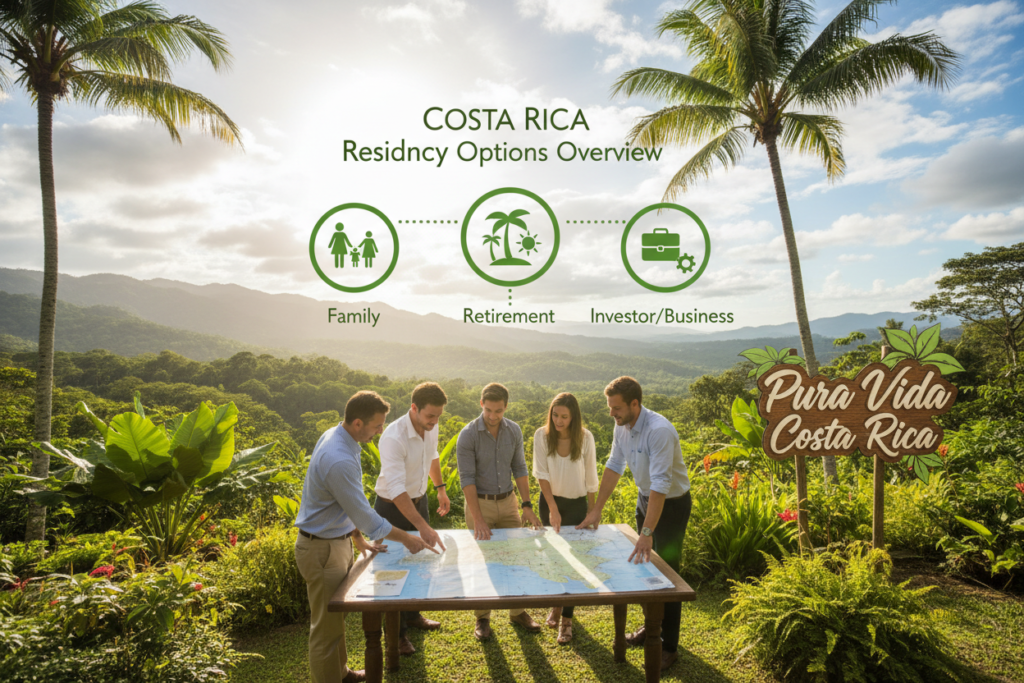
Your path to legal residency in Costa Rica typically falls into one of three main categories. Each is designed for different financial situations and long-term goals. Understanding these options is the first practical step.
Exploring Different Residency Categories
The primary pathways are Pensionado (Retiree), Rentista (Person of Independent Means), and Inversionista (Investor). The Pensionado category requires a guaranteed lifetime pension of at least $1,000 US per month.
Rentista applicants must prove a stable passive income of $2,500 US per month for two years. The Inversionista option demands a minimum investment of $150,000 US in the country.
Benefits of Each Option
Each category grants formal legal residency, not a tourist visa. This allows you to live in the country legally. Key benefits include different work authorizations and a clear pathway to permanent status.
We guide clients to choose the right category from the start. This saves significant time and avoids frustration. Our services focus exclusively on these residency areas within the immigration system.
laws-of-costa-rica: What You Need to Know
Before gathering a single document, it’s crucial to comprehend the legal system governing residency. The government’s approach is methodical, not meant to exclude you. It requires following specific procedures and maintaining compliance.
Understanding Key Immigration Principles
Costa Rica’s immigration authorities operate under clear regulations. The Dirección General de Migración y Extranjería (migracion.go.cr) administers these rules. Their enforcement has become increasingly strict in recent years.
Residency is a privilege granted by the government based on objective criteria. It is not a right. There is a firm legal distinction between tourist status and residency status.
Tourist visits do not provide a pathway to residency. Attempting to live here as a “perpetual tourist” is both illegal and risky. Overstaying your visa can lead to fines, deportation, and denial of future entry.
Always verify the latest information at migracion.go.cr before you begin. This ensures you are working with accurate government data. Starting from home with your documents ready is the most practical first step.
Who Qualifies for Residency in Costa Rica?
Qualifying for legal residency in Costa Rica hinges on meeting specific, non-negotiable criteria set by immigration authorities. Eligibility is not one-size-fits-all. It depends on your financial situation, employment status, and chosen residency category.
Eligibility Criteria and Basic Requirements
All applicants must satisfy baseline requirements. You need a clean criminal record from your home country. Proof of stable financial solvency is mandatory.
You must also hold a valid passport. The core principle is demonstrating you won’t become a burden on social services.
Foreigners from any nation can apply for Costa Rican residency. The process is identical for U.S. citizens, Canadians, and Europeans.
Tourist visits allow stays up to 180 days. People wanting to live long-term must obtain formal legal residency. Immigration authorities accept no gray area workarounds.
Costa Rican citizenship requires seven years of legal residency first. For citizens of Spain or Latin America, it’s five years. Residency is always the essential first step.
Seeking qualified legal guidance is practically necessary. The complexity of immigration law and consequences for errors are high. We advise U.S. citizens and all foreigners to consult a local attorney.
Pensionado Requirements (Pensionado)
For retirees with a stable pension, the Pensionado (Pensionado) category offers a direct route to legal residency in Costa Rica. This option is designed specifically for those receiving a guaranteed, lifetime pension. The core requirement is proving a minimum income of $1,000 US dollars per month.
Minimum Pension Income Threshold ($1,000+ US/month)
This financial threshold is non-negotiable. Your pension must come from a government, Social Security, or a certified private retirement plan. Investment income or rental money does not qualify for this category.
You will need official letters and bank statements as proof. In some cases, authorities may request several months of records. This verification takes time, so start gathering documents early.
Once approved, you must maintain this income. It’s an ongoing requirement, not a one-time use of funds. We help you prepare this information correctly from the start.
Rentista Requirements (Rentista)
If you have reliable passive income but not a formal pension, the Rentista (Rentista) residency category could be your ideal fit. This option is for individuals with stable, verifiable income from non-employment sources. It requires a higher financial threshold than the Pensionado route but offers more flexibility.
Proving Income Over Two Years ($2,500+ US/month)
You must demonstrate a guaranteed income of at least $2,500 US dollars per month. This guarantee must cover a full 24-month period from your application date. It’s not about having a lump sum of money in the bank.
Acceptable sources include investment accounts, annuities, trust distributions, or rental properties. The key is proving the income is stable and passive. Immigration authorities require solid documentation.
You’ll need bank statements, contracts, or a financial institution’s guarantee letter. All documents must be apostilled and officially translated. We help clients structure their financial proof correctly from the start.
This process takes time and careful planning. In some cases, you may need to set up a specific instrument to meet the two-year guarantee. Having expert guidance prevents costly mistakes with your application in Costa Rica.
Investor Option: Inversionista Essentials (Inversionista)
For investors seeking residency through capital, the Inversionista (Investor) category presents a distinct path. It requires a minimum investment of $150,000 US dollars in qualifying Costa Rican assets. This is typically real estate, but certain business investments can also qualify.
The investment must be registered in your personal name, not through a corporation. This is a critical government rule. Common property types include residential, commercial, and agricultural land.
Minimum Investment Amount and Property Ownership
You must understand key property restrictions. Coastal land within 50 meters of the high tide line is public space. The next 150 meters inland, known as the Maritime Zone, cannot be owned by foreign nationals.
Attempting to use property in this restricted area for your investment will cause rejection. Your money must be placed in a qualifying asset outside this zone. This is a fundamental part of Costa Rican real estate law.
Documenting Your Investment
Proper documentation is non-negotiable. You need the registered property title from the Registro Nacional. An official appraisal must show the value meets or exceeds $150,000.
You also need proof of payment and a lien-free certification. The purchase and registration must be complete before you apply for residency. This process takes time and due diligence.
Be aware of risks like incomplete title records. Squatter groups can claim unused land. We recommend separate legal counsel for the real estate transaction. We focus exclusively on the residency application.
Preparing Your Application Documents
Properly preparing your paperwork from home is the single most effective step to avoid delays. This phase is where most applicants either set themselves up for success or create months of setbacks. We guide you to start this process before you ever set foot in the country.
Always carry copies of your ID and immigration papers. Local authorities may ask for your original passport. A valid, undamaged passport is required for the entire stay—immigration can deny entry otherwise.
Apostilles and Translations
An apostille is an international certification. It validates documents for use in countries party to the Hague Convention. Key documents like birth certificates and police clearances require it.
You must obtain apostilles in your home country before you leave. Attempting this from Costa Rica is far more difficult and time-consuming. All non-Spanish documents also need official translation by a certified translator here.
Gathering Essential Paperwork
Create a comprehensive checklist. Essential items include a valid passport, birth certificate, and marriage certificate if applicable. You also need a police clearance and proof of income or investment.
Allow significant time for this. Police clearances can take 8-12 weeks to receive. Financial statements should be recent, typically within three months of your application date.
Incomplete documentation is the top cause for rejection. Our services include reviewing your paperwork to ensure it meets all requirements. For detailed guidance on the next step, learn how to submit residency documents in Costa correctly.
Understanding Residency Timelines and Processes
Setting realistic expectations about how long residency takes is crucial for planning your move to Costa Rica. The process typically takes 6 to 12 months from submission to approval. Individual cases vary, and we make no guarantees about specific timeframes.
Step-by-Step Guidance for Application Processing
The system follows a structured sequence. It starts with document preparation in your home country. Then, you need translation and legalization locally.
Next, submit your application to immigration authorities. Officials will review your file thoroughly. They may request additional information or an interview.
Finally, upon approval, you receive your residency card. Throughout this process, you must maintain legal tourist status.
Expected Timelines and Milestones
Key milestones include initial receipt confirmation within two weeks. The first review completion often takes two to three months.
Requests for extra documentation can add one to three months. Final approval usually happens four to eight months from submission. Cédula issuance follows in two to four weeks.
Factors like application volume and government holidays affect these timelines. Patience is essential, as the immigration system moves at its own pace.
Avoiding Common Application Pitfalls
The most frustrating delays in obtaining residency are often self-inflicted through simple, avoidable errors. We’ll walk you through the most frequent mistakes we see. This practical guidance helps you sidestep them.
Frequent Document and Process Mistakes
Document errors are a top cause for rejection. These include expired police clearances and missing apostilles. Financial statements that are too old also cause problems.
Process errors are just as common. Applying in the wrong residency category for your situation is a major one. Submitting applications with inconsistent information creates immediate red flags.
The single biggest mistake is rushing. People who submit incomplete paperwork to “save time” almost always face longer overall timelines. Proper preparation from the start is always faster.
Tips to Prevent Delays
Create a comprehensive document checklist. Verify every apostille and translation before you submit. Working with experienced professionals for a final review is a key preventive strategy.
Consider a real-world case. A Pensionado applicant’s pension letter lacked the proper certifying language. This one oversight forced a complete restart of their process.
This level of attention to detail is practical risk management. Each small error can add months to your wait. While we cannot guarantee approval, our review significantly reduces preventable errors.
Always provide honest and complete data. Attempting to hide information or misrepresent your situation will result in denial. It can also lead to a permanent bar from residency in Costa Rica.
Beginning Your Journey from Home
The most strategic move you can make for your Costa Rican residency is to begin the process from your current home. This approach saves significant time, money, and frustration later. We strongly advise starting your document preparation at least six months before your planned move.
Tips for Organizing Documentation Pre-Departure
Create a dedicated file system, both physical and digital. Start by gathering core documents like birth certificates and police clearances. Research which papers require apostilles in your specific state or country.
Accessing government offices is far easier from home. Obtaining apostilles through your Secretary of State is straightforward. You also have time to correct any errors without the pressure of a ticking tourist clock.
Use the pre-departure period effectively. Schedule your FBI background check early—it can take 8-12 weeks. Request official pension or income letters with all required certifying language. Ensure your passport has ample validity.
Resist the temptation to “figure it out when you get there.” That mindset creates complications and often forces expensive trips back home. Thorough preparation minimizes stress and positions you for success. It also allows for exploratory visits to confirm your choice, while you maintain your legal status through proper visa renewal in Costa Rica.
Digital Nomad Misconceptions and Alternatives>
A common misunderstanding among expats is that Costa Rica’s Digital Nomad status is equivalent to legal residency. This is a critical error. The Digital Nomad visa is a temporary work authorization, typically valid for one to two years.
It allows remote workers to live in the country while employed outside it. However, it is fundamentally not a residency category. It does not provide a pathway to permanent status.
Why Digital Nomad Status Doesn’t Count as Residency
Holders of this visa do not receive a cédula, the official residency card. They lack access to the public healthcare system, known as Caja. They also do not gain the same legal rights and protections as formal residents.
Most importantly, time spent on a Digital Nomad visa does not count toward citizenship requirements. Misusing this or tourist status to live long-term can have severe consequences. U.S. citizens, for example, risk deportation and entry bans.
Recommended Residencies for Remote Workers
For remote workers seeking permanent life in Costa Rica, the Rentista category is often the best fit. It requires proving stable income of $2,500 per month for two years. This aligns well with remote employment or contract work.
If you wish to transition from Digital Nomad to resident, you must apply for Rentista separately. The prior visa time does not transfer. Remember, citizenship requires years of legal residency first. Our services help people choose the right category for long-term security in this beautiful country.
Leveraging CRIE’s Residency Services
At CRIE, we focus exclusively on helping you secure legal residency in Costa Rica through expert, localized support. Our services are dedicated solely to immigration and residency matters. We do not handle real estate or tax planning.
This singular focus allows us to provide the highest quality assistance. We ensure your application is prepared correctly from the start.
Expert Guidance and Local Experience
Our team possesses deep knowledge of Costa Rican immigration law. We maintain current awareness of policy changes and procedural updates. This expertise is crucial for navigating the system effectively.
We have established professional relationships with local authorities. This helps us understand what documentation and processes work in practice.
Being based in Costa Rica provides a significant advantage. We navigate the immigration system daily and understand its cultural nuances. This local experience allows us to offer real-time support throughout your entire process.
Our service includes reviewing your situation to recommend the right category. We guide document preparation and verify everything meets official requirements. We also coordinate translations, legalizations, and application tracking.
We provide clear communication and honest assessments. However, we do not make promises about approval or timelines. Those decisions rest solely with immigration officials.
Leveraging our professional services is about ensuring your application is complete and correct. We help you avoid costly mistakes within the established legal process.
Essential Tips for a Successful Residency Application
Successfully navigating Costa Rica’s residency process requires a methodical approach and careful attention to detail. We compile practical advice from years of experience to improve your application’s quality and timeline.
Best Practices and Expert Advice
Maintain meticulous organization of all documents. Create digital and physical copies, and verify apostilles before leaving your home country.
Gather more financial data than you think you’ll need. Ensure bank statements match immigration requirements precisely. Keep a comfortable margin above income thresholds.
Start the process 6-12 months early. Build buffer time and maintain legal status throughout. Respond promptly to any requests from authorities.
Approach your application as a serious legal process. Invest time in getting the details right. In cases where applications are denied, it’s often due to incomplete information. For a comprehensive checklist, review these key steps before applying for legal.
Next Steps to Secure Your Costa Rican Residency
Securing your future in this beautiful country hinges on moving from planning to doing. Start by assessing which residency category fits your situation. Then, begin gathering required documents from your home country.
For personalized guidance, contact our team. Reach out via WhatsApp at +506 8706 3888 for quick questions. You can also email info@crie.cr or visit www.crie.cr for comprehensive information about our Costa Rican residency services.
Every case is unique and requires individual assessment. We provide expert support and thorough preparation assistance. While we cannot guarantee approval, we help you navigate the process correctly. With proper preparation, you can build a legal, secure life in Costa Rica.
FAQ
What are the main residency options for foreigners in Costa Rica?
What are the basic eligibility rules for residency under Costa Rican law?
What exactly is required for the Pensionado residency category?
FAQ
What are the main residency options for foreigners in Costa Rica?
The primary pathways we help clients navigate are the Pensionado, Rentista, and Inversionista (Investor) categories. Each has distinct financial requirements—like proving a stable pension or making a qualified investment—and grants different rights. Understanding which option fits your situation is the crucial first step in a successful application process.
What are the basic eligibility rules for residency under Costa Rican law?
Beyond the specific financial criteria for each category, all applicants must meet core government requirements. This includes a clean police record from your home country and any place you’ve lived recently, a complete medical exam, and proof of your financial stability. The system is designed to ensure applicants can support themselves without burdening local social services.
What exactly is required for the Pensionado residency category?
To qualify for Pensionado status, you must prove a lifetime pension of at least
FAQ
What are the main residency options for foreigners in Costa Rica?
The primary pathways we help clients navigate are the Pensionado, Rentista, and Inversionista (Investor) categories. Each has distinct financial requirements—like proving a stable pension or making a qualified investment—and grants different rights. Understanding which option fits your situation is the crucial first step in a successful application process.
What are the basic eligibility rules for residency under Costa Rican law?
Beyond the specific financial criteria for each category, all applicants must meet core government requirements. This includes a clean police record from your home country and any place you’ve lived recently, a complete medical exam, and proof of your financial stability. The system is designed to ensure applicants can support themselves without burdening local social services.
What exactly is required for the Pensionado residency category?
To qualify for Pensionado status, you must prove a lifetime pension of at least $1,000 USD per month from a legitimate source, such as a government or corporate retirement plan. This income must be guaranteed and permanent. We assist clients in gathering the proper certification from the pension issuer and having it apostilled and translated for submission to Costa Rican authorities.
How does the Rentista residency option work?
The Rentista category is for those with stable income but not a formal pension. You must demonstrate a guaranteed income of at least $2,500 USD per month for two years. This is typically proven through a bank deposit or investment commitment. It’s a detailed process where documenting the source and stability of your funds is critical for approval by immigration officials.
What defines the Investor (Inversionista) residency?
The Inversionista residency requires a minimum investment of $150,000 USD in Costa Rican assets, which can include real estate, business projects, or forestry. You must provide official documentation, like registered property deeds or corporate shares, to prove the investment. This path is popular for those using property equity to secure their legal status in the country.
How long does the residency application process typically take?
A> From initial document preparation to final approval, the process usually takes between 6 to 12 months. Timelines depend on the completeness of your file, government processing speeds, and avoiding common errors. We manage expectations by providing clear milestones, from submitting your dossier at the immigration office to receiving your temporary and then permanent cédula (ID card).
What are the most common mistakes that delay applications?
Frequent pitfalls include submitting documents without the required apostille or official translation, providing outdated police reports, or having insufficient proof of income. Even small errors in how forms are filled out can cause significant delays. Our service focuses on meticulous preparation to prevent these issues, ensuring your application meets all legal standards on the first submission.
Does the Digital Nomad Visa lead to permanent residency?
No, the Digital Nomad Visa is a separate, temporary permit that does not count toward permanent residency or citizenship. It’s a great option for remote workers to live here short-term, but it operates under a different legal framework. For long-term status, we recommend pursuing a formal residency category like Rentista or Inversionista from the start.
How can CRIE’s services help with my residency application?
We act as your expert guide through the entire complex process. Our team provides step-by-step guidance on document collection, ensures everything is properly legalized for Costa Rican authorities, and manages the submission and follow-up with immigration. Our local experience helps navigate the system efficiently, saving you time, money, and stress while protecting your rights.
,000 USD per month from a legitimate source, such as a government or corporate retirement plan. This income must be guaranteed and permanent. We assist clients in gathering the proper certification from the pension issuer and having it apostilled and translated for submission to Costa Rican authorities.
How does the Rentista residency option work?
The Rentista category is for those with stable income but not a formal pension. You must demonstrate a guaranteed income of at least ,500 USD per month for two years. This is typically proven through a bank deposit or investment commitment. It’s a detailed process where documenting the source and stability of your funds is critical for approval by immigration officials.
What defines the Investor (Inversionista) residency?
The Inversionista residency requires a minimum investment of 0,000 USD in Costa Rican assets, which can include real estate, business projects, or forestry. You must provide official documentation, like registered property deeds or corporate shares, to prove the investment. This path is popular for those using property equity to secure their legal status in the country.
How long does the residency application process typically take?
A> From initial document preparation to final approval, the process usually takes between 6 to 12 months. Timelines depend on the completeness of your file, government processing speeds, and avoiding common errors. We manage expectations by providing clear milestones, from submitting your dossier at the immigration office to receiving your temporary and then permanent cédula (ID card).
What are the most common mistakes that delay applications?
Frequent pitfalls include submitting documents without the required apostille or official translation, providing outdated police reports, or having insufficient proof of income. Even small errors in how forms are filled out can cause significant delays. Our service focuses on meticulous preparation to prevent these issues, ensuring your application meets all legal standards on the first submission.
Does the Digital Nomad Visa lead to permanent residency?
No, the Digital Nomad Visa is a separate, temporary permit that does not count toward permanent residency or citizenship. It’s a great option for remote workers to live here short-term, but it operates under a different legal framework. For long-term status, we recommend pursuing a formal residency category like Rentista or Inversionista from the start.
How can CRIE’s services help with my residency application?
We act as your expert guide through the entire complex process. Our team provides step-by-step guidance on document collection, ensures everything is properly legalized for Costa Rican authorities, and manages the submission and follow-up with immigration. Our local experience helps navigate the system efficiently, saving you time, money, and stress while protecting your rights.
How does the Rentista residency option work?
What defines the Investor (Inversionista) residency?
How long does the residency application process typically take?
What are the most common mistakes that delay applications?
Does the Digital Nomad Visa lead to permanent residency?
How can CRIE’s services help with my residency application?
Article by Glenn Tellier (Founder of CRIE and Grupo Gap)
Don't wait, contact us right now!
Call or WhatsApp Costa Rica +506 8373 2085 or +506 8706 3888
Call USA/Canada +1 305-906-6784