
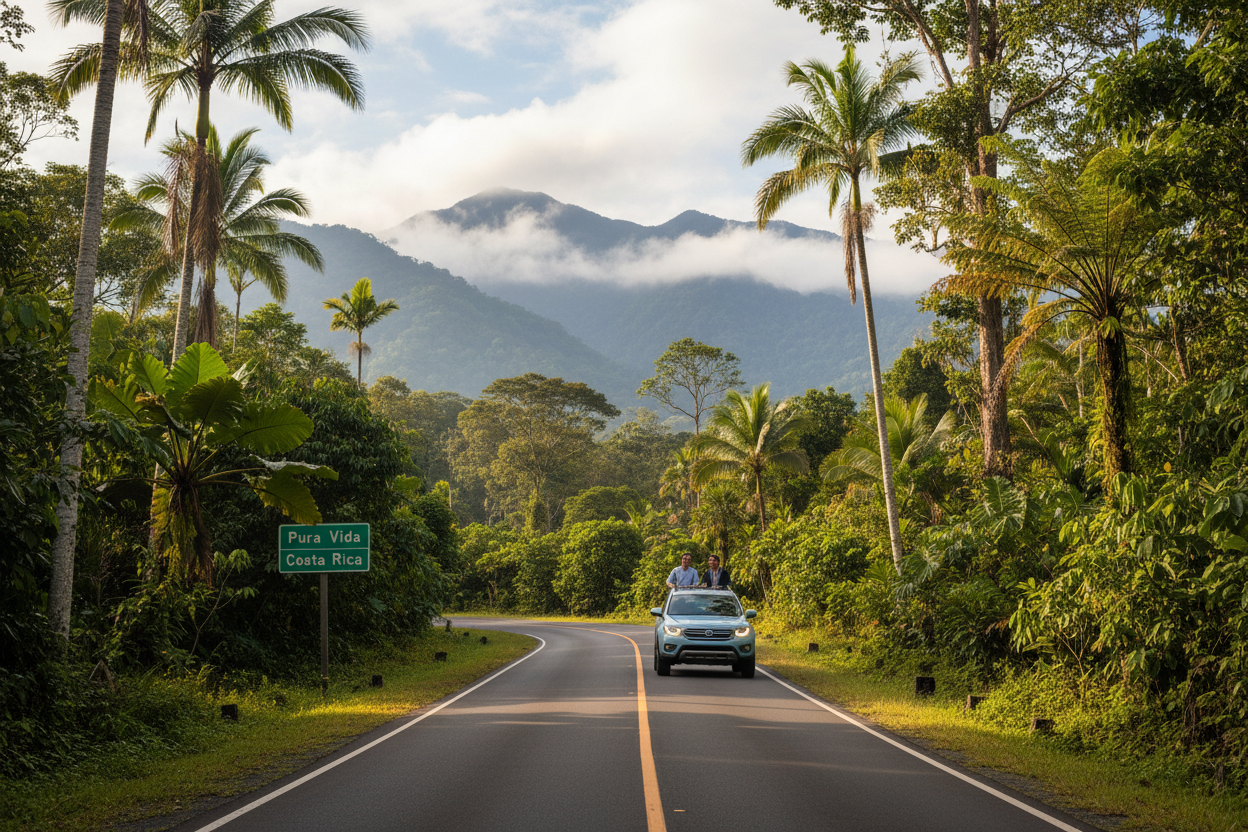
Navigating the roads in a new country can be confusing. We’re here to clarify what you need to know about operating a vehicle in Costa Rica. This is true whether you’re visiting for a short trip or considering a permanent move.
Tourists have it straightforward. You only need a valid driver’s license from your home country and your passport with the entry stamp. An international permit is not required. The legal driving age is 18, though you must be 21 to rent a car. Road rules are familiar—drive on the right, wear seatbelts, and watch for speed signs in kilometers per hour.
Your driving rights depend entirely on your immigration status. A tourist license works for 90 days. For long-term stays, you must transition to a local license as a resident. Many people first explore Costa Rica as tourists before pursuing formal residency options.
This guide covers the essentials: rules, safety, and the critical link between your legal status and your ability to legally drive in Costa Rica. We provide clear, realistic information to help you plan. Remember, we specialize in residency services—not driving instruction—so you can focus on the journey ahead.
Understanding Driving Requirements in Costa Rica
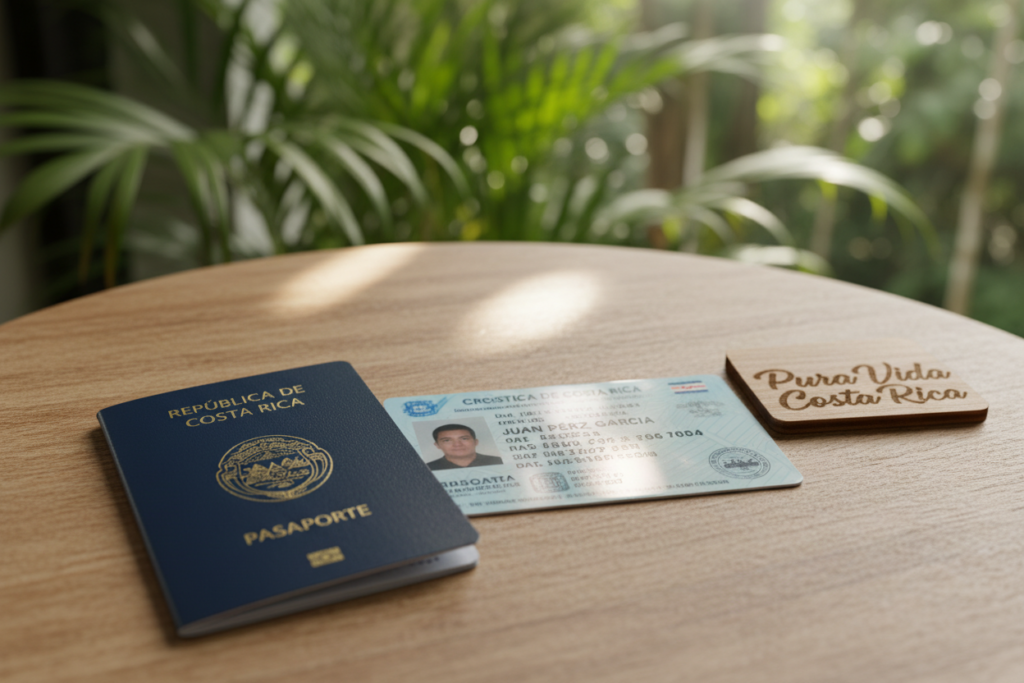
Your ability to drive here hinges on two key items from your country of origin. For short-term visitors, the process is designed to be straightforward.
Valid Home Country Driver’s License and Passport Essentials
You must carry your valid driver’s license from your home country. Always have your passport or a clear copy showing your photo and entry stamp. Police may request both during a routine stop.
Your home country license is valid based on your passport’s entry stamp. This period is typically 90 days. It is a temporary privilege for tourists only.
No Need for an International Driver’s License
An international permit is not a legal requirement. This simplifies arrival for many foreign drivers. Your existing credential is sufficient for the duration of your tourist stay.
This arrangement does not grant residency status. Driving beyond your stamped period is illegal. For longer stays, you must transition to a local license through a formal residency process.
We assist clients in preparing the necessary documents—like apostilled birth certificates and translations—from their home country. Proper preparation is essential for this next step.
Costa Rica Road Rules and Traffic Regulations
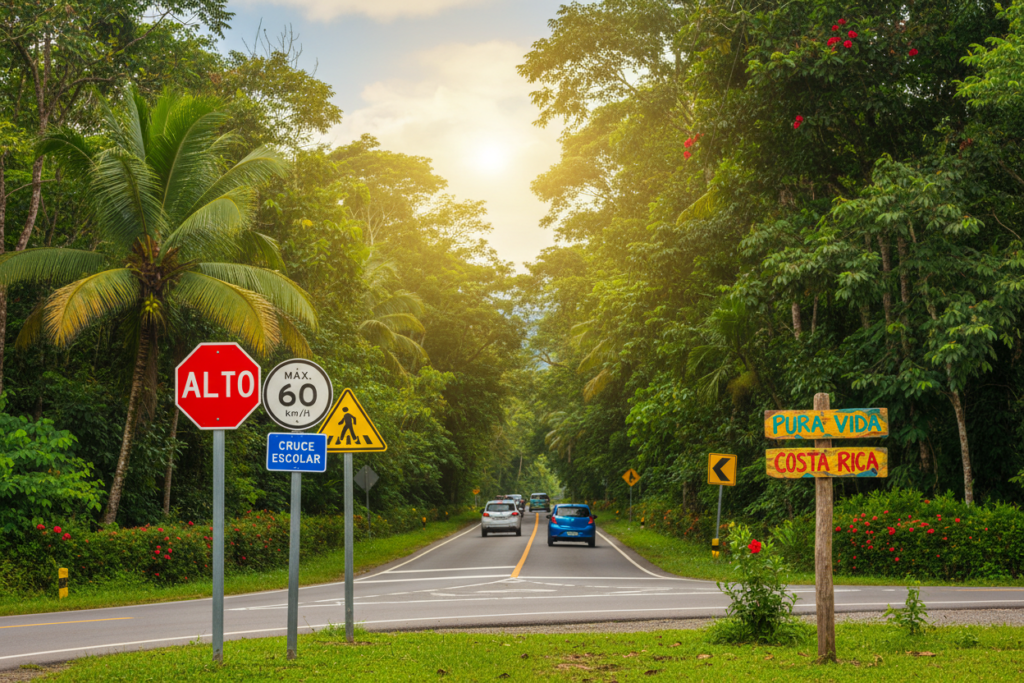
While Costa Rica’s written traffic laws will feel familiar to North American drivers, the on-the-ground reality presents a distinct learning curve. The basic rules of the road are straightforward: drive on the right-hand side, and seatbelts (cinturones de seguridad) are mandatory for all.
Speed limits (límites de velocidad) are posted in kilometers per hour. You’ll typically see 40-60 km/h in towns and 80-100 km/h on open highways. Signage is less frequent than you may be used to.
Local Signage, Lane Markings, and Speed Limits
Pay close attention to road markings. Double solid lines (líneas sólidas dobles) mean no passing. Dotted or hatched lines indicate a passing zone is permitted. Local drivers, however, don’t always respect these designations.
This requires defensive awareness, especially on winding mountain roads. For a comprehensive look at local conditions, consult this detailed driving guide.
Safety Rules and Practical Enforcement
Child safety rules require kids under 12 to use appropriate car seats (sillas de seguridad). The legal framework exists, but enforcement is inconsistent.
A critical difference from the US involves pedestrians. They do not have automatic right-of-way at crosswalks. Do not expect cars to stop if you step into a side road.
In practice, rules are bent more often outside urban centers. You’ll see practices that wouldn’t be acceptable back home. Successful driving in Costa Rica means knowing the official code and adapting to the local flow.
Adapting to Costa Rica’s Road Conditions
The quality of pavement in Costa Rica can shift from smooth asphalt to rugged terrain within a short drive. You must be ready for this variety. It defines the driving experience here.
Urban Highways vs. Rural Dirt Roads
Around San José, you’ll find modern, multi-lane highways. These roads are generally well-maintained. Venture beyond the capital, and the conditions change dramatically.
Many coastal towns and remote areas rely on unpaved roads. These routes feature potholes, dust, and occasional river crossings. A four-wheel-drive vehicle is often essential for accessing these areas safely.
Weather Challenges: Rainy Season, Washouts, and Landslides
Heavy rains from May to November severely impact road conditions. They cause washouts and landslides. Major routes like Highway 32 to the Caribbean are especially prone.
Locals often mark hazards with palm fronds or sticks. Stay alert for these informal warnings. Always check current conditions before a trip, as a passable way one day can be blocked the next.
For specific vehicle rules, understand the requirements for a license to ride a motorcycle. Proper documentation is key for all drivers.
Safety Tips for Navigating Costa Rican Roads
Driving safely in Costa Rica requires adapting to local habits that often diverge from official rules. Your best defense is a proactive, defensive mindset. We’ll share key tips to keep you secure.
One of the most critical things to watch for is unsafe passing. Drivers frequently overtake on blind curves and steep hills. Maintain a generous following distance to maximize your reaction time.
Locals use informal signals. Flashing hazard lights often warn of debris or animals ahead. A left turn signal from a slow vehicle suggests they think it’s safe for you to pass—always verify for yourself first.
Avoiding Unsafe Passing and Night Driving Risks
Night driving presents distinct hazards. Street lighting is minimal outside cities. Narrow, curvy mountain roads often lack guardrails.
Spotting pedestrians or cyclists in dark clothing is very difficult. If you must drive after dark, reduce your speed significantly. Plan long trips for daylight hours.
Always be alert for motorcycles. They may weave through traffic or travel slowly on the road’s edge. Parked cars are targets for theft, so never leave valuables in sight.
Following these practical tips will make your experience driving in Costa Rica much safer. Stay cautious, and trust your own judgment over other drivers’ actions.
Preparing Required Documents and Essential Guidelines
Establishing your legal right to drive long-term in Costa Rica begins long before you arrive. Tourists can use foreign licenses, but staying beyond 90 days requires residency. You must then convert your license through a local process.
This conversion requires specific items. You’ll need your unexpired foreign license, a residency card, and a passport showing at least 91 days in the country. A medical exam and possible license translation are also part of the process.
Step-by-Step: Document Preparation, Apostilles, and Translations
Start this work from your home country. Gather birth certificates, marriage certificates, and police background checks. Each document needs an apostille for international use.
After apostilles, get certified Spanish translations. Submitting documents without these validations is a common mistake that causes delays. Proper preparation streamlines everything.
Immigration Essentials: CRIE’s Guidance for Residency (Pensionado, Rentista, Inversionista)
For residency, Costa Rica offers main categories. Pensionado (Pensionado) requires a $1,000+ US dollar monthly pension. Rentista (Rentista) needs $2,500 US dollars monthly income for two years.
Inversionista (Inversionista) requires a $150,000 US dollar minimum investment. The property must be in your personal name, not a corporation. Note that Digital Nomad status is not a residency path.
Realistically, gathering documents can take months. Once submitted, residency processing often takes 3-6 months. We provide expert guidance for this complex process.
CRIE specializes in Costa Rica residency and immigration services. Contact us for help: WhatsApp +506 8706 3888 | info@crie.cr | www.crie.cr. Always verify current rules at migracion.go.cr.
Understanding Immigration Implications on Driving
The transition from tourist to resident in Costa Rica brings a fundamental change in your obligations behind the wheel. Your immigration status is the primary factor determining your legal right to operate a vehicle.
Tourist vs. Resident Driving Privileges
As a tourist, you may drive on your home country license. This privilege lasts only for the duration of your legal stay, typically 90 days.
Once you obtain residency, you must get a local driver’s license. This process, called homologation, is mandatory. It integrates you fully into the national system.
Common Mistakes in Document Preparation and Application
A major error is attempting a “visa run” to reset driving time. Transit authorities track license use separately from immigration stamps. This strategy does not work and can be illegal.
Residents must be physically present for at least 91 days before applying. You will need your residency card, valid foreign license, a medical exam, and often a certified Spanish translation.
Driving on an expired tourist status voids insurance and breaks the law. Planning your transition early is crucial for a smooth experience.
We help clients establish the residency that makes this possible. Always verify current rules at migracion.go.cr.
Using GPS and Local Navigation Tools
The lack of consistent street signage across the country makes GPS a necessity for drivers. In Costa Rica, you cannot rely on traditional methods like following route numbers or street names.
Highways rarely display their numbers. Exits often appear with minimal warning. This is true even in San José and is standard in rural areas.
Leveraging Waze, Offline Maps, and Other Apps
We recommend Waze as the primary navigation app. It is the most popular tool among locals in Costa Rica. This means traffic, construction, and police alerts are very current.
Download Waze before you arrive. Enable location services. For destinations without a street address, use GPS coordinates.
Always have a backup plan. Download regions on Google Maps for offline use. This is crucial in areas with poor cell coverage.
A physical, waterproof map is also wise. It provides broader context if technology fails. It can save you significant time and stress.
Purchase a local SIM card for reliable data. Many rental cars offer WiFi hotspots. Hotels can give directions using landmarks, which is often the best way to find a place.
Foreigners-Guide-to-Legally-Driving-in-Costa-Rica: Practical Insights
Securing permanent driving rights in Costa Rica is directly tied to your chosen residency pathway. Your tourist license is temporary. For long-term legality, you must qualify under a formal category.
Key Thresholds for Residency Qualifiers and Their Impact on Driving
The Pensionado (Pensionado) category requires proof of at least $1,000 USD in monthly pension income. This suits retirees with stable, documented pensions.
The Rentista (Rentista) option demands $2,500 USD monthly income guaranteed for two years. It fits those with reliable investment or rental income.
For the Inversionista (Inversionista) pathway, a minimum $150,000 USD investment in property is needed. The asset must be in your personal name, not a corporation.
Once your residency is approved, you must be physically present for 91 days before applying for a local license. Planning this timeline is crucial.
We help you navigate these specific financial thresholds and documentation. You must make sure you meet the requirements before applying. Always verify current rules at migracion.go.cr.
Note that Digital Nomad status does not provide a path to residency or permanent driving privileges in this country.
Renting vs. Owning a Car in Costa Rica
Choosing between renting and buying a vehicle is a key decision for anyone spending time here. Your best option depends entirely on your timeline and legal status.
Considerations for Tourists and Future Residents
For short visits, a rental car offers immediate convenience. Drivers must be at least 21, with extra fees for those under 25.
The mandatory local liability insurance confuses many visitors. You must purchase it even with credit card coverage. Read all agreements carefully to avoid surprise costs.
Rental vehicles are theft targets due to their identifiable models. Never leave valuables visible inside the car. Use attended parking when available.
Once you establish residency, buying often makes financial sense. It provides freedom without rental deadlines. Popular Asian brands like Toyota and Hyundai dominate the market.
Spare parts and mechanics for these vehicles are readily available. A lawyer is legally required for valid title transfer when you purchase.
Ownership brings annual costs. The marchamo combines registration and mandatory insurance. The RITEVE safety inspection is also required yearly.
Parking in cities often requires paid permits. Traffic police enforce violations aggressively. Understanding these realities helps you choose wisely.
Roadmap to a Smooth Driving Experience in Costa Rica
Your successful driving experience in this beautiful country rests on a clear understanding of both temporary privileges and permanent requirements.
Tourists enjoy straightforward access with a valid home license and passport. This permission lasts 90 days. It does not lead to residency.
On the roads, defensive habits are essential. Variable conditions and local driving styles demand constant attention. Reliable GPS navigation is a must.
For long-term stays, your immigration status is key. You must establish formal residency first. Pathways include Pensionado, Rentista, or Inversionista categories.
We help clients navigate these residency processes. Proper preparation with documents like apostilled certificates is crucial. This foundation grants permanent driving rights.
Driving here offers incredible freedom to explore diverse landscapes. With knowledge and planning, you can navigate confidently.
Contact us to begin your journey: WhatsApp +506 8706 3888 | info@crie.cr | www.crie.cr. Always verify current rules at migracion.go.cr.
FAQ
Do I need an International Driver’s License to drive in Costa Rica?
What are the most important road rules I should know before driving?
How bad are the roads, and what should I watch for?
Is it safe to drive at night in Costa Rica?
What documents do I need to rent a car?
Can I use my home country driver’s license if I become a resident?
What’s the best navigation app to use while driving?
Is it better to rent a car or buy one as a future resident?
Article by Glenn Tellier (Founder of CRIE and Grupo Gap)
Don't wait, contact us right now!
Call or WhatsApp Costa Rica +506 8373 2085 or +506 8706 3888
Call USA/Canada +1 305-906-6784