
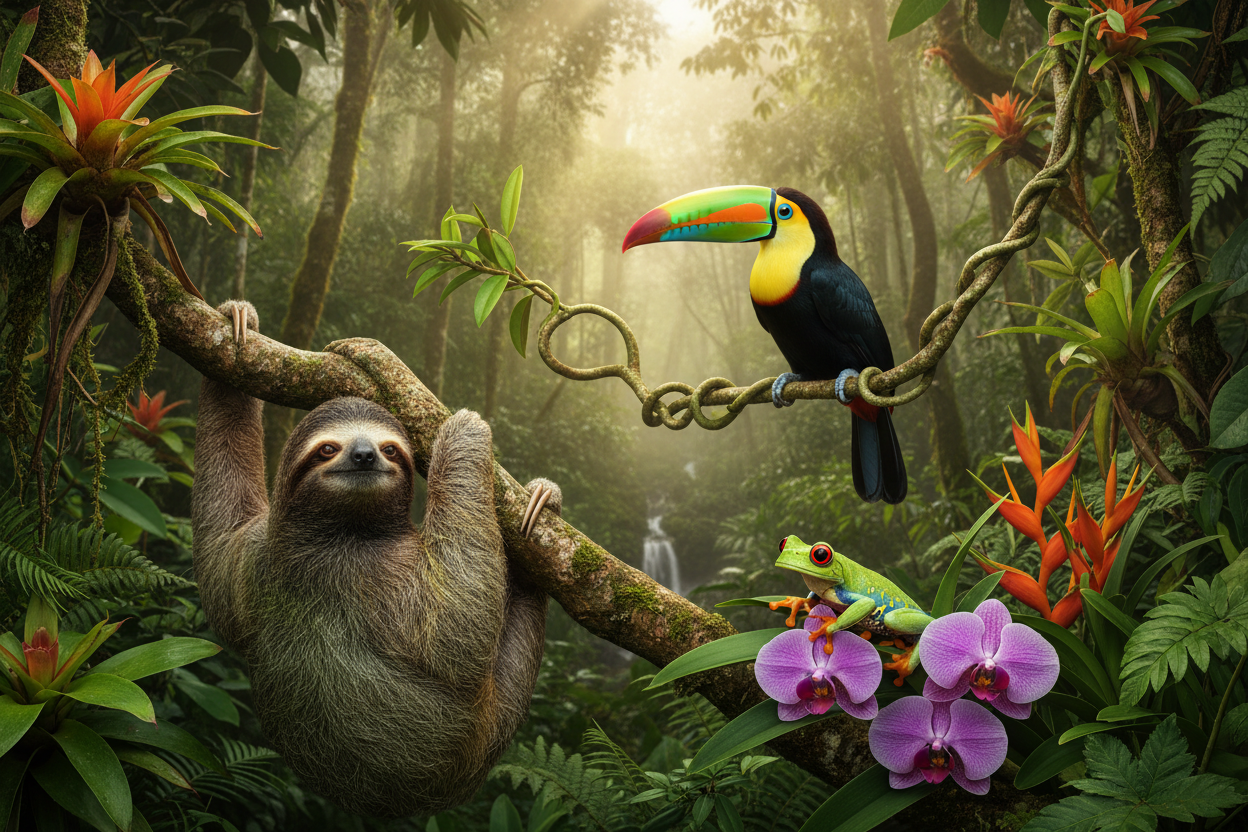
Imagine a place where over 500,000 wild species live in a nation smaller than West Virginia. This is Costa Rica, a Central American country celebrated as one of the most biodiverse spots on Earth.
This practical guide is for North American travelers. It aims to prepare you for amazing wildlife encounters. You will learn what animals you might see and how to enjoy them safely.
Costa Rica is packed with life, but seeing it requires patience. Some animals are shy or active only at certain times. Expert local guides can greatly improve your chances of memorable sightings.
Visitors can expect to find several main groups of wildlife. These include colorful tropical birds, mammals like monkeys and wild cats, reptiles from frogs to crocodiles, and vibrant marine life.
Knowledge is key before exploring Costa Rica’s national parks. Understanding animal behavior and park rules ensures a safe and respectful visit for everyone.
This guide provides identification tips, safety considerations, and practical advice. It will help any wildlife enthusiast plan an unforgettable Costa Rican adventure.
Discovering Costa Rica’s Unique Wildlife
From misty cloud forests to sunny coastal mangroves, Costa Rica’s ecosystems host distinct animal communities. This small nation in Central America sits between two oceans. Its varied elevations create many life zones in a compact area.
An Overview of the Biodiversity
Each ecosystem supports specialized species. Rainforests are alive with chattering monkeys. Dry forests hide unique reptiles. Coastal wetlands attract wading birds.
The sheer number of species is astounding. Over 500,000 wild animals live here. This includes 918 bird species and hundreds of mammals. Many creatures are found nowhere else on Earth.
Real-Life Encounters in Nature
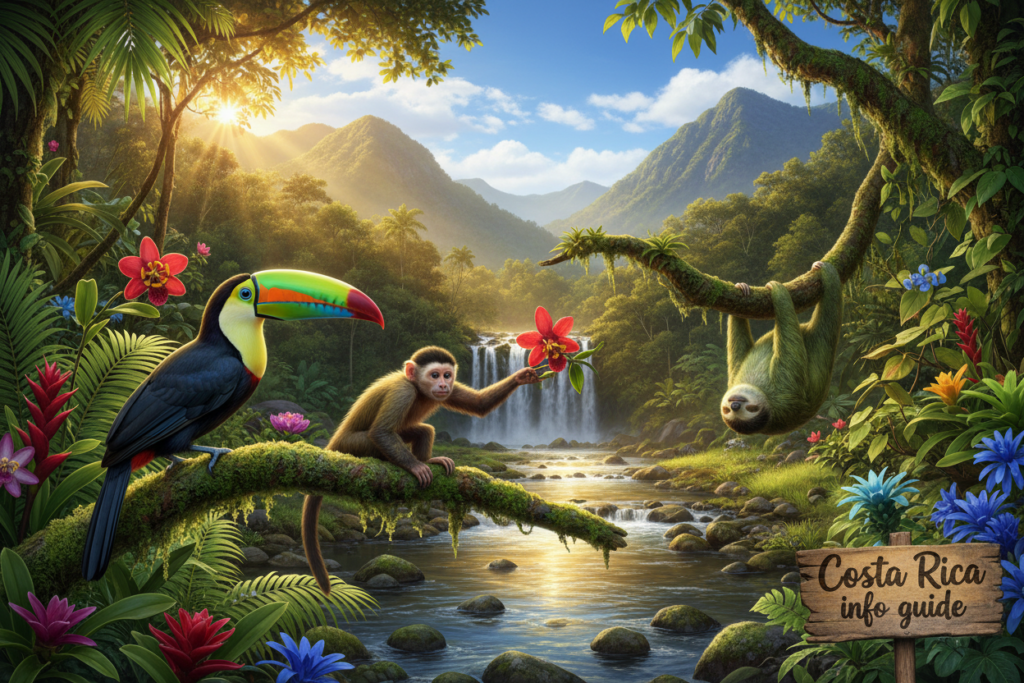
The country’s small size makes wildlife viewing remarkably accessible. Visitors can experience multiple habitats in one trip. You might see a toucan from your hotel balcony.
Discovery is ongoing. Even long-term residents spot new animals on familiar trails. Scientists recently documented two new bat species here. Every walk can bring a surprise.
Viewing experiences range from casual to guided. A flash of color might be a new bird outside your window. National park tours offer deeper encounters with shy mammals. This variety makes every visit special.
costa-rica-animals-and-wildlife-guide: Tips for Exploring Nature
Successful wildlife spotting in this Central American paradise hinges on knowing where to look and what to look for. Practical preparation turns casual walks into rewarding discoveries.
How to Identify Local Species
Carry a reliable field guide. “The Wildlife of Costa Rica” is a comprehensive option. It details 74 mammal species, 226 birds, and many reptiles.
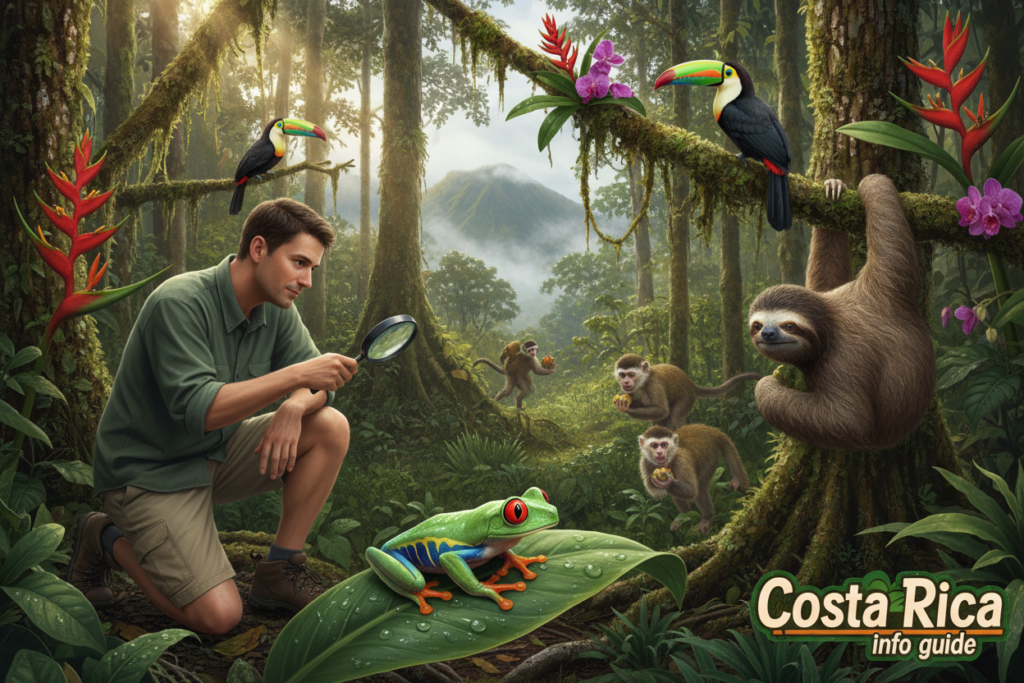
Use range maps to narrow down possibilities. For example, seeing a yellow-bellied trogon in Guanacaste helps eliminate other types not found there.
Specialized guides like “The Birds of Costa Rica” cover over 903 bird species. They help differentiate similar birds, such as various woodpeckers.
Illustration colors can sometimes differ from real life. Travelers often supplement book learning with quick online photo searches for confirmation.
Good guides cross-reference similar-looking species. They highlight key differences like wing bars or striped crowns.
For quick reference, consider regional wildlife pamphlets. Also, develop an eye for shapes in the trees and listen for unique animal calls.
Navigating Safety Tips and Do’s & Don’ts in the Wild
Safety and respect are the two pillars of a rewarding wildlife experience in Costa Rica’s natural areas. Most creatures pose little threat if you follow simple guidelines.
Staying aware and prepared lets you enjoy the adventure without fear.
Staying Safe in Costa Rican National Parks
Realistic risks exist but are manageable. The Fer-de-lance snake is a primary concern. It is aggressive and common, not just highly venomous.
Watch your step on trails. Avoid putting hands where you cannot see. Other snakes like vipers and coral snakes also live here.
Follow these key practices for safe viewing.
| Do’s | Don’ts |
|---|---|
| Stay on marked paths at all times. | Never feed monkeys or other wildlife. |
| Keep a respectful distance from all animals. | Do not touch frogs, even poison dart species. |
| Hire a guide for remote park areas. | Avoid swimming in rivers with crocodiles. |
| Make noise while hiking to avoid surprises. | Do not approach large mammals like jaguars. |

Respecting the Local Environment
Know what to do during an encounter. Back away slowly if you see a snake. Do not make sudden movements.
If you spot a jaguar in Corcovado, stay calm. Never run. Give iguanas space, as they can bite.
Contact park rangers for any aggressive animal behavior. They are there to help. Report injured wildlife as well.
Conservation is part of safety. Stay on trails to protect habitats. Do not disturb nests or dens.
Pack out all trash. Follow all specific park rules. This protects both you and the incredible nature of Costa Rica.
Common Costa Rican Creatures: Birds, Mammals, and Reptiles
From colorful birds in the canopy to shy mammals on the forest floor, Costa Rica’s wildlife offers endless discovery. This variety of creatures includes familiar favorites and unique surprises.
Bird-Watching Highlights
Look for tiny hummingbirds. About 50 different species hover at flowers with a signature hum. Three types of Motmots are also common.
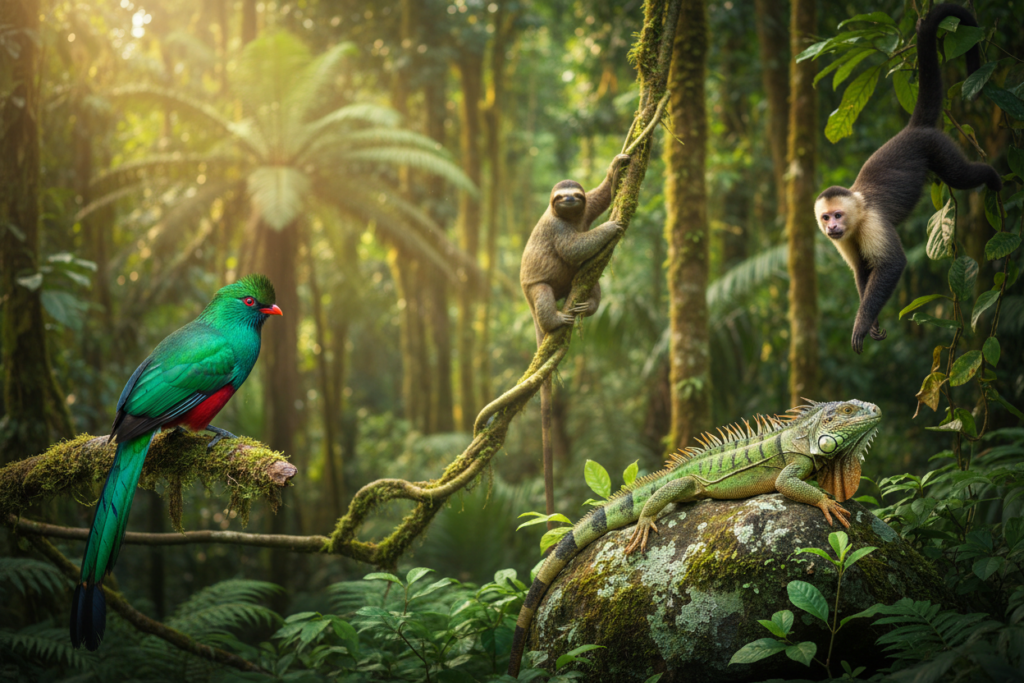
The Resplendent Quetzal is a star. This bright bird from the Trogon family has a long tail. Find it in cloud forests like Monteverde.
Scarlet and Great Green Macaws are intelligent. They can live 35-50 years. For the best birding, visit Palo Verde National Park.
Notable Mammals and Their Behaviors
The Baird’s Tapir is the largest land mammal here. Young tapirs have white stripes for camouflage. They are generally docile.
Four monkey species live in Costa Rica. Howler monkeys make loud 5 AM calls. Spider monkeys have strong, prehensile tails.
Sloths move slowly through trees. The elusive jaguar is the biggest cat. Day-active Agoutis help spread seeds in the forest.
Reptile Awareness and Precautions
Iguanas in trees can bite. They may drop their tails to escape. Small geckos eat bugs and are everywhere.
Crocodiles are the biggest reptiles. They grow 3-5 meters. See them from the Tarcoles bridge. Learn more about dangerous animals to stay safe.
Among amphibians, eight poison dart frog species exist. Their poison won’t harm unbroken skin. Look for red-eyed frogs and large Cane Toads.
Wildlife Spotting in Top Costa Rican National Parks
For unforgettable animal encounters, visitors should prioritize a few key protected areas known for high activity. These national parks offer some of the best places to see diverse species in their natural habitats.
Manuel Antonio’s Prime Locations
Manuel Antonio is one of Costa Rica’s most popular national parks. It is perfect for a family tour. Sloths and monkeys hang from trees near town trails.
White-faced capuchin monkeys often try to steal snacks. The main beach and Cathedral Point trail are prime wildlife spotting locations. You can see different animals at various times of day.
Corcovado and Other Hidden Gems
Corcovado National Park on the Osa Peninsula is for serious enthusiasts. Day trips offer chances to see the Baird’s Tapir. It is also a key jaguar habitat.
Other hidden gems provide unique viewing. Tortuguero is a top spot for sea turtles laying eggs. Drake Bay is great for spotting humpback whales.
Monteverde Cloud Forest attracts birders. Each costa rican park offers a distinct wildlife experience.
Practical Travel Tips for Wildlife Enthusiasts
A successful wildlife viewing adventure in Costa Rica relies as much on preparation as it does on patience. Smart packing and thoughtful planning significantly enhance comfort and increase the chances of remarkable sightings.
Essential Packing and Gear Recommendations
Pack lightweight, portable field guides for quick trail reference. Leave heavy books at your home or hotel for evening study. This way, your daypack stays light.
Insect repellent is non-negotiable for protection against local mosquitoes. Bring it from home before your trip begins.
Essential gear includes binoculars and a camera with good zoom. Use waterproof bags for electronics. Wear sturdy, closed-toe shoes for hiking.
Choose clothing in neutral colors. Lightweight long sleeves and pants protect from sun and insects. Pack layers for changing weather during your travel.
Time your outings for early morning or late afternoon. This is when animal activity peaks. Booking a guided tour with a naturalist greatly improves your experience.
For logistics, book accommodations near national parks. This saves valuable time. Consider a conservation-focused lodge to support local nature efforts.
These simple steps make any family trip to Costa Rica more rewarding and immersive.
Final Thoughts: Quick Checklist for Your Costa Rican Adventure
With your plans taking shape, a final checklist ensures your wildlife adventure is both safe and spectacular. This quick guide answers common questions to prepare you for the forests, coasts, and incredible nature of Costa Rica.
How do I prepare for my wildlife trip? Research animals you hope to see. Pack field guides, bug repellent, sun protection, and neutral-colored clothing. Book accommodations near national parks and consider hiring a local guide.
What are the best viewing tips? Plan outings for early morning or late afternoon. Make noise on trails to avoid surprising animals. Always keep a respectful distance and never feed wildlife.
What safety steps are vital? Watch your footing for snakes. Respect all warning signs near waterways. Do not touch amphibians or other creatures. Know how to contact park rangers if needed.
How can I support conservation? Follow Leave No Trace principles. Support eco-lodges and tours. Your responsible travel helps protect this land for future generations.
Costa Rica always has new wonders to discover, from your first day to making it your home. Thinking about an extended stay? CRIE can help with residency questions: WhatsApp +506 8706 3888 | info@crie.cr | www.crie.cr.
FAQ
Is it safe to explore the national parks and see wildlife in Costa Rica?
What is the best time of day to see animals in their natural habitat?
Where are the best places to see sloths in the country?
Are howler monkeys dangerous to travelers?
What should I pack for a wildlife-focused trip?
Which national park offers the best chance to see a wide variety of species?
Article by Glenn Tellier (Founder of CRIE and Grupo Gap)
Don't wait, contact us right now!
Call or WhatsApp Costa Rica +506 8373 2085 or +506 8706 3888
Call USA/Canada +1 305-906-6784