
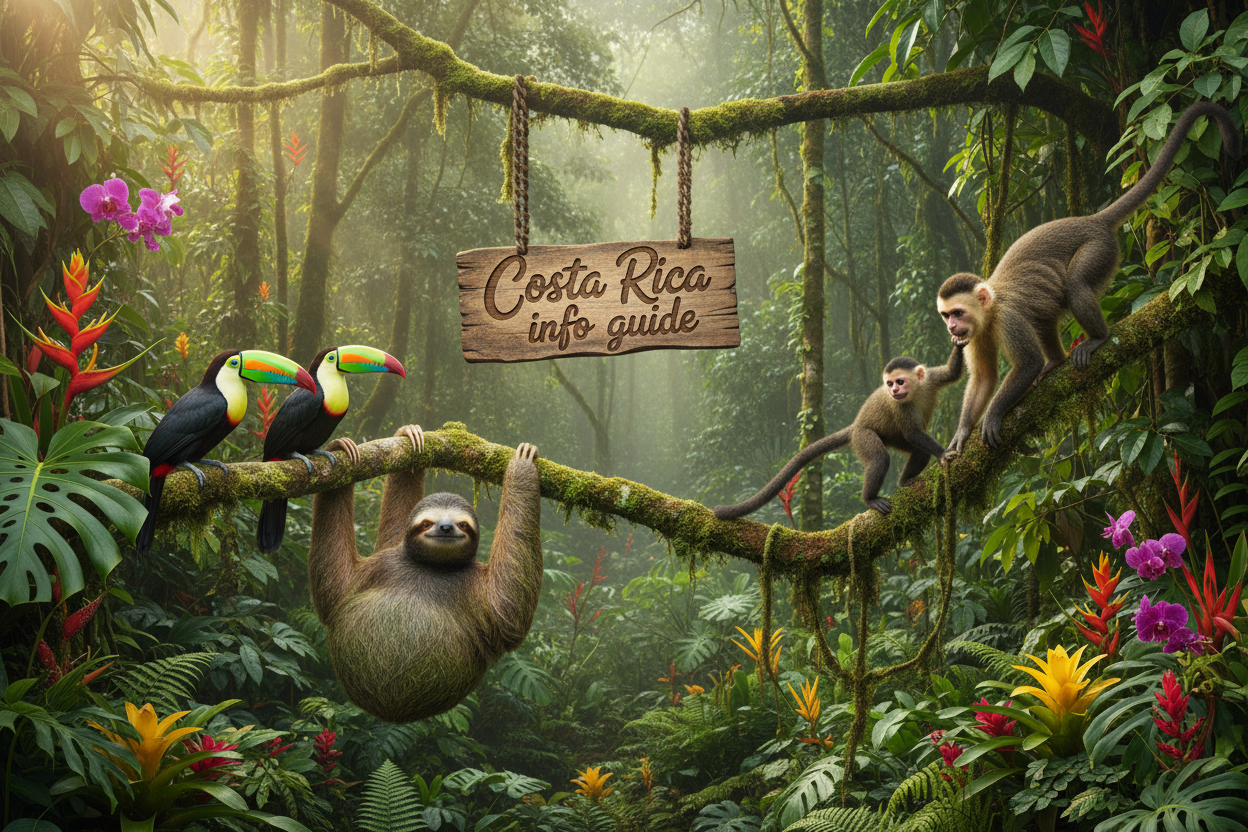
This small nation is a giant in the natural world. Costa Rica hosts over 500,000 animal species. This incredible variety ranges from tiny insects to majestic jungle cats.
The country’s density of life is astonishing. For every 10,000 square kilometers, you find about 615 species. The United States has only 104 in the same area. This Central American treasure punches far above its weight.
Nearly one-fifth of all butterfly species on the planet call this place home. The white-tailed deer is the respected national animal. The numbers tell a clear story of immense biodiversity.
Travelers can explore protected jungles and rainforests. Many creatures are commonly seen by visitors. Others, like wildcats, are rare and elusive. This guide offers a realistic look at the amazing animals you might encounter.
Overview of Costa Rica’s Diverse Wildlife
From misty cloud forests to sun-drenched coastal mangroves, Costa Rica’s landscapes foster an astounding array of life. This variety stems from the country’s unique geography and climate.
Protected jungles and national parks cover a significant part of the nation. These areas are safe havens for an incredible range of species.
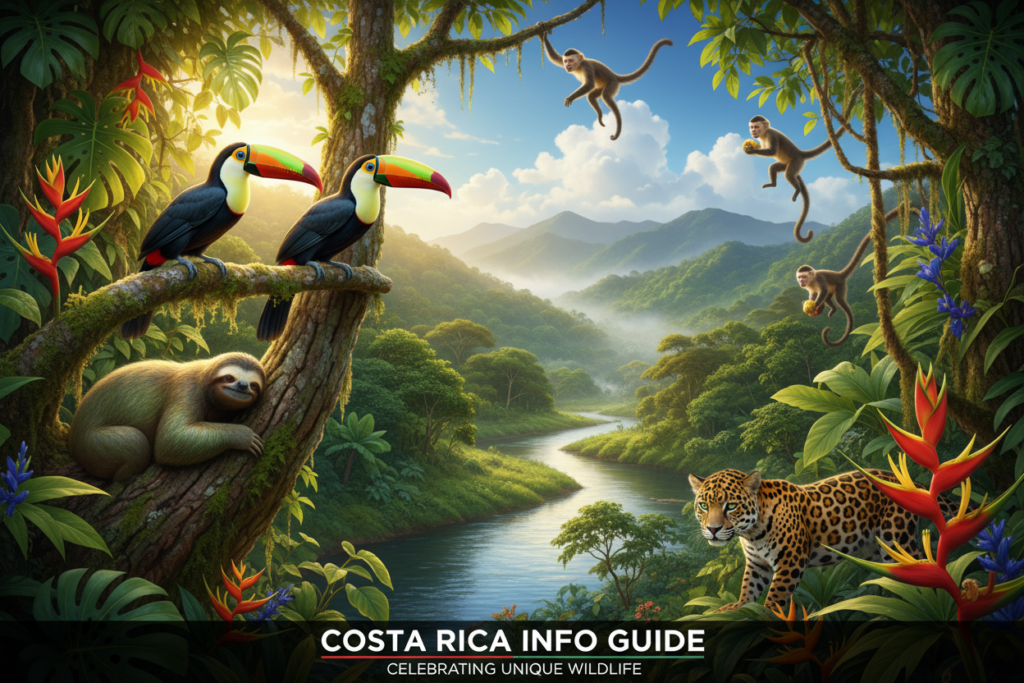
An Introduction to the Country’s Biodiversity
Different regions host unique creatures. The Caribbean lowlands buzz with different life than the Pacific coasts.
The highland cloud forests are another world entirely. This ecosystem variety makes Costa Rica a top destination for wildlife watching.
Decades of conservation commitment have made this possible. The result is a living showcase of natural wealth.
Tips for Safe Wildlife Watching
Costa Rica launched a campaign urging tourists to stop taking selfies with animals. Respect means not touching or getting too close.
Feeding wildlife is harmful and dangerous. In Manuel Antonio National Park, monkeys have become aggressive due to tourist food.
Always maintain a safe distance. Avoid loud noises that disturb the animals. Let them approach naturally if they choose.
Choosing a certified, conservation-focused tour operator is key. They follow best practices for responsible observation. Understanding potential risks, like the deadliest animals in Costa Rica, is also part of being prepared.
Exploring Popular Wildlife Destinations
Choosing where to go is the first step to witnessing Costa Rica’s legendary wildlife. The country’s many protected areas each offer a unique window into nature.
From famous parks to hidden gems, there is a perfect place for every traveler.
Highlights of Monteverde Cloud Forest and Manuel Antonio
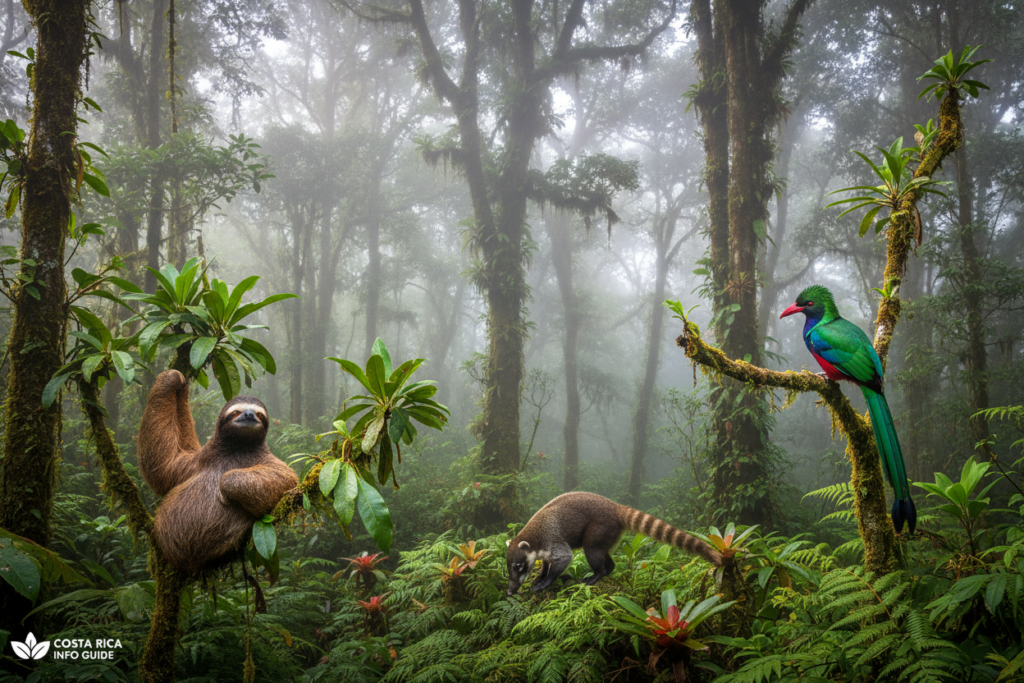
The Monteverde Cloud Forest is a misty highland realm. Visitors often spot the three-toed sloth and the vibrant Resplendent Quetzal here.
For easier access, Manuel Antonio National Park is a top choice. Its well-maintained trails frequently reveal all four monkey species and sloths.
| Destination | Key Wildlife | Experience Type |
|---|---|---|
| Monteverde Cloud Forest | Three-toed sloth, Resplendent Quetzal | Misty highland trails |
| Manuel Antonio National Park | All four monkey species, sloths | Easy coastal trails |
| Corcovado National Park (Osa Peninsula) | Monkeys, potential wildcats | Remote jungle trekking |
| Tortuguero National Park | River monkeys, nesting sea turtles | Boat-based exploration |
National Parks and Off-the-Beaten-Path Spots
For raw biodiversity, Corcovado National Park on the Osa Peninsula is unmatched. It is one of the most intense wildlife experiences in Costa Rica.
Tortuguero offers a unique network of canals. Arenal provides convenient forest canopy trails near hot springs.
The Caribbean coast near Puerto Viejo is famous for reliable sloth spotting. For fewer crowds, Palo Verde National Park in Guanacaste boasts scarlet macaws. Discover more great places to explore in Costa for your itinerary.
An In-depth Look at what-wild-animals-live-in-costa-rica
Costa Rica’s animal residents are not randomly scattered. They thrive in specific ecological zones. Knowing these habitats is key to a successful wildlife trip.
Key Species and Their Habitats
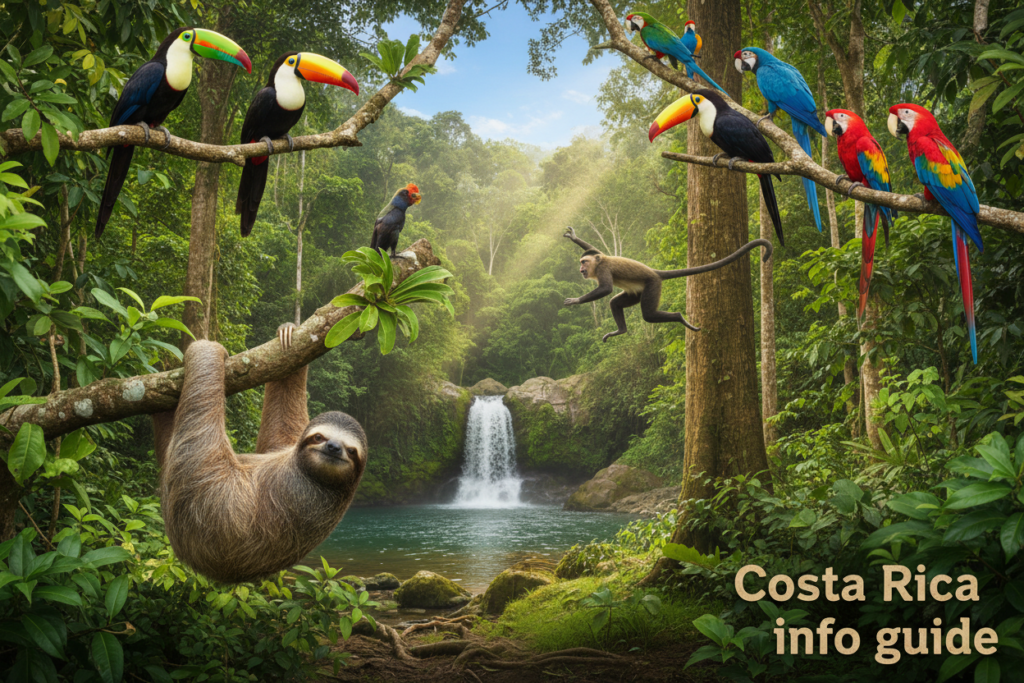
Different ecosystems host unique communities. Lowland rainforests are home to monkeys, sloths, and colorful frogs.
Cooler cloud forests shelter the Resplendent Quetzal. Coastal areas see sea turtles and crocodiles. Each zone supports distinct species.
Seasonal Patterns and Best Times to Visit
The dry season from December to April offers clearer skies. This is the best time for Pacific coast tours and easier hiking.
The wet season brings lush greenery and peak animal activity. Fall is perfect for turtle nesting spectacles.
For a balance, visit during the green seasons of May-June or November. You’ll find fewer crowds and excellent wildlife viewing.
Meeting Iconic Species: Sloths, Monkeys, and More
Among the treetops of Costa Rica’s rainforests, some of the world’s most iconic mammals move at a leisurely pace. This section provides practical tips for spotting these beloved animals.
Spotting Three-toed Sloths in the Treescape
Costa Rica has two sloth species. The Brown-throated Three-toed Sloth is diurnal and easier to see during the day.
It is the world’s slowest mammal. It sleeps 15-20 hours daily and moves so slowly that algae grows on its fur.
Look for a rounded shape or a “smiling” face high in the canopy. Binoculars and patience are essential for sloth spotting.
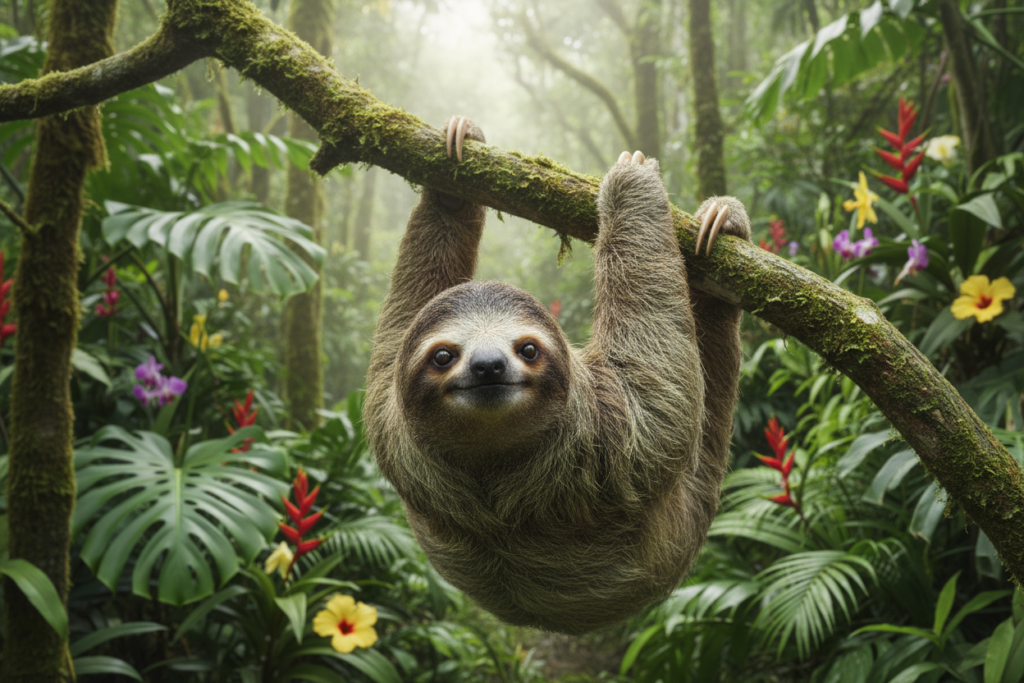
Manuel Antonio National Park offers easy trail sightings. The Caribbean coast is also excellent for viewing both species.
Observing Howler, Spider, and Capuchin Monkeys
Four monkey species inhabit this country. They are the Howler Monkey, White-faced Capuchin, Spider Monkey, and Squirrel Monkey.
Monkeys travel in troops. Seeing one often means the whole group is nearby.
The Osa Peninsula uniquely hosts all four species. For best viewing, go out early in the morning or late afternoon.
Never feed these animals. In places like Manuel Antonio, human food has made monkeys aggressive.
| Species | Key Trait | Best Viewing Time | Spotting Tip |
|---|---|---|---|
| Three-toed Sloth | World’s slowest mammal | Daytime | Look for algae-covered fur in high canopy |
| Howler Monkey | Loud territorial calls | Early morning | Follow the sound; often in large groups |
| White-faced Capuchin | Curious and intelligent | Late afternoon | Watch for foraging on forest floor |
| Spider Monkey | Acrobatic canopy dweller | Mid-morning | Look for long limbs swinging between trees |
Other Mammals You Might Encounter
Keep an eye out for Baird’s Tapir. This large herbivore has a trunk-like nose.
Coatis are often seen foraging in groups. The elusive anteater is a rare but thrilling sight.
Hiring local guides dramatically increases your chances of seeing these mammals. They know the animals’ habits and favorite spots.
Bird Watching Insights in Costa Rica
With over 900 recorded species, Costa Rica stands as a premier destination for bird enthusiasts worldwide. This incredible diversity turns any forest walk into a potential discovery.
Scarlet Macaw, Toucan, and Other Vibrant Birds
The spectacular scarlet macaw is a highlight. These large, red parrots mate for life and are often seen in pairs. Reliable spots include Carara National Park and the Osa Peninsula.
Visit early in the day or late afternoon for the best viewing. Listen for their loud squawks near beach almond trees. Conservation efforts have successfully helped these birds rebound.
Toucans are another crowd-pleaser. The Keel-billed and Chestnut-mandibled species sport colorful bills. Find them in Caribbean lowlands and Monteverde Cloud Forest.
For a bucket-list sighting, seek the Resplendent Quetzal in Monteverde. The breeding season from March to June is ideal. Hummingbirds dazzle year-round at spots like Monteverde’s Cafe Colibri.
- Use binoculars for canopy birds like toucans.
- Dawn tours offer peak activity for many species.
- Local guides greatly enhance wildlife spotting success.
Reptiles and Amphibians in the Rainforest
Beyond the furry mammals and colorful birds, Costa Rica’s rainforests teem with a fascinating world of reptiles and amphibians. This group includes some of the country’s most iconic and visually striking animals.
Discovering the Red-Eyed Tree Frog
The red-eyed tree frog is a living postcard. Its bright green body, striking red eyes, and blue-yellow striped sides are unforgettable. Those big red eyes are a defense called “startle coloration.”
When a predator approaches, the frog suddenly opens its eyes. This flash of color can startle the attacker. During the day, it sleeps with eyes closed and legs tucked.
It blends perfectly with the leaves. This makes the frog a master of camouflage.
This tree frog is strictly nocturnal. Seeing one requires a guided night tour. Rainy nights are ideal, as high humidity brings them out.
Look for them perched on broad leaves near water. Good locations include Tortuguero and Monteverde. Use a headlamp with a red filter to spot their reflective eyes.
| Species | Key Identification | Habitat & Viewing Tip |
|---|---|---|
| Red-eyed Tree Frog | Bright green body, red eyes, blue-yellow sides | Rainforest leaves near water; night tours with red light |
| Eyelash Viper | Variable colors, raised ‘eyelash’ scales above eyes | Forest floor and low branches; always keep a safe distance |
| American Crocodile | Large size, powerful jaw, gray-green coloration | Rivers and lakes; best observed from a safe boat tour |
Other notable species include the Eyelash Viper. This venomous snake has distinctive scales above its eyes. American crocodiles are also found in many waterways.
Marine Life and Coastal Creatures
Two of Costa Rica’s most awe-inspiring natural events involve giants of the sea: nesting turtles and migrating whales. These coastal spectacles offer a different kind of wildlife adventure.
Nightly Turtle Arribadas and Whale Watching Tips
Several turtle species return annually to nest on specific beaches. Ostional Beach is famous for olive ridley arribadas, where tens of thousands nest at once.
Tortuguero National Park is a key place for green turtles. The best time to witness this is during guided night tours, as most nesting occurs after dark.
For whale watching, Costa Rica boasts the world’s longest season. Humpback whales from two different populations visit, making sightings possible almost year-round.
The optimal time for a trip is often September to October. This period offers the best chances to see mothers with calves in nursery areas like Marino Ballena.
Book small-group boat tours for a better experience. Morning is the best time of day, as seas are typically calmer. Always bring binoculars for the best viewing.
Practical Safety Tips and Do’s/Don’ts for Wildlife Encounters
A successful wildlife encounter hinges on respect and following a few key guidelines. This ensures safety for visitors and protects the natural behavior of Costa Rica’s incredible animals.
How to Observe Without Disturbing
The best viewing happens when animals feel undisturbed. Move slowly and quietly on designated trails. Early morning and late afternoon offer the best chances to see active wildlife.
Patience is essential. Let animals approach naturally if they choose. Never chase or try to touch them for a photo.
| Action | Do | Don’t |
|---|---|---|
| Feeding | Secure your own food tightly. | Give any food to monkeys or other animals. |
| Distance | Use binoculars or a zoom lens. | Get close for a selfie or to touch. |
| Noise | Speak in low voices. | Shout or make loud, sudden noises. |
| Timing | Plan tours for dawn or dusk. | Expect high activity during midday heat. |
Respect and Responsibility in Nature
Hiring a certified naturalist guide is one of the most responsible choices. These professionals know animal behavior and ensure safe, ethical viewing. They follow best practices on every tour.
Choose operators who prioritize animal welfare. For example, they maintain proper boat distances from whales and use red lights on night walks.
Real risks from venomous snakes or crocodiles are extremely rare when you keep a safe distance. If you see a snake, back away slowly. For any concern, contact your guide or local authorities immediately.
Following these tips makes your Costa Rican trip rewarding for everyone. It helps preserve the wildlife for future visitors.
Planning Your Wildlife Viewing Trip
The key to a rewarding Costa Rican safari lies in aligning your travel dates with nature’s rhythms. Strategic planning ensures you witness the specific animals and natural spectacles you dream of seeing.
Timing Your Visit with Nature’s Calendar
Costa Rica has two main seasons. The dry season from December to April offers clear skies. It is ideal for hiking and Pacific coast exploration.
The wet season from May to November brings lush greenery. Animal activity increases, and fall is peak time for turtle nesting.
For a balance, visit during the green seasons of May-June or November. You’ll find fewer crowds and excellent wildlife viewing.
Specific timing targets key species. March to May is breeding season for birds like the Resplendent Quetzal.
September to November features massive sea turtle arribadas. Whale watching is best from December to April for Northern Hemisphere humpbacks.
Southern Hemisphere whales visit from July to November.
| Wildlife Focus | Best Time to Visit | Prime Locations |
|---|---|---|
| Bird Watching (Quetzals) | March – May | Monteverde Cloud Forest |
| Sea Turtle Nesting | September – November | Tortuguero, Ostional |
| Whale Watching | Dec-Apr & Jul-Nov | Marino Ballena National Park |
| General Wildlife & Hiking | December – April | Manuel Antonio, Corcovado |
Booking Guided Tours and Local Expertise
Hiring a certified naturalist guide dramatically improves your experience in Costa Rica. These professionals have trained eyes for spotting camouflaged animals.
They know animal behavior and locations. Different experiences require specific tour types.
Book night tours for nocturnal species like red-eyed tree frogs. Morning boat tours are best for whale watching when seas are calm.
Choose conservation-focused, certified operators. They prioritize animal welfare and follow best practices.
Consider small-group tours for flexibility. For travelers considering extended stays, CRIE can assist with residency questions.
Final Thoughts and Quick Checklist
The true magic of Costa Rica lies in its ability to connect visitors directly with untamed nature. This Central American country shelters an estimated 500,000 animal species, from tiny insects to majestic mammals.
Its commitment to conservation, with vast protected forests and national parks, ensures these encounters endure. Whether seeking a three-toed sloth in the cloud forest or scarlet macaws in flight, authentic wildlife experiences await.
For a successful trip, remember these tips. Book a certified guide for better spotting. Time your visit with target species seasons. Bring binoculars and a camera. Always maintain a safe distance and never feed the animals.
Common questions answered: The national animal is the white-tailed deer. Top spots include Corcovado, Monteverde, and Manuel Antonio parks. A guide is highly recommended for safety and insight.
These moments create lasting memories. If you consider making Costa Rica your home after your adventure, CRIE can assist with residency questions. Contact them via WhatsApp at +506 8706 3888, email info@crie.cr, or visit www.crie.cr.
FAQ
What is the best time of year to see wildlife in Costa Rica?
Where are the best places to see a three-toed sloth?
Can I see scarlet macaws in the wild?
Are guided tours necessary for wildlife watching?
What safety precautions should I take in rainforests?
Article by Glenn Tellier (Founder of CRIE and Grupo Gap)
Don't wait, contact us right now!
Call or WhatsApp Costa Rica +506 8373 2085 or +506 8706 3888
Call USA/Canada +1 305-906-6784