
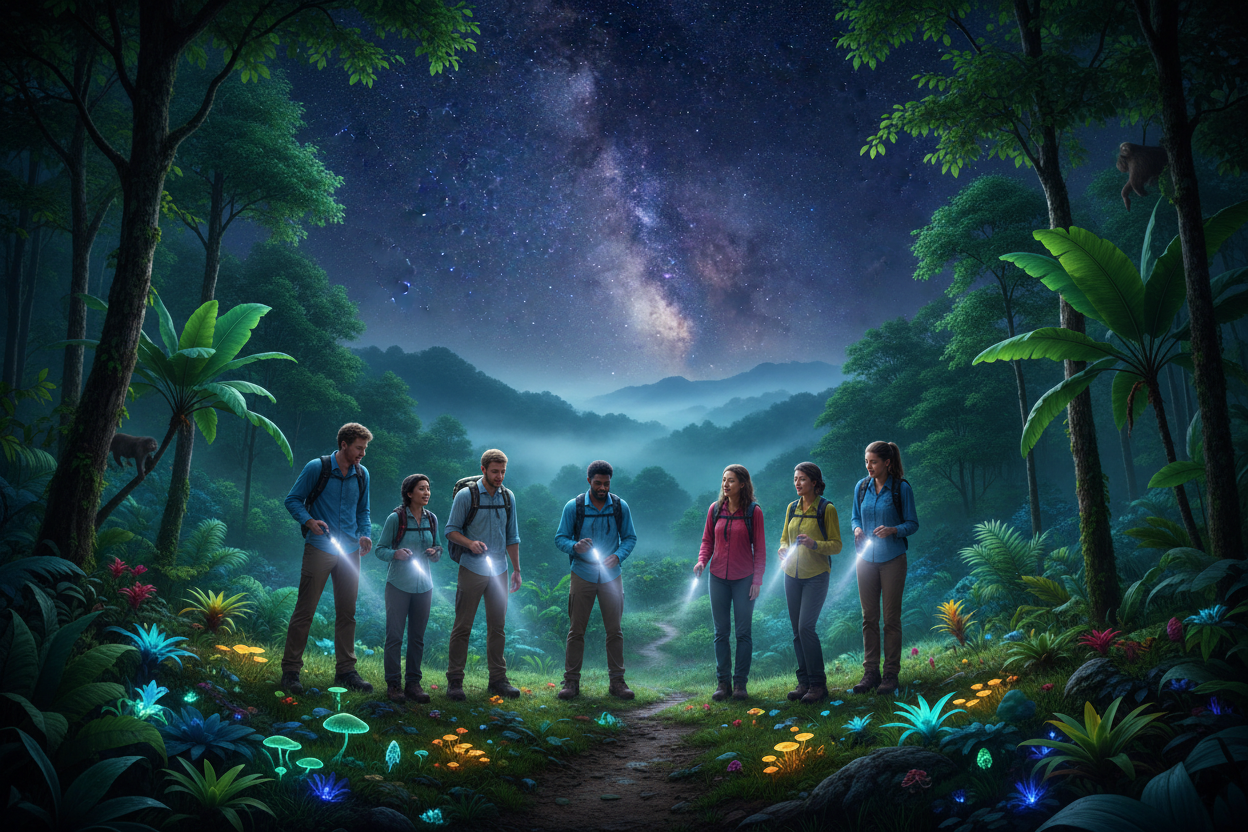
Costa Rica transforms into a different world after sunset. The country’s famous biodiversity comes alive in new and exciting ways. This creates a premier destination for nighttime wildlife exploration.
Guided night tours offer a completely different perspective on local ecosystems. They reveal creatures and behaviors hidden during daylight hours. It is a unique adventure for any nature enthusiast.
These experiences are suitable for various types of travelers. Families, couples, and solo adventurers all find value. The tours provide solid educational value alongside pure entertainment.
This practical guide covers essential safety tips and preparation advice. Readers will learn what to expect on a typical excursion. The article also shares insider recommendations for making the most of the opportunity.
It focuses on real examples from different regions like La Tigra and Drake Bay. You will learn about specific animals you might encounter. Authentic encounters with expert guides share knowledge about frogs, insects, bats, and other fascinating nocturnal creatures.
Embracing the Wonders of costa-rica-night-tours
Local families open their lands to share the magic of the night. A typical evening adventure starts as the sun sets.
The forest sounds change. Frogs and insects begin their chorus. This transition marks the start of an unforgettable experience.
What to Expect on a Night Tour
You will walk on established trails through the rainforest. Guides use special lights to spot hidden creatures.
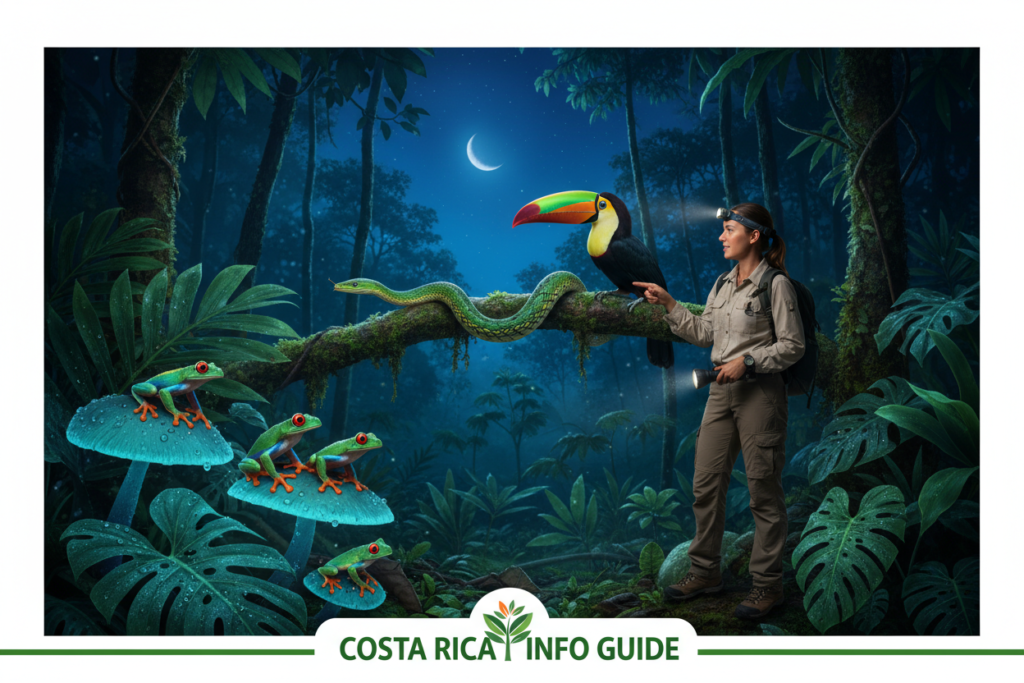
Your headlamp beam catches countless glowing eyes. Green reflections often mean spiders. Orange hints at moths or mammals.
The guides are storytellers. They explain animal behaviors and ecological connections. Every walk is a live lesson.
Local Experiences and Real-Life Examples
Many tours connect you with Costa Rican families. The Mendez Family near La Fortuna is a great example.
They regenerated forest on their land. A 600-meter trail passes water mirrors that attract amazing wildlife. After the walk, they serve a traditional home-cooked dinner.
In Drake Bay, expert guides like Tracie and Gian lead small groups. They have over 20 years of experience. Their tours last about three hours near Corcovado National Park.
| Tour Location | Guide Expertise | Key Features |
|---|---|---|
| La Tigra (La Fortuna area) | Local family hosts | Regenerating forest trail, water mirrors, traditional dinner |
| Drake Bay | Biologist & mammal specialist with 20+ years | Borders Corcovado Park, intimate groups, 2.5-3 hour duration |
These real-life examples show the blend of nature and culture. You see incredible wildlife and learn from local experts.
Preparing for Your Night Tour Adventure
Knowing what to pack ensures your focus stays on the wildlife, not discomfort. Smart preparation makes the evening walk more enjoyable for all travelers.
Packing Essentials and Recommended Attire
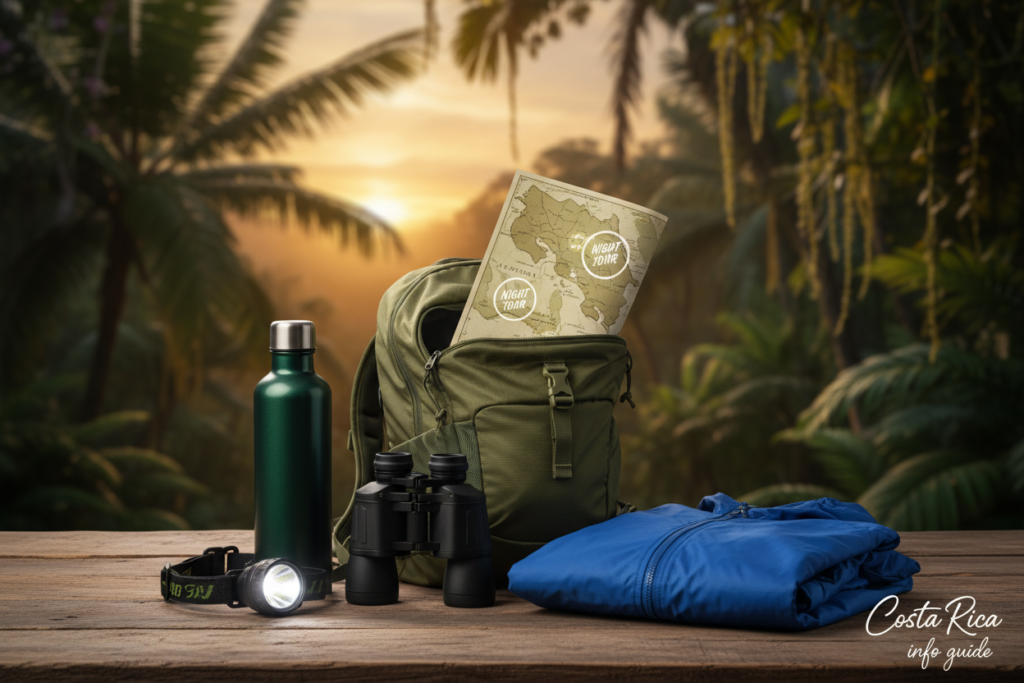
Proper footwear is the most important item. Comfortable closed-toe shoes like running or hiking boots are required. Sandals, Keens, Tevas, and Crocs are not safe for uneven trails.
Wear lightweight long pants to protect your legs. They guard against branches, insects, and vegetation. The evening hours may still feel warm, but protection matters.
Bring insect repellent and a camera. Bug spray keeps mosquitoes away. Your camera captures memories, though flash may be restricted around sensitive animals.
Tips on Comfort and Practical Gear
Tour operators provide key equipment. You’ll get LED lights or headlamps, bottled water, and round-trip transport. This saves time and hassle.
Choose moisture-wicking fabrics. Humidity stays high after sunset. Light layers let you adjust as temperatures change during the 2.5 to 3 hour walk.
Leave valuables at your hotel. Hands should be free for balance. Knowing about local creatures, including potentially dangerous ones, is wise. Read our guide to the deadliest animals in Costa Rica before your trip.
Staying Safe on Your Costa Rican Night Walk
Expert guides with decades of experience make nighttime exploration both safe and educational. Your security is their top priority on any tour. This ensures a positive experience for all travelers.
Do’s and Don’ts for a Secure Experience
Following a clear set of rules prevents most issues. Guides train for years to understand local wildlife behavior. They create protocols for every situation.
| Do | Don’t | Why It Matters |
|---|---|---|
| Stay with the group | Wander off the trail | Prevents getting lost and ensures guide oversight |
| Follow guide instructions | Touch wildlife without permission | Guides know animal behavior and safe distances |
| Use provided lighting | Use flash on sensitive animals | Protects your vision and avoids disturbing creatures |
Practical Safety Tips from Local Guides
Most animals you meet are harmless. A guide once safely showed a red-eyed tree snake to a group. Even scary-looking creatures, like tailless whip scorpions, pose little danger.
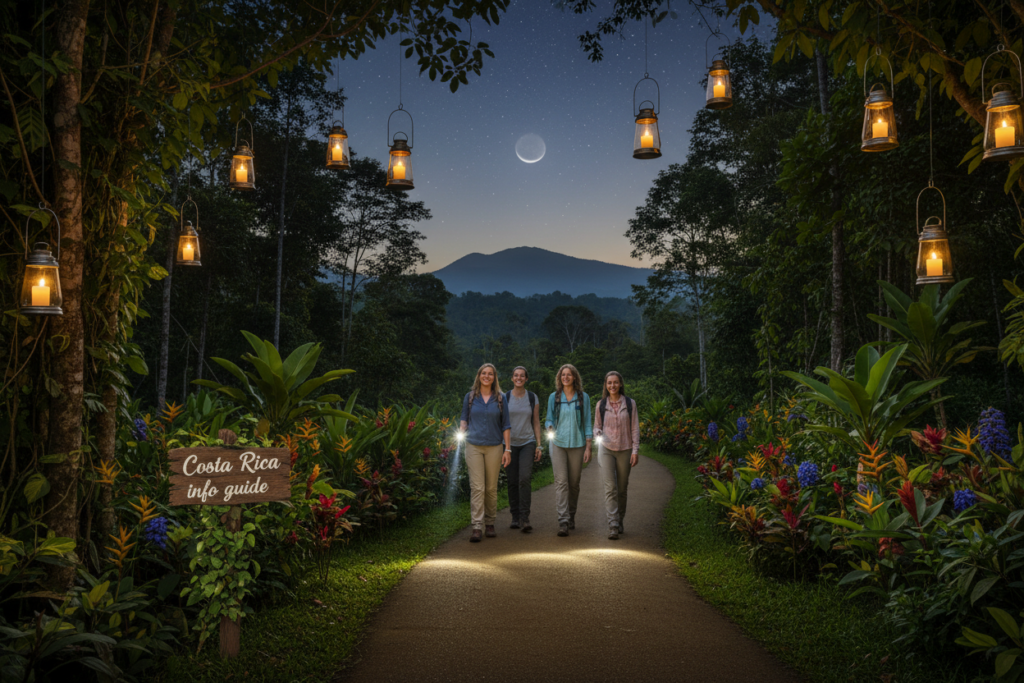
If you get separated, stay put. Use your light to signal and call for your guide. Never try to find your own way back.
Guides carry first aid kits and radios. They know when to call for extra help. Share any health concerns before the walk starts.
Simple steps make every night walk safe. Wear proper shoes, stay on the path, and listen. This allows everyone to enjoy the amazing animals and unique night time.
Experiencing Costa Rica’s Nocturnal Wildlife and Culture
The heart of a Costa Rican night tour lies in its intimate encounters with wildlife and local culture. Travelers connect deeply with the living rainforest and the people who call it home.
Spotting Exotic Species and Natural Wonders
Places like a frog sanctuary in La Tigra showcase amazing amphibians. You might see the large hammer frog or the tiny bullfrog. The iconic red-eyed tree frog and translucent glass frog are also common.
Over 110 bat species live here. Look for tent-making bats bending palm tree leaves into shelters. Bioluminescent click beetles flash lights on their backs.
Guides share that these beetle lights may have once scared British explorers. Net-casting spiders throw webs to catch prey. Guides teach you to identify creatures by their eye-shine color.
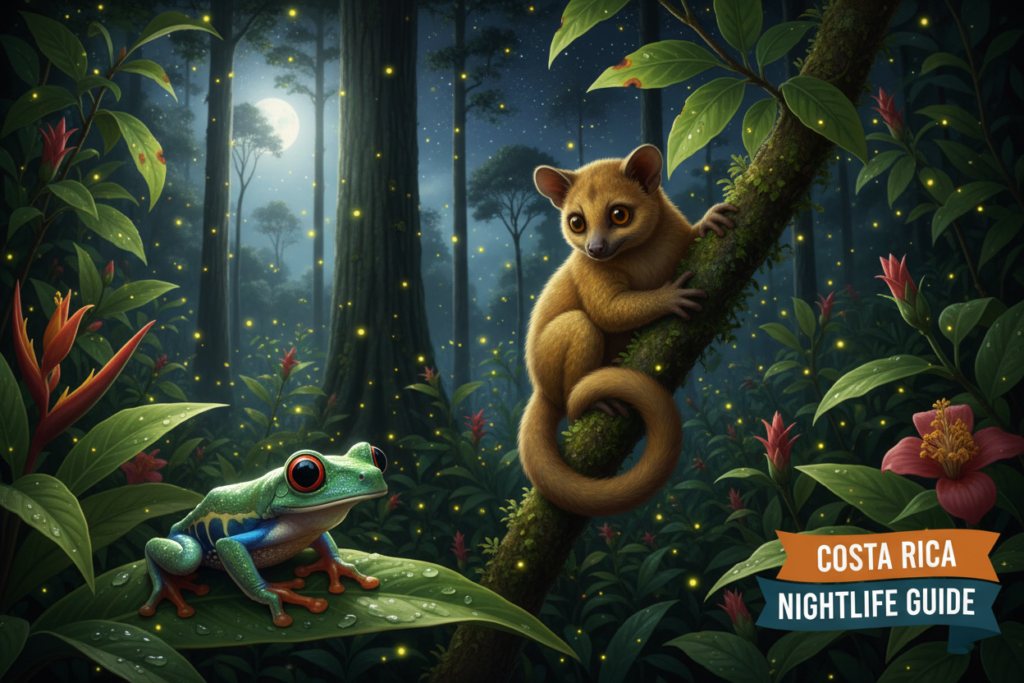
Even a mildly venomous red-eyed tree snake is handled safely for education. A tailless whip scorpion looks scary but is nearly blind and harmless.
Local Family Encounters and Authentic Narratives
Families like the Mendez Family share their land and stories. Reflective water mirrors on their property attract birds, mammals, and insects.
After the walk, they often serve a traditional home-cooked meal. This blends wildlife viewing with authentic hospitality.
Expert guides explain each species’ role in nature. They tell how frog skin toxins are studied for medicine. Some cultures use glowing beetles as natural jewelry.
These narratives turn simple sightings into lasting lessons about ecology and culture.
Highlights of a Typical Costa Rican Night Tour
From pickup to drop-off, each tour is crafted to provide a seamless and educational experience. This section outlines the key moments and flow of a standard evening adventure.
Key Moments and Tour Itinerary Insights
A La Fortuna night tour often begins with a hotel pickup. Guests enjoy a scenic 30-minute drive to the La Tigra area.
Upon arrival at a local family property, guides distribute equipment. The group then walks a 600-meter trail through regenerating forest.
Drake Bay tours typically start with a meeting near the village center around 7:30 PM. After a briefing, the small group walks to a dock.
A short boat crossing over a river leads to rainforest trails near Corcovado National Park. Both tours last about 2.5 to 3 hours total.
| Phase | La Fortuna Tour | Drake Bay Tour |
|---|---|---|
| Start & Meeting | Hotel pickup, drive to La Tigra | Village center meet at 7:30 PM |
| Transportation & Access | Vehicle to family property | Boat river crossing to trail |
| Trail & Walk | 600-meter regenerating forest path | Corcovado border rainforest trails |
| Duration & Group | ~3 hours, intimate small group | ~2.5-3 hours, limited size |
| Inclusions & Highlights | Traditional dinner, LED light, guide | Bilingual guide, light, transport |
Key moments include initial wildlife spottings as eyes adjust. Guides explain animal behavior and ecological relationships throughout the walk.
The social aspect of a small group allows for personalized attention. Advanced reservations ensure limited numbers for better viewing.
A cultural highlight is sharing a traditional Costa Rican dinner with a local family. The meal is prepared over a wood-burning stove.
Practical inclusions like round-trip transportation and provided LED lights add convenience. These tours welcome families with children aged 8 and up.
Each evening offers a unique opportunity based on wildlife activity and conditions. Guides adapt while following established trails and safety protocols.
Expert Advice and Insider Recommendations
Choosing the right night walk involves more than just showing up; it’s about the team leading you. Expert guides transform a simple stroll into a deep connection with nature.
Guided Insights and Group Dynamics
Seek out guides with specialized backgrounds. Some are published researchers or biologists with decades of field experience.
For example, guides like Tracie and Gian have over 20 years leading tours. They still discover new wildlife behaviors about every ten days.
These experts tell engaging stories about ecological and cultural connections. Their passion makes every encounter a lesson.
Small group sizes are intentional. They allow for personalized attention and create better wildlife viewing.
Less noise and disturbance means more animal activity. Always book these intimate tours well in advance.
Transportation and Essential Tour Details
Convenient round-trip hotel transportation is standard. This service allows easy access to remote rainforest locations.
Tours typically start at 7:30 PM and last about three hours. A second time slot is sometimes added if demand is high.
Daily availability makes it simple to fit this activity into your travel itinerary. Consider the timing when planning other daytime visits.
Communicate specific interests to your guide beforehand. Many can tailor their commentary to match your curiosity.
Wrapping Up Your Night Tour Journey
The memories forged during a rainforest night walk often become the most vivid stories from a Costa Rican trip. This unique adventure reveals hidden wildlife and offers deep educational value. It connects travelers with local culture in a way daytime activities cannot.
With proper shoes, long pants, and a trusted guide, these tours are safe and rewarding. A quick checklist helps: book ahead, pack bug spray and a camera, follow instructions, and stay with your group for the 2.5-3 hour duration.
Common questions are easily answered. Guides expertly help with fears of insects. Children aged eight and up can usually join. Tours continue in light rain with provided gear. No special camera is needed, though low light is a fun challenge.
For those dreaming of longer stays to enjoy more nature experiences, CRIE can assist with residency questions. Contact them via WhatsApp at +506 8706 3888, email info@crie.cr, or visit www.crie.cr.
Embrace this opportunity to gain a profound understanding of tropical ecosystems. A guided night tour is an unforgettable highlight, creating lasting appreciation for the country’s remarkable natural heritage.
FAQ
Are evening walks in the rainforest safe?
What kind of creatures might I see on a nocturnal adventure?
What should I wear and bring for a night walk?
How long does a typical night tour last?
Is transportation to the tour location included?
Are these tours suitable for families with young children?
Article by Glenn Tellier (Founder of CRIE and Grupo Gap)
Don't wait, contact us right now!
Call or WhatsApp Costa Rica +506 8373 2085 or +506 8706 3888
Call USA/Canada +1 305-906-6784